Artwork
Hartford Bridge
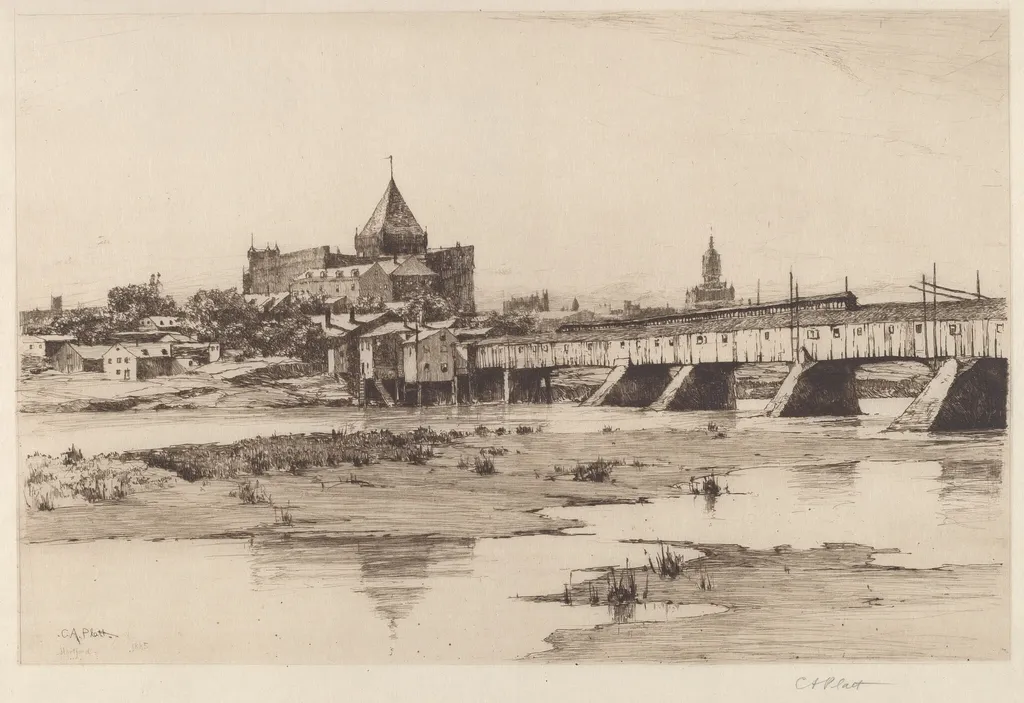
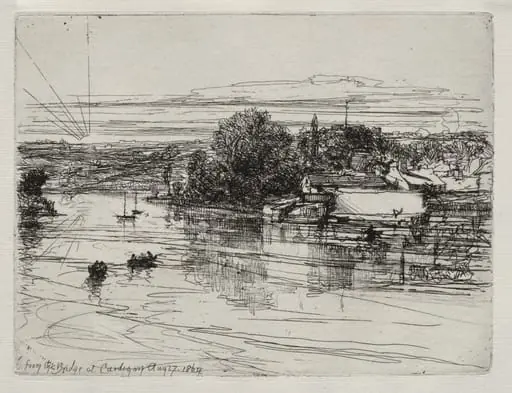
Hartford Bridge is an ink print by the Impressionist artist Charles A. Platt. It dates from 1885 and is held in the collection of the National Gallery of Art. Charles A.
About this work
Overview
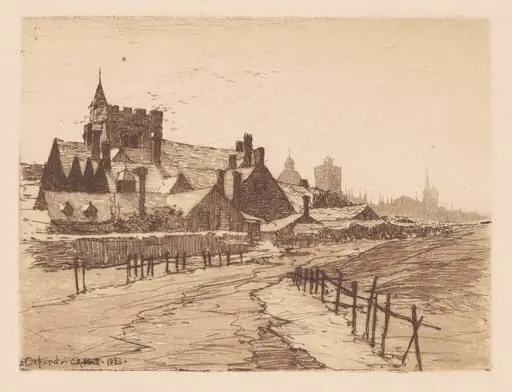
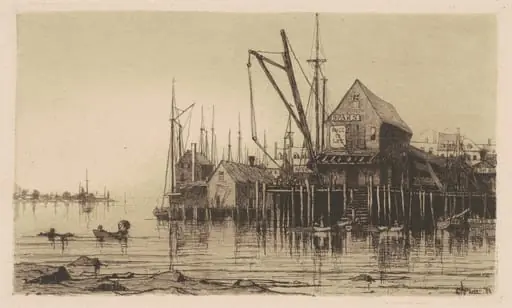
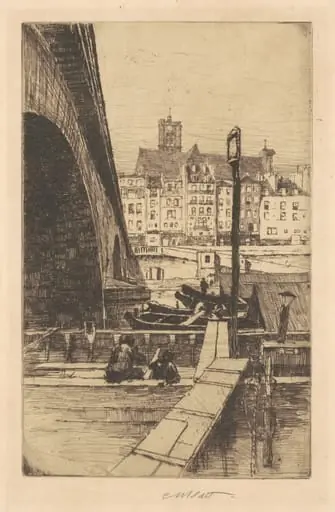
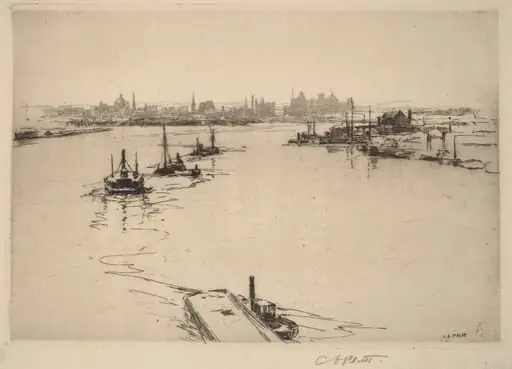
Charles A. Platt’s 1885 etching titled Hartford Bridge presents a tranquil riverside village. Rendered in brownish‑black tones, the work captures a mist‑laden atmosphere, with reeds and muddy banks foregrounding a covered bridge that spans the water. Small dwellings and a larger, steep‑roofed structure rise behind the bridge, composing a compact, bucolic scene.
Subject & Meaning
The composition focuses on the interplay between human architecture and the natural river environment. The covered bridge, supported by piers emerging from the water, serves as a focal point that links the bustling riverbank to the modest settlement beyond, suggesting themes of connection and the quiet rhythms of rural life.
Technique & Style
Platt employed a traditional intaglio etching process, using a scratchy, densely drawn line to build texture and depth. The heavy cross‑hatching creates a sense of atmospheric haze, while the limited brown‑black palette lends the image an aged, sketch‑like quality that emphasizes form over color.
History & Provenance
Created in 1885, Hartford Bridge is an early example of Platt’s printmaking before he became better known for architecture and landscape design. The work has circulated among private collections and occasional museum exhibitions, reflecting its status as a representative piece of late‑19th‑century American etching.
Own this work as a print
Artist & collection