Artwork
Weymouth and Distant Portland
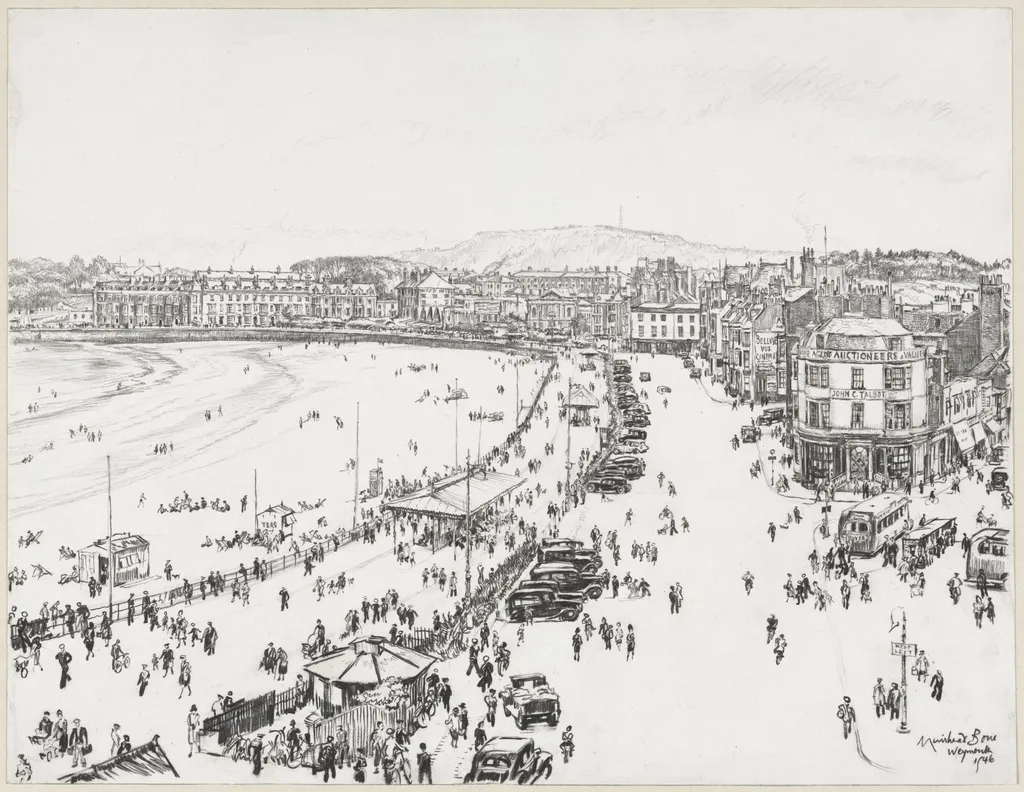
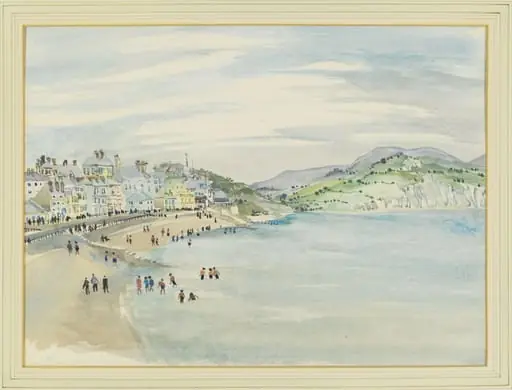
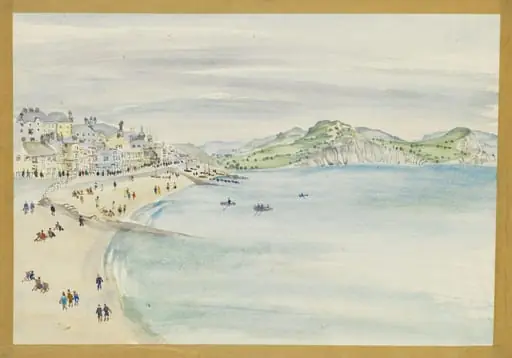
Weymouth and Distant Portland is a drawing by Muirhead Bone. It dates from 1946 and is held in the collection of the Cleveland Museum of Art.
About this work
Overview
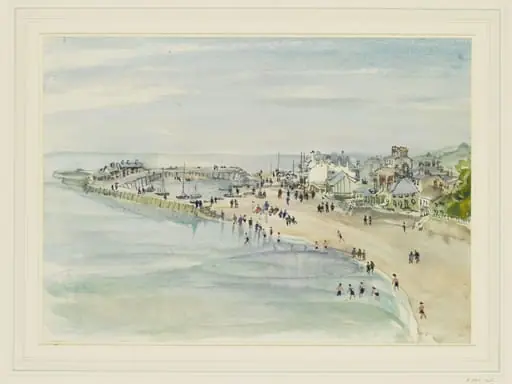
Created in 1946, *Weymouth and Distant Portland* is a detailed drawing by Scottish artist Muirhead Bone. The work depicts a lively coastal scene, foregrounding a straight thoroughfare lined with buildings, pedestrians, and vehicles, while the sea and a distant hill bearing the Isle of Portland rise in the background.
Subject & Meaning
The composition records everyday activity in the seaside town of Weymouth, emphasizing the interaction between urban infrastructure and the surrounding landscape. By juxtaposing the bustling road with the tranquil water and distant architecture, Bone highlights the coexistence of human movement and natural setting.
Technique & Style
Executed with precise line work and a restrained palette, the drawing balances realistic detail with atmospheric depth. Bone employs varied tones—from bright blues and greens for the water to muted browns and grays for the built environment—to convey spatial recession and the weathered texture of the town’s structures.
History & Provenance
Muirhead Bone, noted for his industrial and architectural subjects and his service as a war artist, produced this piece toward the end of his career, during the post‑World War II period. The drawing entered the collection of the Cleveland Museum of Art, where it remains on view as part of the museum’s holdings of early‑mid‑20th‑century British works.
Context
The work belongs to the final phase of the Etching Revival, a movement that revived interest in printmaking techniques in the early 20th century. Bone’s focus on architectural precision and everyday scenes aligns with the revival’s emphasis on craftsmanship and documentary observation.
Artist & collection
Artist
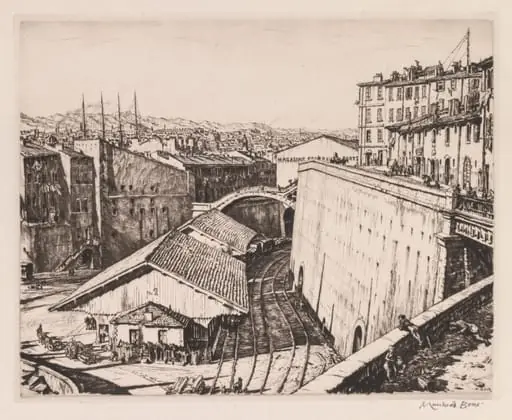
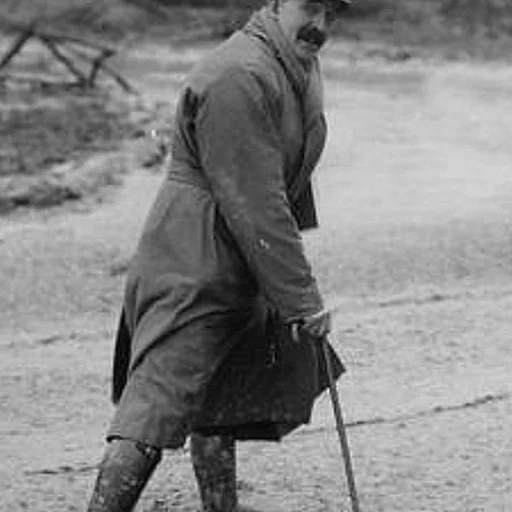
Sir Muirhead Bone (23 March 1876 – 21 October 1953) was a Scottish etcher and watercolourist who became known for his depiction of industrial and architectural subjects and his work as a war artist in both the First and Second World Wars.