Artwork
Lyme Regis Bay
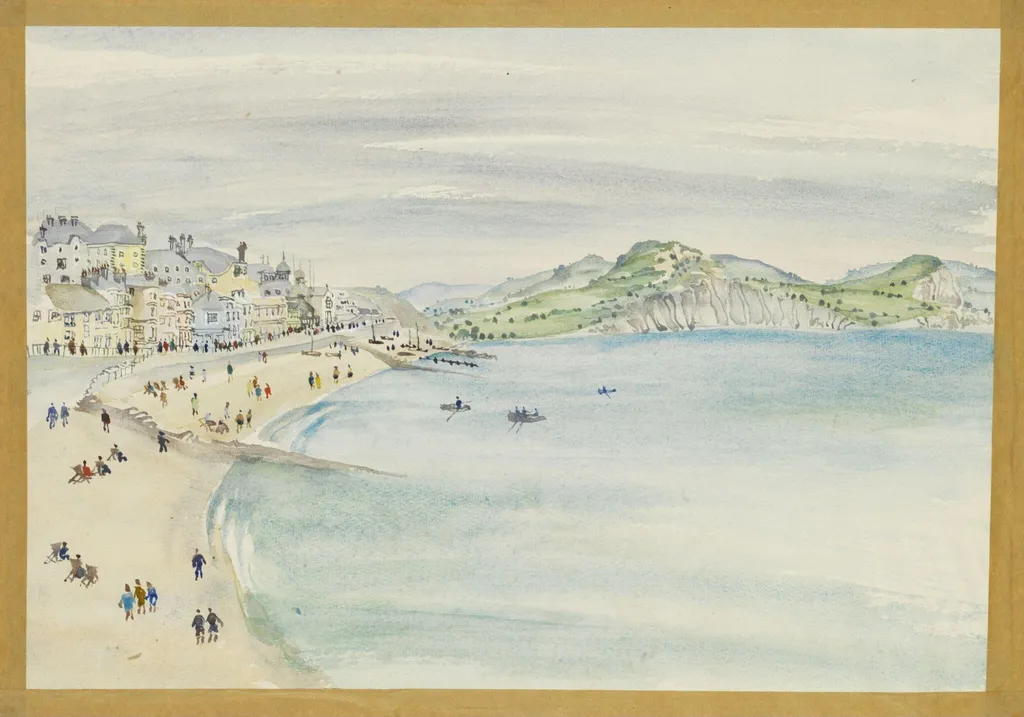
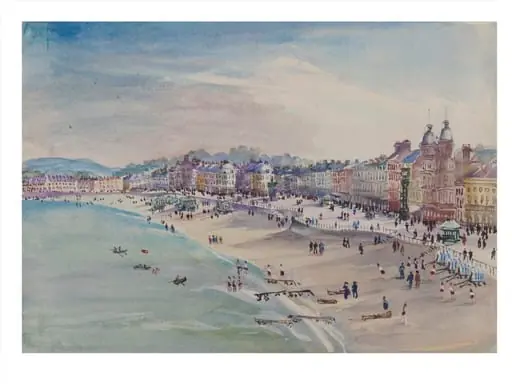
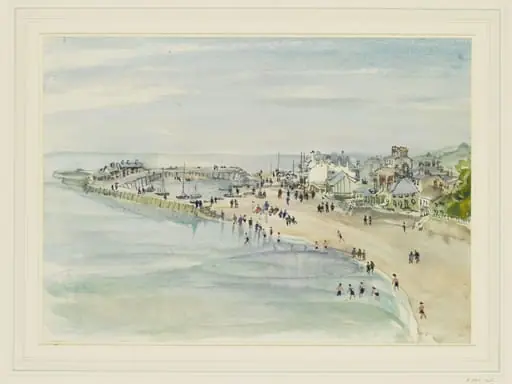
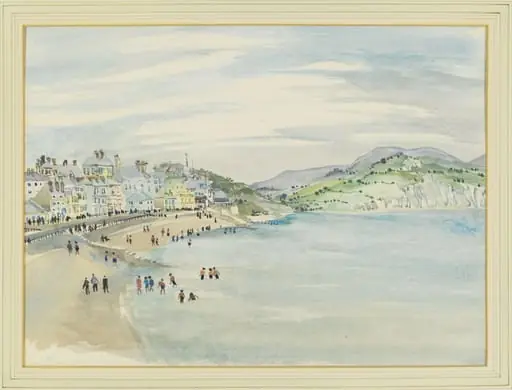
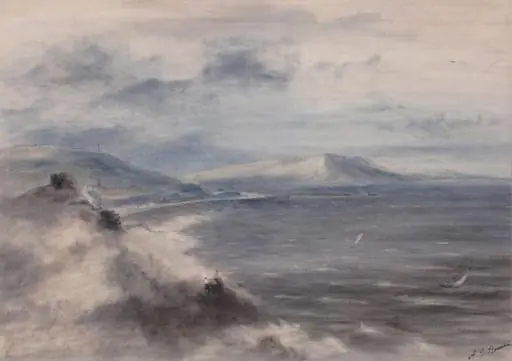
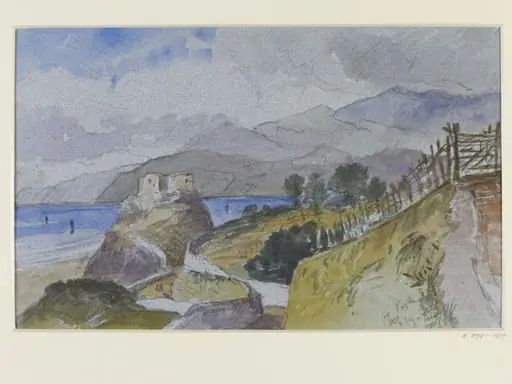
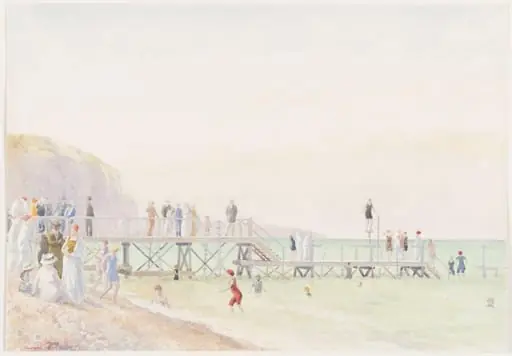
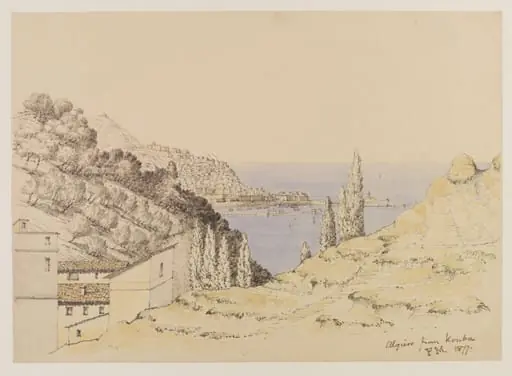
Lyme Regis Bay is a watercolor work on paper by the Impressionist artist Kirk. It dates from 1940 and is held in the collection of the Victoria and Albert Museum.
About this work
Overview
The project sought to preserve visual records of places deemed vulnerable to wartime destruction or rapid modernization.
Created in 1940, Lyme Regis Bay is a watercolour produced under the *Recording Britain* initiative, a government-backed effort to document the nation’s rural and coastal landscapes during World War II. The project sought to preserve visual records of places deemed vulnerable to wartime destruction or rapid modernization. This work, like others in the series, reflects a deliberate focus on quiet, everyday scenes rather than grand monuments, emphasizing the value of ordinary places in shaping national identity.
Subject & Meaning
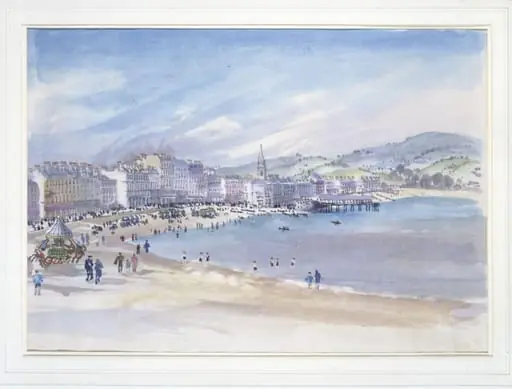
The scene captures Lyme Regis, a coastal town in Dorset, during a moment of calm seaside activity. Figures stroll along the shore, small boats rest near the water, and modest buildings cling to the cliffside. The absence of military or industrial elements underscores the project’s intent to highlight peaceful, enduring aspects of British life. The composition suggests continuity amid national uncertainty, offering a visual anchor to pre-war routines and landscapes.
Technique & Style
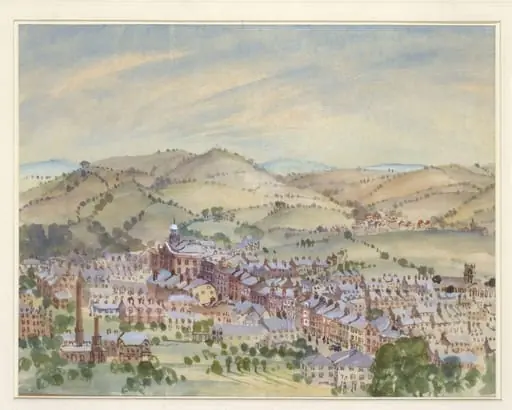
The artist employed loose, fluid brushwork and diluted watercolour washes to convey a sense of lightness and immediacy. Soft, pale hues dominate the palette—gentle blues, greys, and ochres—enhancing the airy atmosphere of the coastal setting. The technique avoids heavy detail, favoring suggestive strokes that imply form rather than define it. This approach aligns with the tradition of British watercolour sketching, prioritizing mood over precision.
History & Provenance
The painting was produced as part of the *Recording Britain* project, initiated in 1939 and overseen by Sir Kenneth Clark. Funded by the Pilgrim Trust, it commissioned over 150 artists to document landscapes and vernacular architecture across Britain. Works from the project were collected by the Victoria and Albert Museum, where this watercolour remains in the national collection. Its creation was both an artistic and cultural preservation effort during a time of national crisis.
Context
During the early years of World War II, Britain faced widespread anxiety over the loss of its cultural and physical heritage. The *Recording Britain* project emerged as a response to fears of bombing, urban expansion, and the erosion of traditional ways of life. Artists were sent to rural and coastal areas to record scenes considered emblematic of English identity, turning art into a quiet act of resistance against cultural erasure.
Legacy
The *Recording Britain* collection endures as a vital archive of mid-20th-century British landscapes. Lyme Regis Bay contributes to a broader understanding of how art was mobilized during wartime to sustain collective memory. Today, the watercolours are studied not only for their aesthetic qualities but also as historical documents that reveal what communities chose to preserve visually during a time of profound change.
Artist & collection
Artist
This British artist left a small but vivid trail of watercolours, all painted around 1940.