Artwork
La fântână
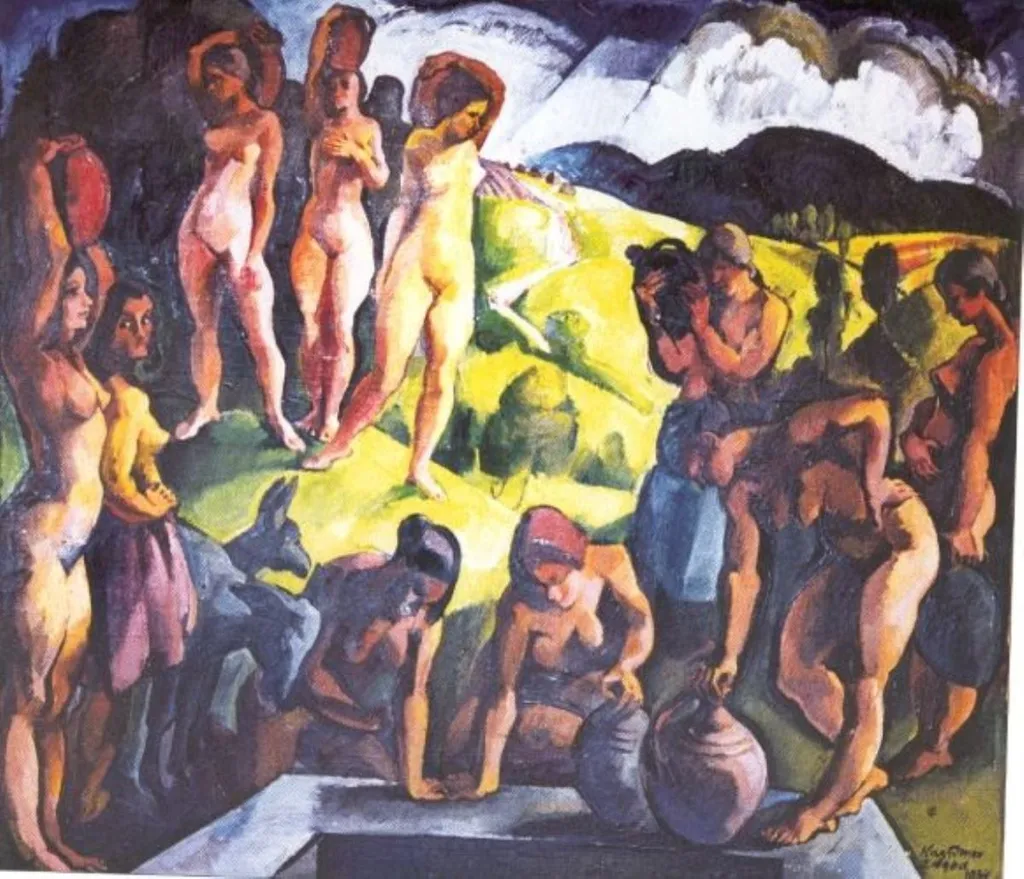
La fântână is an unspecified painting by Imre Nagy. It is held in the collection of the Székely National Museum.
About this work
Overview
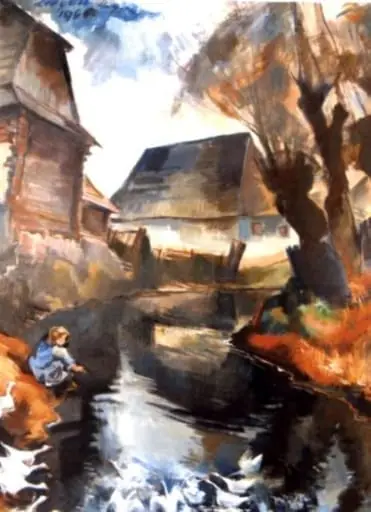
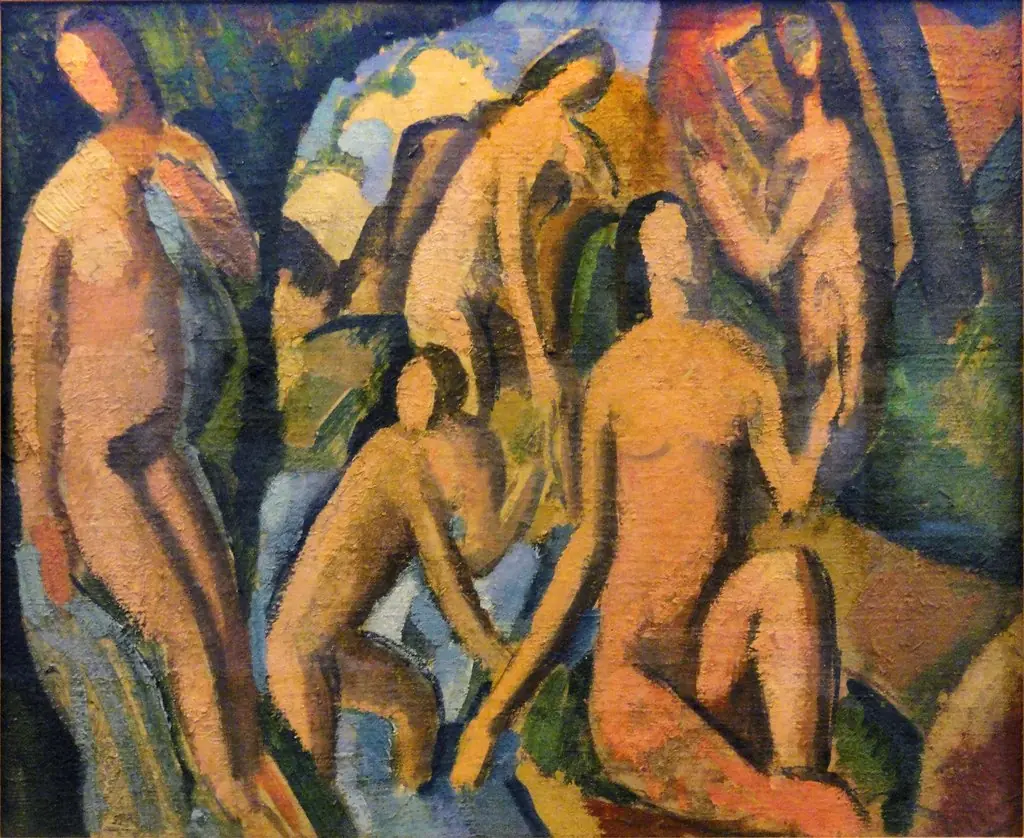
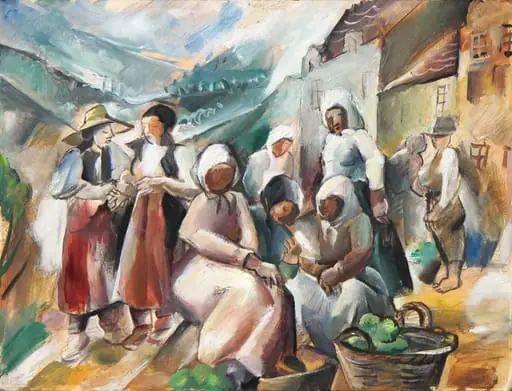
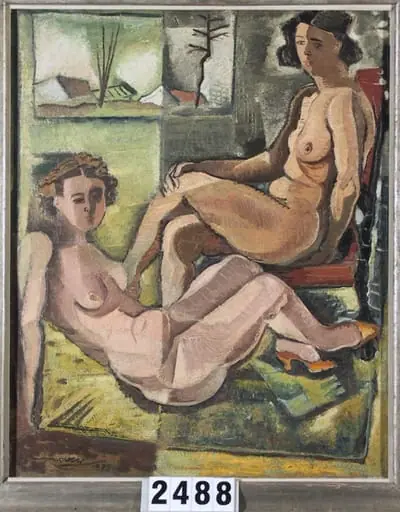
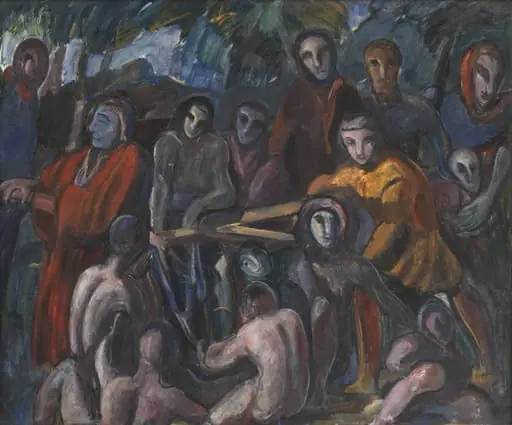
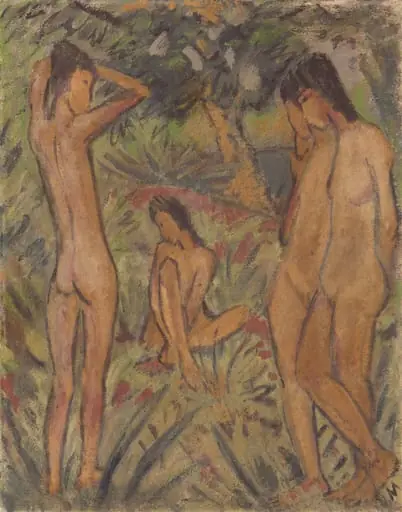
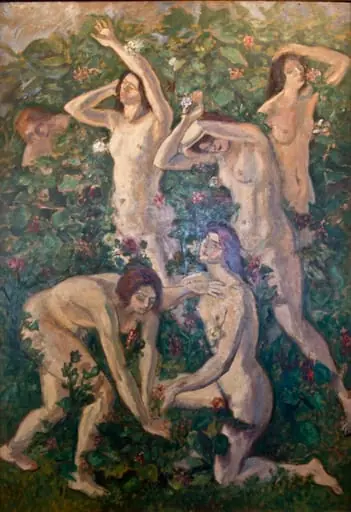
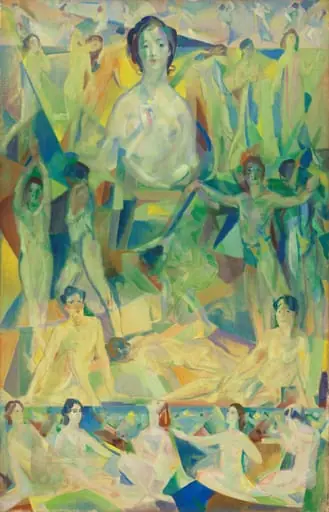
La fântână depicts a quiet gathering of nude women around a rural well, set within a softly rendered landscape of rolling hills and overcast skies.
La fântână depicts a quiet gathering of nude women around a rural well, set within a softly rendered landscape of rolling hills and overcast skies. The composition avoids narrative urgency, instead inviting stillness and introspection. Figures are arranged in varied postures—standing, kneeling, seated—creating a naturalistic rhythm that anchors the scene in everyday ritual rather than myth or allegory.
Subject & Meaning
The painting presents women engaged in a domestic act—drawing water—yet removes it from explicit utility by focusing on their bodily presence and quiet communion. There is no indication of labor’s strain or social context; the emphasis lies in their shared solitude and physicality. The absence of clothing and narrative detail suggests an idealized, timeless moment, rooted in observation rather than symbolism.
Technique & Style
The artist employs warm, earthy tones for the figures, contrasting with the cooler, subdued hues of the landscape to create spatial depth. Chiaroscuro is used subtly to model form and guide the eye, enhancing volume without theatricality. Brushwork remains restrained, favoring soft transitions over sharp definition, contributing to the painting’s hushed, contemplative mood.
History & Provenance
The painting’s origin and early ownership remain undocumented in public records. It is not attributed to any widely recognized artist of the period, and no exhibition history or collector lineage has been established. Its survival as a standalone work suggests it may have been privately commissioned or produced for personal contemplation rather than public display.
Context
Created during a time when rural life and the nude figure were common subjects in European art, La fântână diverges from academic traditions by avoiding classical references or moralizing themes. Its focus on ordinary women in a natural setting aligns with emerging realist tendencies, yet its lack of social commentary distinguishes it from contemporary genre painting.
Legacy
Though not widely exhibited or reproduced, La fântână retains a quiet influence among regional collectors who value its understated harmony between figure and landscape. Its restrained approach to the nude and its emphasis on atmospheric mood prefigure later 20th-century tendencies toward emotional minimalism in figurative art, though it remains outside mainstream art historical narratives.