Artwork
Peisaj cu gâște
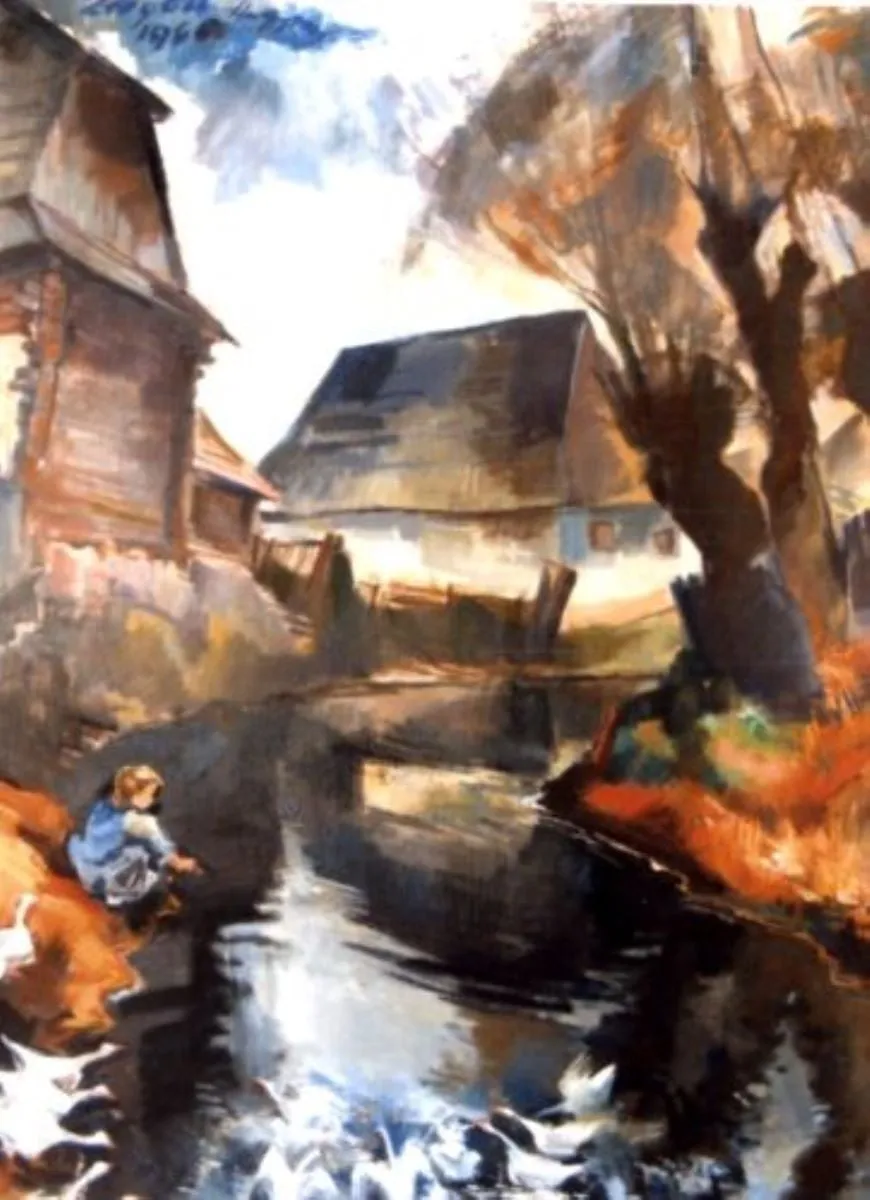
Peisaj cu gâște is an unspecified painting by Imre Nagy. It dates from 1966 and is held in the collection of the Székely National Museum.
About this work
Overview
Its title, meaning 'Landscape with Geese,' references a subtle presence of waterfowl, though the human figure and structure dominate the composition.
Painted in 1966 by Imre Nagy, Peisaj cu gâște is a landscape oil on canvas that captures a quiet rural scene in Hungary. The work is part of the permanent collection at the Museum of Ethnography in Budapest, where it is displayed as an example of mid-20th-century Hungarian figurative painting. Its title, meaning 'Landscape with Geese,' references a subtle presence of waterfowl, though the human figure and structure dominate the composition.
Subject & Meaning
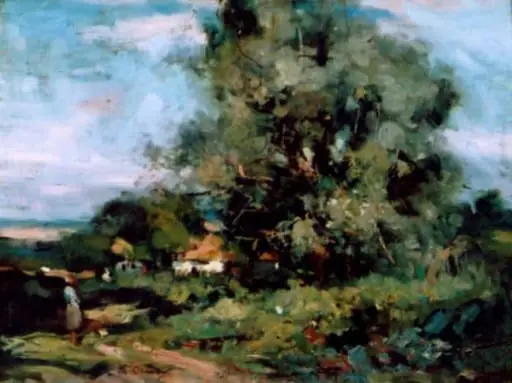
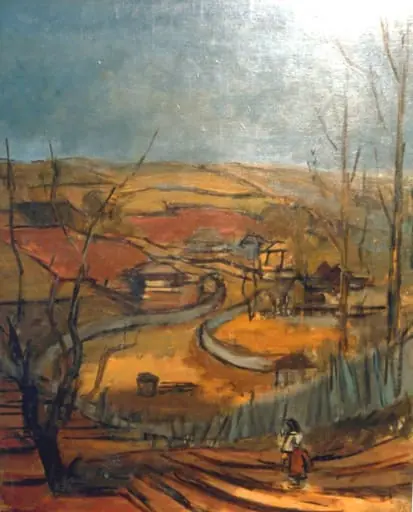
A young child sits alone on a weathered wooden dock, gazing toward a dilapidated house with a sloping roof and faded walls. The isolation of the figure, combined with the barren trees and turbulent sky, suggests a mood of stillness and quiet contemplation. The faint suggestion of fish beneath the water’s surface adds a layer of quiet life, contrasting with the stillness of the human presence. The scene evokes rural solitude rather than narrative drama.
Technique & Style
Nagy employed thick, impasto brushwork to build texture across the water, tree trunks, and roof surfaces, giving the painting a tactile, almost sculptural quality. The palette is muted, with earth tones and pale blues, punctuated by uneven patches of light that carve out forms from shadow. The sky is rendered in irregular strokes, avoiding smooth gradients, reinforcing the painting’s raw, unidealized character.
History & Provenance
Created in 1966 during Nagy’s active period in Hungarian rural realism, the painting entered the Museum of Ethnography’s collection shortly after its completion. It was acquired as part of a broader effort to document vernacular life through visual art. No public record of prior ownership exists, suggesting it was likely retained by the artist or gifted directly to the institution.
Context
In 1960s Hungary, state-supported art often favored idealized socialist realism, but Nagy’s work diverged by focusing on unadorned rural existence. Peisaj cu gâște reflects a quiet resistance to official aesthetics, emphasizing personal observation over propaganda. Its inclusion in an ethnographic museum underscores its value as a document of everyday life, not merely artistic expression.
Legacy
Though not widely exhibited beyond Hungary, the painting remains a significant example of postwar Hungarian landscape painting that prioritized emotional tone over spectacle. It continues to be referenced in scholarly discussions of regional realism and the role of domestic scenes in national art collections. Its preservation in an ethnographic context highlights its dual role as both art and cultural record.