Artwork
Charles-Maurice Le Tellier
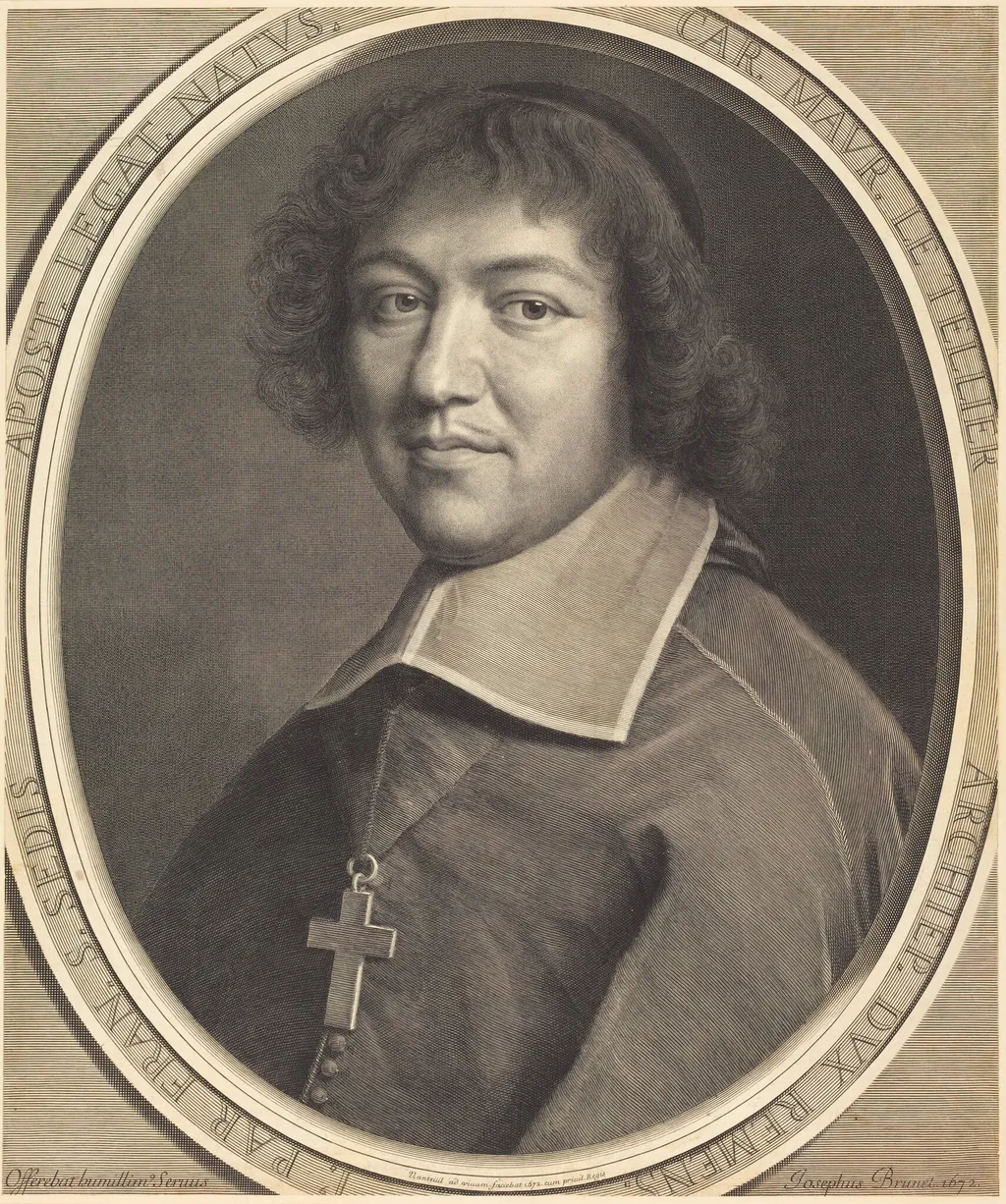
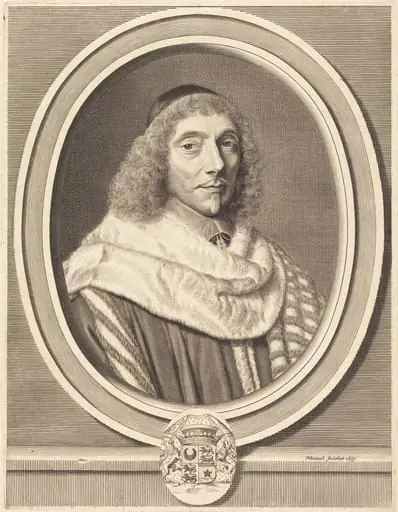
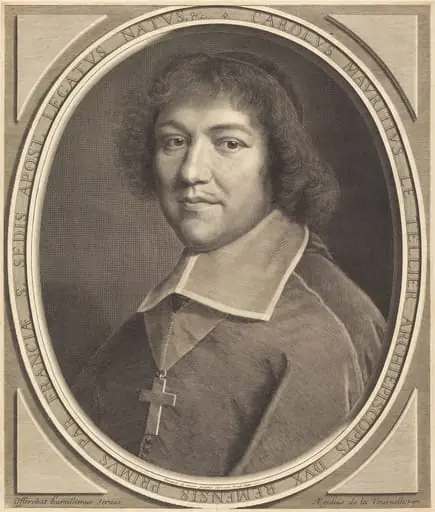
Charles-Maurice Le Tellier is an ink print by the Baroque artist Robert Nanteuil. It dates from 1672 and is held in the collection of the National Gallery of Art.
About this work
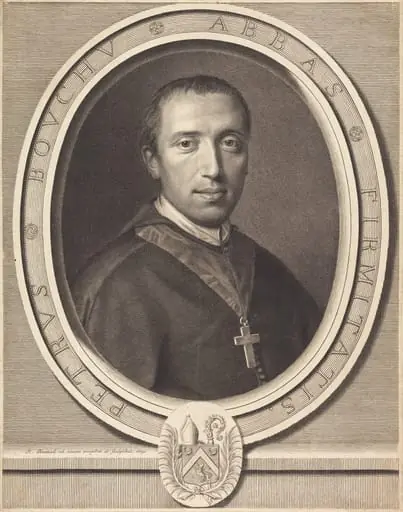
He’s wearing a white collar and a dark robe, with a large key hanging from a chain around his neck.
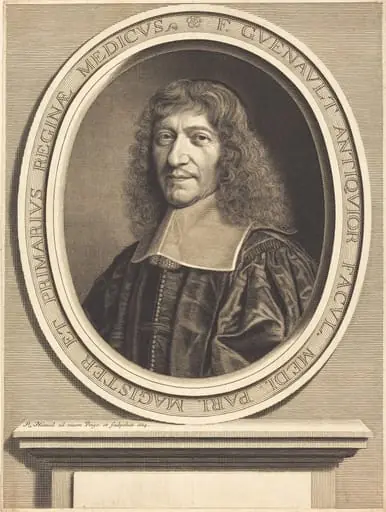
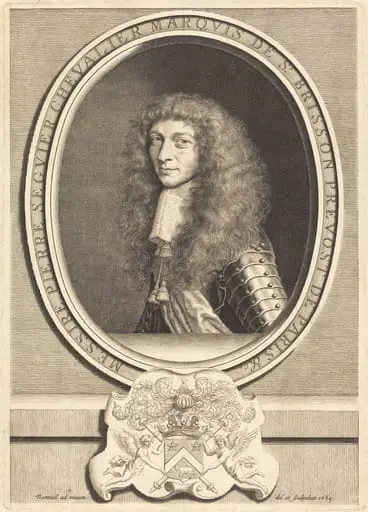
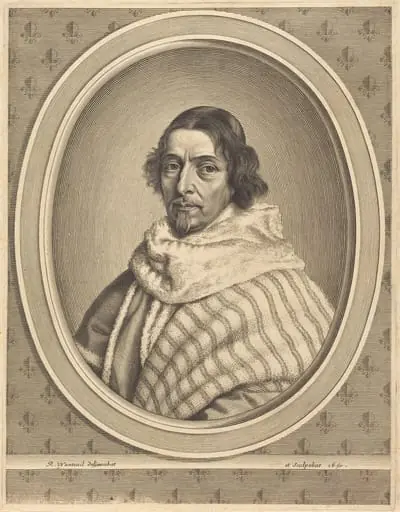
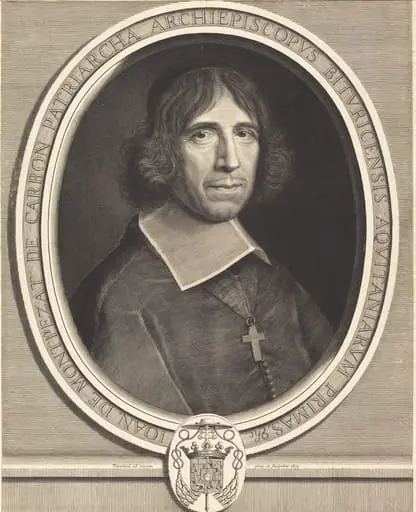
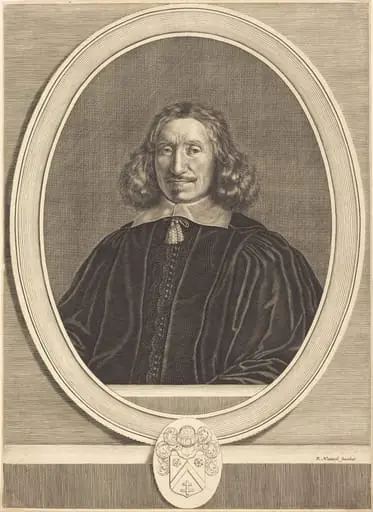
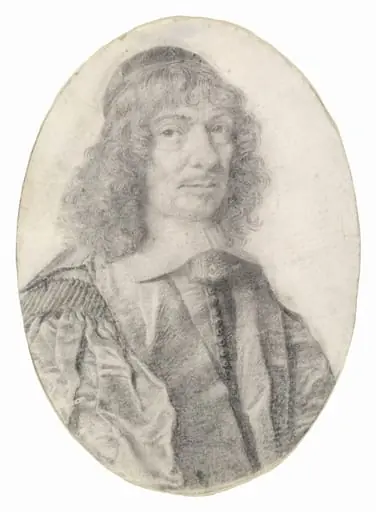
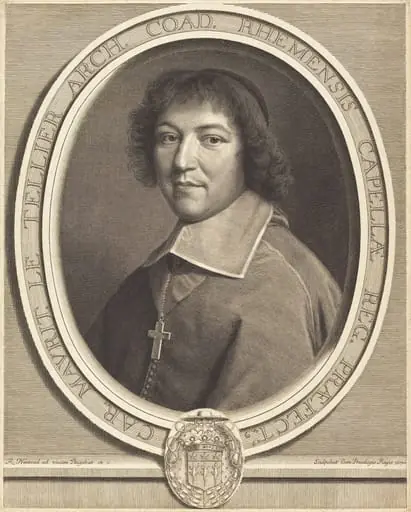
This is a black-and-white portrait of a man with curly hair and a serious face. He’s wearing a white collar and a dark robe, with a large key hanging from a chain around his neck. The background is plain, but the edges of the image have a textured, woven look.
The key suggests he might have been important—maybe a church or government official. This picture was made in 1672, not painted but carved into metal.
Next, check out how this was made with engraving.
Overview
In 1672 Robert Nanteuil, a leading French engraver of the Louis XIV court, created a portrait print of Charles‑Maurice Le Tellier. Executed as a copper engraving, the image presents the subject in a stark monochrome format, emphasizing his dignified bearing and attire.
Subject & Meaning
The sitter, Charles‑Maurice Le Tellier, is depicted with curled hair, a solemn expression, a white ruff, and a dark ecclesiastical robe. A prominent key hangs from a chain at his throat, a conventional emblem of high clerical or administrative authority, indicating his prominent role within the church or state.
Technique & Style
Nanteuil employed fine line engraving, incising the design into a metal plate to produce a high‑contrast, textured surface. The background remains plain, while the edges display a woven‑like pattern that frames the figure, a typical device in 17th‑century French portrait prints to focus attention on the subject.
History & Provenance
The print originates from the French royal workshop, where Nanteuil served as a draughtsman and pastellist as well as an engraver. It was likely circulated among court circles and ecclesiastical patrons shortly after its completion, serving both as a record of Le Tellier’s status and as a collectible portrait.
Context
Created during the reign of Louis XIV, the portrait reflects the era’s emphasis on hierarchical representation and the use of printmaking to disseminate images of notable officials. Nanteuil’s work aligns with the broader Baroque tendency to combine realistic detail with symbolic attributes, such as the key, to convey rank.
Legacy
While not a painted work, the engraving remains a valuable visual document of 17th‑century French officialdom. It exemplifies Nanteuil’s skill in rendering texture and expression, and continues to inform scholars about the visual conventions used to denote authority in the early modern period.
Artist & collection
Artist
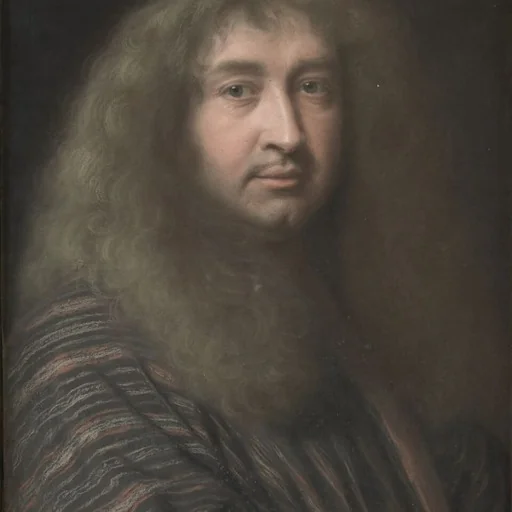
Robert Nanteuil (French pronunciation: ; 1623 – 9 December 1678) was a French portrait artist: engraver, draughtsman and pastellist to the court of Louis XIV.