Artwork
Rene, Marquis de Maisons
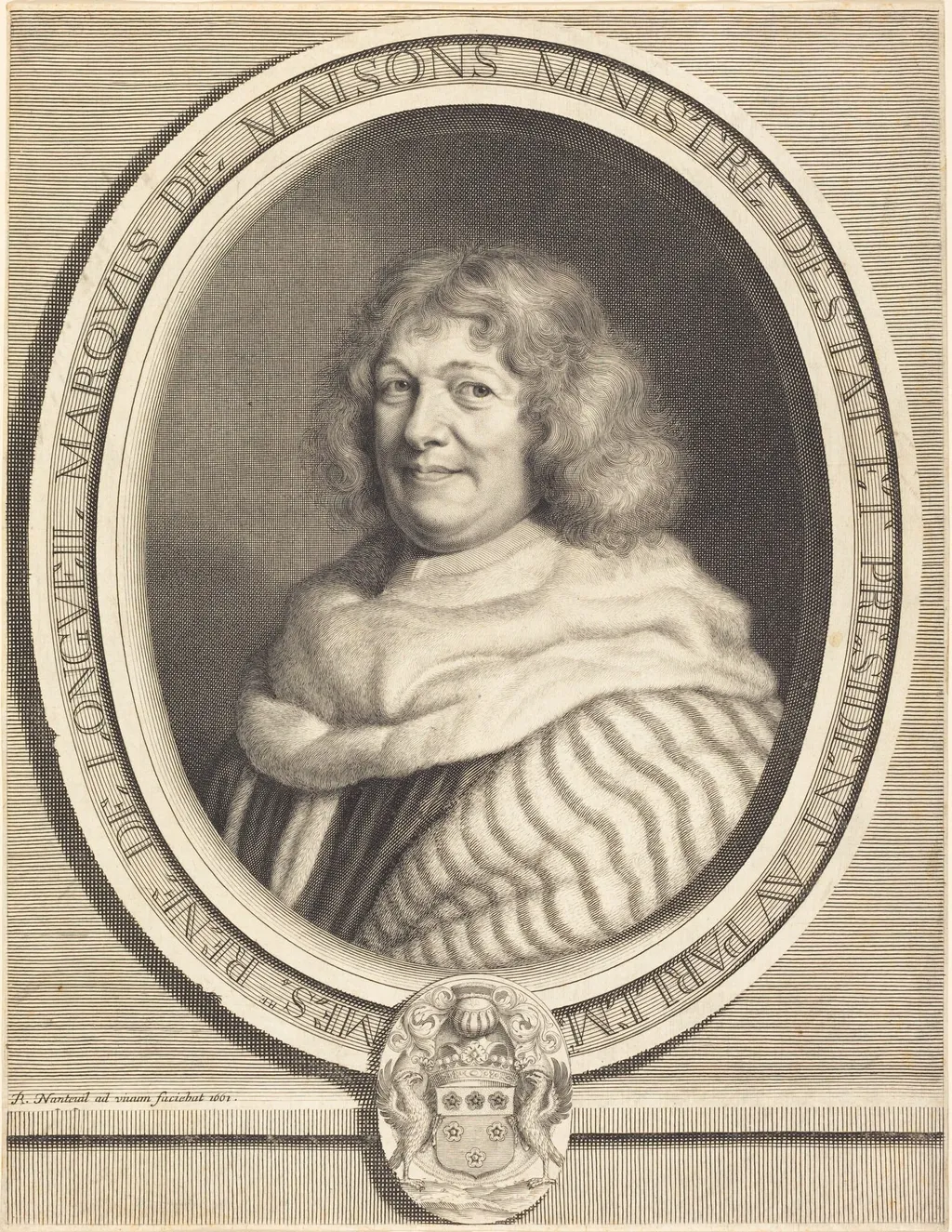
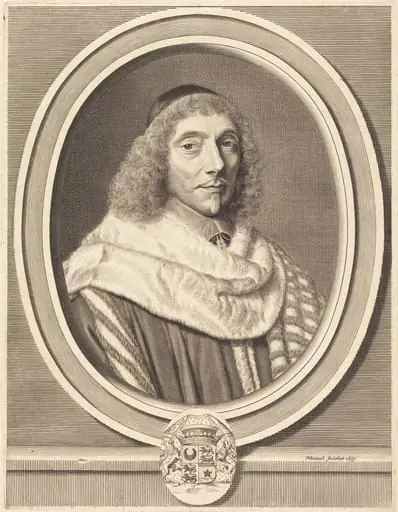
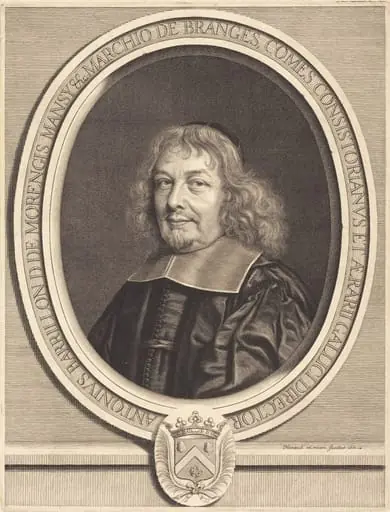
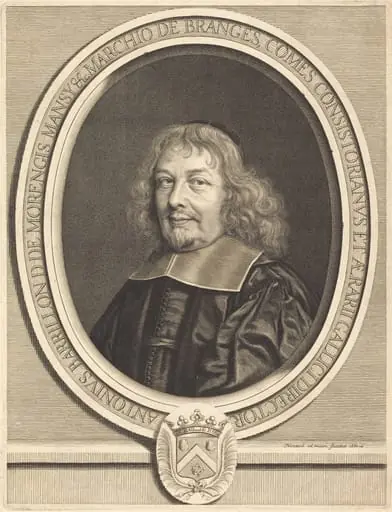
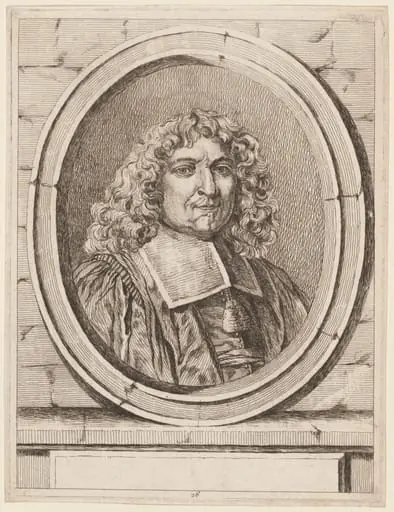
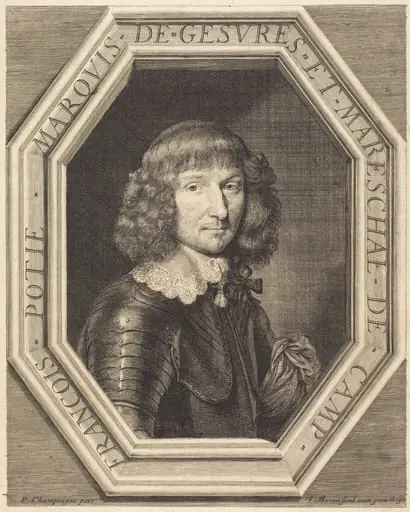
Rene, Marquis de Maisons is an ink print by the Baroque artist Robert Nanteuil. It dates from 1661 and is held in the collection of the National Gallery of Art.
About this work
Overview
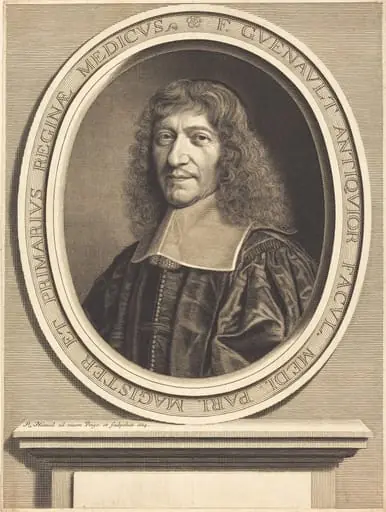
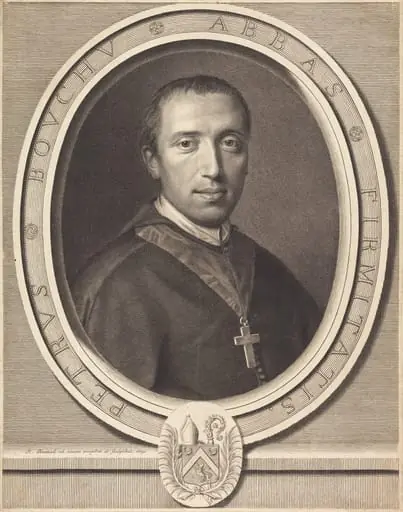
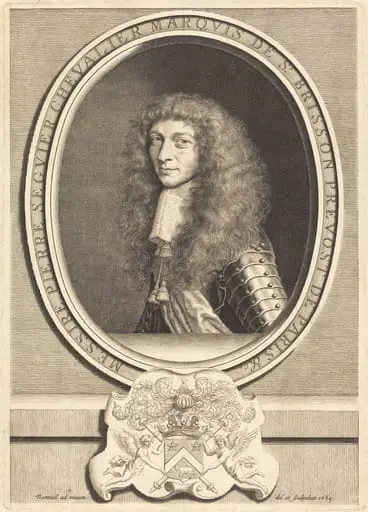
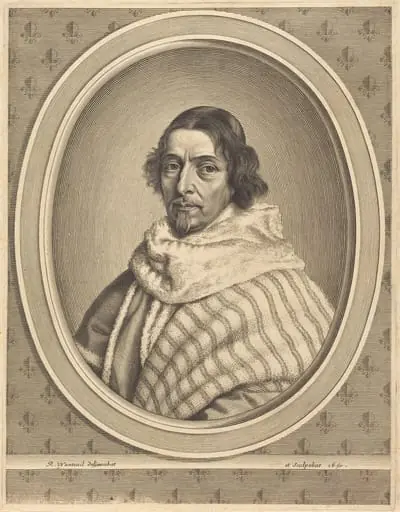
Robert Nanteuil created this 1661 engraving of René, Marquis de Maisons during his tenure as a court artist under Louis XIV. The work belongs to a series of formal portraits intended to document the French nobility through precise graphic reproduction. Executed in monochrome, it relies on fine linear control to convey texture, volume, and status without the use of color.
Subject & Meaning
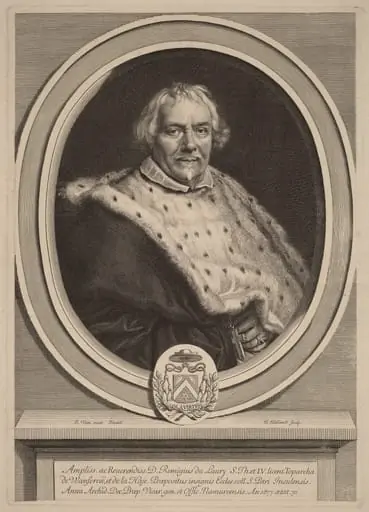
The fur collar and small heraldic crest at the base signal his social rank, while the plain background directs attention to his presence.
The Marquis de Maisons, a member of the French aristocracy, is portrayed with quiet composure, his slight smile and rounded features suggesting personal character rather than rigid formality. The fur collar and small heraldic crest at the base signal his social rank, while the plain background directs attention to his presence. The image functions as both a personal likeness and a marker of elite identity within the courtly hierarchy.
Technique & Style
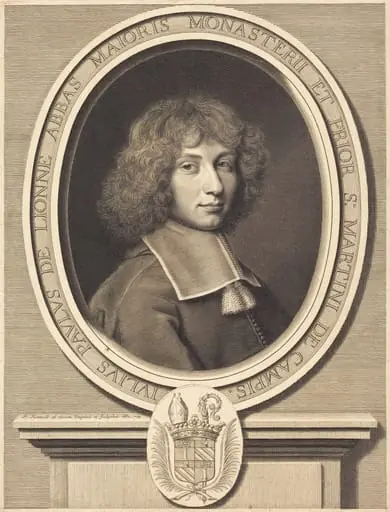
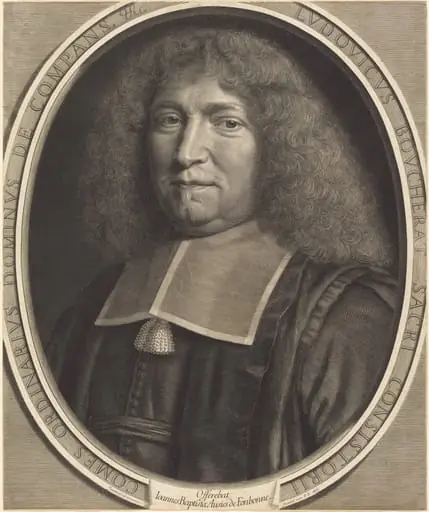
Nanteuil employed fine, controlled engraving lines to model the face and fur, achieving subtle gradations of tone without shading or tone blocks. The intricate border patterns around the image frame the portrait with decorative precision, typical of French printmaking of the period. His technique prioritizes clarity and refinement, avoiding dramatic contrasts in favor of balanced, restrained realism.
History & Provenance
Commissioned as part of a broader effort to visually codify the nobility at Louis XIV’s court, the print likely circulated among courtiers or was archived in royal collections. Nanteuil’s position as official engraver ensured his works were treated as authoritative records. The survival of this impression suggests it was valued for its accuracy and craftsmanship, not merely as art but as documentation.
Context
In mid-17th-century France, engraved portraits served as tools of political and social representation, especially where painting was inaccessible or impractical. Nanteuil’s style aligned with the court’s preference for dignified, unembellished likenesses. This print reflects a shift from Baroque flamboyance toward a more restrained, intellectual ideal of nobility, suited to the emerging absolutist state.
Legacy
Nanteuil’s engravings set a standard for French portraiture in print, influencing generations of graphic artists. His ability to capture individuality within formal constraints made his works enduring references for aristocratic identity. Though less known today than his painted contemporaries, his prints remain key artifacts in understanding how status was visually constructed in early modern France.
Artist & collection
Artist
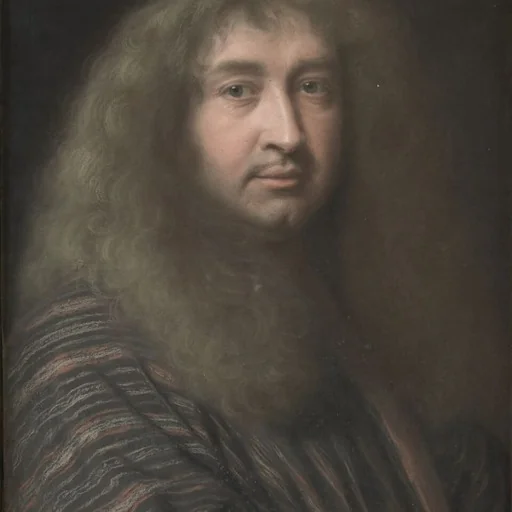
Robert Nanteuil (French pronunciation: ; 1623 – 9 December 1678) was a French portrait artist: engraver, draughtsman and pastellist to the court of Louis XIV.