Artwork
Crucifixion
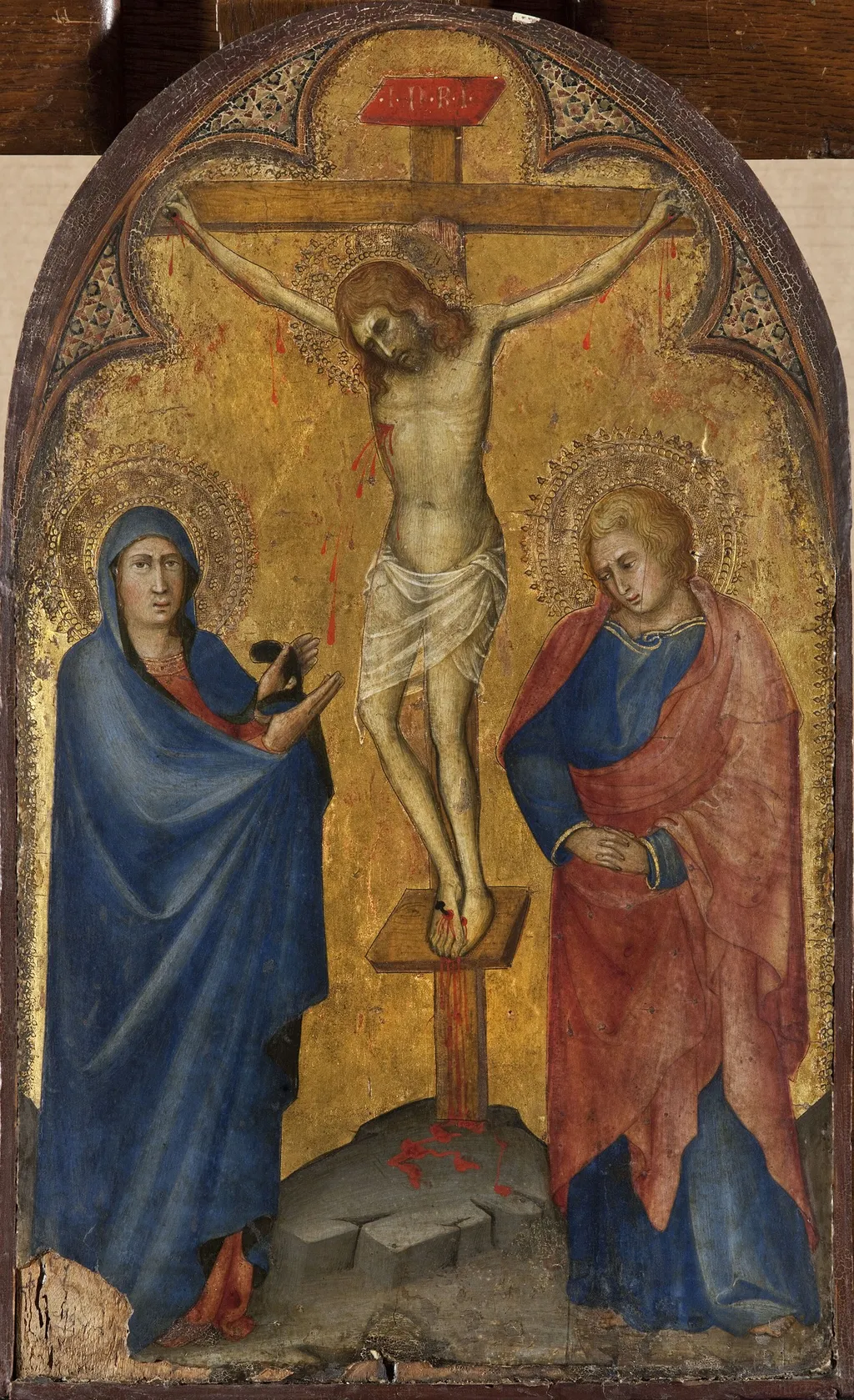
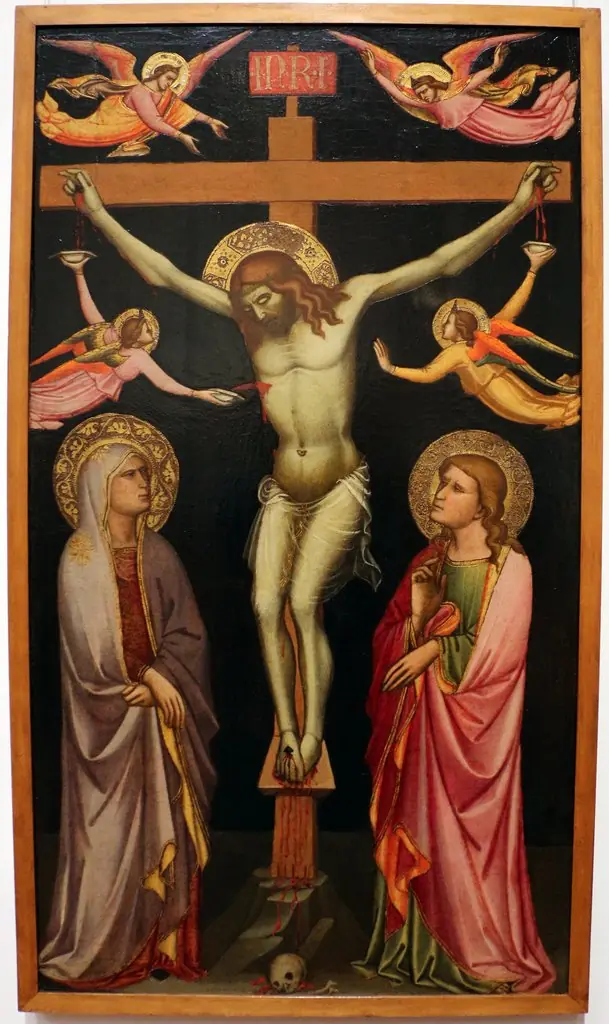
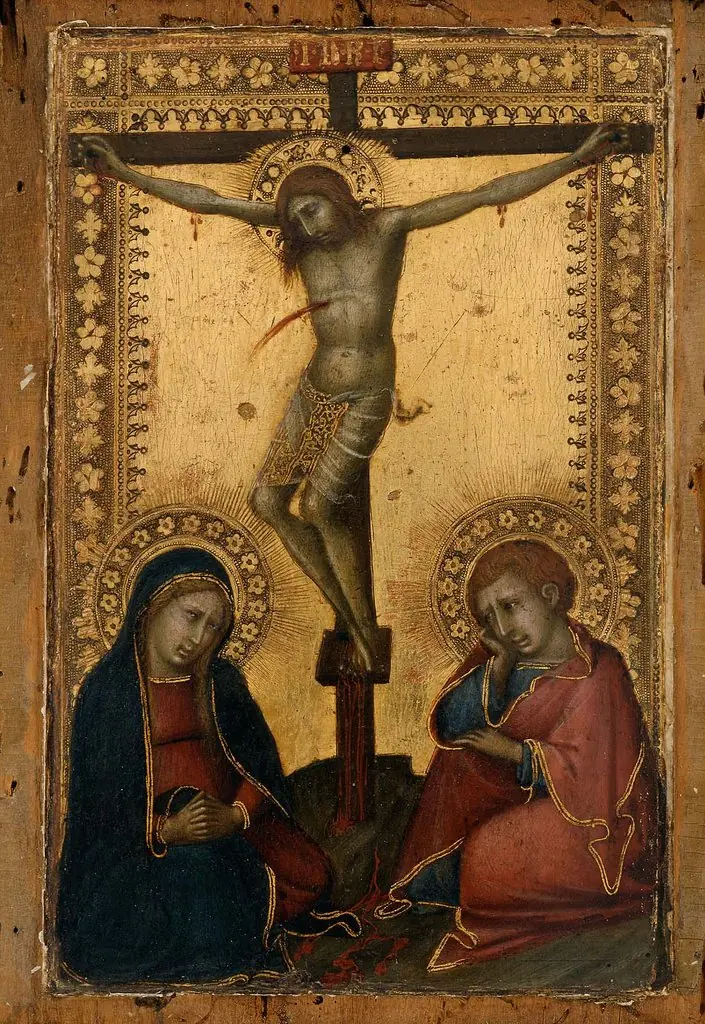
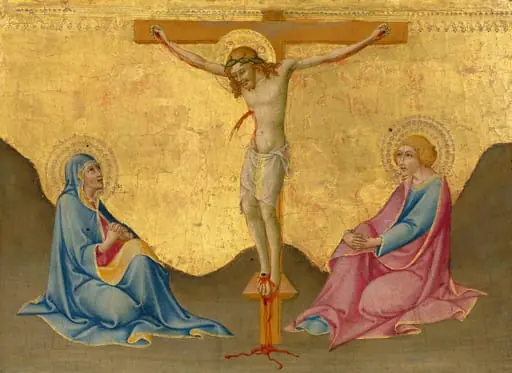
Crucifixion is a tempera painting by the Early Renaissance artist Andrea del Castagno. It dates from 1460 and is held in the collection of the National Museum in Warsaw.
About this work
Overview
This tempera painting, titled Crucifixion, is the work of Andrea del Castagno, created around 1460. It is a representation of the crucifixion of Jesus Christ and is currently housed at the National Museum in Warsaw.
Subject & Meaning
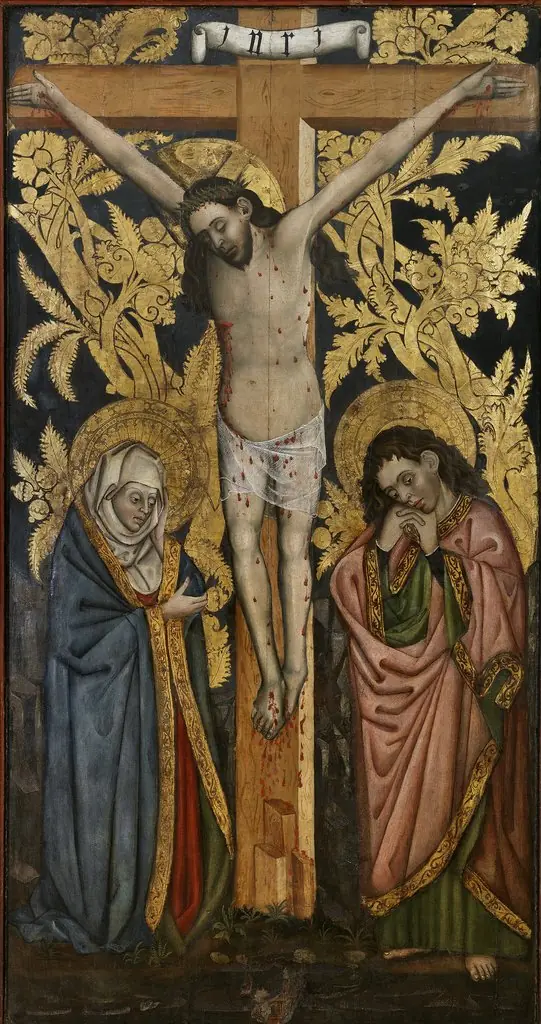
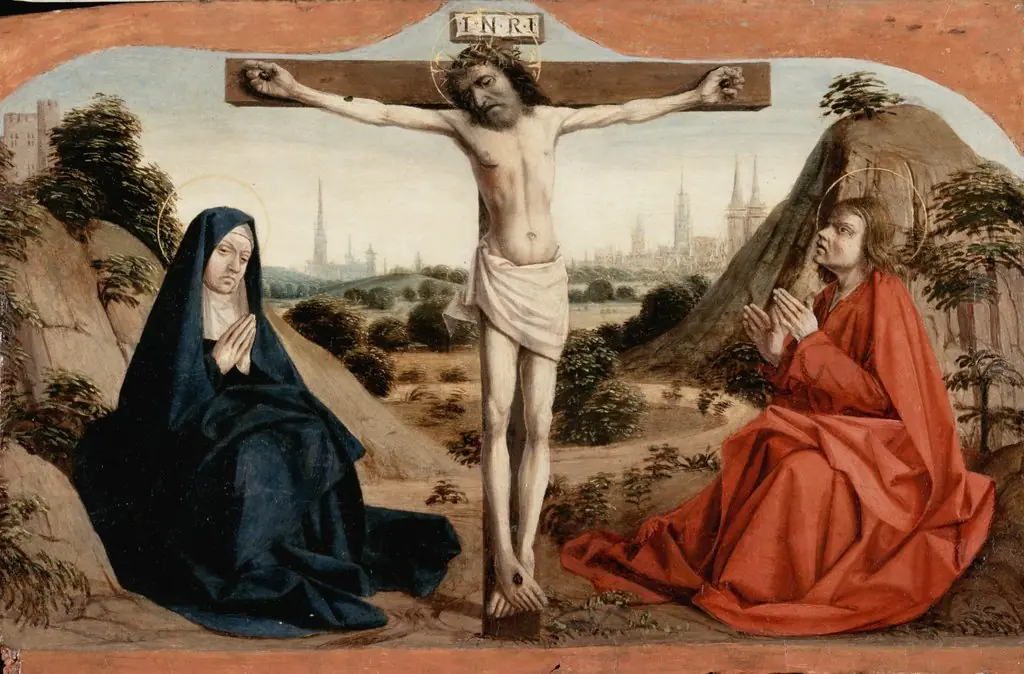
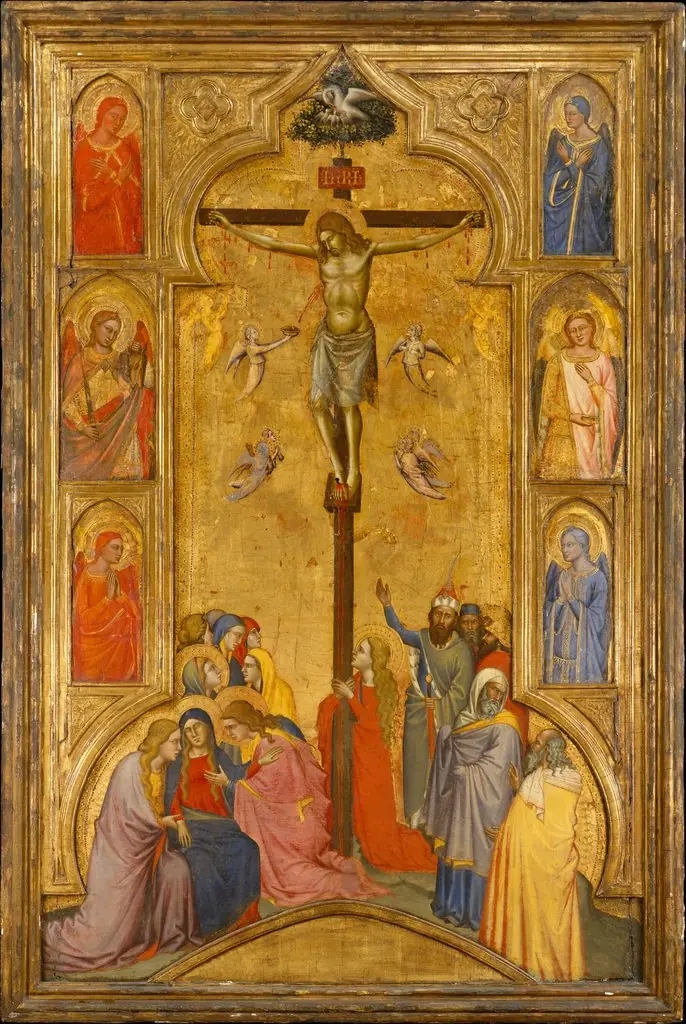
The scene depicts Christ on the cross, flanked by two figures: a woman in blue to his left, likely the Virgin Mary, and another figure in red and blue robes to his right, possibly John the Apostle. Christ's body is shown with red wounds against a pale complexion.
Technique & Style
The painting is executed in tempera, a medium made by mixing pigment with a binding agent, typically egg. The gold background and the use of tempera are characteristic of the artistic techniques prevalent during the period. The scene is framed by a dark, patterned border.
History & Provenance
Created around 1460 by Andrea del Castagno, the painting has been preserved and is now part of the collection at the National Museum in Warsaw.
Artist & collection

Artist
Andrea del Castagno had a quick, sharp career in 15th-century Florence. He wasn’t the most famous painter of his time, but he stood out for his bold, almost sculptural figures that looked ready to step off the wall. His…