Artwork
Little Mereton Hall, Cheshire
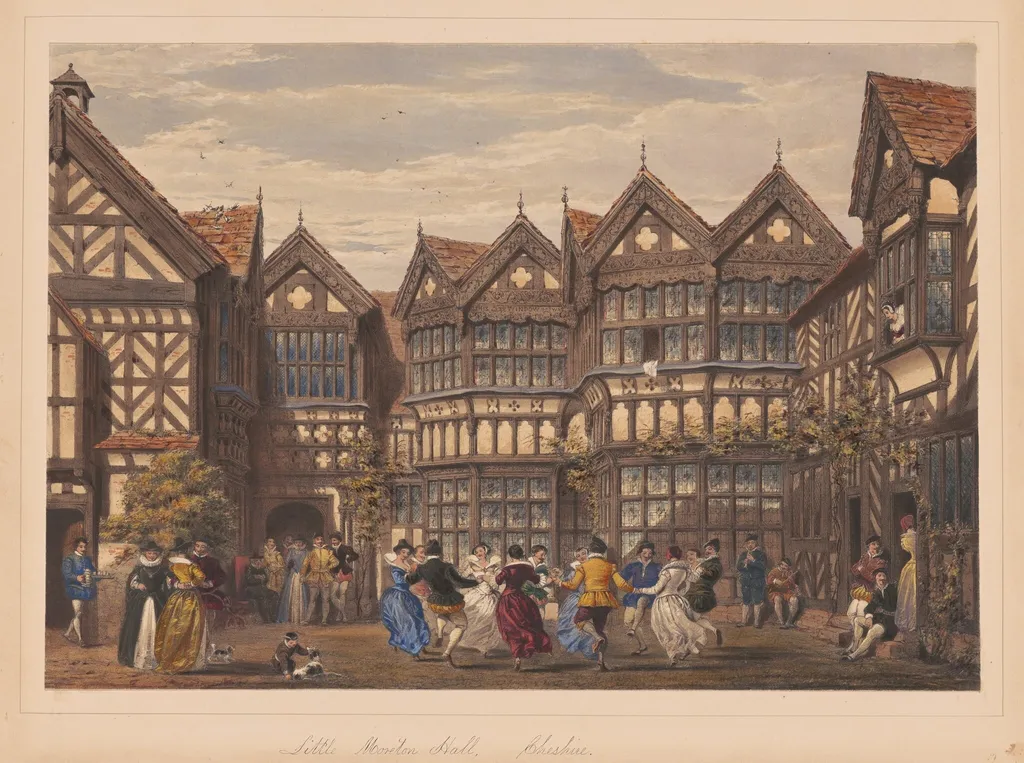
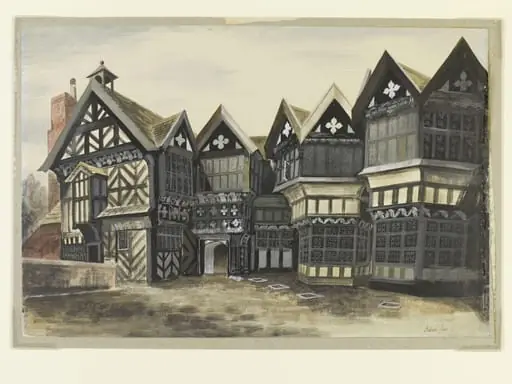
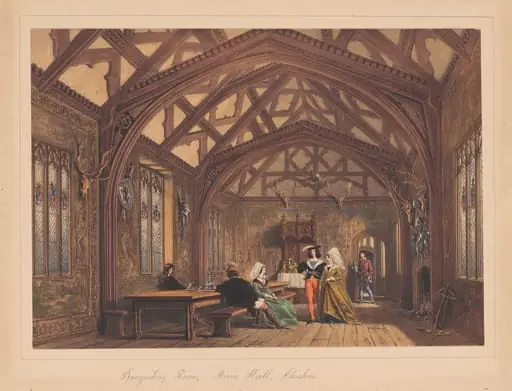
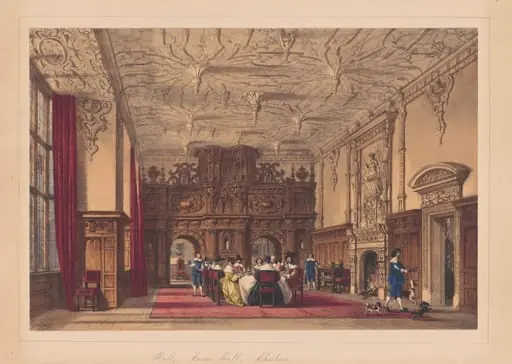
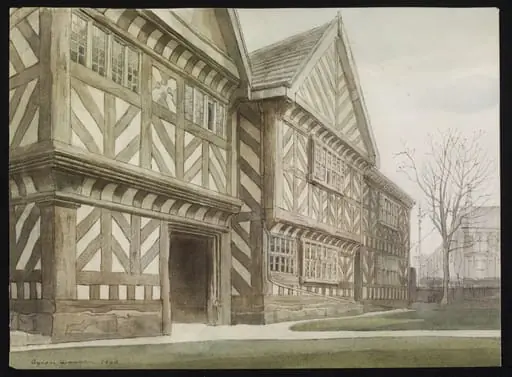
Little Mereton Hall, Cheshire is an ink print by the Romanticist artist Joseph Nash. It dates from 1849 and is held in the collection of the National Gallery of Art.
About this work
Overview
It was produced as part of Nash’s four-volume series documenting historic English country houses, published between 1839 and 1849.
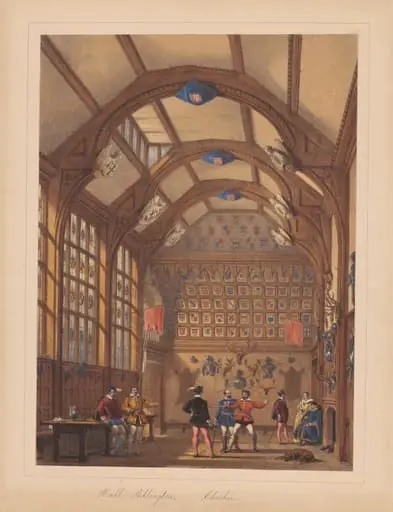
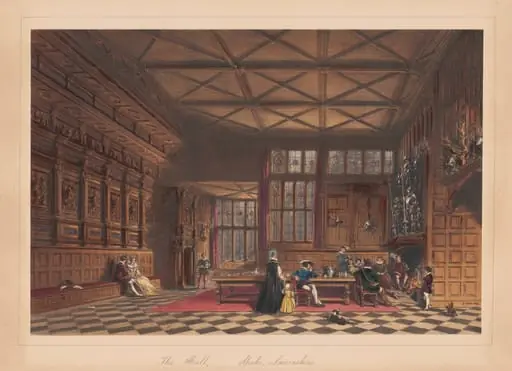
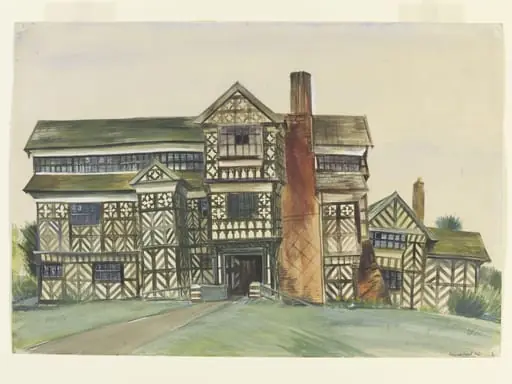
Created in 1849 by Joseph Nash, this hand-colored lithograph depicts Little Moreton Hall, a Tudor manor in Cheshire. It was produced as part of Nash’s four-volume series documenting historic English country houses, published between 1839 and 1849. The work is mounted on board and rendered on wove paper, combining precise draftsmanship with delicate color washes to enhance architectural detail and atmospheric tone.
Subject & Meaning
The scene captures the courtyard of Little Moreton Hall during a moment of domestic festivity, with figures engaged in dance and conversation. The inclusion of daily life—dancers, onlookers, a resting dog—transforms the building from a static monument into a lived-in space. This suggests an interest not only in architecture but in the social rituals that animated such homes during the Tudor period.
Technique & Style
Nash employed lithography to achieve fine linear detail in the timber framing and window tracery, then applied watercolor by hand to unify the composition. The soft, cloudy sky and muted tones lend a quiet, nostalgic mood. The contrast between dark wood and pale plaster is heightened through careful coloring, reinforcing the hall’s distinctive half-timbered structure while preserving a sense of natural light and texture.
History & Provenance
The print originated as Plate 12 in Nash’s series *Mansions of England in the Olden Time*, commissioned to preserve the appearance of historic buildings amid rapid industrial change. It was widely distributed to subscribers and institutions, contributing to a growing public interest in architectural heritage. The work’s survival in good condition reflects its early institutional and private collection.
Context
In the mid-19th century, antiquarianism flourished in Britain, with increasing efforts to record and protect medieval and Tudor structures. Nash’s project aligned with this movement, offering accessible visual records to a middle-class audience. His focus on domestic architecture, rather than cathedrals or castles, reflected a broader cultural shift toward valuing vernacular history and everyday life in the past.
Legacy
Nash’s lithographs became reference points for later historians and preservationists. His depiction of Little Moreton Hall helped cement its reputation as a quintessential example of Tudor domestic design. Though romanticized, the image contributed to public awareness of architectural heritage, influencing conservation attitudes and the perception of historic houses as cultural artifacts rather than mere relics.
Artist & collection
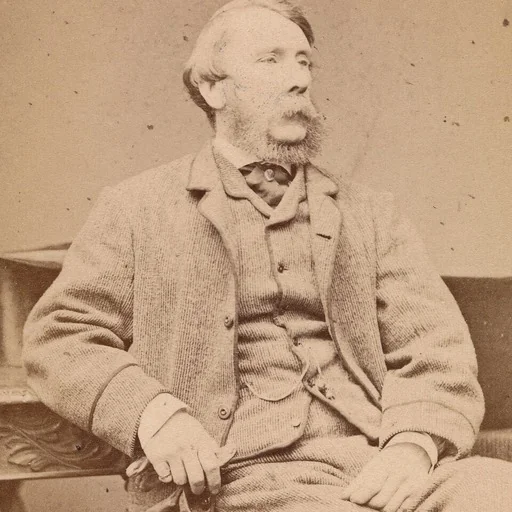
Artist
Joseph Nash (17 December 1809 – 19 December 1878) was an English watercolour painter and lithographer, specialising in historical buildings. His major work was the 4-volume Mansions of England in the Olden Time, published from 1839–49.

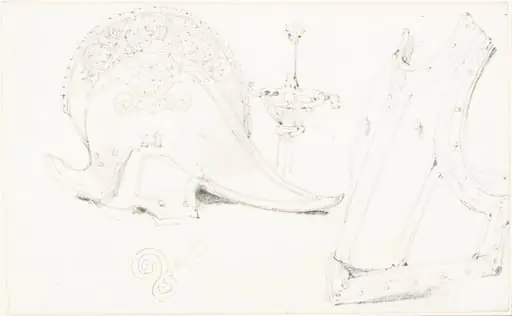 Study of a Helmet, Breastplate, and Rapier
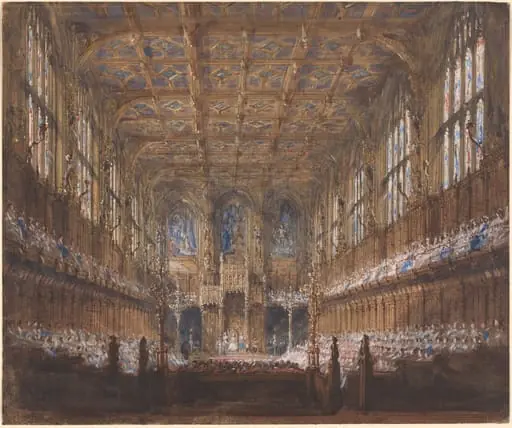 The State Opening of Parliament in the Rebuilt House of Lords
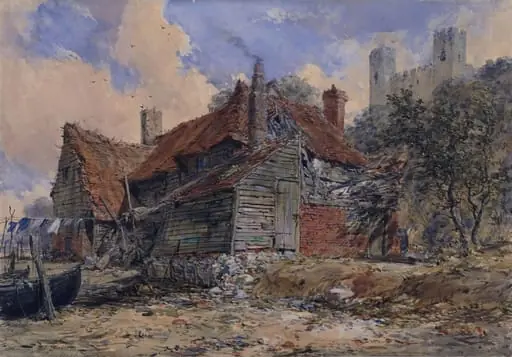 Rochester
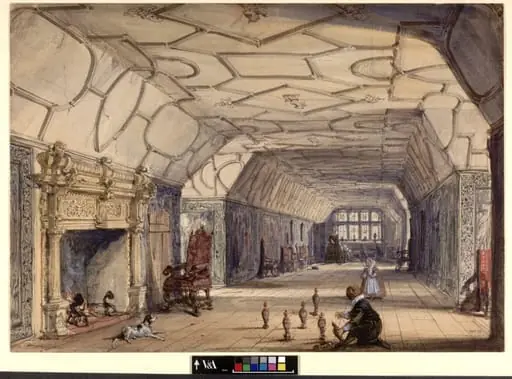 The gallery at Knole House, near Sevenoaks
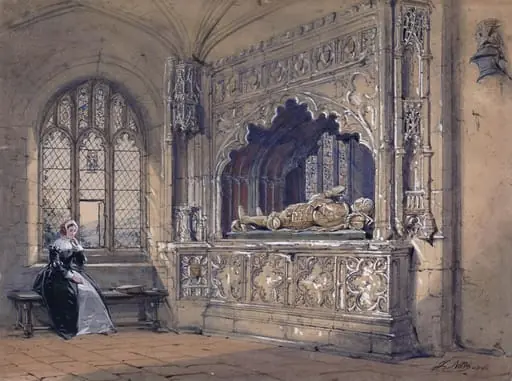 The supposed tomb of Thomas Fiennes, in Herstmonceux Church, Sussex, looking south-east from the North Chapel
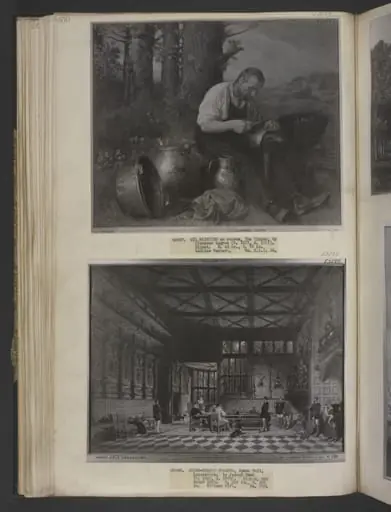 Speke Hall, Lancashire
 The Cartoon Gallery at Knole
 The Porch at Montacute House, Somerset