Artwork
Bookplate: Coat of Arms with John Lowell inscribed
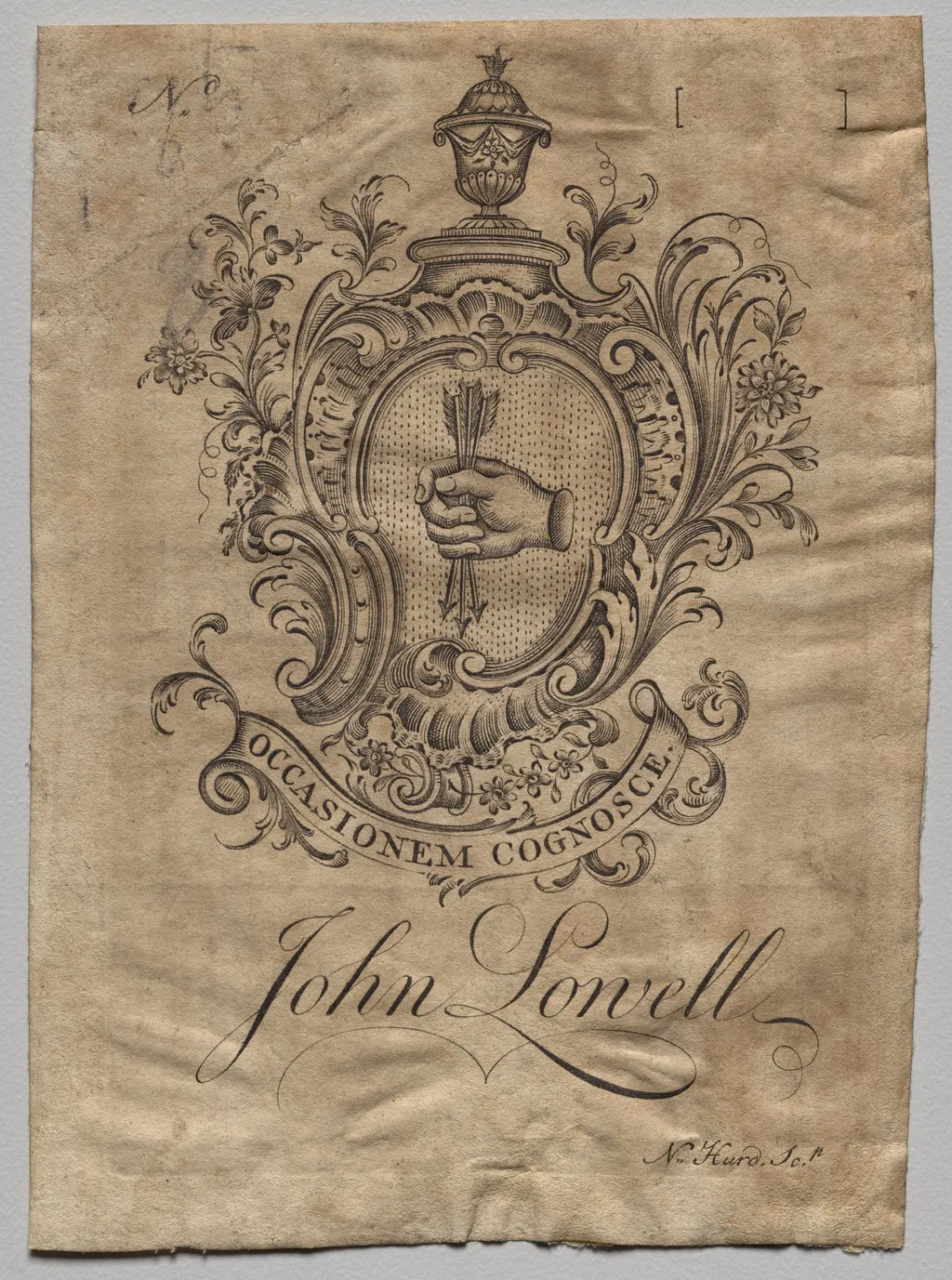
Bookplate: Coat of Arms with John Lowell inscribed is a print by Nathaniel Hurd. It dates from 1764 and is held in the collection of the Cleveland Museum of Art.
About this work
Overview
Created around 1764 by Nathaniel Hurd, this engraved bookplate was designed as a personal identifier for John Lowell, a prominent Boston merchant.
Created around 1764 by Nathaniel Hurd, this engraved bookplate was designed as a personal identifier for John Lowell, a prominent Boston merchant. Executed in the colonial American tradition, it combines heraldic symbolism with ornamental engraving to signify lineage and status. The plate was likely affixed to the inside cover of books in Lowell’s personal library, marking ownership with visual authority.
Subject & Meaning
The central motif is a heraldic shield bearing a hand clutching a drawn sword, symbolizing readiness and vigilance. Above it rests a crown, suggesting nobility or elevated social standing. The Latin motto 'Occasionem Cognosce'—'Know the Occasion'—advises discernment in action. Surrounding foliage and scrollwork frame the emblem, reinforcing themes of growth and enduring legacy, common in aristocratic and mercantile self-representation of the era.
Technique & Style
Hurd employed fine-line engraving to achieve intricate detail, characteristic of 18th-century American printmaking. The composition is symmetrical and densely ornamented, with delicate linework defining leaves, scrolls, and the armorial elements. The script lettering of 'John Lowell' is rendered in an elegant, flowing hand, typical of period bookplate design. The contrast between bold heraldic forms and delicate decorative elements reflects a balance of authority and refinement.
History & Provenance
The bookplate was commissioned by John Lowell, a leading figure in Boston’s commercial and civic life during the mid-1700s. It remained in private hands until entering the collection of The Cleveland Museum of Art, where it is preserved as an example of colonial American print culture. Its survival offers insight into how elite families used visual symbols to assert identity in a society without formal nobility.
Context
In colonial America, bookplates served as substitutes for heraldic seals, allowing wealthy families to display social distinction through printed emblems. Hurd, a Boston silversmith and engraver, was among the most skilled practitioners of this niche. His work reflects transatlantic influences, adapting European heraldic conventions to local tastes, where merit and commerce increasingly shaped status over inherited title.
Legacy
Hurd’s bookplate exemplifies the fusion of personal identity and visual symbolism in early American material culture. It remains a key artifact for understanding how colonial elites constructed their public image through printed objects. Today, it contributes to scholarly study of printmaking, heraldry, and the social rituals of book ownership in pre-revolutionary New England.
Artist & collection

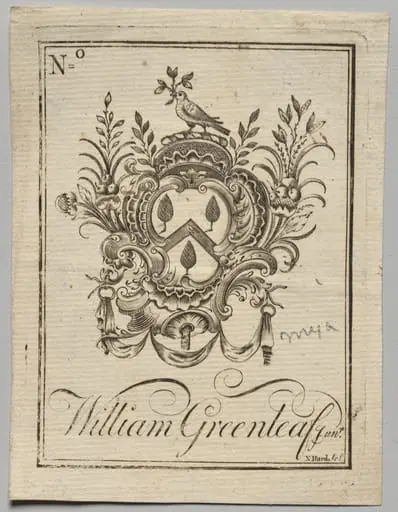 Bookplate: Coat of Arms with William Greenleaf Jun.r inscribed
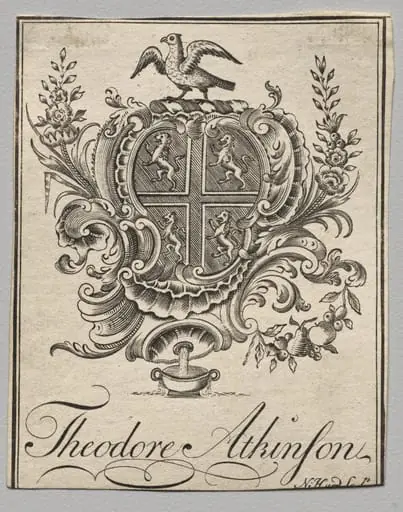 Bookplate: Coat of Arms with Theodore Atkinson inscribed
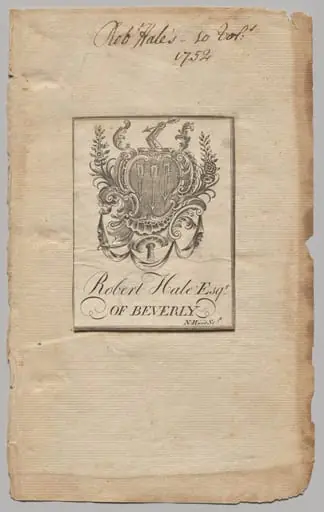 Bookplate: Coat of Arms with Robert Hale, Esq. inscribed
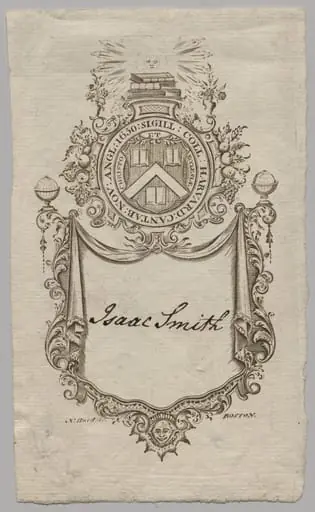 Bookplate: Coat of Arms with Isaac Smith inscribed
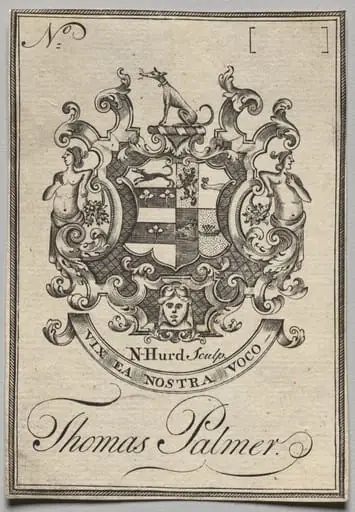 Bookplate: Coat of Arms with Thomas Palmer inscribed
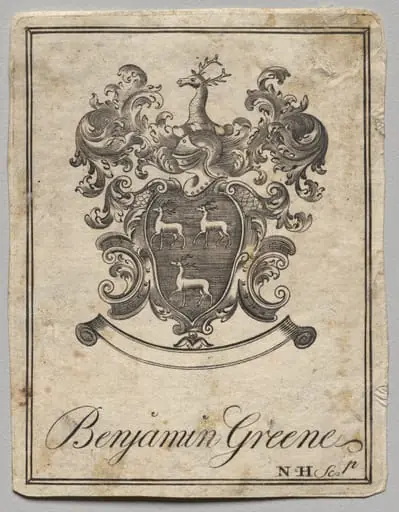 Bookplate: Coat of Arms with Benjamin Greene inscribed
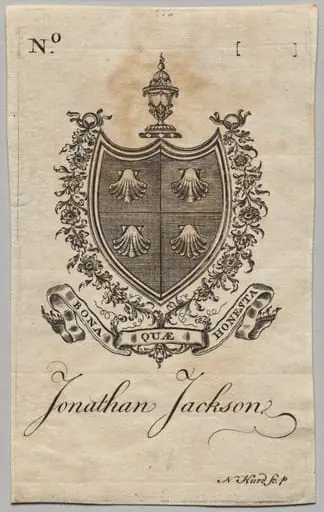 Bookplate: Coat of Arms with Jonathan Jackson inscribed
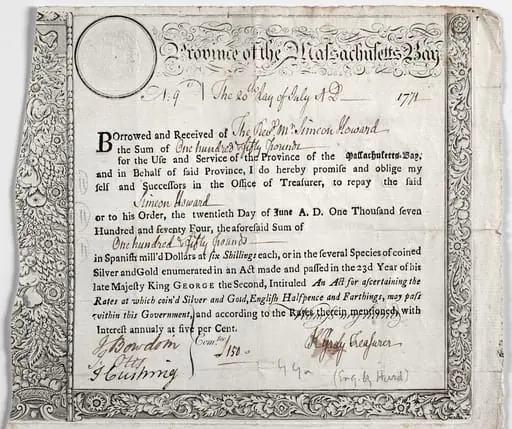 Loan Certificate
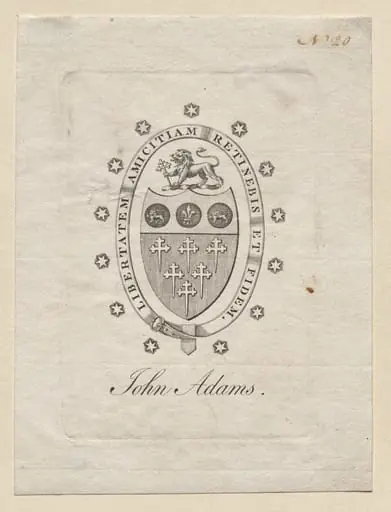 Bookplate: Coat of Arms with John Adams inscribed below
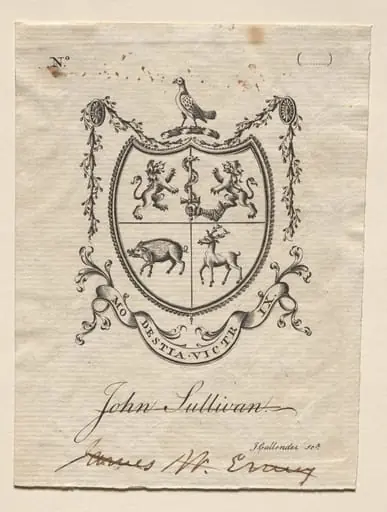 Bookplate: Coat of Arms with John Sullivan inscribed below
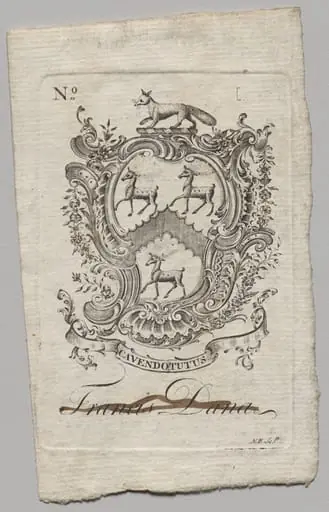 Bookplate: Coat of Arms with Francis Dana inscribed
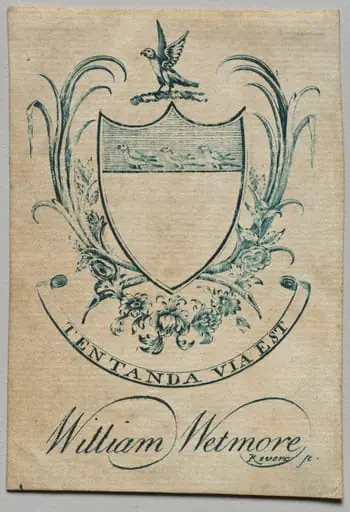 Bookplate: Coat of Arms with William Wetmore inscribed below
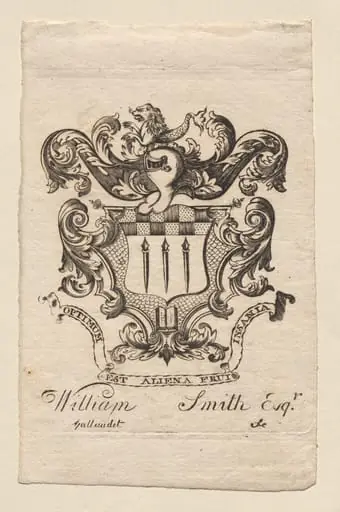 Bookplate: Coat of Arms with William Smith, Esq. inscribed below
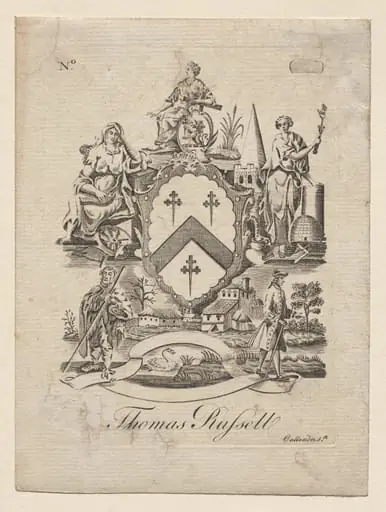 Bookplate: Coat of Arms with Thomas Russell inscribed below
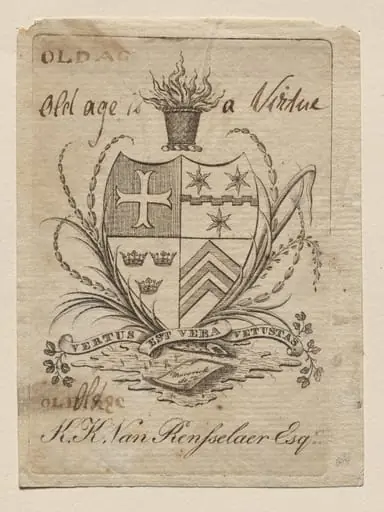 Bookplate: Coat of Arms with K. K. Van Rensselaer, Esq. inscribed below
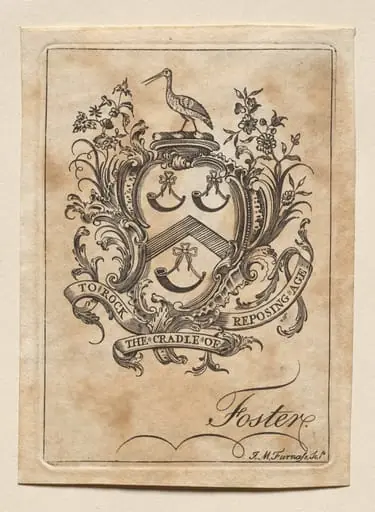 Bookplate: Coat of Arms with Foster inscribed below