Artwork
Bookplate: Coat of Arms with Jonathan Jackson inscribed
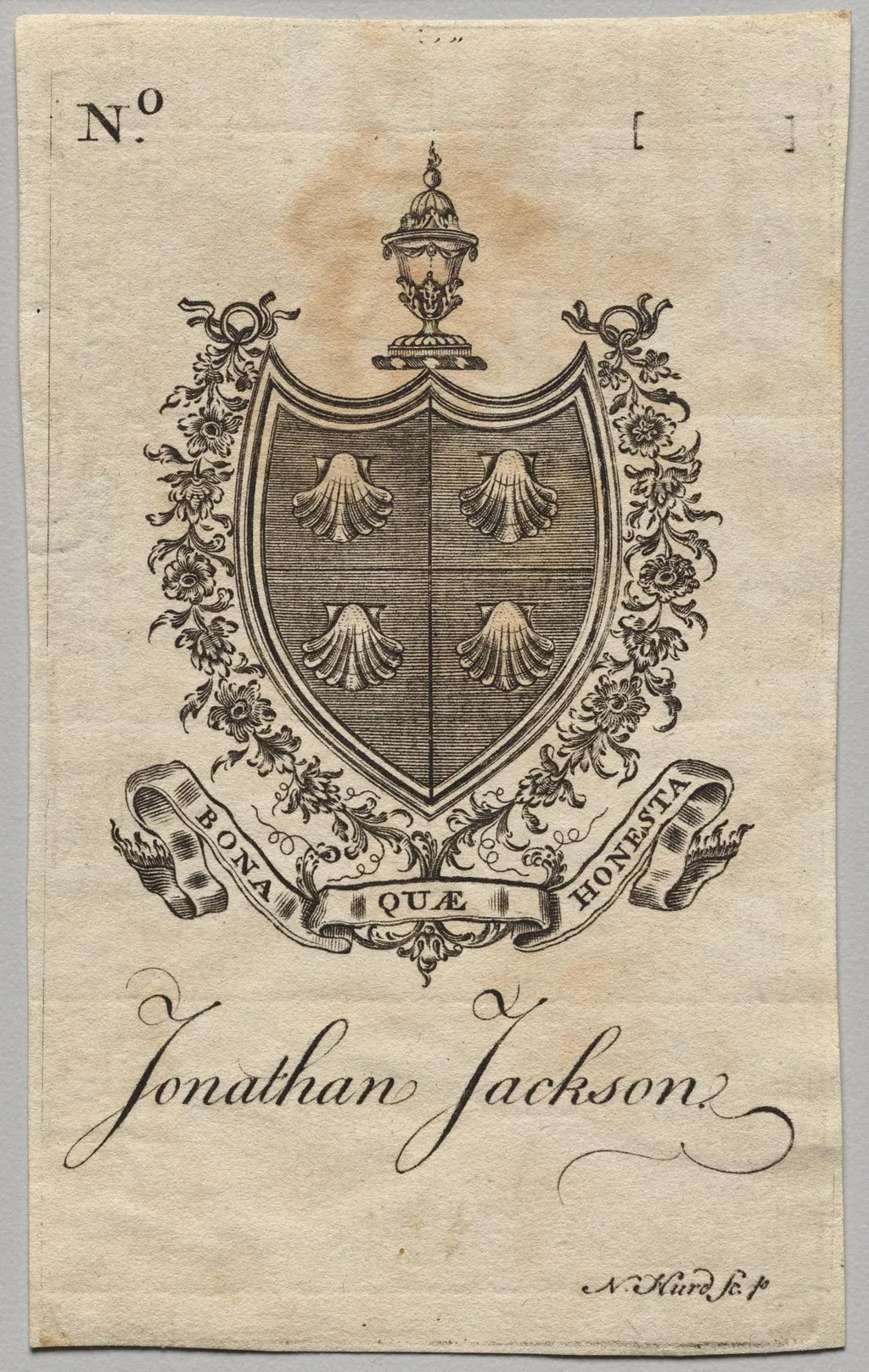
Bookplate: Coat of Arms with Jonathan Jackson inscribed is a print by Nathaniel Hurd. It dates from 1764 and is held in the collection of the Cleveland Museum of Art.
About this work
Overview
This early American bookplate, executed around 1764 by engraver Nathaniel Hurd, presents a heraldic design intended to identify the owner of a volume. The plate is a black‑and‑white intaglio impression on light paper, currently conserved in the collection of the Cleveland Museum of Art.
Subject & Meaning
The central element is a shield bearing three scallop shells, a traditional emblem often associated with pilgrimage or maritime trade.
The central element is a shield bearing three scallop shells, a traditional emblem often associated with pilgrimage or maritime trade. Above the shield a lamp‑shaped ornament crowns the composition, while surrounding swirls and floral motifs frame the device. A banner beneath the shield carries the Latin phrase *Fona Quæ Honest*, and the name Jonathan Jackson appears in a flowing cursive script, indicating the plate’s function as a personal ownership mark.
Technique & Style
Hurd employed copper engraving, a common printmaking method in colonial New England, to achieve fine line work and crisp contrast. The composition balances symmetrical heraldic imagery with decorative Baroque‑inspired scrollwork, reflecting the aesthetic preferences of mid‑18th‑century American gentry for elaborate yet restrained book ownership labels.
History & Provenance
Created circa 1764, the plate was likely affixed to books owned by Jonathan Jackson, a figure whose identity remains tied to the inscription. The work entered the Cleveland Museum of Art’s collection through acquisition (details of purchase are not publicly recorded), where it serves as an example of early American private press culture.
Context
During the colonial period, bookplates functioned as discreet yet authoritative statements of ownership, especially among merchants and professionals. Nathaniel Hurd, one of Boston’s foremost engravers, supplied many such plates, integrating European heraldic conventions with locally relevant symbols, thereby illustrating the transatlantic exchange of artistic ideas.
Artist & collection

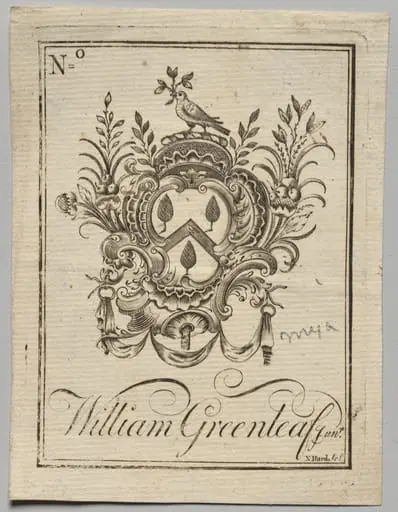 Bookplate: Coat of Arms with William Greenleaf Jun.r inscribed
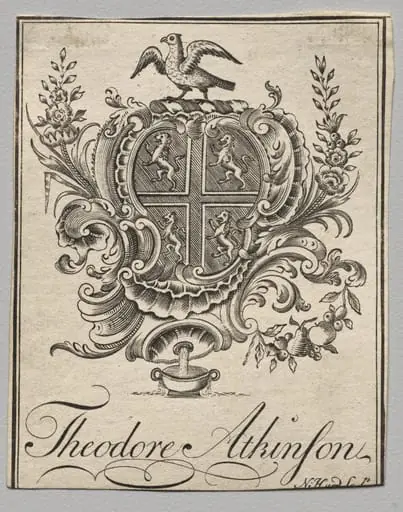 Bookplate: Coat of Arms with Theodore Atkinson inscribed
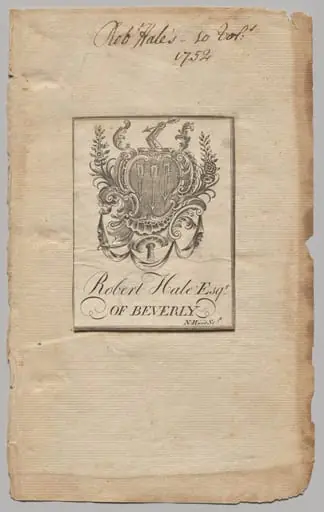 Bookplate: Coat of Arms with Robert Hale, Esq. inscribed
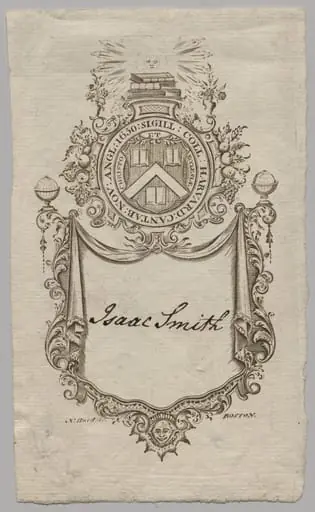 Bookplate: Coat of Arms with Isaac Smith inscribed
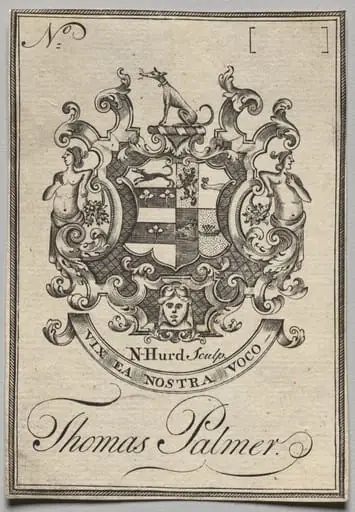 Bookplate: Coat of Arms with Thomas Palmer inscribed
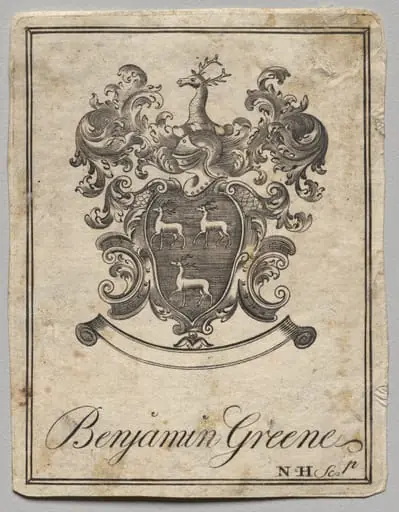 Bookplate: Coat of Arms with Benjamin Greene inscribed
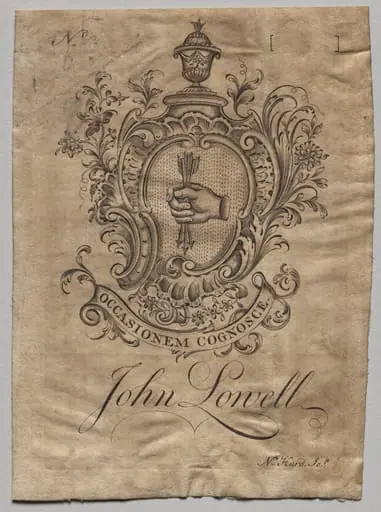 Bookplate: Coat of Arms with John Lowell inscribed
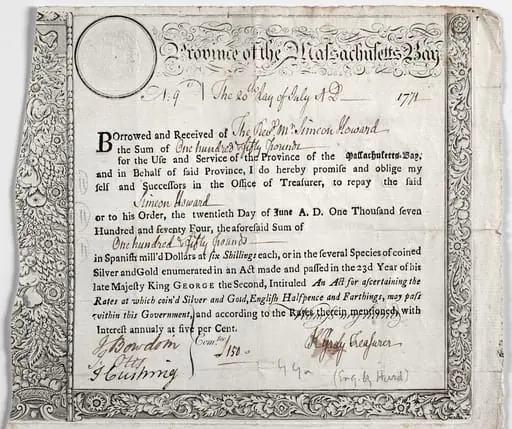 Loan Certificate
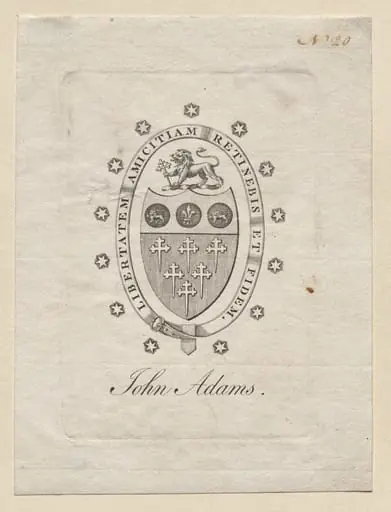 Bookplate: Coat of Arms with John Adams inscribed below
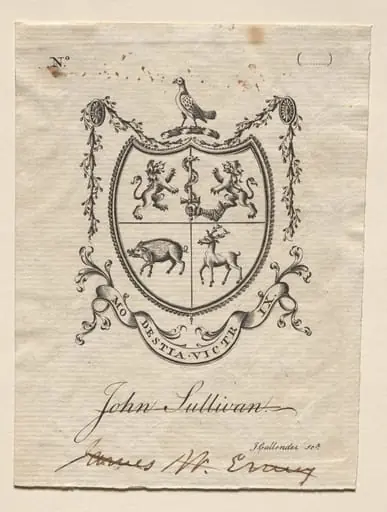 Bookplate: Coat of Arms with John Sullivan inscribed below
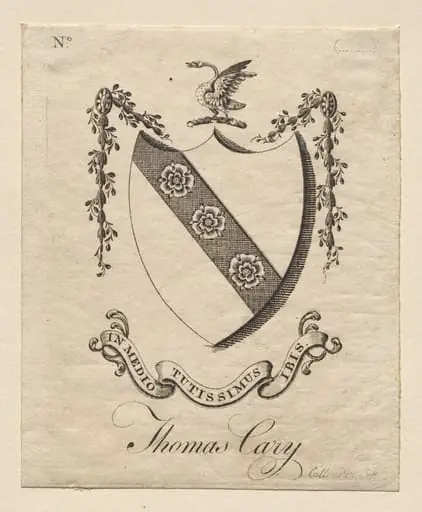 Bookplate: Coat of Arms with Thomas Cary inscribed below
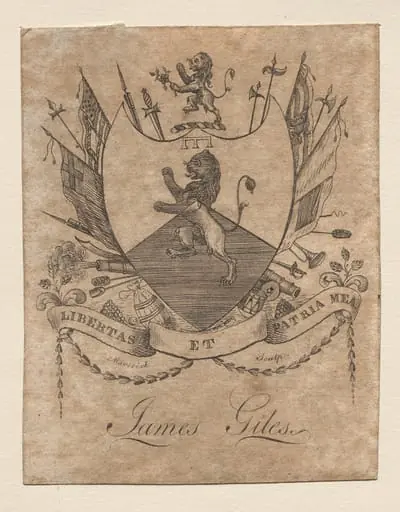 Bookplate: Coat of Arms with James Giles inscribed below
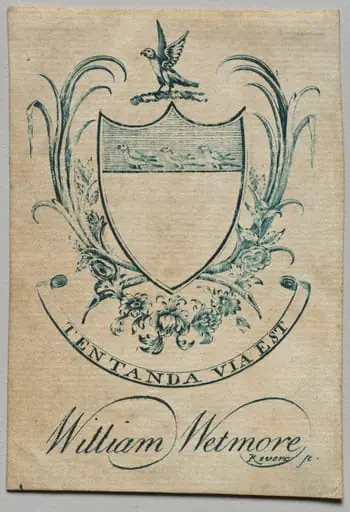 Bookplate: Coat of Arms with William Wetmore inscribed below
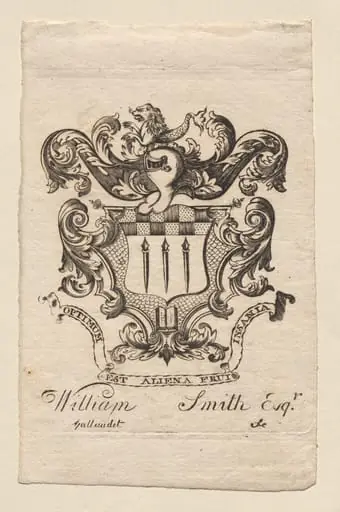 Bookplate: Coat of Arms with William Smith, Esq. inscribed below
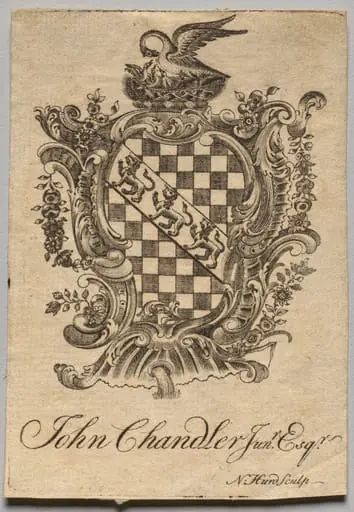 Bookplate: Coat of Arms with John Chandler Jun.r, Esq. inscribed
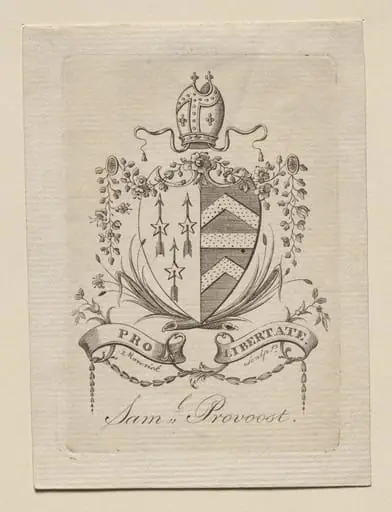 Bookplate: Coat of Arms with Sam'l Provoost inscribed below