Artwork
Bookplate: Coat of Arms with Robert Hale, Esq. inscribed
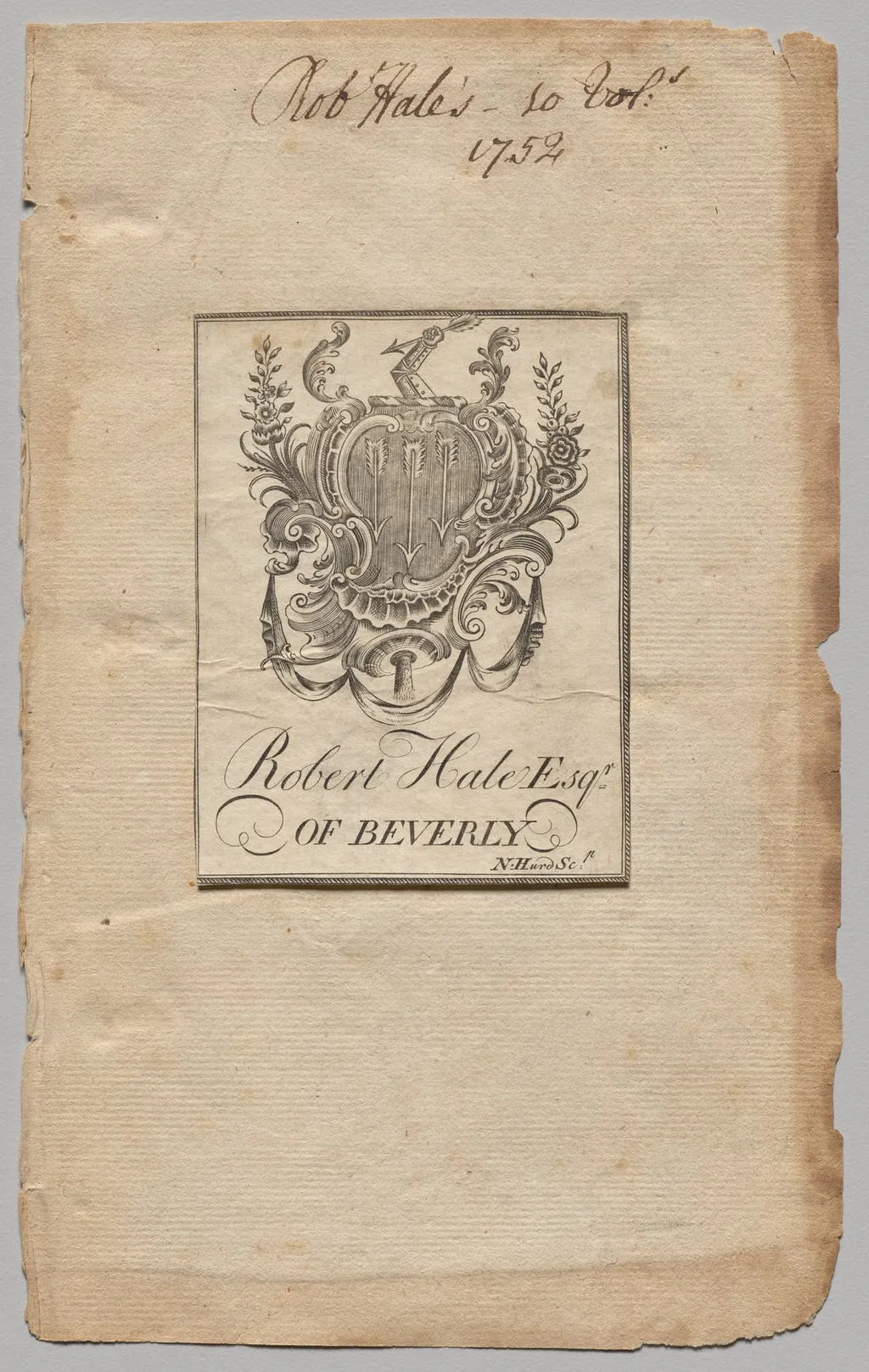
Bookplate: Coat of Arms with Robert Hale, Esq. inscribed is a print by Nathaniel Hurd. It dates from 1764 and is held in the collection of the Cleveland Museum of Art.
About this work
The paper looks old, with handwritten notes in the top corner that say "Robt Hale’s 50 £" and "1752.
This is a faded, yellowed paper with a small framed design in the center. Inside the frame, there’s an ornate coat of arms featuring swirls, a shield, and a crown. The words "Robert Hale Esq. of Beverly" are written in a fancy script below it.
The paper looks old, with handwritten notes in the top corner that say "Robt Hale’s 50 £" and "1752." The design is detailed but simple, like something you’d see on a family crest.
If you like this kind of old, personal symbol, check out The Cleveland Museum of Art.
Overview
This printed bookplate, dated around 1764, was created by Nathaniel Hurd, a Boston-based engraver known for his heraldic designs. Made on paper that has yellowed with age, it bears the name Robert Hale, Esq., and originates from Beverly, Massachusetts. The piece was likely used to mark personal ownership of books in a colonial-era library, reflecting the social customs of property identification among the provincial elite.
Subject & Meaning
The central motif is a traditional European-style coat of arms, rendered with stylized swirls, a shield, and a crown, symbolizing lineage and status. Below it, the inscription 'Robert Hale Esq. of Beverly' identifies the owner and affirms his position within colonial society. Handwritten annotations in the upper corner, including 'Robt Hale’s 50 £' and '1752,' suggest financial or estate records, linking the plate to personal wealth and inheritance.
Technique & Style
Hurd employed fine-line engraving on copper to produce the design, a common method for bookplates in mid-18th-century America. The composition is compact and symmetrical, with decorative elements confined within a bordered frame. The script is elegant but restrained, avoiding excessive ornamentation. The print’s faded ink and aged paper reflect its practical use and decades of handling, preserving its original intent as a functional emblem rather than a display object.
History & Provenance
The bookplate was likely commissioned by Robert Hale, a member of Beverly’s merchant or landowning class, to identify his personal library. Its survival into the 20th century, now held by The Cleveland Museum of Art, indicates preservation by collectors interested in early American material culture. The handwritten notations on the sheet may have been added by Hale or a later family member, offering rare insight into the personal economics of colonial households.
Context
In 18th-century New England, bookplates were common among literate, affluent families as a mark of ownership and social standing. Unlike European aristocratic heraldry, American versions often simplified traditional symbols to reflect local identity. Hurd’s work exemplifies this adaptation, blending European conventions with colonial pragmatism. The presence of such plates in private libraries underscores the growing importance of books as cultural capital in pre-Revolutionary America.
Legacy
This bookplate remains a tangible artifact of colonial American identity, illustrating how personal status was visually encoded in everyday objects. As one of many surviving works by Nathaniel Hurd, it contributes to the study of early American print culture and the material practices of book ownership. Its preservation in a major museum allows ongoing scholarly access to the quiet rituals of domestic life in 18th-century New England.
Artist & collection

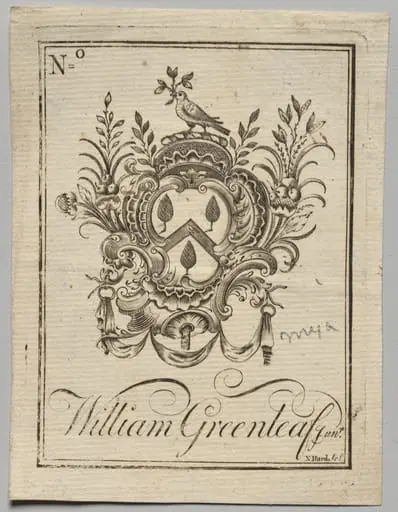 Bookplate: Coat of Arms with William Greenleaf Jun.r inscribed
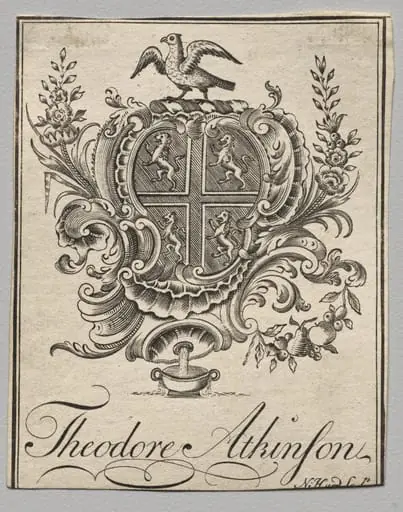 Bookplate: Coat of Arms with Theodore Atkinson inscribed
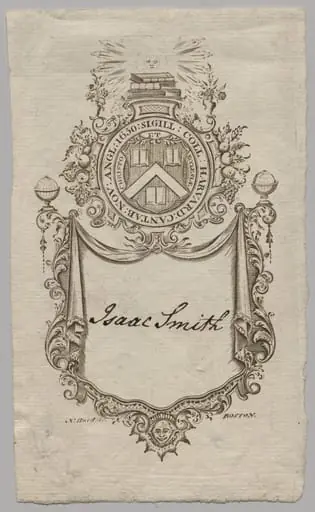 Bookplate: Coat of Arms with Isaac Smith inscribed
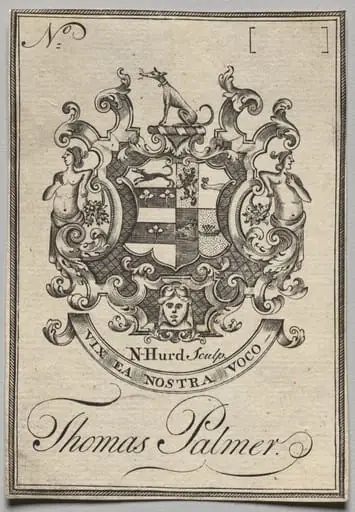 Bookplate: Coat of Arms with Thomas Palmer inscribed
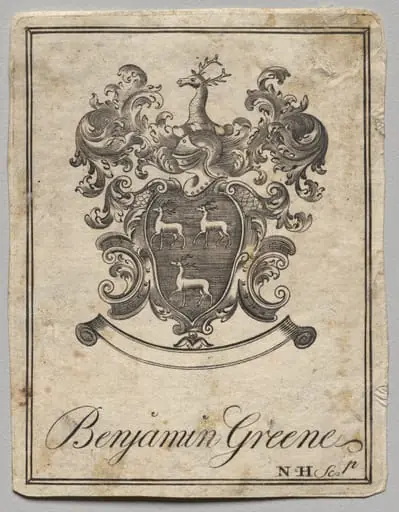 Bookplate: Coat of Arms with Benjamin Greene inscribed
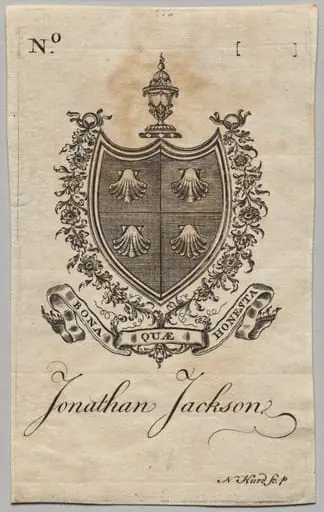 Bookplate: Coat of Arms with Jonathan Jackson inscribed
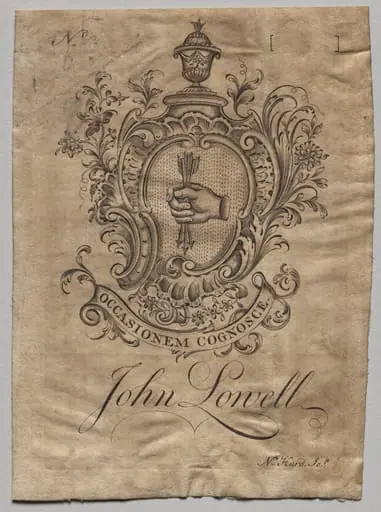 Bookplate: Coat of Arms with John Lowell inscribed
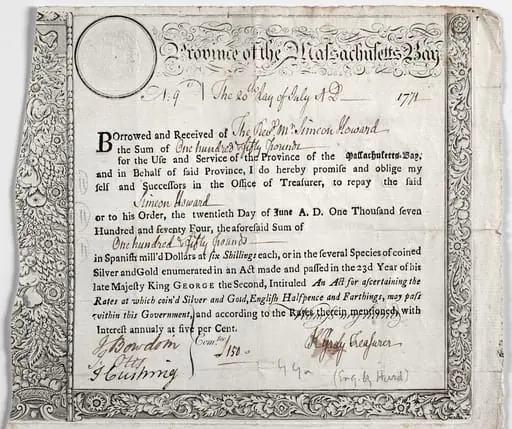 Loan Certificate
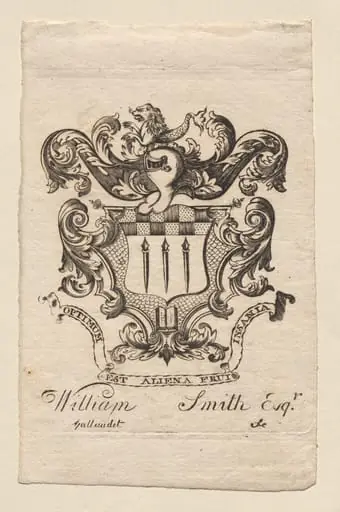 Bookplate: Coat of Arms with William Smith, Esq. inscribed below
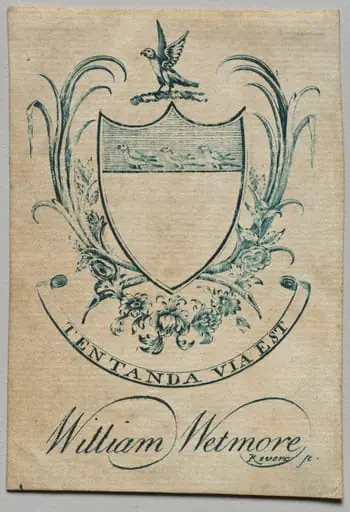 Bookplate: Coat of Arms with William Wetmore inscribed below
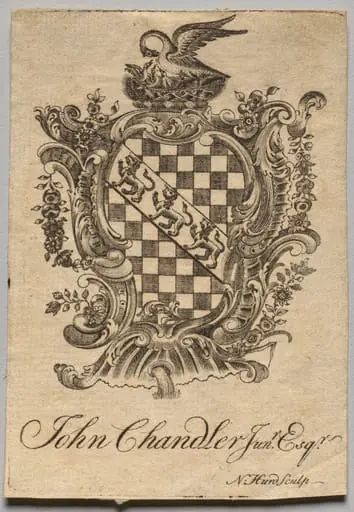 Bookplate: Coat of Arms with John Chandler Jun.r, Esq. inscribed
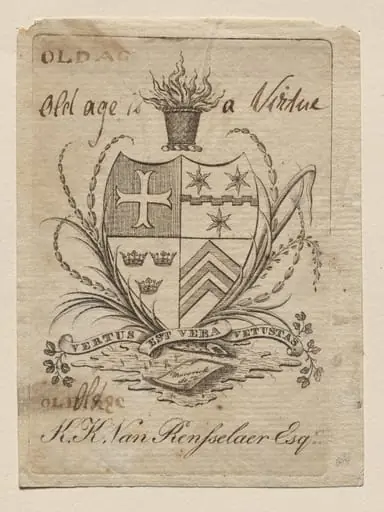 Bookplate: Coat of Arms with K. K. Van Rensselaer, Esq. inscribed below
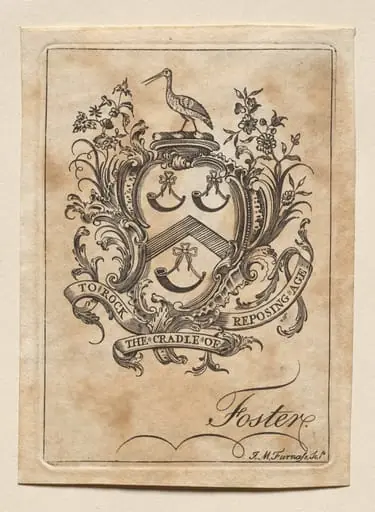 Bookplate: Coat of Arms with Foster inscribed below
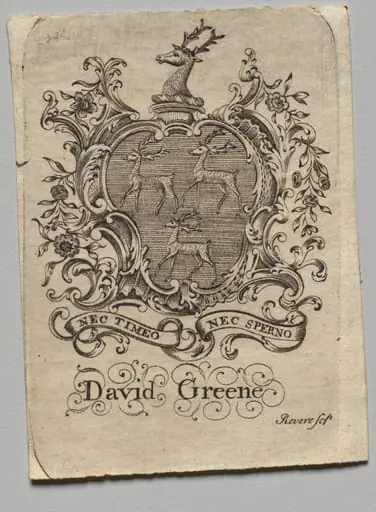 Bookplate: Coat of Arms with David Greene inscribed below
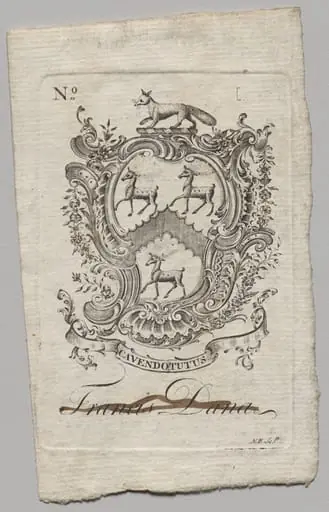 Bookplate: Coat of Arms with Francis Dana inscribed