Artwork
Marino and the Alban Hills
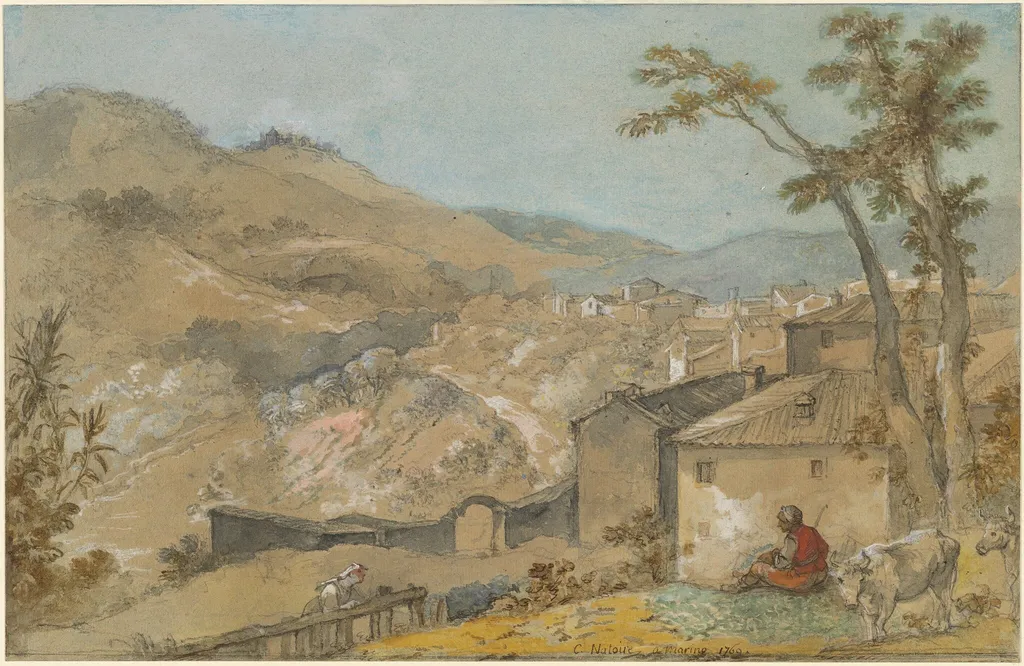
Marino and the Alban Hills is an ink drawing by the Romanticist artist Charles Joseph Natoire. It dates from 1769 and is held in the collection of the National Gallery of Art.
About this work
Next, check out the technique: watercolor, glazing to see how layers of translucent paint create this dreamy effect.
This sketch shows a quiet hillside village with simple stone buildings and a winding path. A lone figure in a red coat sits on a low wall, watching two sheep graze nearby. The background stretches to rolling hills and distant trees, painted in soft browns and greens.
The artist used quick, loose strokes to capture light and shadow—notice how the washy colors blend to show depth. The signature in the corner reads "C. Natoire, a Marine 1769," hinting at a sailor’s eye for landscapes.
Next, check out the technique: watercolor, glazing to see how layers of translucent paint create this dreamy effect.
Overview
Marino and the Alban Hills is a drawing by Charles Joseph Natoire, created in 1769. It is executed in a mix of media on laid paper.
Subject & Meaning
The drawing depicts a serene village scene, with simple stone buildings and a winding path. A figure in a red coat sits on a wall, observing two grazing sheep, set against a backdrop of rolling hills and distant trees.
Technique & Style
Natoire employed a range of techniques, combining pen and ink, wash, watercolor, and gouache to achieve a soft, dreamy effect. Loose strokes and layered colors create a sense of depth and capture the play of light and shadow.
History & Provenance
The drawing is signed 'C. Natoire, a Marine 1769', indicating the artist's presence in Marino, near the Alban Hills, at the time of its creation.
Own this work as a print
Artist & collection


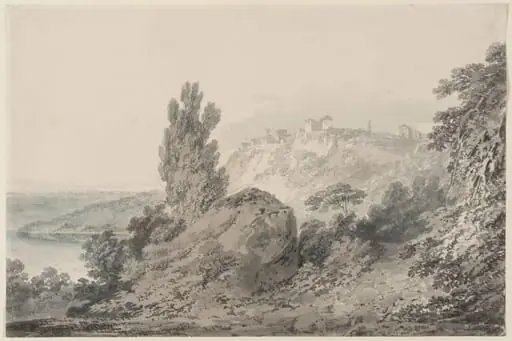 Lake and Town of Nemi
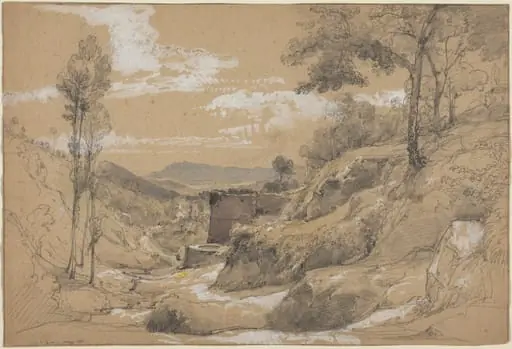 Corpo di Cava
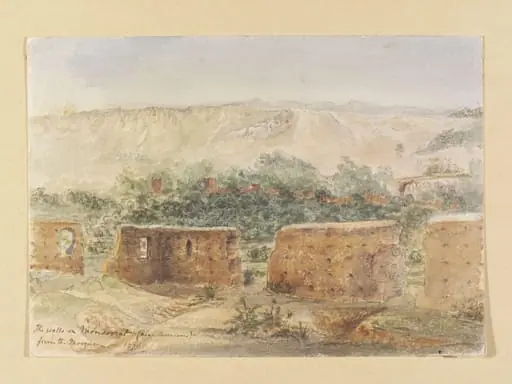 The walls on Monsoorat (near Tlemcen) from the Mosque
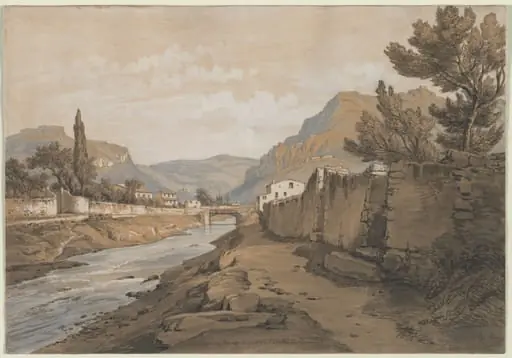 The Neuve River at the End of the Dardenne Valley
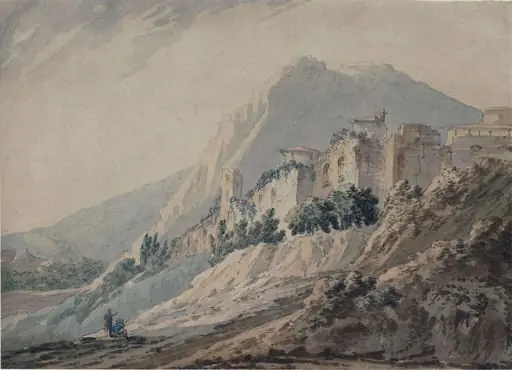 Mountainous landscape with ruined building
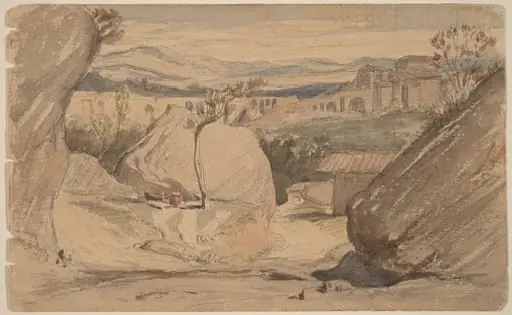 Orte
Orte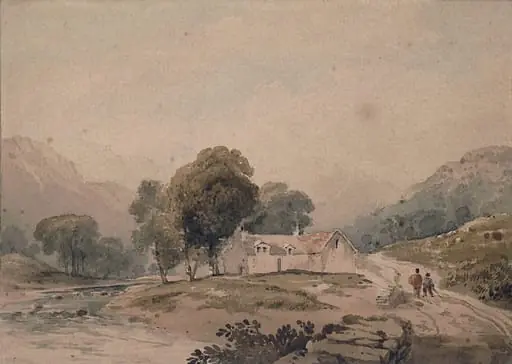 Landscape with cottage and two figures
 Second View of the Agrigento Countryside
 Landscape with ruined castle and river
 Viterbo
 The Hills of Umbria near Perugia
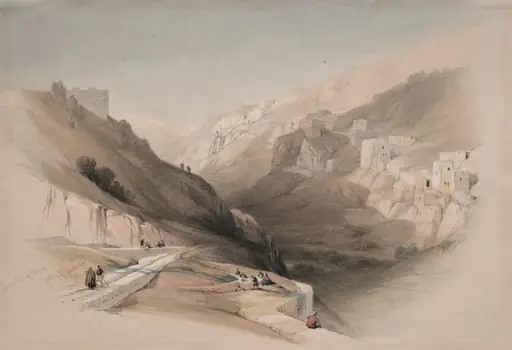 Lower Pool of Siloam, Valley of Jehoshaphat