Artwork
Domnitorul Carol I
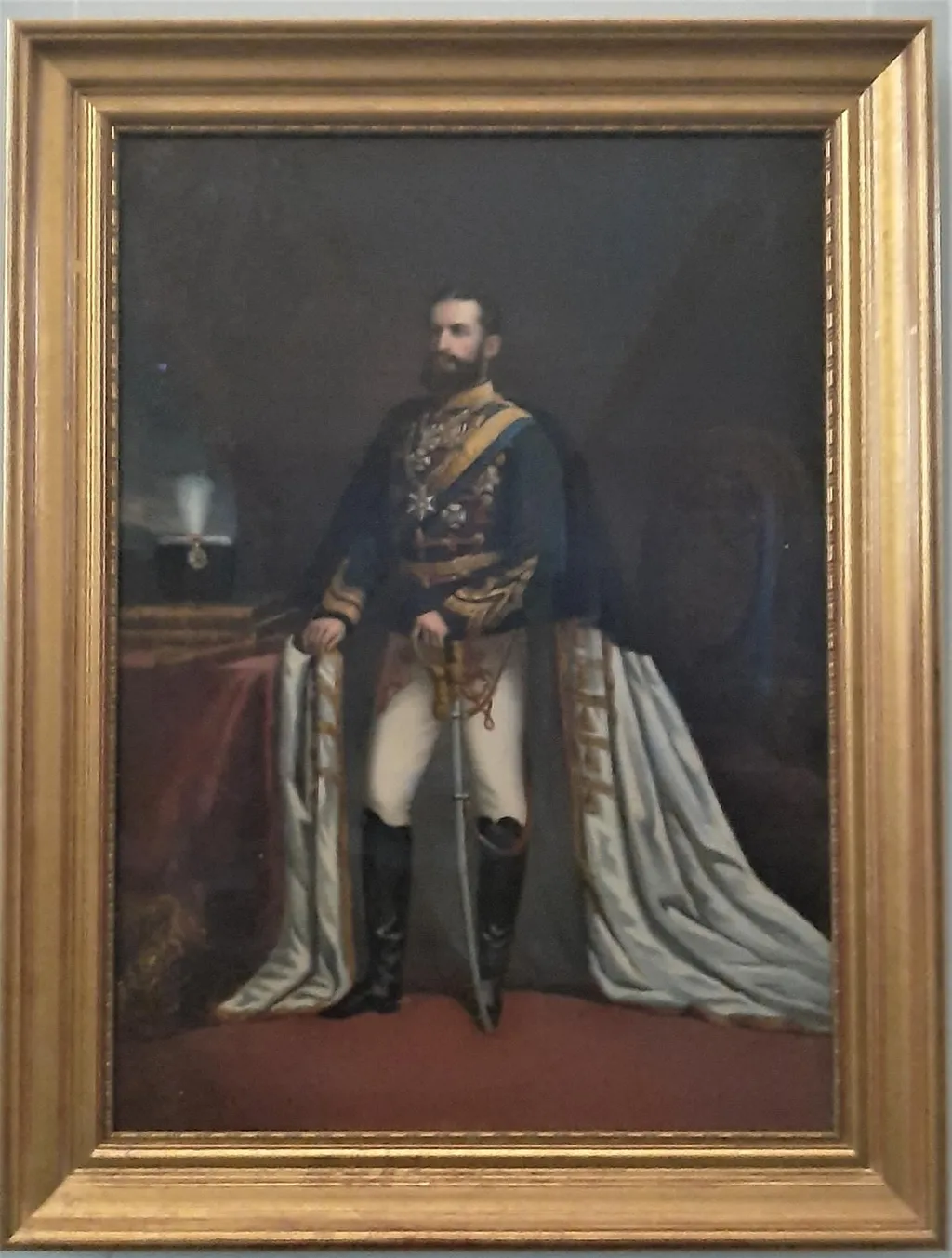
Domnitorul Carol I is a print by the Impressionist artist Carol Popp de Szathmári. It dates from 1877 and is held in the collection of the National Museum of Romanian History.
About this work
Overview
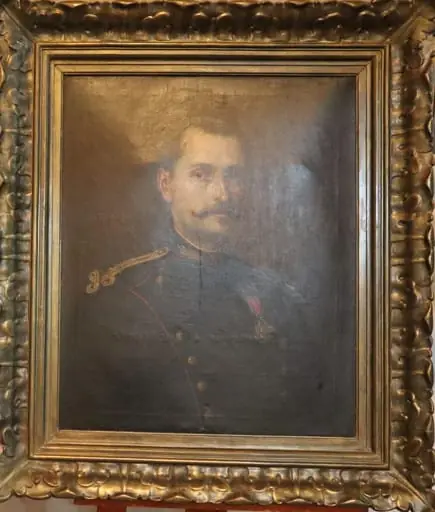
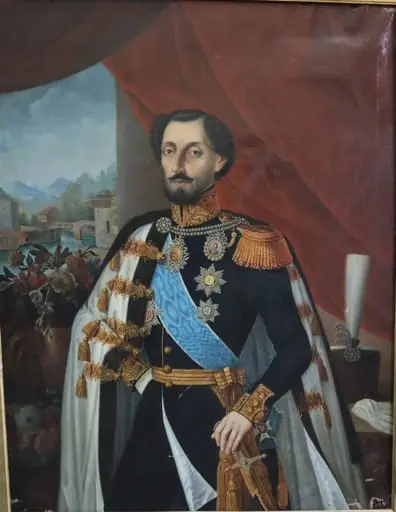
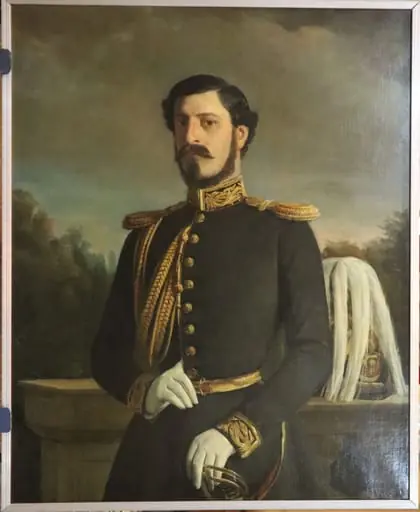
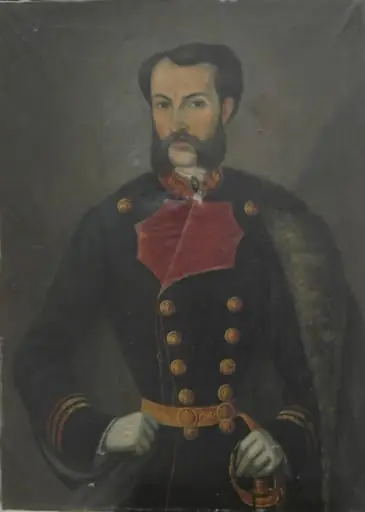
Created in 1877 by Carol Popp de Szathmári, this portrait depicts Carol I, ruler of Romania, in formal military attire. The composition centers on the figure against a muted background, using controlled lighting to isolate his presence. The work serves as a state portrait, intended to convey authority and gravitas through restrained visual elements rather than overt symbolism.
Subject & Meaning
His stillness and direct gaze reinforce a sense of composed leadership, aligning his image with the stability of the newly unified Romanian state.
Carol I is portrayed in the uniform of a high-ranking military officer, adorned with medals and holding a sword, symbols of his dual role as sovereign and commander. The folded cloth in his other hand may reference ceremonial duties or diplomatic formality. His stillness and direct gaze reinforce a sense of composed leadership, aligning his image with the stability of the newly unified Romanian state.
Technique & Style
Szathmári employs chiaroscuro to model the figure with subtle gradations of light and shadow, drawing focus to the face and uniform while allowing the background to recede. The lighting is soft yet directional, enhancing texture in the fabric and metal without creating harsh contrasts. The palette remains muted, emphasizing tonal harmony over color, a hallmark of 19th-century academic portraiture.
History & Provenance
Commissioned during the year Romania gained full independence, the portrait was likely intended for official use, possibly in government or royal collections. It reflects the regime’s effort to visually legitimize Carol I’s rule through established European portraiture conventions. The work remains within Romanian institutional holdings, though its exact early provenance is not widely documented.
Context
The portrait emerged amid Romania’s transition from principality to kingdom, a period marked by nation-building and the adoption of Western political and cultural models. Szathmári, a Hungarian-born photographer and painter active in Bucharest, was among the few artists entrusted to depict state figures. His work bridged photographic realism and painterly tradition in service of national identity.
Legacy
This portrait stands as one of the most recognized images of Carol I, contributing to his enduring visual representation in Romanian history. It exemplifies how portraiture functioned as a tool of political communication in the late 19th century, reinforcing legitimacy through controlled imagery. While stylistically conventional, its historical weight ensures its continued presence in national memory.
Artist & collection
Artist
A 19th‑century Romanian artist who made drawings and prints of daily life, Carol Popp de Szathmári left sharp records of people and places.