Artwork
Bamburgh Castle, Northumberland
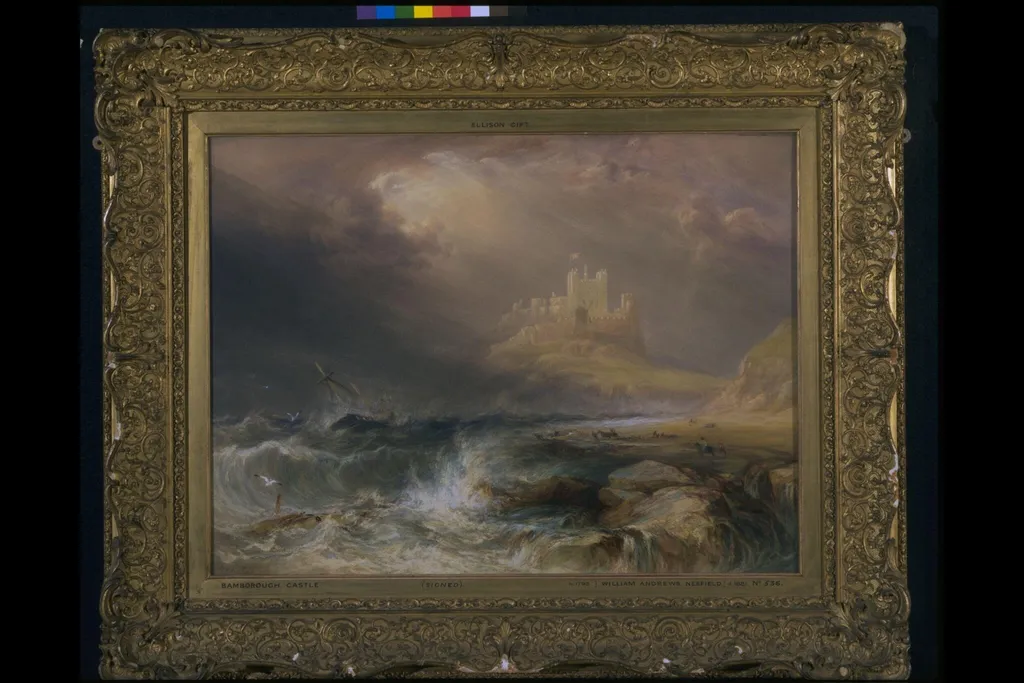
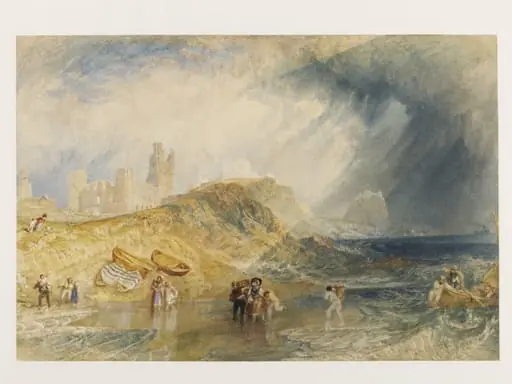
Bamburgh Castle, Northumberland is a watercolor work on paper by the Romanticist artist William Andrews Nesfield. It dates from 1832 and is held in the collection of the Victoria and Albert Museum.
About this work
Most artists then used oils for landscapes, but he liked how watercolor could show light and movement—especially water.
You see a quiet castle on a green hill, waves lapping at its feet under a soft sky.
Nesfield painted this in watercolor, which was still new and tricky in 1832. Most artists then used oils for landscapes, but he liked how watercolor could show light and movement—especially water. The way he layered washes to make the sea shimmer is subtle, almost like magic.
If you like how he handles light, look up *sfumato*.
Overview
Bamburgh Castle, Northumberland is a watercolour painting created by William Andrews Nesfield in 1832, depicting a serene landscape of a castle situated on a green hill with waves gently lapping at its base under a soft, serene sky.
Subject & Meaning
The subject is Bamburgh Castle in a peaceful state, emphasizing the interplay between the static architectural form and the dynamic natural elements of water and sky. The painting conveys a sense of tranquility and harmony between the built and natural environments.
Technique & Style
Nesfield utilized the challenges of watercolour to his advantage, leveraging the medium's capacity to capture light and movement. He employed layered washes to achieve a shimmering effect on the water's surface, a technique that anticipates principles similar to sfumato in its subtle blending of tones.
History & Provenance
Painted in 1832, this work reflects Nesfield's early experimentation with watercolour, a medium then gaining popularity among a younger generation of artists seeking to break from traditional 18th-century landscape conventions, which predominantly favored oil painting.
Context
Created during a period of innovation in watercolour techniques, Bamburgh Castle, Northumberland stands as an example of the medium's emerging expressive capabilities in capturing ephemeral natural phenomena, particularly the depiction of water, a hallmark of Nesfield's work.
Legacy
While specific long-term impacts of this piece on the broader art historical canon are not widely documented, it contributes to the understanding of early 19th-century watercolour experimentation and Nesfield's contribution to the evolution of landscape painting during this transitional period.
Artist & collection

Artist
William Andrews Nesfield (1793–1881) was an English soldier, landscape architect and artist.