Artwork
Christ as the Man of Sorrows
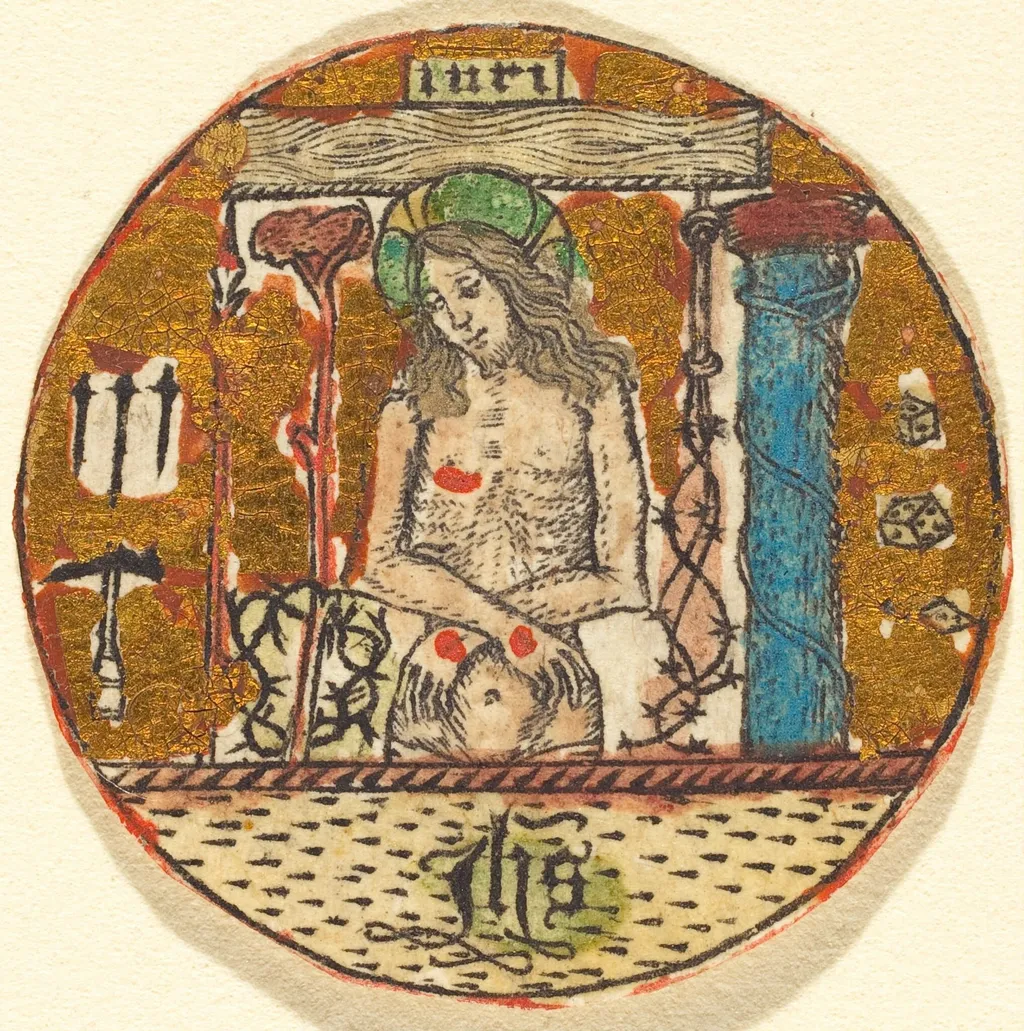
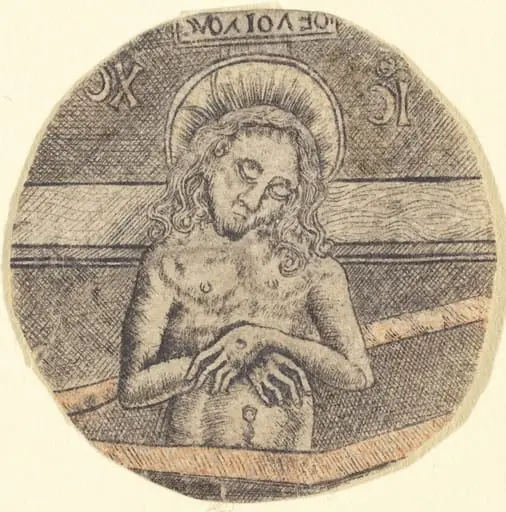
Christ as the Man of Sorrows is an ink print by the Renaissance artist German 15th Century. It dates from 1455 and is held in the collection of the National Gallery of Art. The work is a circular, hand‑colored engraving portraying the Man of Sorrows, a traditional representation of the crucified Christ.
About this work
Overview
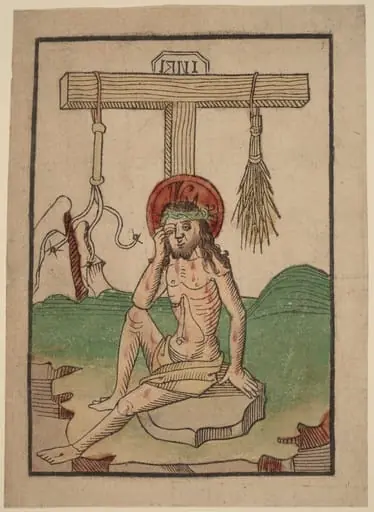
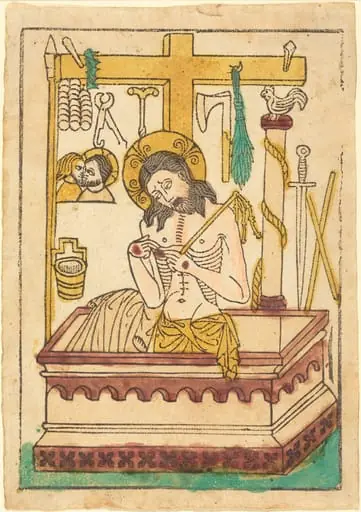
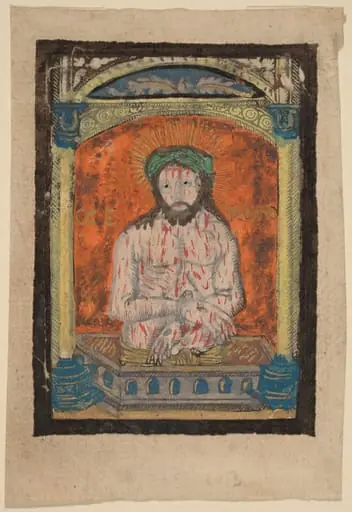
The work is a circular, hand‑colored engraving portraying the Man of Sorrows, a traditional representation of the crucified Christ. The figure appears gaunt, crowned with thorns, and partially draped, with his torso exposed and marked by red spots that signify his wounds. The composition is set against a patterned gold‑brown background and is framed by an ornamental border.
Subject & Meaning
The image conveys the suffering of Christ, emphasizing his physical wounds through the red markings on his chest and hands, a visual shorthand for the Passion. The crown of thorns and the sorrowful expression reinforce the theme of divine sacrifice, inviting contemplation of redemption.
Technique & Style
Created as an engraving, the print was produced by incising lines into a metal plate, then inking and pressing onto paper. After printing, the image was hand‑colored, a common practice that added visual richness before the advent of mass colour printing. The round format and decorative border reflect the aesthetic conventions of devotional prints in the early modern period.
History & Provenance
Such prints circulated widely in the pre‑industrial era, serving as affordable devotional objects for private worship. Their hand‑colored nature indicates they were likely produced in a workshop where multiple copies could be finished by hand, allowing distribution across a broad audience.
Context
The Man of Sorrows motif was popular in Northern European religious art, especially in the 16th and 17th centuries, when printed images helped spread Counter‑Reformation iconography. The inclusion of a blue pillar and a tree with tiny faces may reference biblical symbolism or serve as decorative fillers typical of the period’s print design.
Artist & collection

Artist
This 15th-century German artist carved vivid religious scenes into metal and wood, then hand-painted them in bright, symbolic colors.

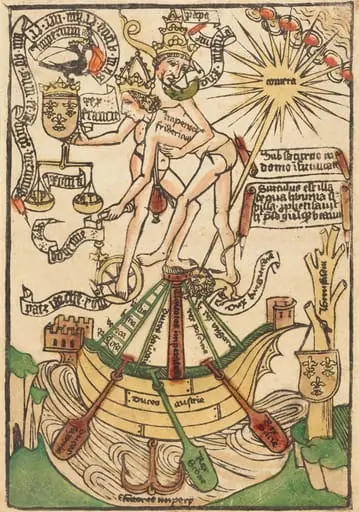 Allegory of the Meeting of Pope Paul II and Emperor Frederick III
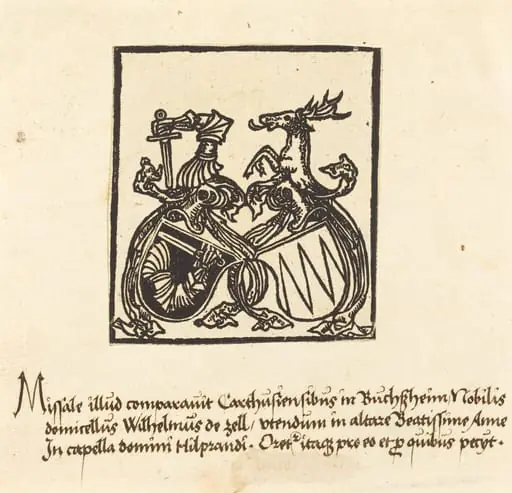 Bookplate of Wilhelm von Zell
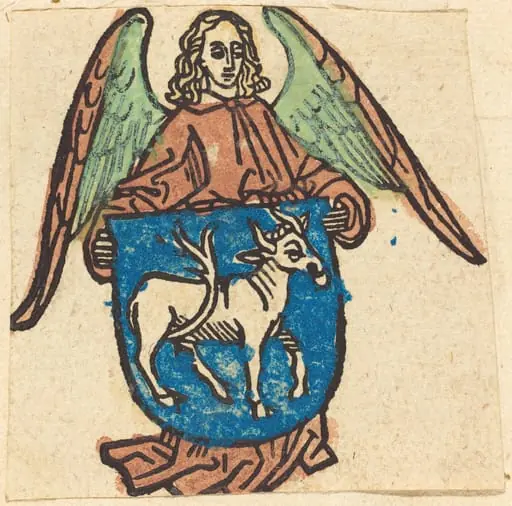 Bookplate of Hilprand Brandenburg of Bibrach
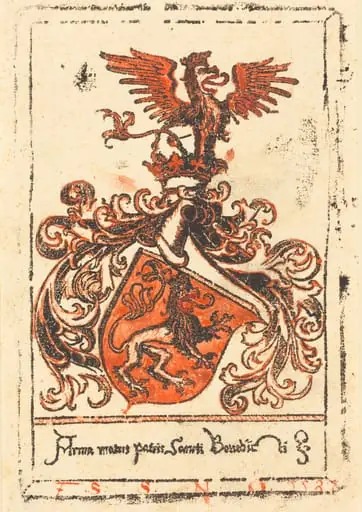 Bookplate of the Abbey of Ottobeuren
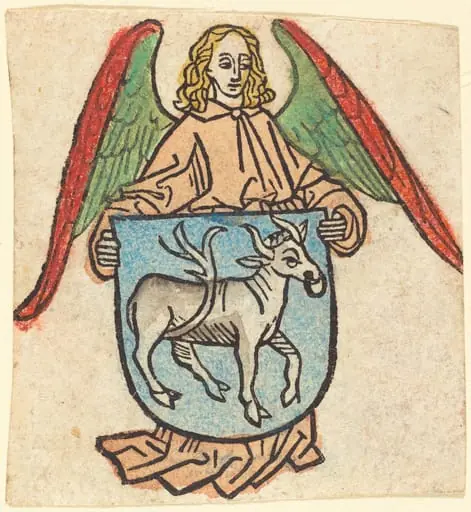 Bookplate of Hilprand Brandenburg of Bibrach
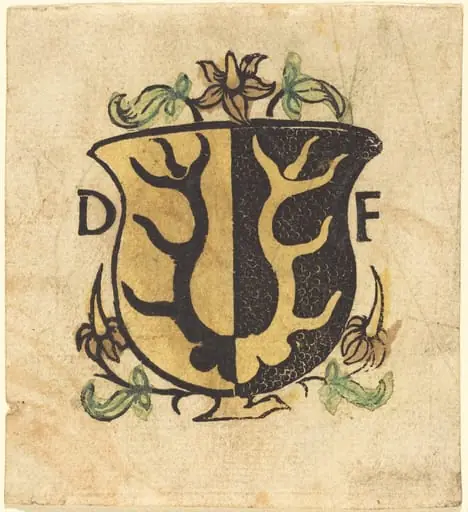 Bookplate of Dominicus Frauenfelder
![Studies for Six Figures (sheet from a model book) [recto], by German 15th Century](https://artifactworldgallery.com/img/german-15th-century--studies-for-six-figures-sheet-from-a-model-book-recto--4837429e0755bc3f-w320.webp) Studies for Six Figures (sheet from a model book) [recto]
Studies for Six Figures (sheet from a model book) [recto]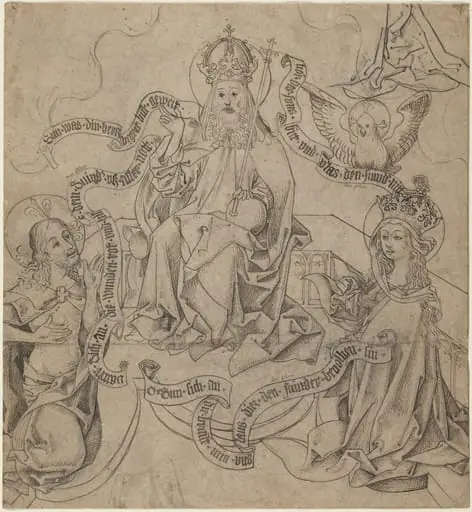 Christ and Mary Interceding with God the Father