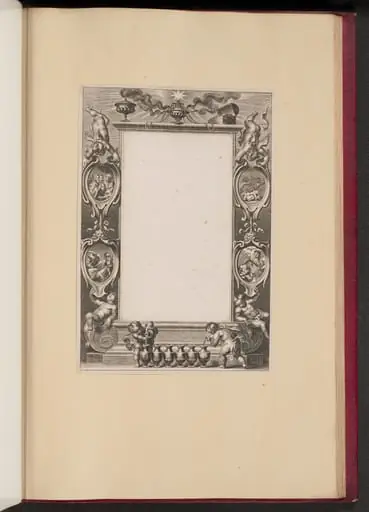
Artwork
Border Illustration with Putti Harvesting Offerings to God
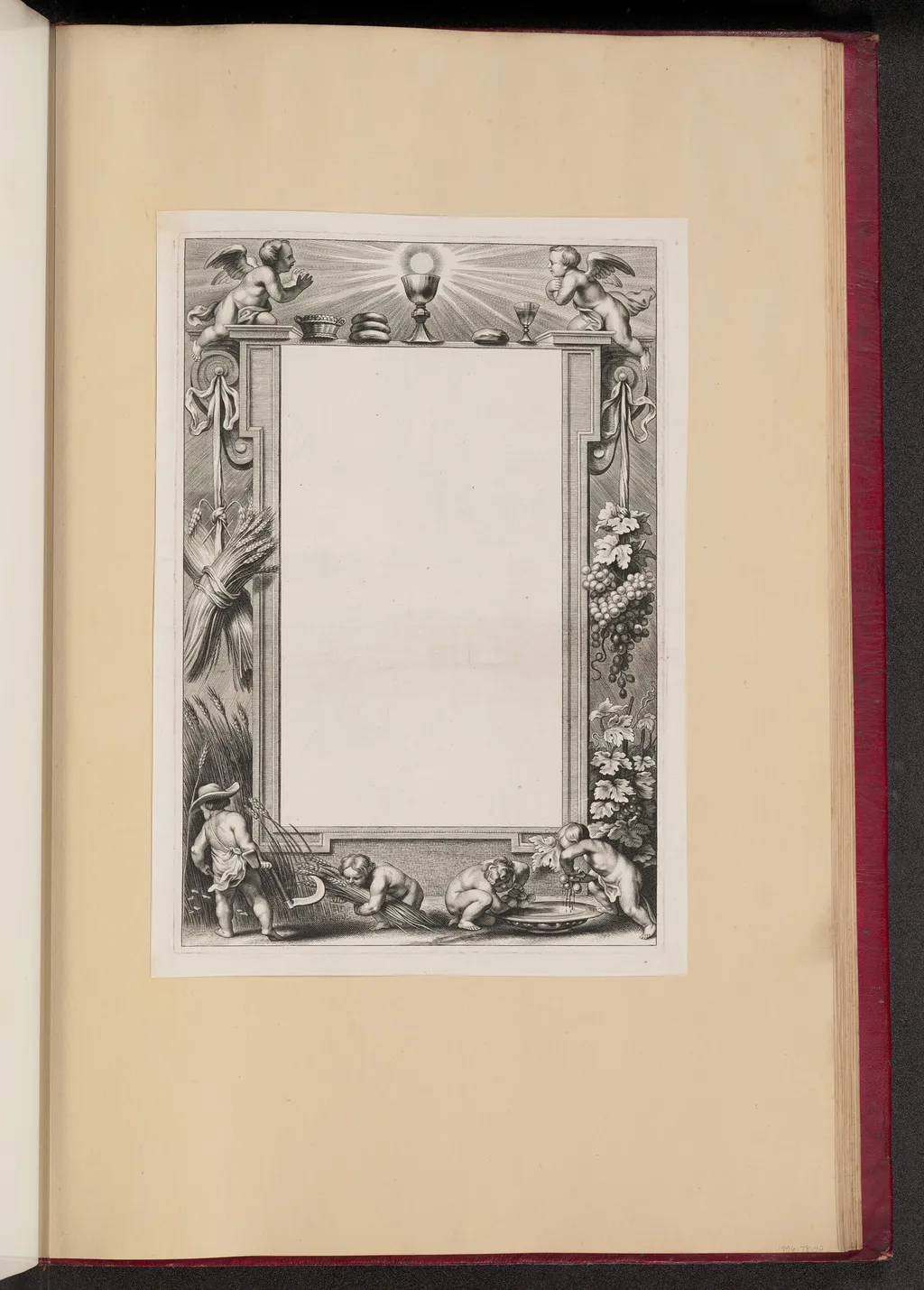
Border Illustration with Putti Harvesting Offerings to God is an ink print by the Baroque artist Netherlandish 17th Century. It dates from 1613 and is held in the collection of the National Gallery of Art.
About this work
Overview
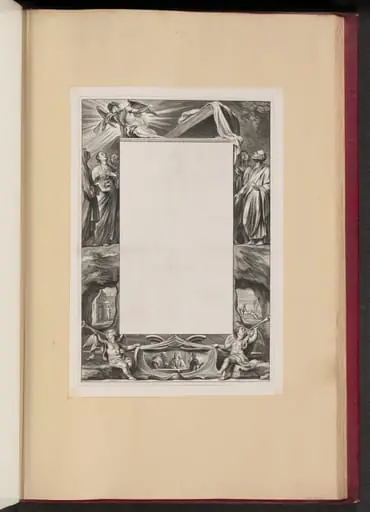
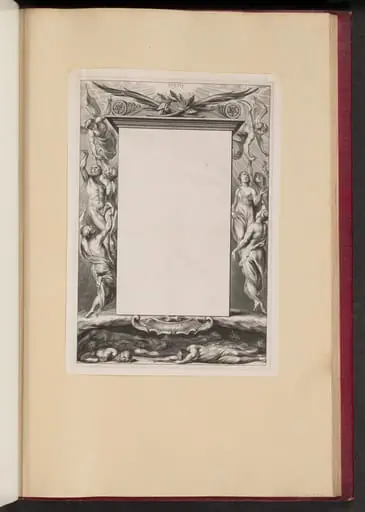
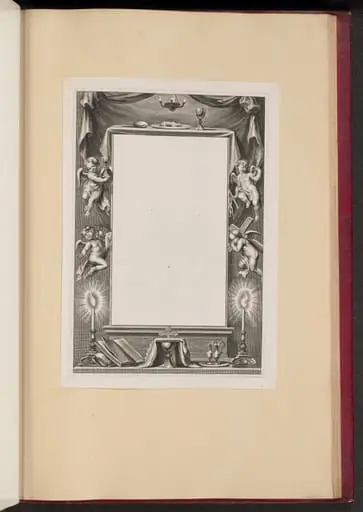
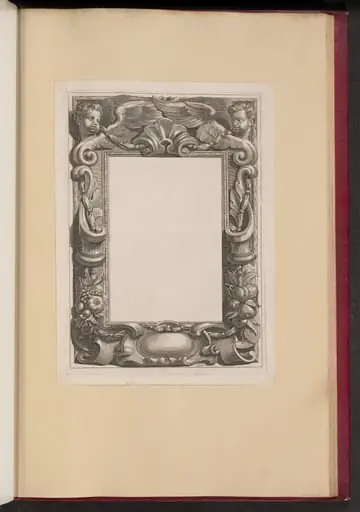
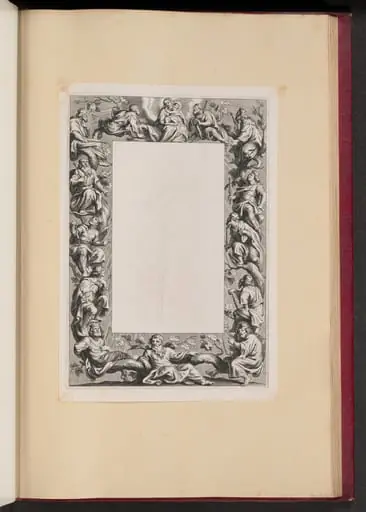
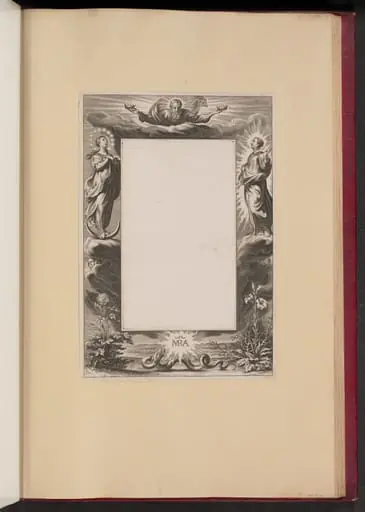
This early modern engraving, executed on laid paper before any lettering was added, presents a decorative border framing an empty central space.
This early modern engraving, executed on laid paper before any lettering was added, presents a decorative border framing an empty central space. Two cherubic figures occupy the upper centre, each bearing a luminous cup and a loaf, while below, a pair of plump youths engage in agricultural tasks—one reaping wheat, the other pouring grapes into a bowl. Vines and wheat stalks wind along the sides, punctuated by miniature tools and baskets.
Subject & Meaning
The composition suggests a theological allegory: the cherubs with cup and bread evoke the Eucharistic elements of wine and host, while the laboring children symbolize the harvest of grain and fruit offered to the divine. The vacant interior was intended to receive a sacred image or text, reinforcing the notion that the surrounding bounty prepares a space for worship.
Technique & Style
Engraved with fine lines on a metal plate, the print demonstrates the meticulous incising typical of early printmaking. The artist rendered delicate details—glowing reflections on the cup, the texture of wheat, and the twisting vines—through varied hatching and cross‑hatching, achieving depth on the laid‑paper substrate. The overall design reflects a baroque sensibility, balancing ornamental richness with symbolic clarity.
History & Provenance
The work exists as a proof before the addition of any inscription, indicating it was likely a preparatory stage for a larger devotional commission. Its precise origin remains undocumented, but the format aligns with 17th‑century European practices of producing ornamental borders for altarpieces or illuminated manuscripts.
Context
Border illustrations of this type were common in religious art, serving both as decorative frames and as visual sermons. The inclusion of putti, agricultural motifs, and Eucharistic symbols reflects Counter‑Reformation iconography, wherein everyday labor was linked to spiritual offering and the sacraments.
Artist & collection

Artist
This artist was born in the Netherlands in the early 1600s and made drawings and engravings.