Artwork
Portret de femeie
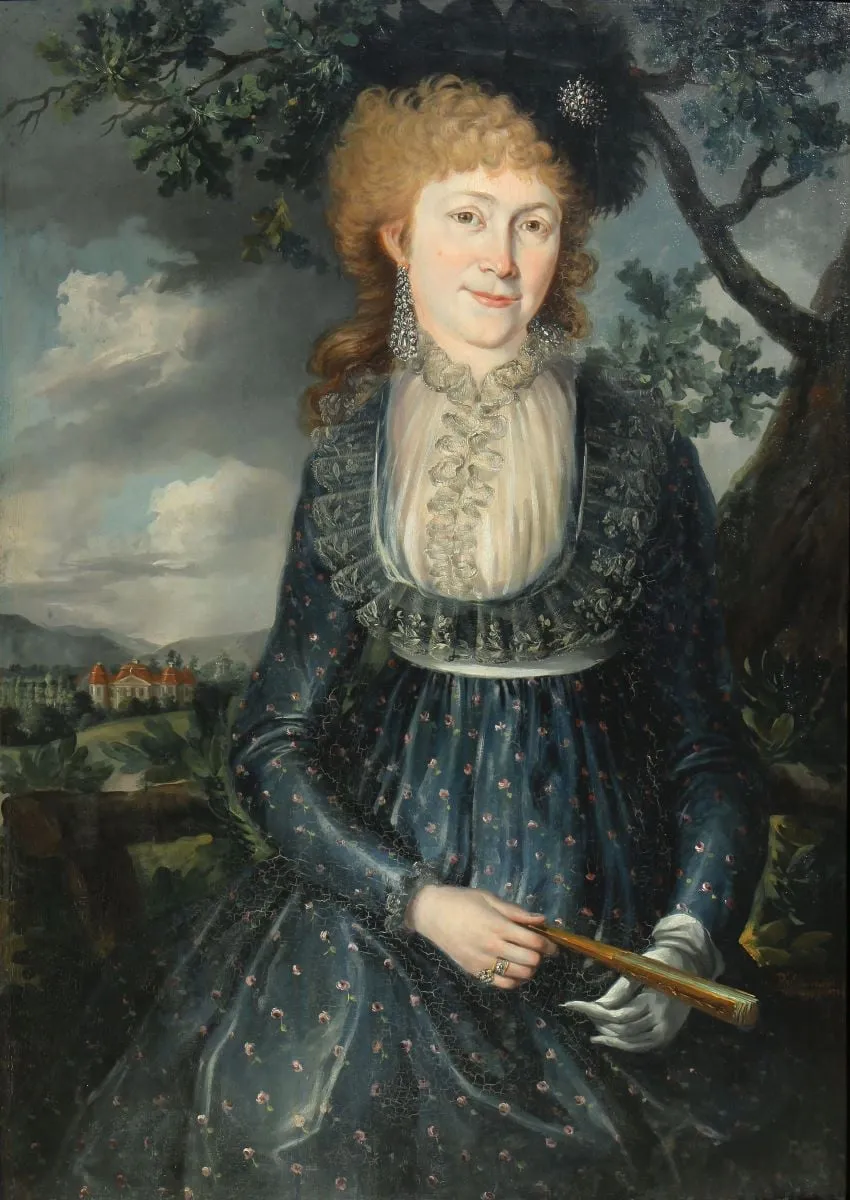
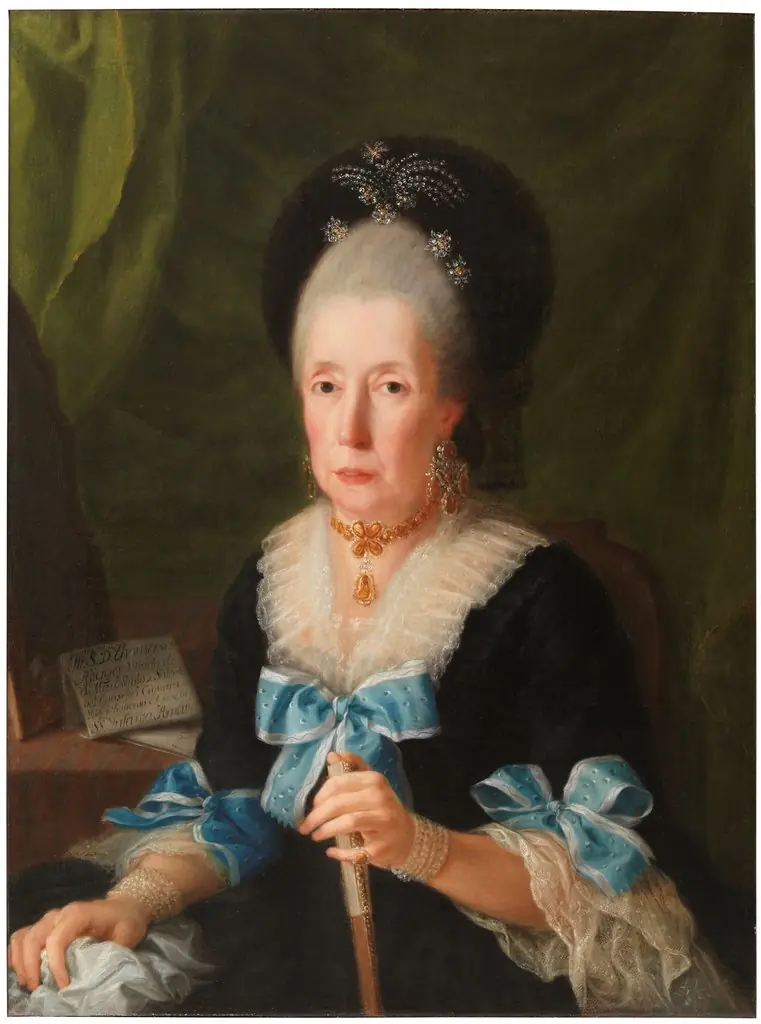
Portret de femeie is an unspecified painting by Frantz cel Tânăr Neuhauser. It is held in the collection of the Museum of Art Cluj-Napoca. This portrait depicts a woman rendered in a detailed, realistic style by the artist Frantz Neuhauser cel Tânăr.
About this work
Overview
She is shown in a blue dress with a white collar and a black hat, holding a fan in her right hand and wearing a ring on her left.
This portrait depicts a woman rendered in a detailed, realistic style by the artist Frantz Neuhauser cel Tânăr. She is shown in a blue dress with a white collar and a black hat, holding a fan in her right hand and wearing a ring on her left. The setting includes a quiet landscape with trees and a distant house, framing the figure without distracting from her presence. The work is held in the collection of the Museum of Ethnography.
Subject & Meaning
The woman’s poised posture and modest attire suggest a middle- or upper-class individual, possibly from a rural or small-town context. The fan and ring imply social refinement, while the landscape background may reflect personal or regional identity. The absence of overt symbolism points toward a straightforward representation of individual dignity rather than allegorical intent.
Technique & Style
The painting employs careful brushwork to render fabric textures, facial features, and natural elements with precision. Light falls evenly across the figure, enhancing the three-dimensionality of the dress and hat. The background is rendered with softer focus, guiding attention to the subject while maintaining atmospheric depth. The style aligns with 19th-century academic realism, prioritizing observation over dramatic expression.
History & Provenance
The painting is attributed to Frantz Neuhauser cel Tânăr, a Romanian artist active in the late 19th century. It entered the Museum of Ethnography’s collection as part of a broader effort to document domestic life and portraiture from the period. Its provenance prior to institutional acquisition remains undocumented, though its subject and setting suggest a local, possibly Transylvanian, origin.
Context
Created during a time when portraiture in Romania was expanding beyond aristocratic circles, this work reflects growing interest in depicting ordinary individuals with dignity. The inclusion of regional dress and landscape aligns with broader cultural movements seeking to define national identity through visual representation, even in private, non-official commissions.
Legacy
Though not widely exhibited outside institutional settings, the portrait contributes to the understanding of Romanian visual culture in the late 1800s. It stands as an example of how regional artists captured everyday subjects with technical care, preserving visual records of personal and social norms during a period of cultural transition.
Artist & collection
Artist
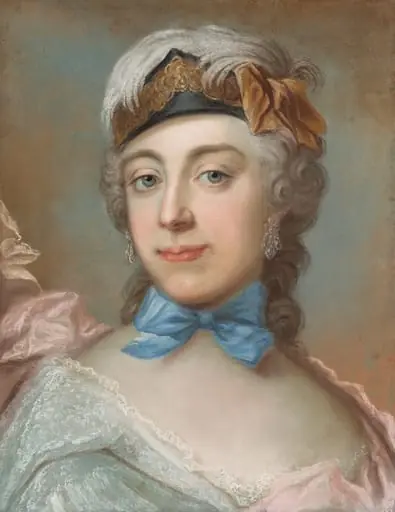 Kreivitär Ulrika Charlotta Sprengtporten
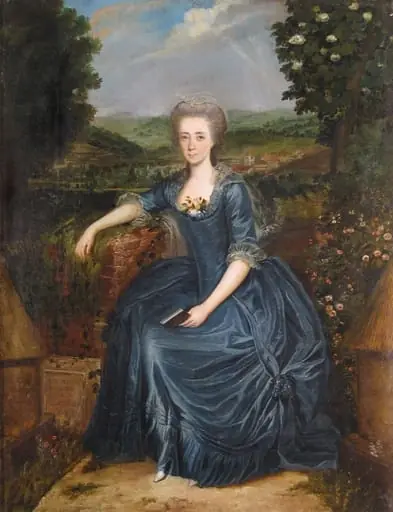 Anna Maria von Huttern, soția primarului
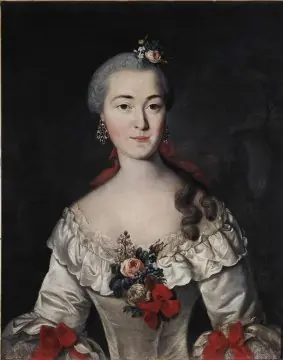 Portrait of M.I. Tatischeva
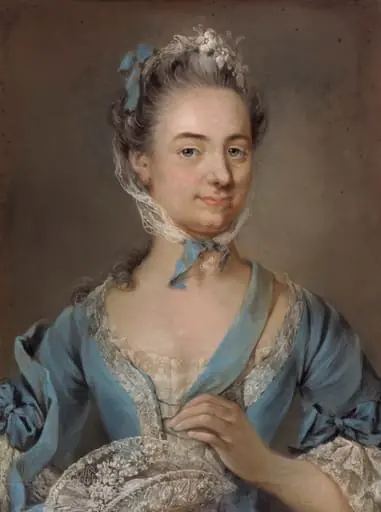 Maria Ulrika Dævel
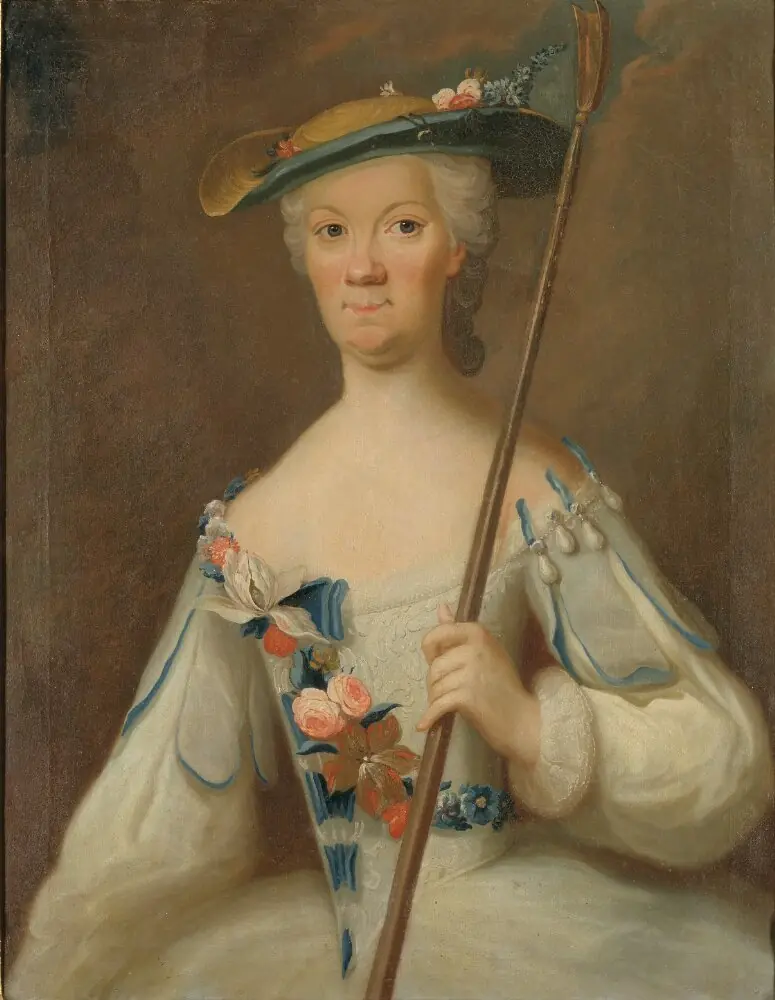 Christina Magdalena Stenbock, gift Creutz (1731-1792)
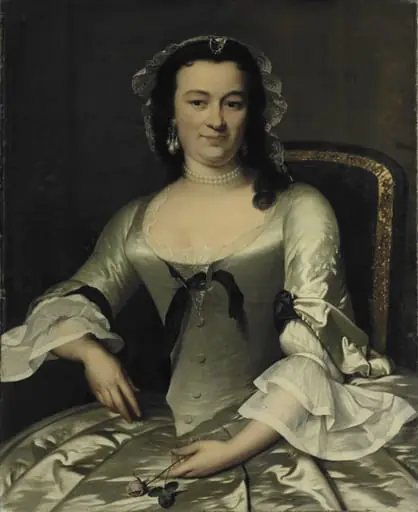 Portrait of Maria Henriëtte van de Pol, Wife of Willem Sautijn
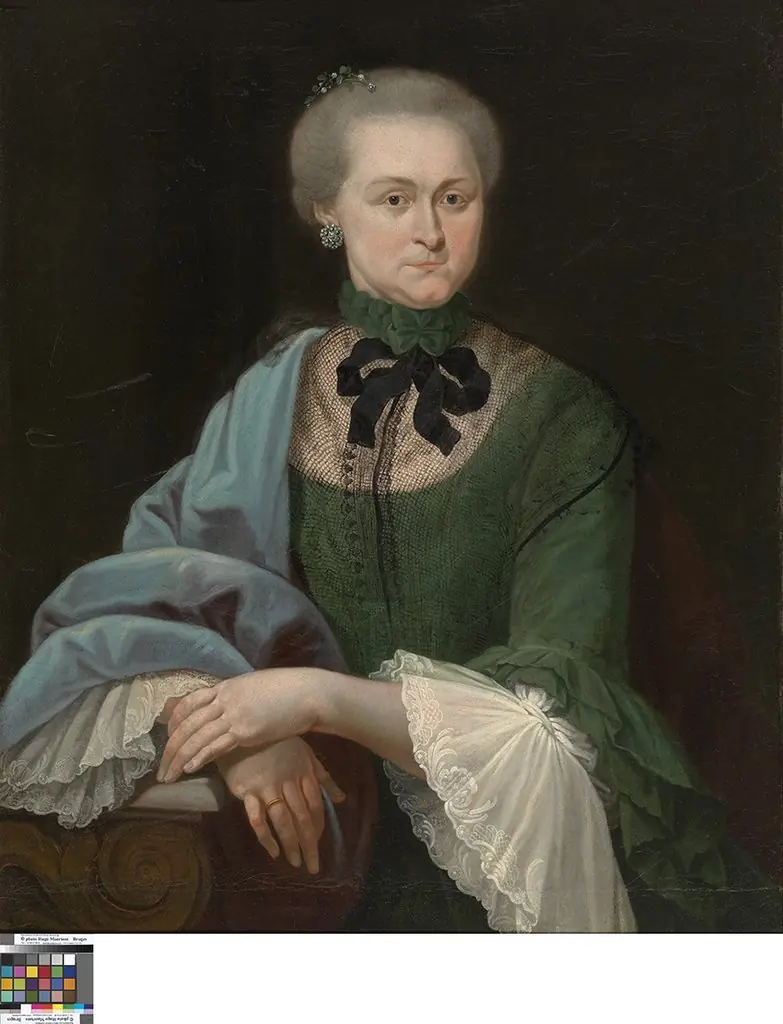 Portret van een vrouw
 Retrato de uma dama com livro junto a uma fonte
 Erzherzogin Maria Christine (1742-1798), Herzogin von Sachsen - Teschen, in gestreiftem Seidenkleid, Halbfigur
 Portrait of Elisabeth Troost (1730-1790)
 Portrait of Elisabeth Troost (1730-1790)
 Tomasa de Aliaga, widow of Manuel Pablo Salcedo