Artwork
Morning after the Masked Ball: Emil Theodor Richter at His Easel
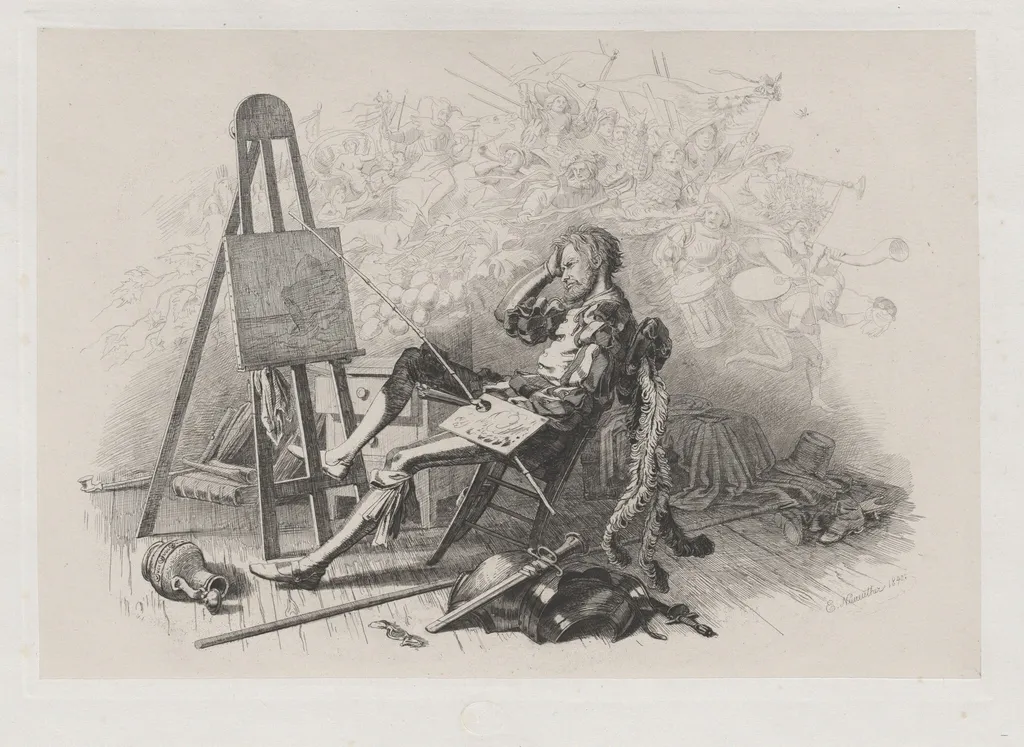
Morning after the Masked Ball: Emil Theodor Richter at His Easel is an ink print by the Romanticist artist Eugen Napoleon Neureuther. It dates from 1840 and is held in the collection of the National Gallery of Art.
About this work
Overview
Created in 1840 by Eugen Napoleon Neureuther, this etching on chine collé captures a quiet moment following a masked ball. The scene centers on Emil Theodor Richter, an artist and scholar, seated at his easel in a state of repose. The composition is intimate, with sparse but deliberate details suggesting the lingering presence of the evening’s festivities without depicting them directly.
Subject & Meaning
The figure, Emil Theodor Richter, is portrayed not as a participant in the ball but as its reflective observer. His relaxed posture and the proximity of his ceremonial sword and helmet imply a transition from public spectacle to private thought. The scene invites interpretation as a meditation on artistry, identity, and the lingering impressions of social performance after the masks are removed.
Technique & Style
Neureuther employed fine, controlled lines in etching, enhanced by the delicate texture of chine collé, to render subtle tonal contrasts.
Neureuther employed fine, controlled lines in etching, enhanced by the delicate texture of chine collé, to render subtle tonal contrasts. The background figures and objects are rendered in faint, blurred outlines, creating depth without distraction. The focus remains on the central figure, whose clothing and accoutrements are rendered with precision, reflecting Romanticism’s interest in individual character and historical detail.
History & Provenance
The print was produced during Neureuther’s active years in Munich, where he was known for his illustrations of historical and literary themes. Richter, a contemporary and colleague, was a noted art historian and collector. The work likely originated as part of a series documenting cultural figures of the time, though its specific commission or publication context remains undocumented in widely accessible records.
Context
In early 19th-century Germany, Romanticism emphasized introspection, historical nostalgia, and the artist as a solitary thinker. Neureuther’s depiction aligns with this ethos, portraying the creative individual not in grand action but in quiet aftermath. The inclusion of armor and ceremonial items reflects a broader cultural fascination with medievalism and the symbolic weight of personal identity in an era of political change.
Legacy
Though not widely exhibited today, the print remains a representative example of Neureuther’s skill in blending portraiture with narrative suggestion. It contributes to the understanding of how artists of the period visualized intellectual life—not through dramatic events, but through stillness, objects, and the psychological space between social roles and personal reflection.
Artist & collection


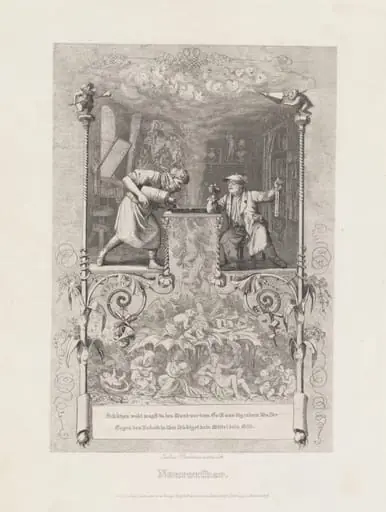 Neureuther (Self-Portrait in the Etching Studio)
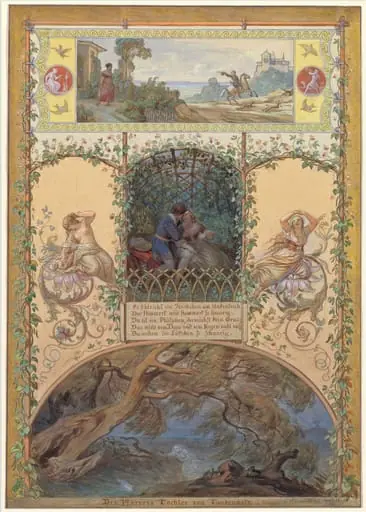 Des Pfarrers Tochter von Taubenhein (The Parson's Daughter from Taubenhain)
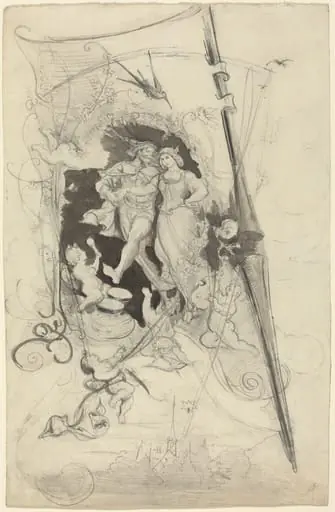 The Happy Squire and His Bride
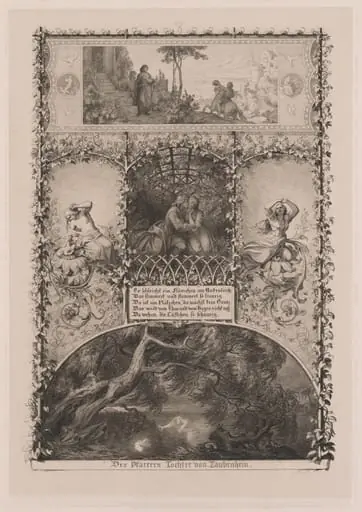 Des Pfarrers Tochter von Taubenhein (The Parson's Daughter from Taubenhain)
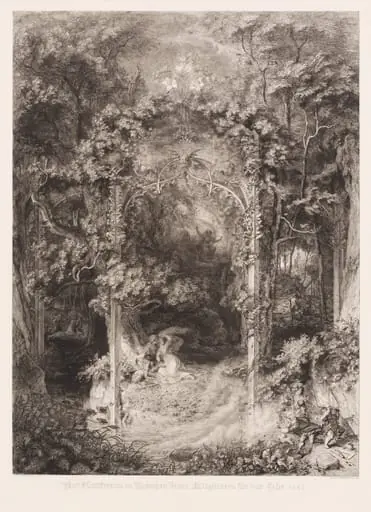 Das Waldfräulein (The Lady of the Forest)
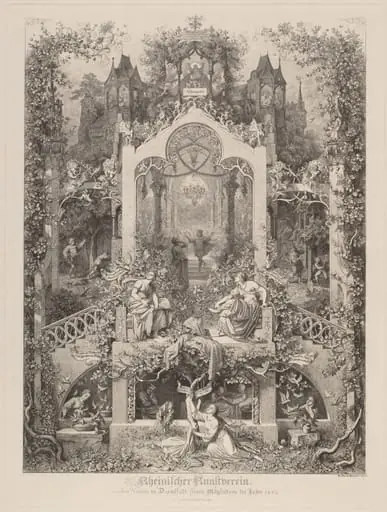 Aschenputtel (Cinderella)
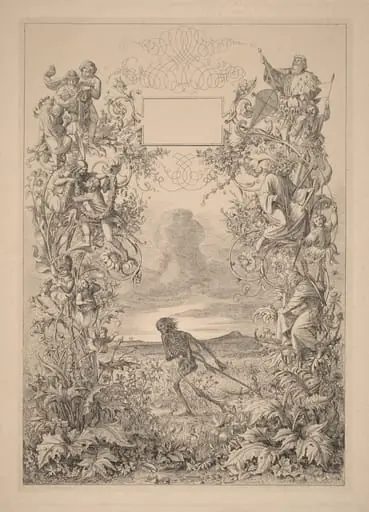 Heute Roth, Morgen Tod (Today Red, Tomorrow Dead)
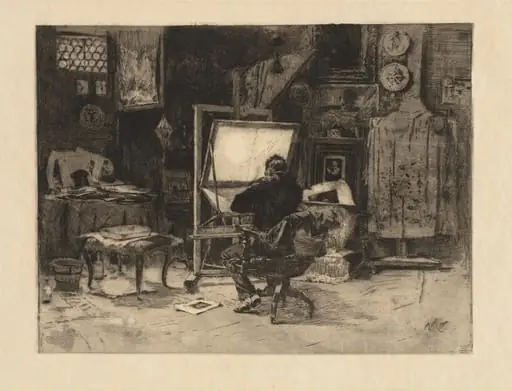 The Etcher
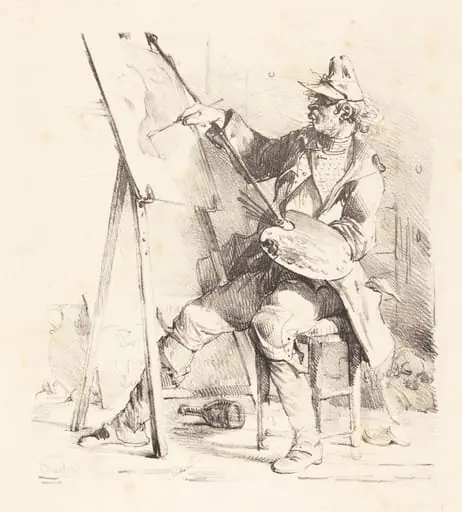 The Sign Painter (Le Peintre d'Enseignes)
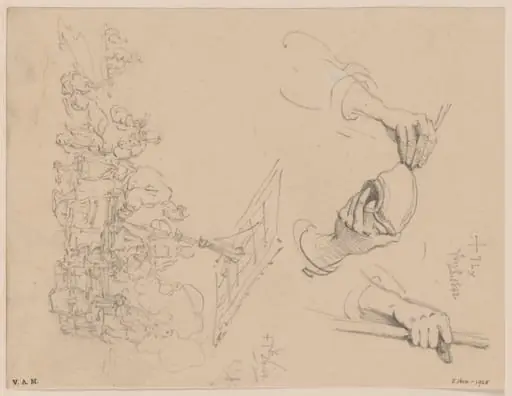 A crowded food stall, and of hands holding a bowl and a pole
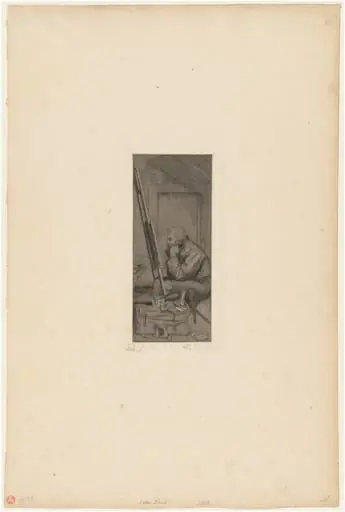 The Artist in the Attic
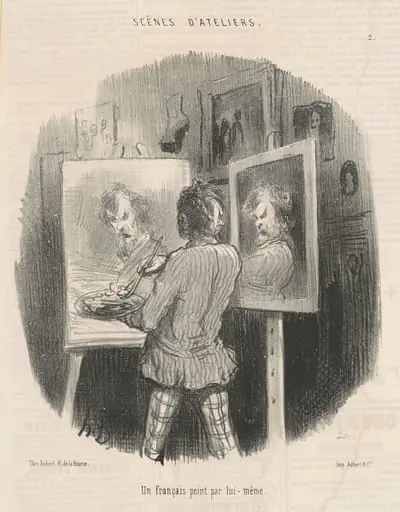 Un français peint par lui-même
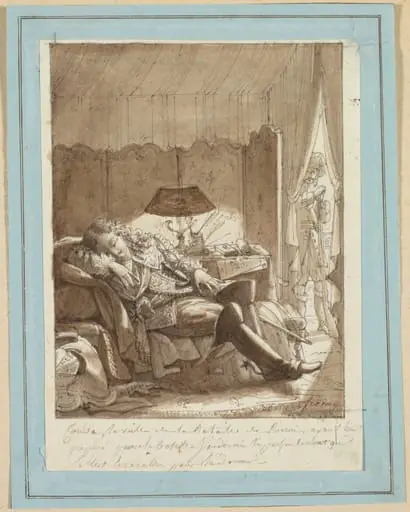 Le Sommeil du Grand Condé
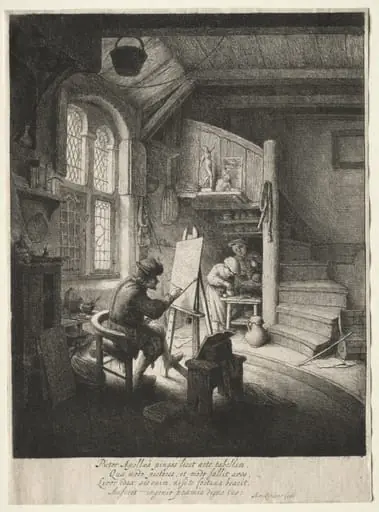 The Painter's Studio
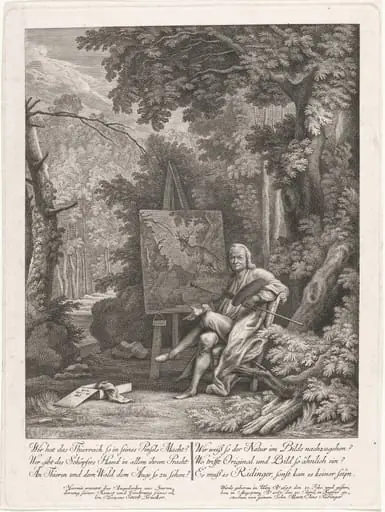 Self-Portrait of the Artist's Father in a Forest
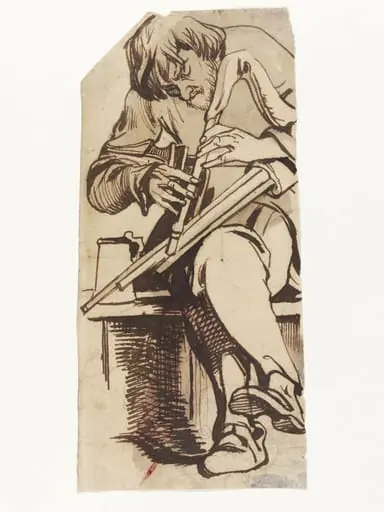 Man and Pipes
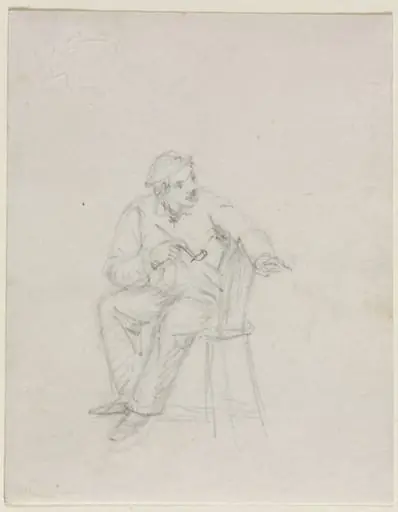 Man Smoking a Pipe
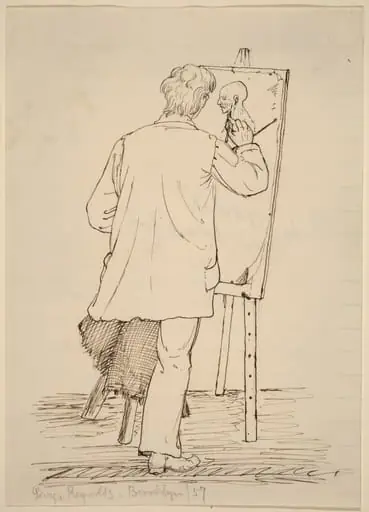 George Reynolds
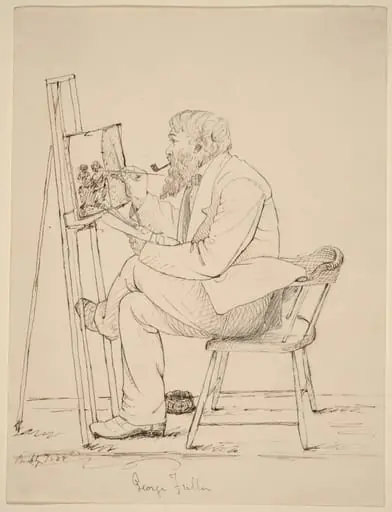 Sketching - George Fuller