Artwork
The Happy Squire and His Bride
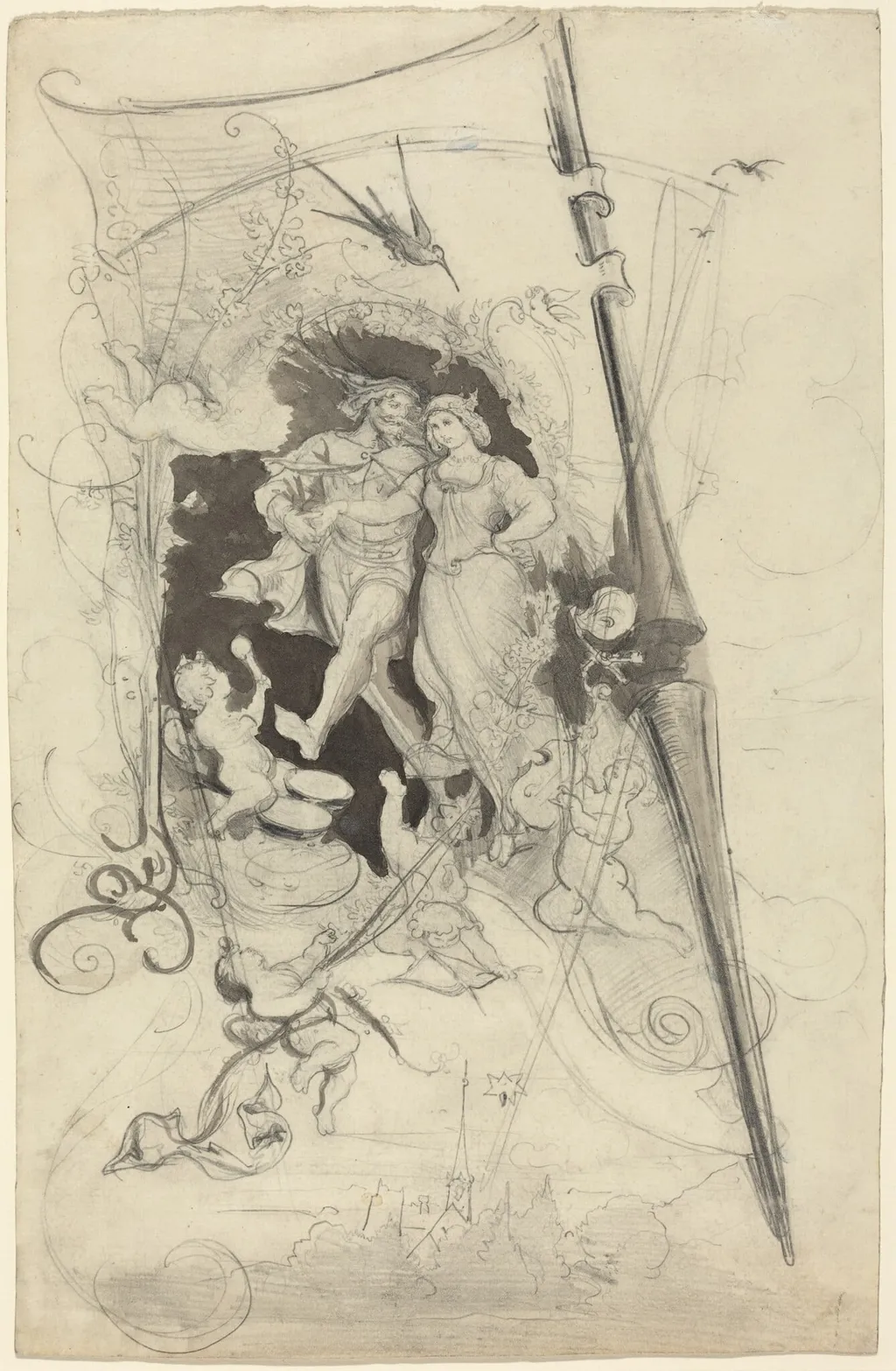
The Happy Squire and His Bride is a graphite drawing by the Romanticist artist Eugen Napoleon Neureuther. It dates from 1844 and is held in the collection of the National Gallery of Art.
About this work
Overview
Executed circa 1844, *The Happy Squire and His Bride* is a drawing by Eugen Napoleon Neureuther. Rendered in graphite heightened with gray wash, the work occupies a sheet of wove paper. Its composition avoids finished precision, instead favoring a provisional, atmospheric quality that invites interpretation over literal description.
Subject & Meaning
The drawing centers on two figures: a bare-chested man clutching a staff or spear and a woman draped in diaphanous robes who leans into him. Surrounding them, spectral forms drift amid swirling lines, evoking a liminal space between waking and dreaming. The imagery resists fixed narrative, suggesting allegory or myth rather than a straightforward scene.
Technique & Style
Neureuther employs loose, gestural strokes and translucent washes to create an ethereal effect. The graphite underdrawing remains visible, reinforcing the work’s provisional character. This approach aligns with Romanticism’s emphasis on emotion and imagination, where technique serves to dissolve clarity in favor of suggestive ambiguity.
History & Provenance
The drawing’s early history remains undocumented, though its creation around 1844 places it within Neureuther’s mature period. No record of its initial ownership or exhibition survives, leaving its trajectory through private or public collections unclear. Its current status and location are not publicly specified.
Context
Emerging during the height of Romanticism, the work reflects the era’s fascination with the sublime, the supernatural, and the unresolved. Neureuther’s contemporaries often explored similar themes, using fluid, evocative techniques to convey states of reverie or transcendence. The drawing’s dreamlike quality situates it within this broader artistic preoccupation.
Artist & collection


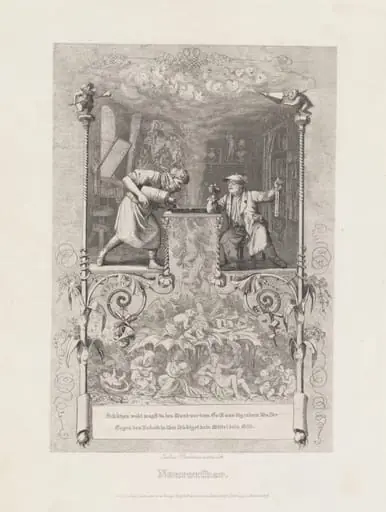 Neureuther (Self-Portrait in the Etching Studio)
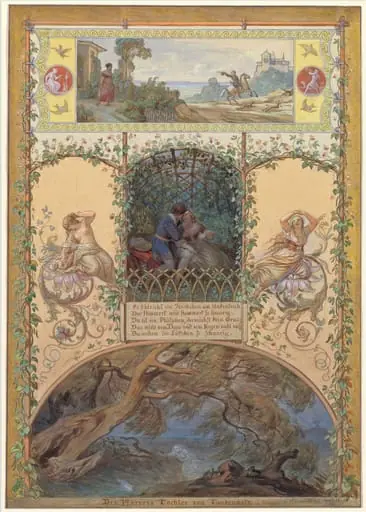 Des Pfarrers Tochter von Taubenhein (The Parson's Daughter from Taubenhain)
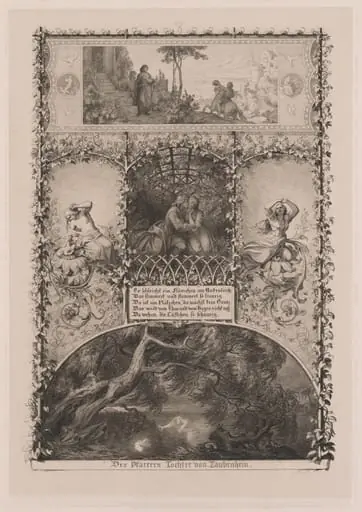 Des Pfarrers Tochter von Taubenhein (The Parson's Daughter from Taubenhain)
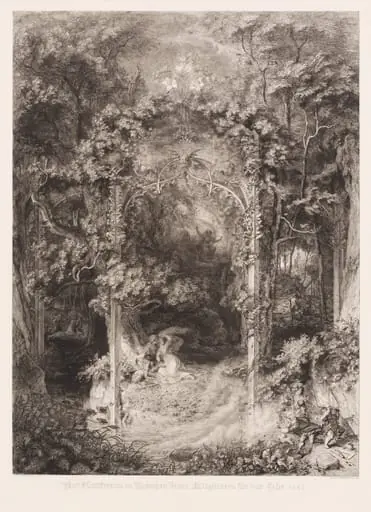 Das Waldfräulein (The Lady of the Forest)
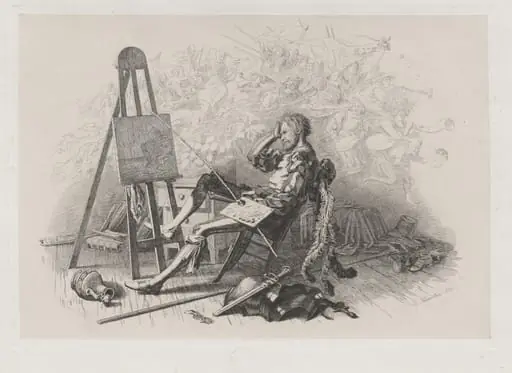 Morning after the Masked Ball: Emil Theodor Richter at His Easel
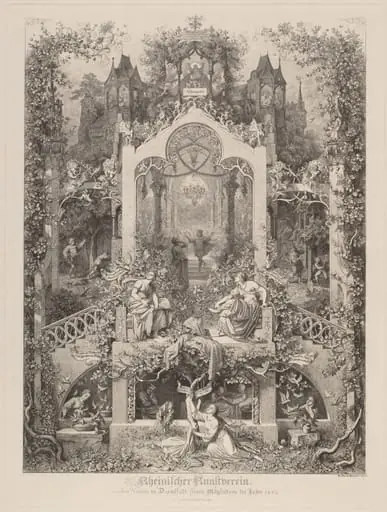 Aschenputtel (Cinderella)
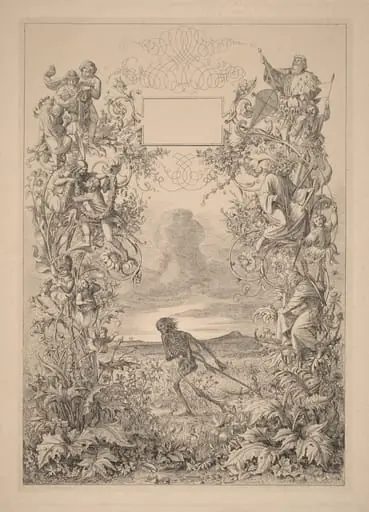 Heute Roth, Morgen Tod (Today Red, Tomorrow Dead)
 Ornamental design, probably for a title page: a figure of Time resting on a cartouche held up by a pair of tritons and holding a clock
 A Reliquary of Saint Sigismondo
 The Annunciation to Joachim
 Studies by Alfred Stevens
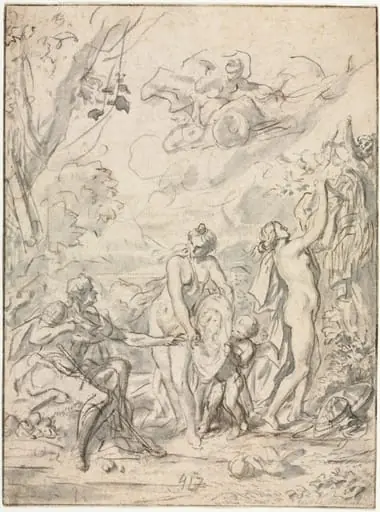 The Judgment of Paris
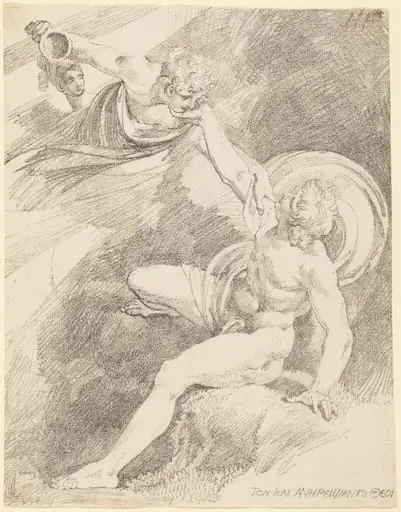 The Rape of Ganymede
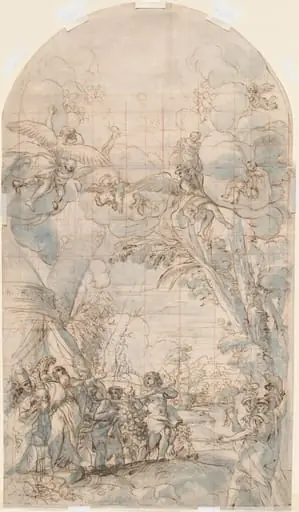 The Spies Returning from Canaan
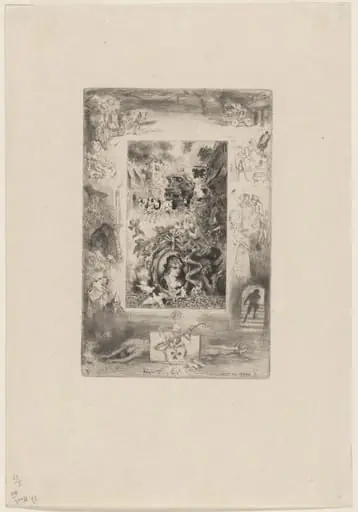 La Diligence de Beaucaire
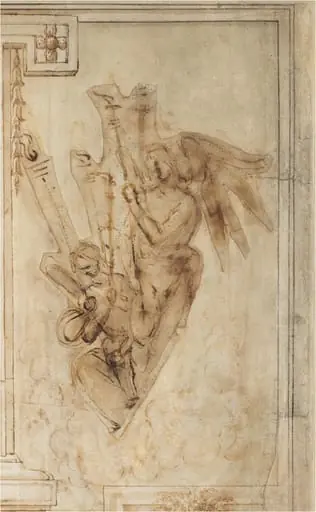 Two Angels Carrying Torches
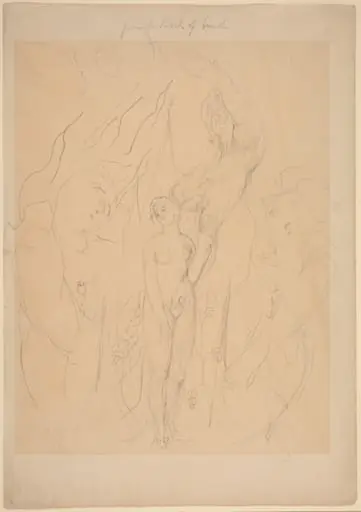 An Angel Teaching a Daughter of Men the Secrets of Sin
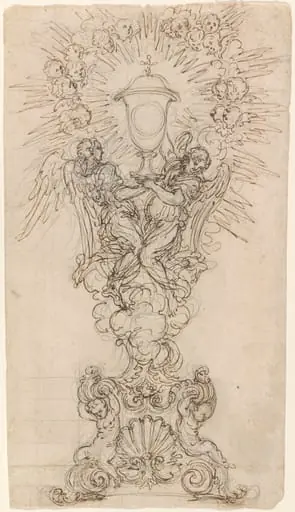 A Monstrance with Two Angels Supporting a Chalice
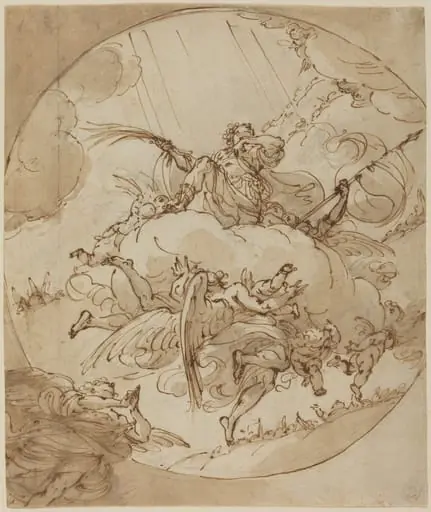 The Apotheosis of San Vitale