Artwork
St Mary Magdalen
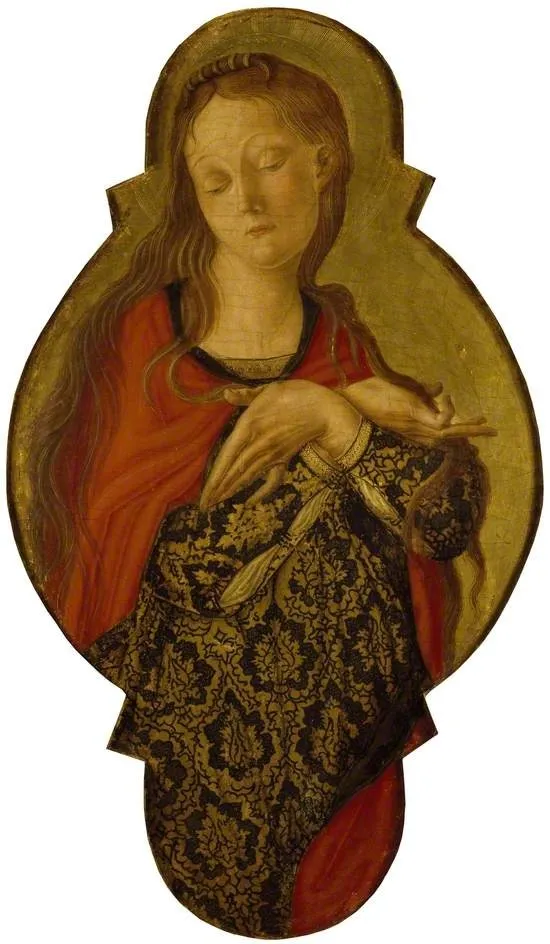
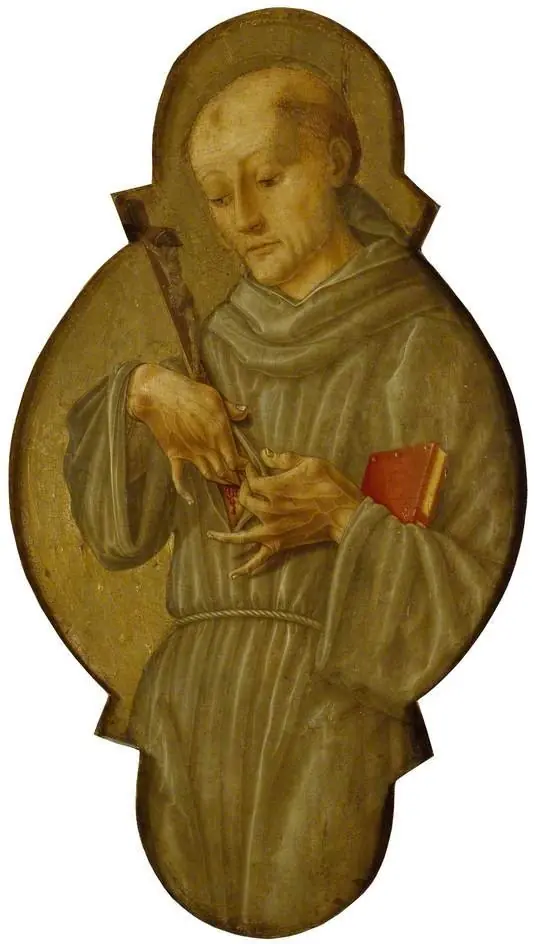
St Mary Magdalen is an unspecified painting by Nicola di Maestro Antonio d'Ancona. It dates from 1495 and is held in the collection of the Ashmolean Museum.
About this work
Overview
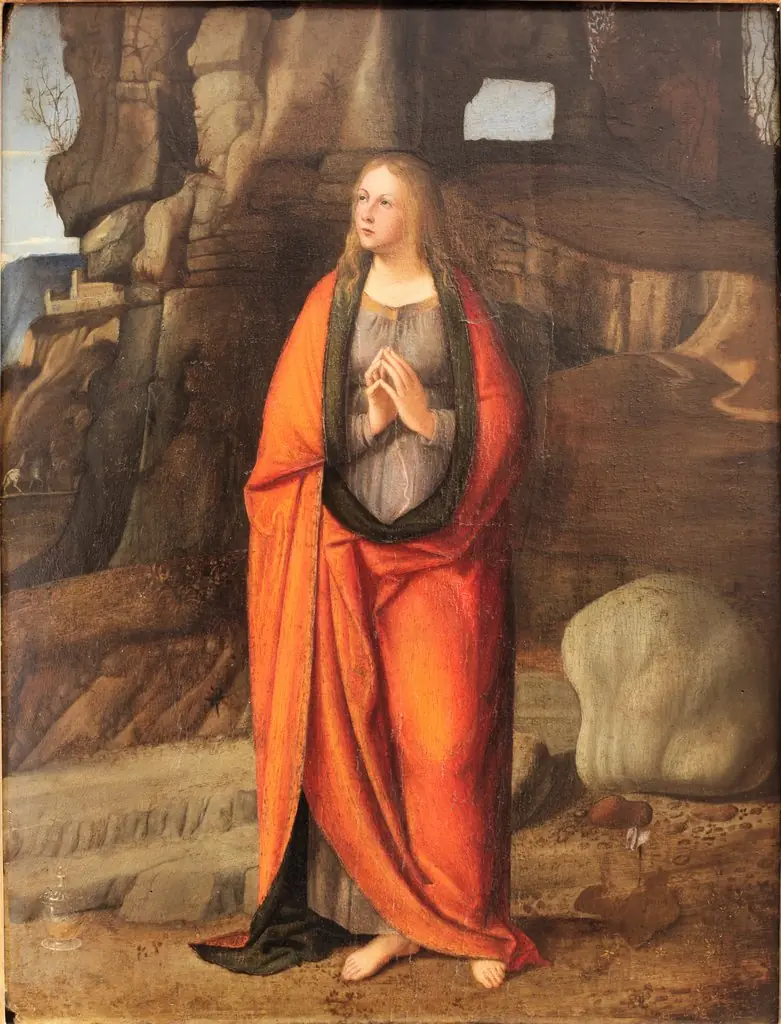
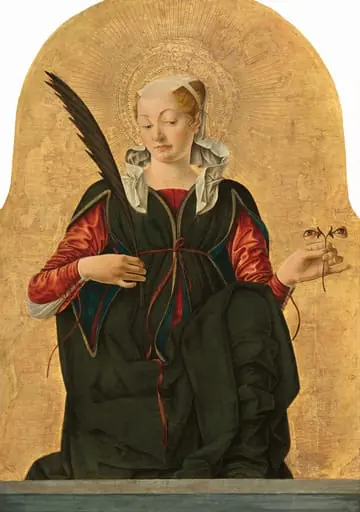
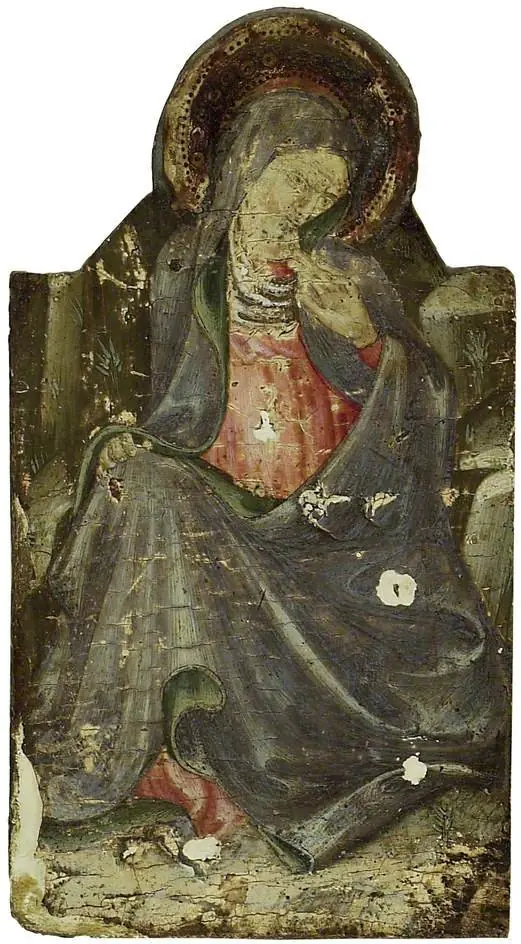
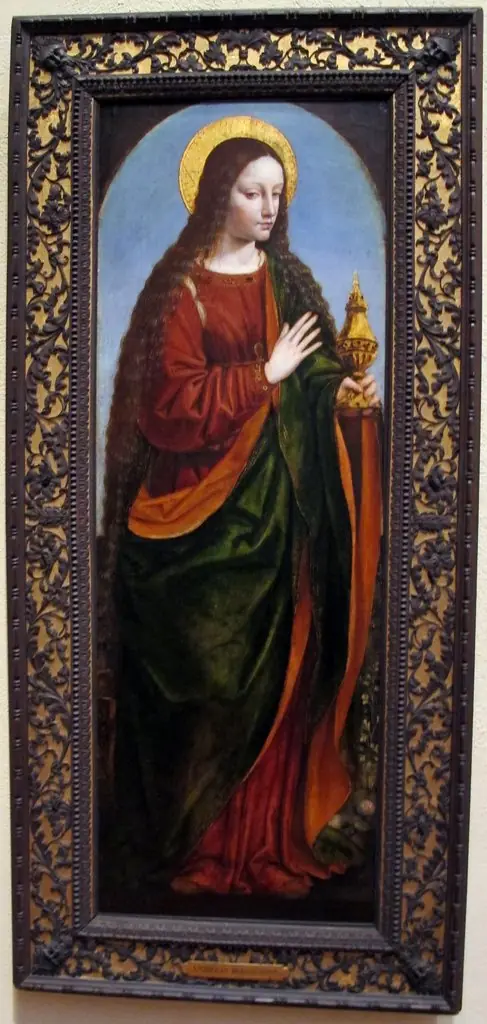
Painted around 1495 by Nicola di Maestro Antonio d'Ancona, this devotional panel depicts Saint Mary Magdalen in a contemplative pose.
Painted around 1495 by Nicola di Maestro Antonio d'Ancona, this devotional panel depicts Saint Mary Magdalen in a contemplative pose. Executed in tempera and gold leaf on wood, the work is part of the Ashmolean Museum’s collection. Its quiet intensity and refined detail reflect the devotional painting traditions of late 15th-century Italy, particularly in the Marche region where the artist was active.
Subject & Meaning
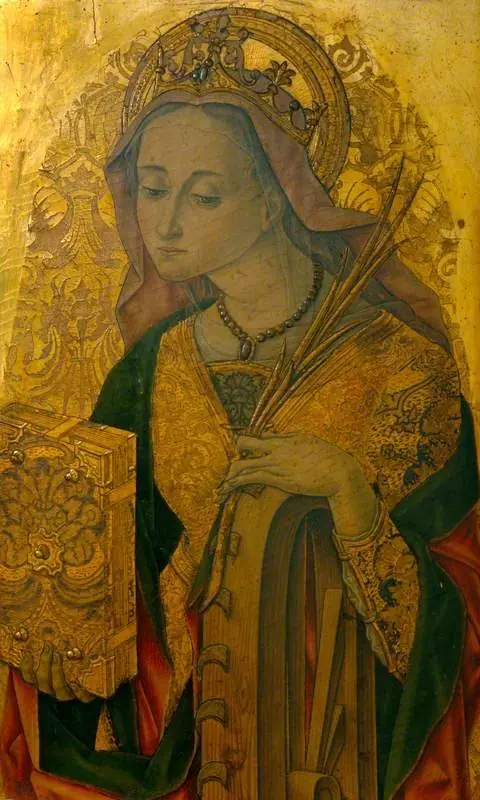
The figure represents Mary Magdalen in her penitent form, a common subject in late medieval and Renaissance art. Her closed eyes and clasped hands suggest deep prayer, while her flowing hair alludes to the legend of her renunciation of worldly life. The rich garments signify both her former status and her spiritual transformation, aligning with contemporary hagiographic narratives that emphasized her inner devotion over outward display.
Technique & Style
The artist employed tempera paint with gold leaf accents to create luminous surfaces and intricate textile patterns. The black and gold brocade of her undergarment is rendered with fine linear detail, contrasting with the smooth, flowing drapery of the red robe. The face is rendered with subtle modeling, avoiding dramatic expression in favor of serene stillness, characteristic of devotional imagery meant for private meditation.
History & Provenance
The painting entered the Ashmolean Museum’s collection in the 19th century, though its earlier ownership remains undocumented. It likely originated in a private chapel or domestic devotional setting in the Marche region. No records of its commission survive, but its quality suggests it was made for a patron of modest means who valued spiritual imagery with refined craftsmanship.
Context
Nicola di Maestro Antonio d'Ancona worked in a period when religious imagery was central to personal piety, especially in central Italy. His style shows influences from both local Umbrian traditions and broader trends in Marchigian painting, blending delicate line work with restrained color. This work aligns with other small-scale panels produced for private devotion during the decades before the High Renaissance transformed Italian art.
Legacy
Though not widely known today, Nicola’s work contributes to the understanding of regional painting practices in late 15th-century Italy. This panel exemplifies how devotional subjects were rendered with quiet dignity for intimate use, distinct from the grand altarpieces of larger urban centers. It remains a modest but significant record of the spiritual aesthetics of its time.
Artist & collection
Artist
Nicola di Maestro Antonio d'Ancona
Nicola di Maestro Antonio d'Ancona (1460–1511) was an artist, born in Ancona.