Artwork
Horseman's Scene
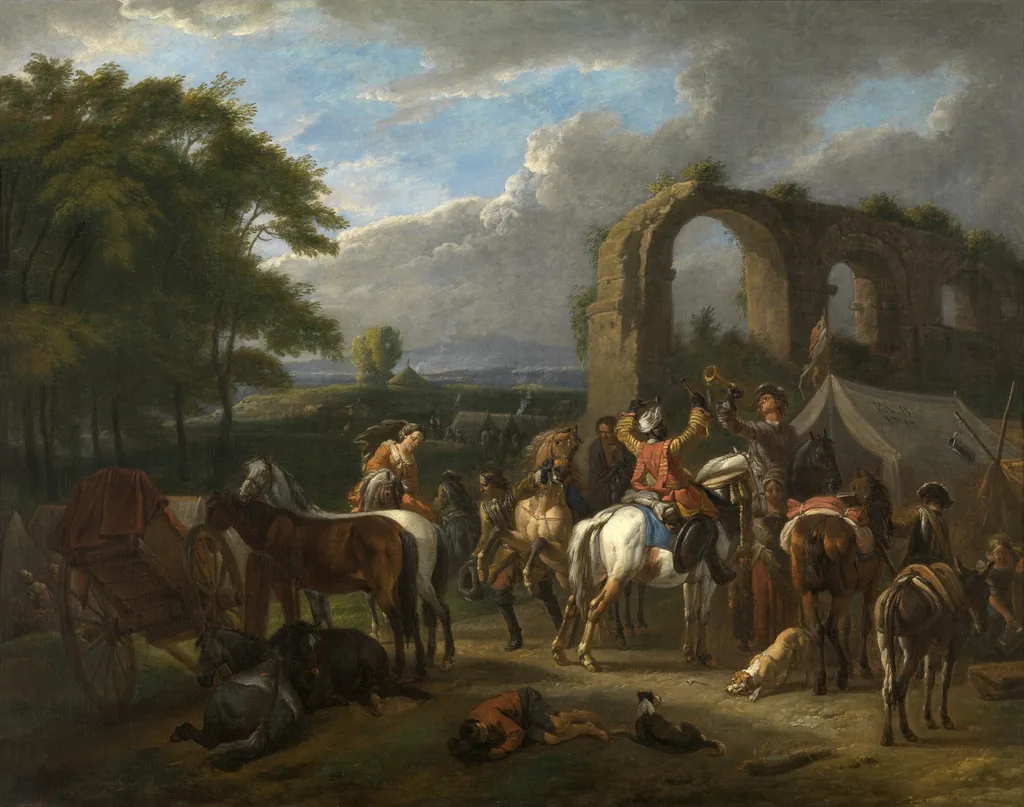
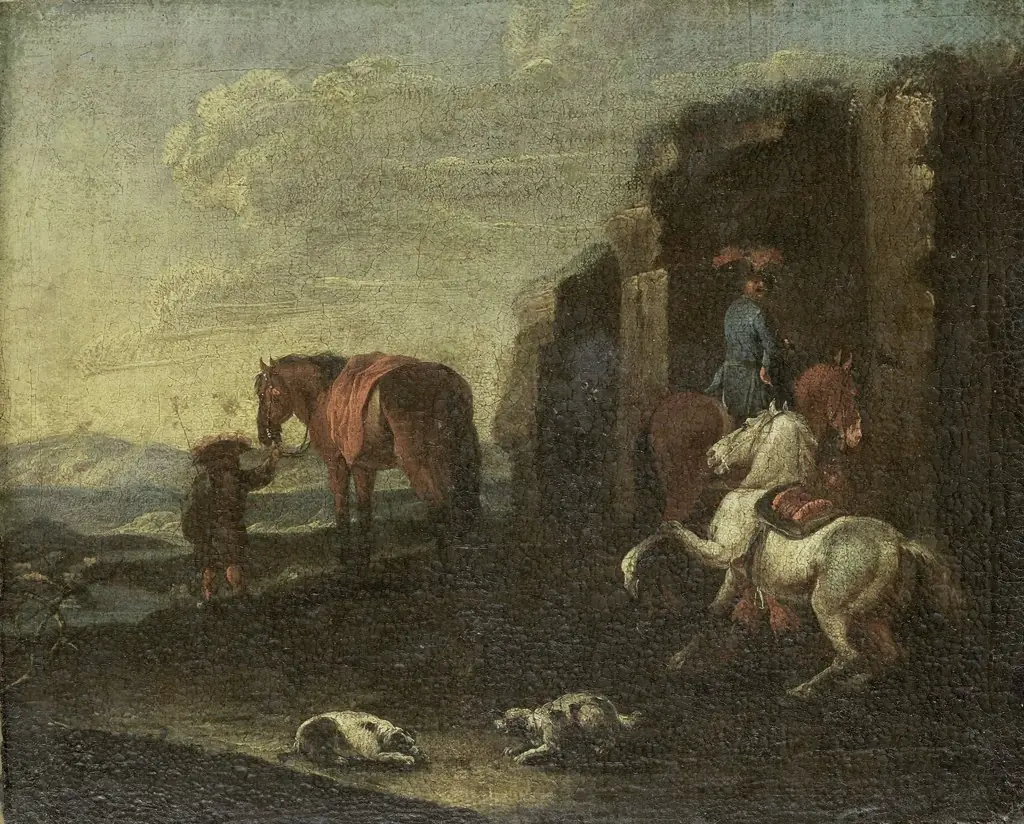
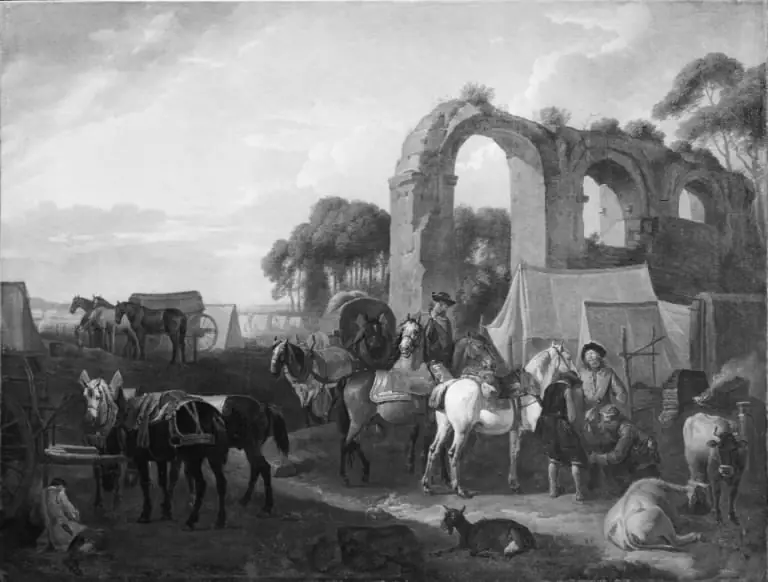
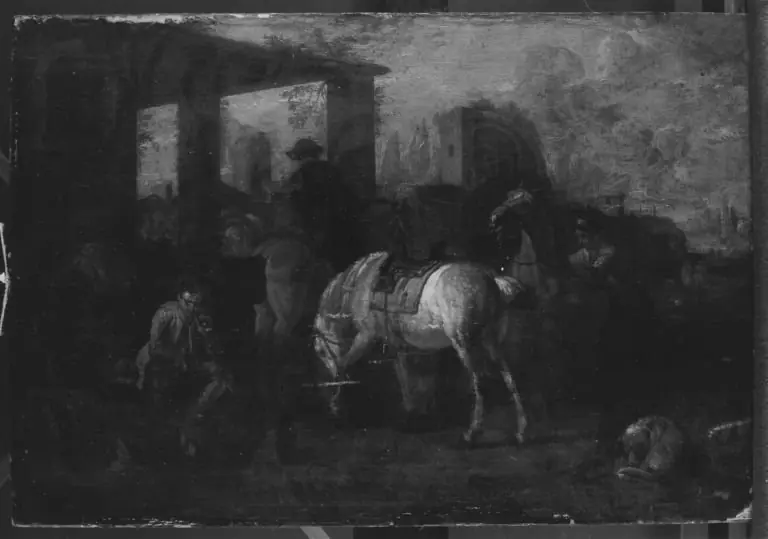
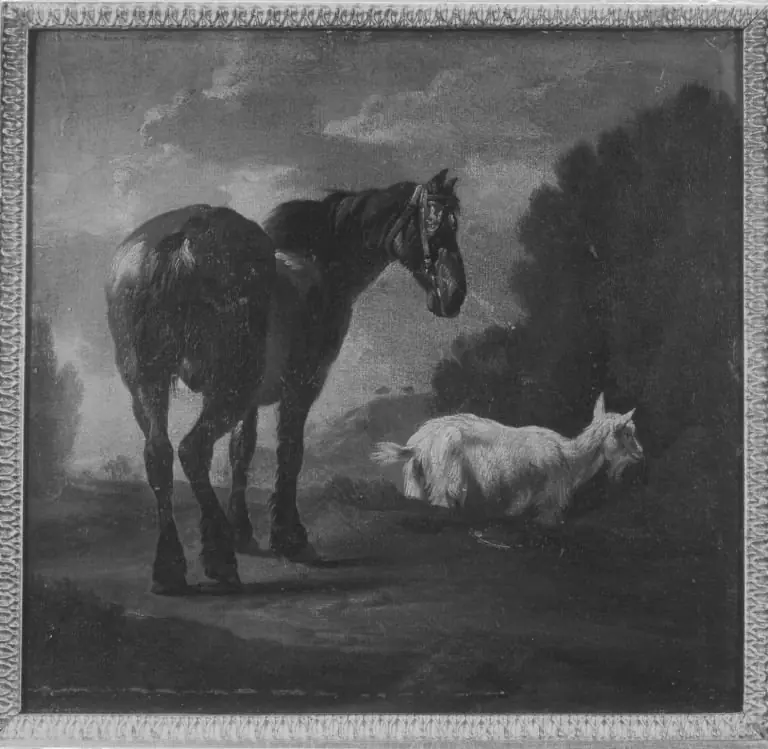
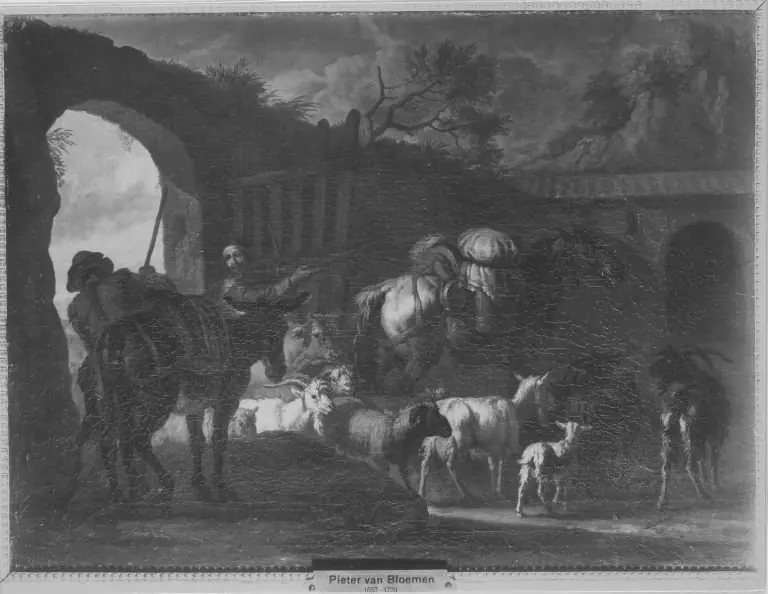
Horseman's Scene is an unspecified painting by the Flemish Baroque painting artist Pieter van Bloemen. It dates from 1713 and is held in the collection of the Royal Museum of Fine Arts Antwerp.
About this work
Overview
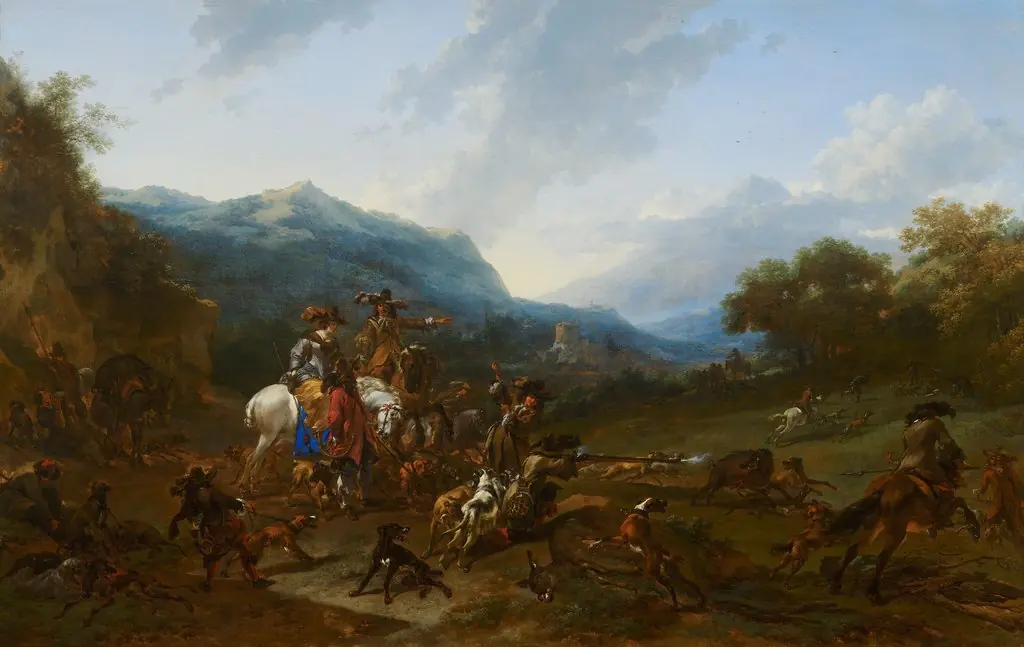
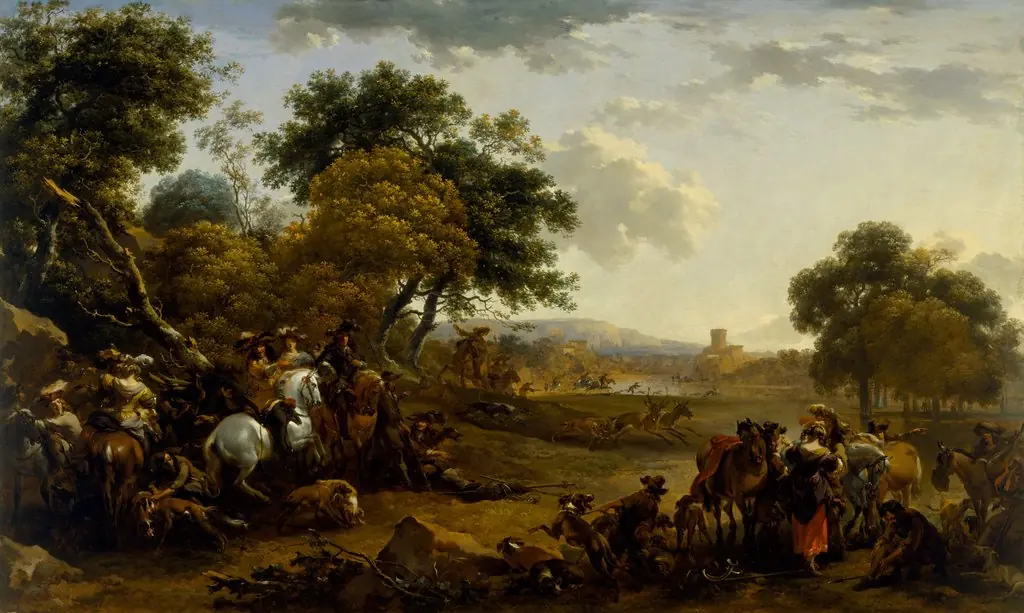
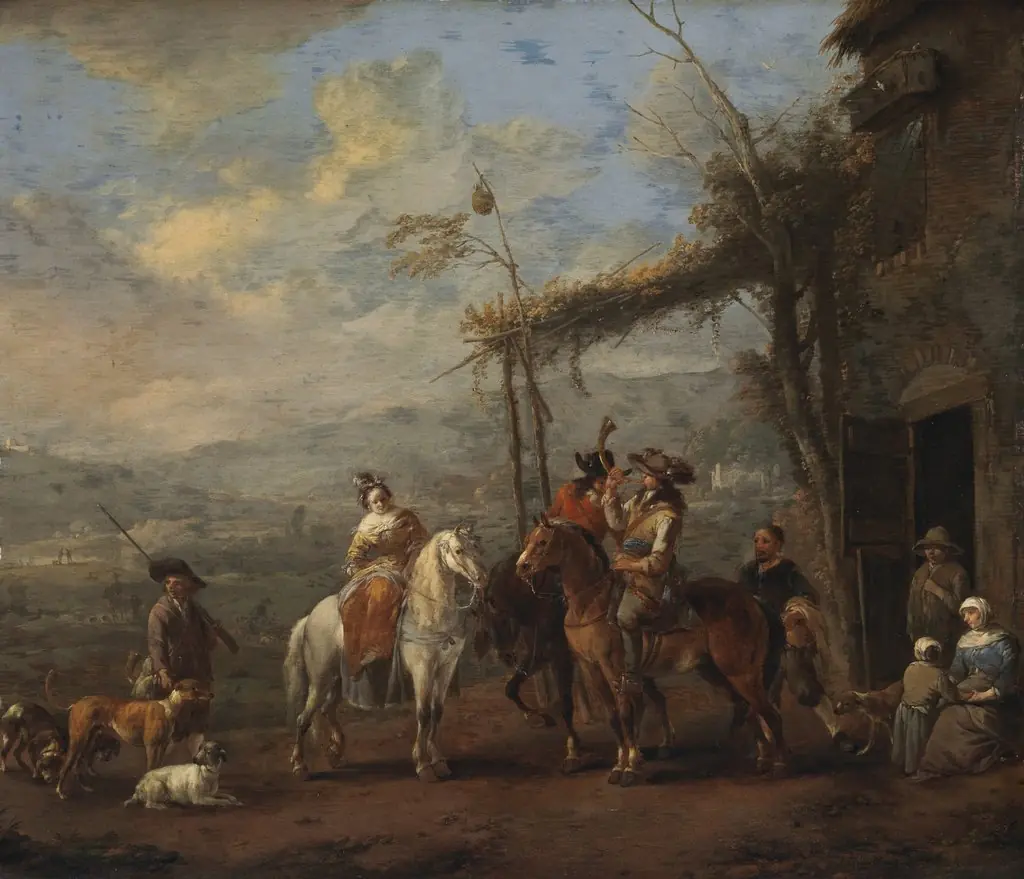
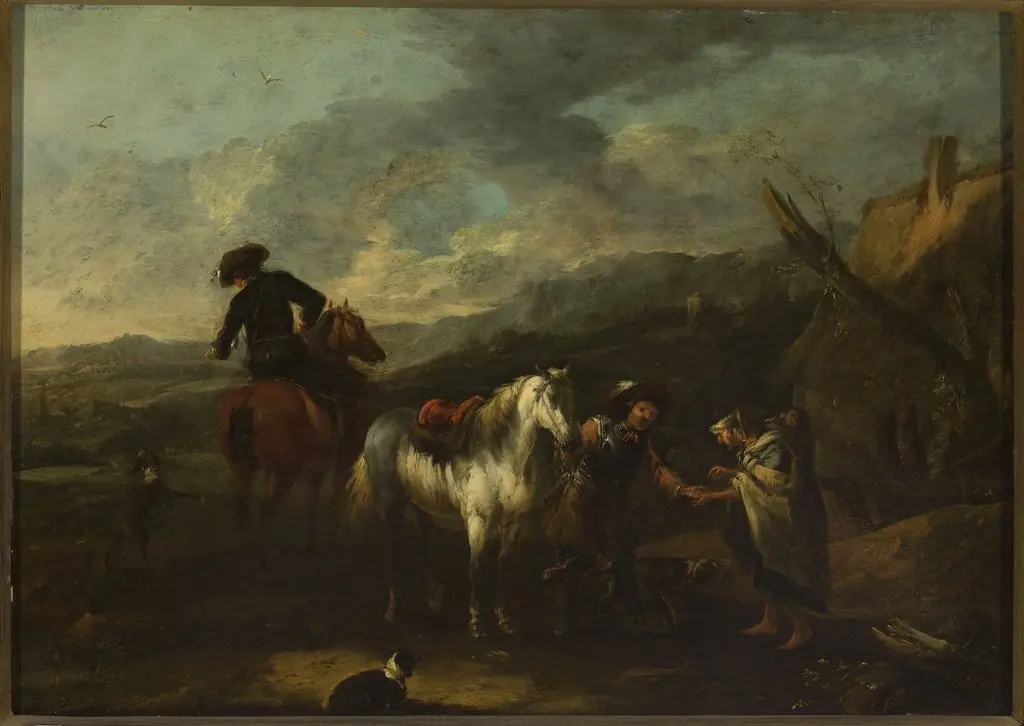
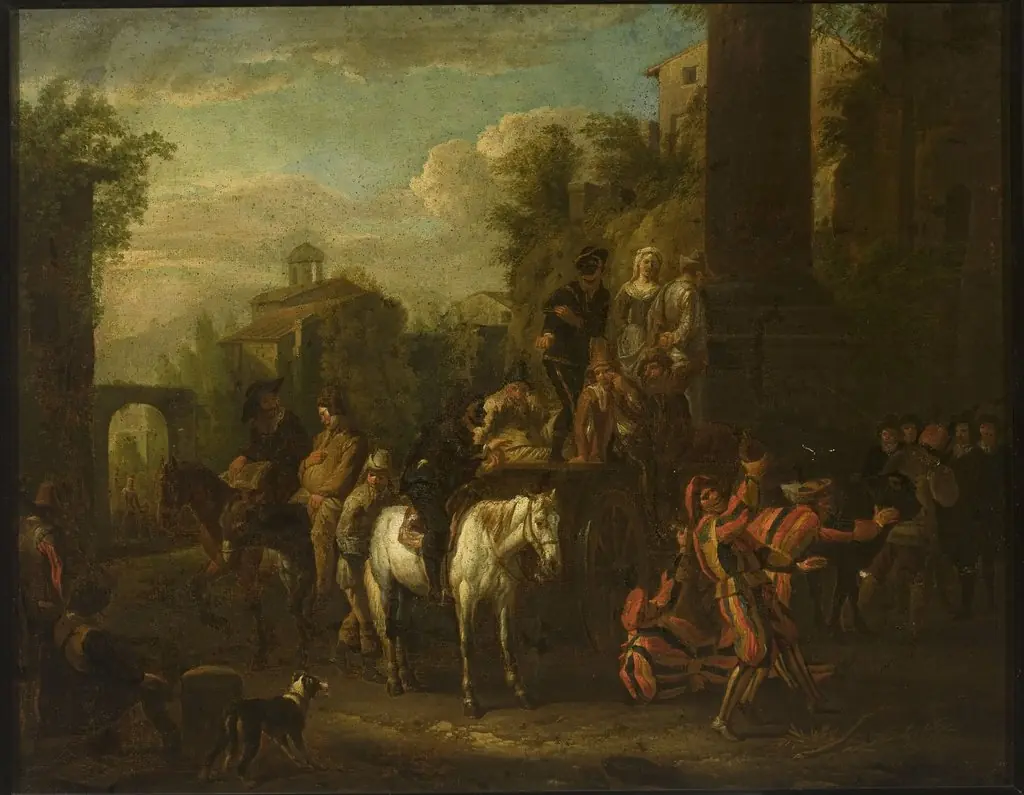
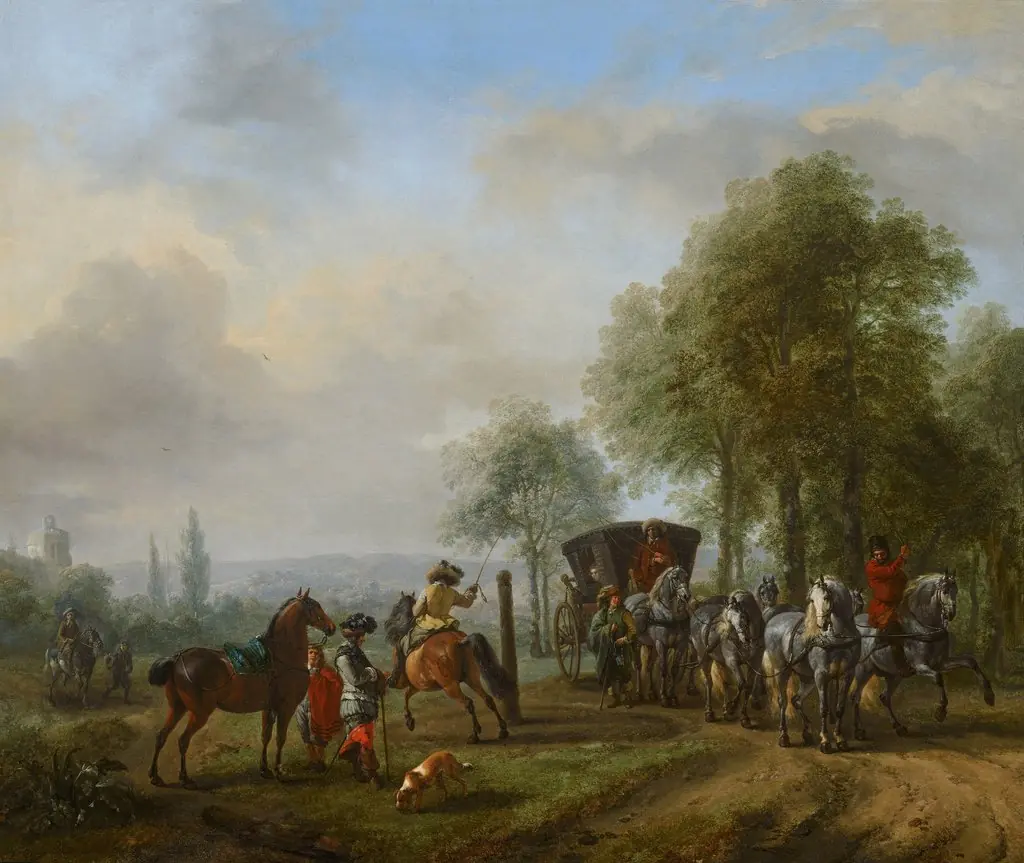
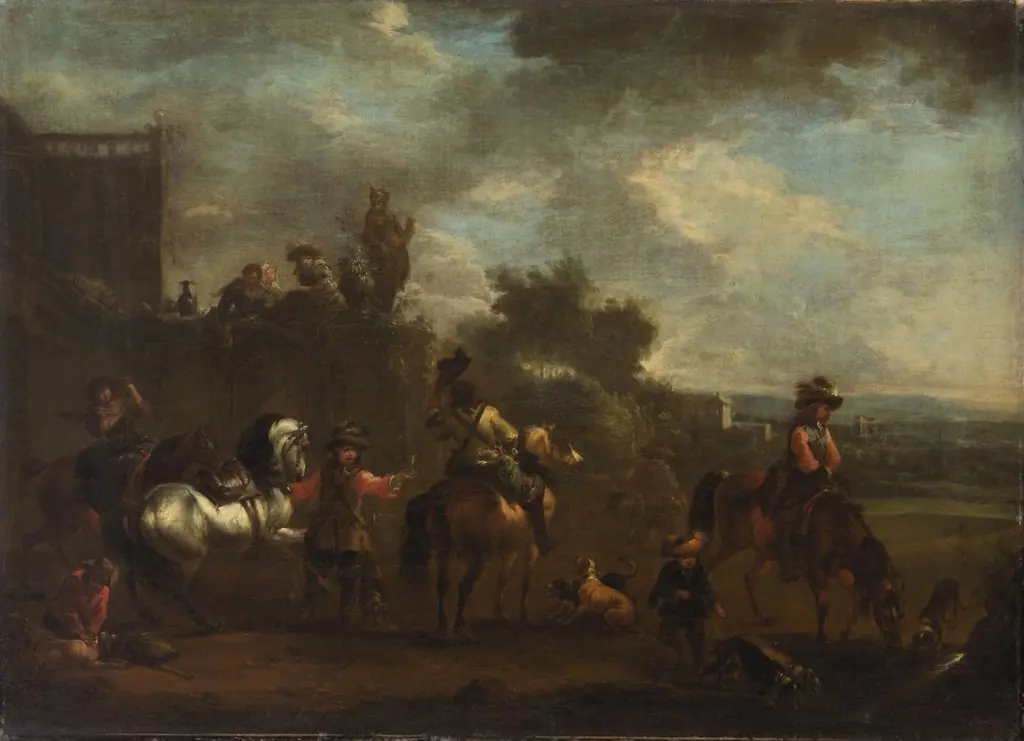
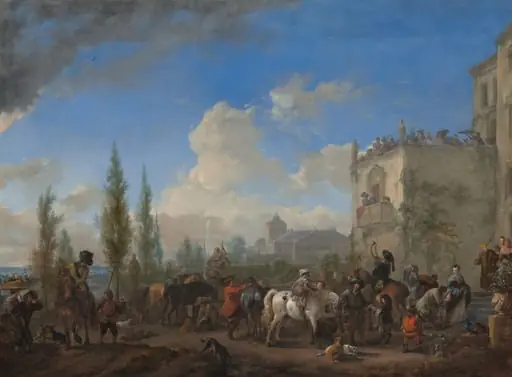
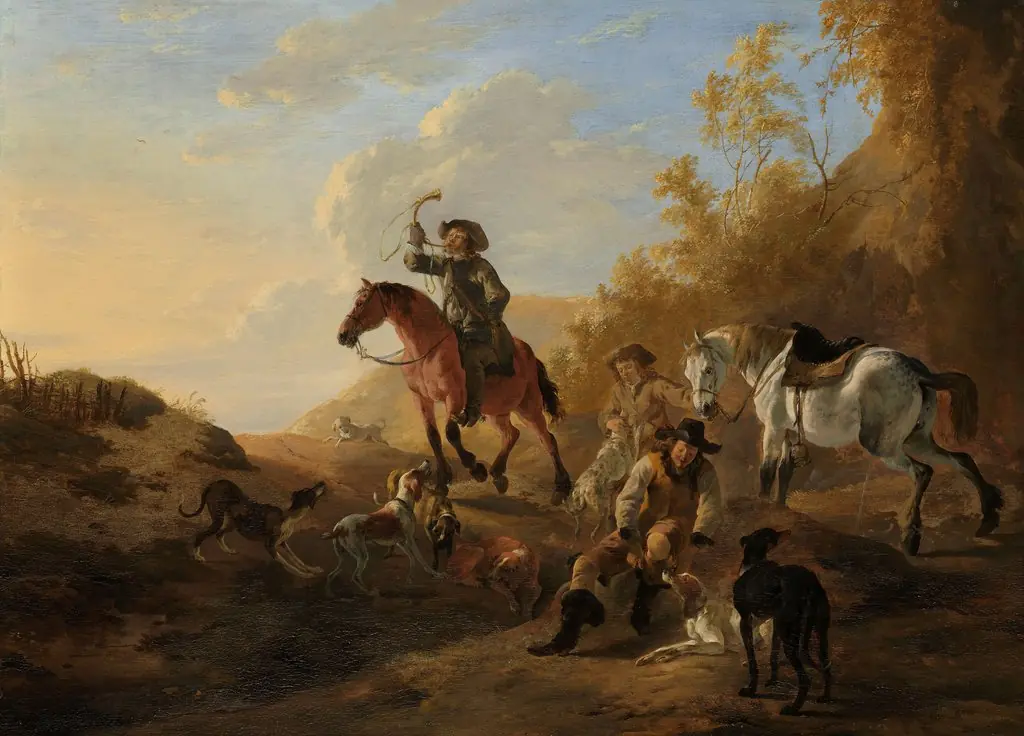
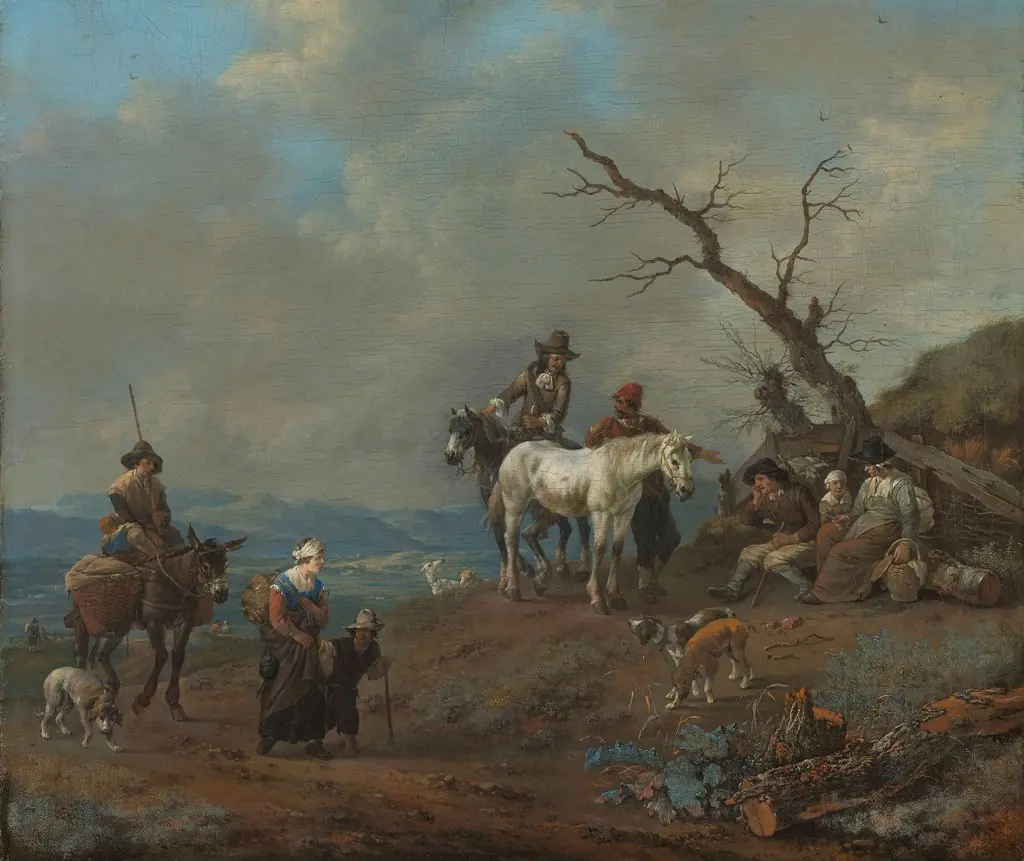
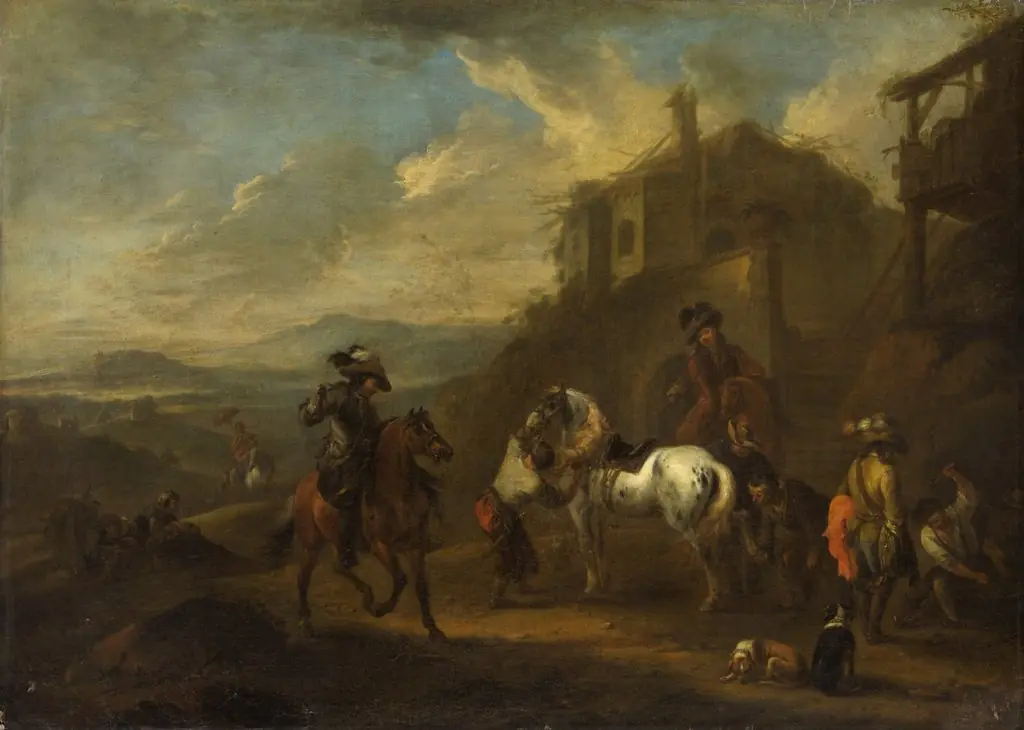
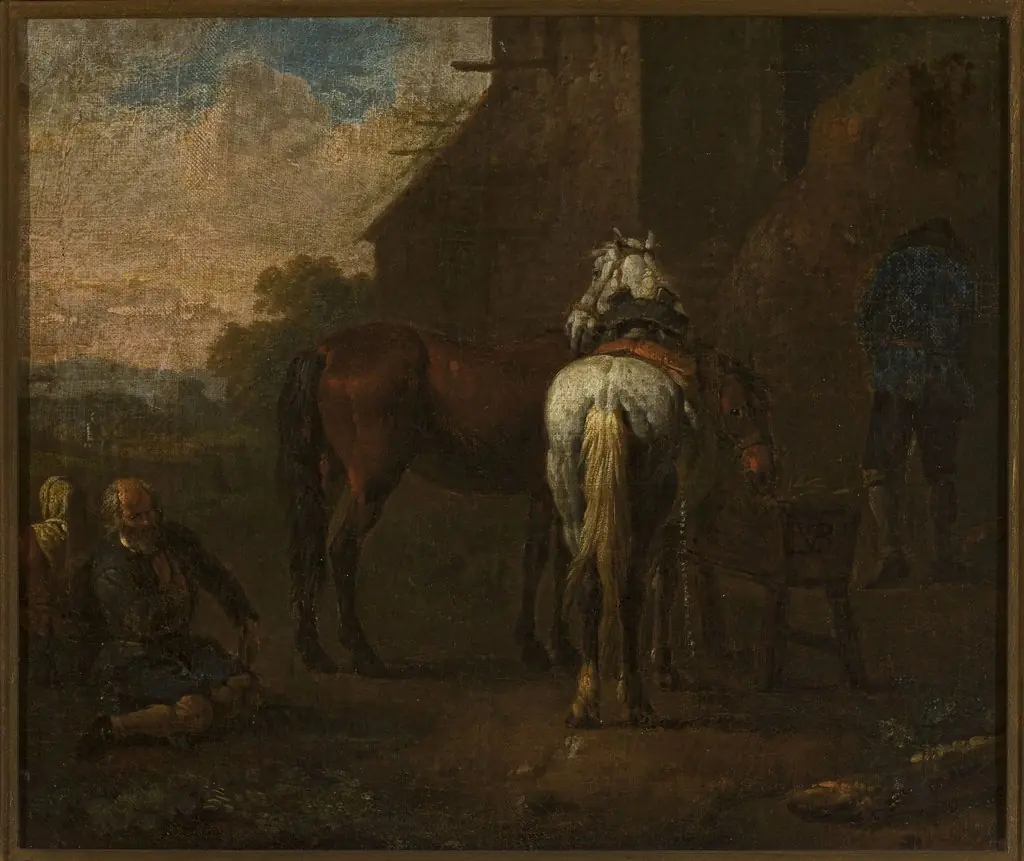
Painted in 1713 by Flemish artist Pieter van Bloemen, this work captures a group of horsemen and onlookers near a stone archway in a rural Italianate setting.
Painted in 1713 by Flemish artist Pieter van Bloemen, this work captures a group of horsemen and onlookers near a stone archway in a rural Italianate setting. Van Bloemen, known for his focus on equestrian and landscape subjects, rendered the scene with attention to naturalistic detail and atmospheric depth. The painting belongs to a series of works he produced during his time in Rome, reflecting his engagement with southern European topography and daily life.
Subject & Meaning
The scene portrays a moment of informal gathering, possibly a ceremonial procession or local festival, centered around a monumental arch. Figures in varied attire, including a horseman bearing a banner, suggest movement and social interaction. The absence of overt religious or mythological references points to a genre-focused narrative, emphasizing the vitality of everyday rural life rather than grand historical or allegorical themes.
Technique & Style
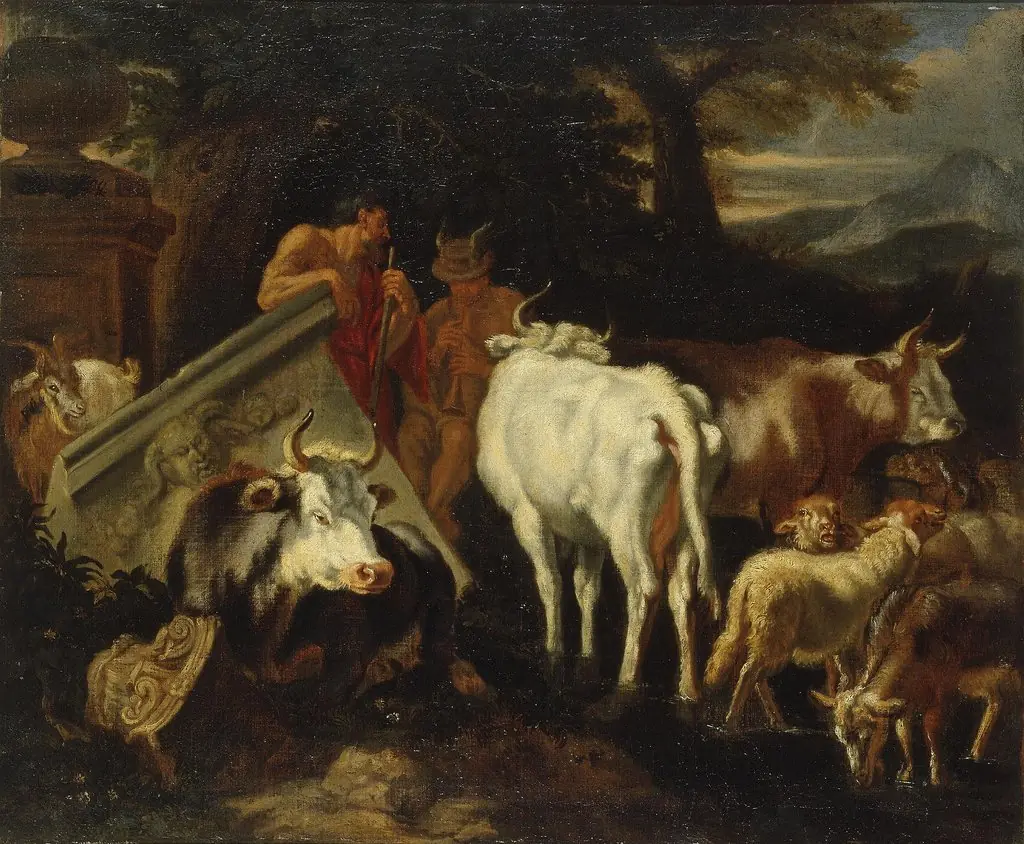
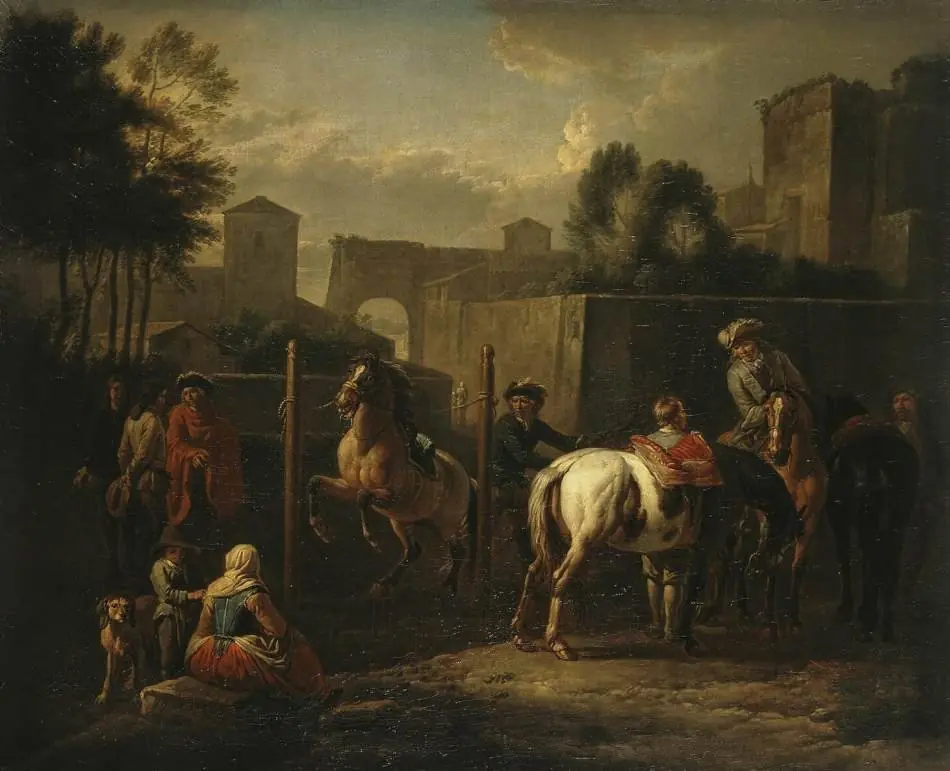
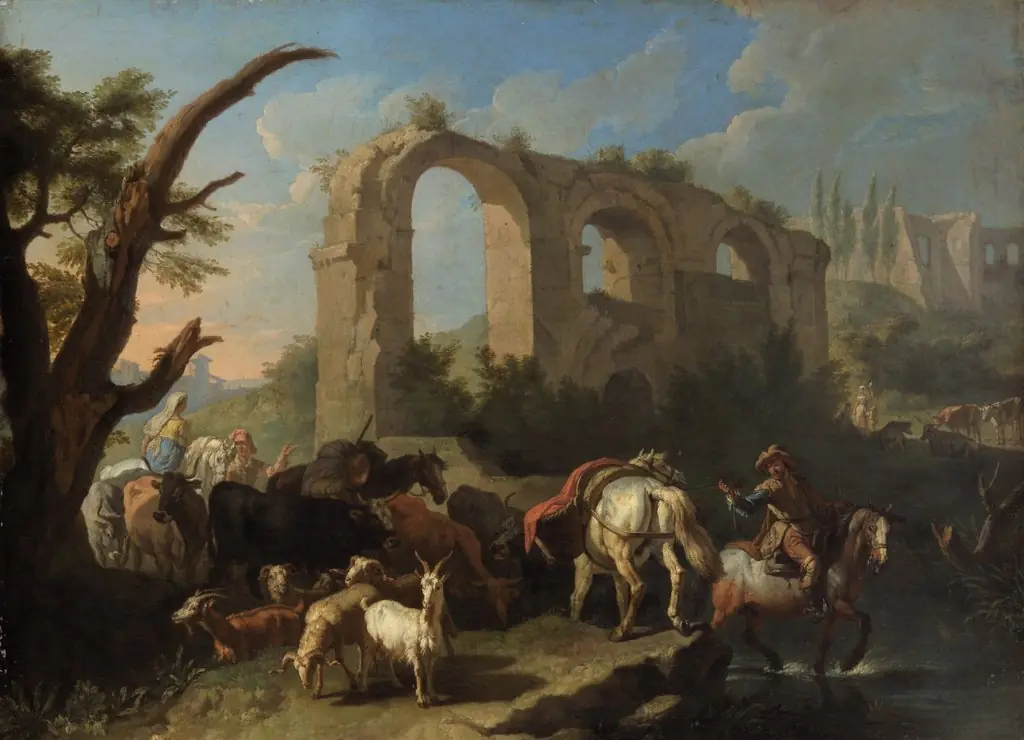
Van Bloemen employed chiaroscuro to model forms and enhance spatial depth, particularly in the rendering of figures and the arch’s stonework. Brushwork is precise yet fluid, capturing the texture of fabric, animal hide, and foliage with subtle variation. The composition balances dynamic figures in the foreground with a soft, open sky behind, a hallmark of Flemish Baroque landscape painting that prioritizes naturalism over idealization.
History & Provenance
The painting entered the collection of the Royal Museum of Fine Arts Antwerp in the 19th century, following the broader acquisition of Flemish works from private collections and monastic holdings. Its attribution to van Bloemen has remained consistent since its cataloging, supported by stylistic parallels to his other dated works from the early 1700s. No significant alterations or restorations are documented in its modern record.
Context
Van Bloemen traveled to Italy in the 1680s and spent decades there, absorbing the visual culture of Roman countryside and equestrian traditions. His paintings, including this one, reflect the tastes of Flemish patrons who admired Italianate scenery rendered with northern European precision. The work aligns with a broader trend among Northern artists to depict foreign landscapes with ethnographic detail and observational fidelity.
Legacy
Though not widely known outside specialist circles, van Bloemen’s contributions to Flemish landscape and animal painting influenced later generations of genre painters. His ability to merge naturalistic observation with compositional clarity helped sustain the tradition of equestrian scenes in Northern European art. This painting remains a representative example of his mature style and his role in bridging Flemish and Italian visual cultures.
Own this work as a print
Artist & collection
Artist
Pieter van Bloemen, also known as Standaart (bapt. 17 January 1657 – 6 March 1720), first name also spelled Peter or Peeter, was a Flemish painter, draughtsman and printmaker. He was a gifted landscape and animal artist…