Artwork
Man Clutching a Horse in Water, after Poussin's "Deluge" (recto); Compositional Study? (possibly for "Poussin's Deluge") (verso)
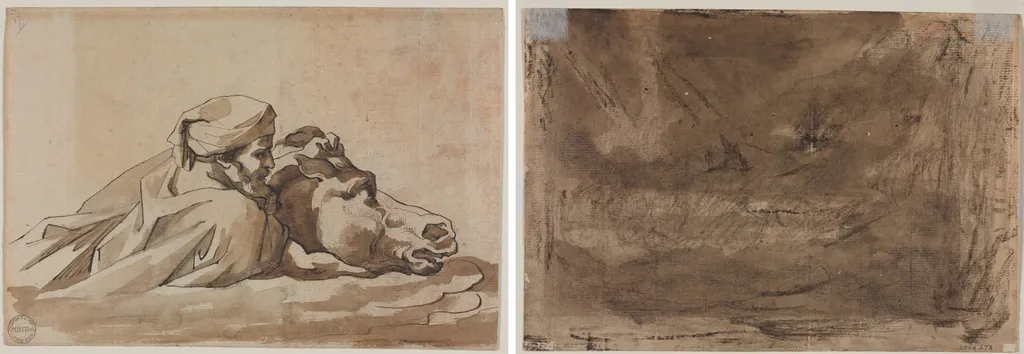
Man Clutching a Horse in Water, after Poussin's "Deluge" (recto); Compositional Study? (possibly for "Poussin's Deluge") (verso) is a drawing by the Romanticist artist Théodore Géricault. It dates from 1816 and is held in the collection of the Cleveland Museum of Art.
About this work
Overview
Though modest in size, the composition conveys intense physical and emotional weight, signaling his shift toward a more monumental, archaic style.
This small drawing by Géricault reproduces a dramatic moment from Poussin’s painting The Deluge, depicting a man and horse locked in a desperate struggle against rising waters. Executed in ink and wash, the sheet reflects Géricault’s deliberate engagement with classical sources during the mid-1810s. Though modest in size, the composition conveys intense physical and emotional weight, signaling his shift toward a more monumental, archaic style.
Subject & Meaning
The scene captures a single, frozen instant of survival amid catastrophe: a man clutches the mane of a horse as both are submerged by turbulent water. The focus on bodily strain and shared fate suggests a meditation on human vulnerability and endurance. Géricault isolates this detail not merely as imitation but as an exploration of primal struggle, stripped of narrative context to emphasize raw physicality.
Technique & Style
Géricault employs thick, decisive contours and dense ink washes to model form and suggest the weight of water. The heavy lines define limbs and muscle tension, while layered washes create depth and the illusion of churning currents. This approach, influenced by Renaissance and classical models, abandons delicate detail for bold, sculptural clarity—hallmarks of his so-called 'antique manner' developed during this period.
History & Provenance
Created around 1815–1817, the drawing stems from Géricault’s intensive study of Old Master compositions, particularly Poussin’s biblical landscapes. He made numerous copies after prints and paintings as part of his artistic education, seeking to internalize compositional power. This sheet likely served as both study and personal exercise, not a preparatory sketch for a larger work, but a focused engagement with historical precedent.
Context
During the 1810s, Géricault turned away from contemporary subjects to examine the formal language of earlier art, including works by Raphael, Michelangelo, and Poussin. This shift coincided with broader European interest in classical ideals and the emotional gravity of ancient narratives. His copies were not acts of replication but tools for understanding how structure, gesture, and tone could convey enduring human experiences.
Legacy
The drawing exemplifies Géricault’s commitment to learning from the past as a means of forging a more powerful visual language. His engagement with Poussin’s composition influenced his later works, particularly in the handling of movement and mass under duress. Though unpublished in his lifetime, such studies reveal the quiet discipline behind his more famous public works.
Artist & collection
Artist
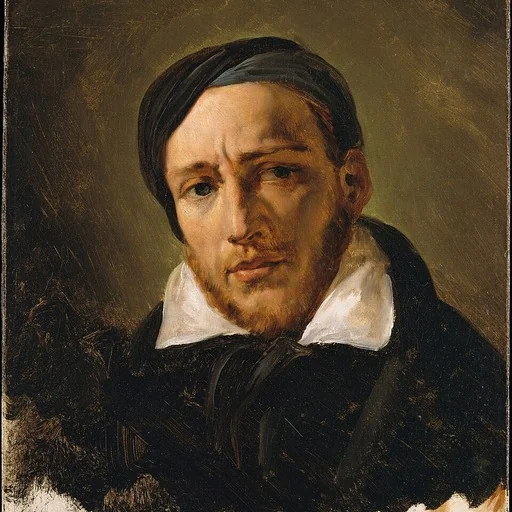
Jean-Louis André Théodore Géricault (French: ; 26 September 1791 – 26 January 1824) was a French painter and lithographer.

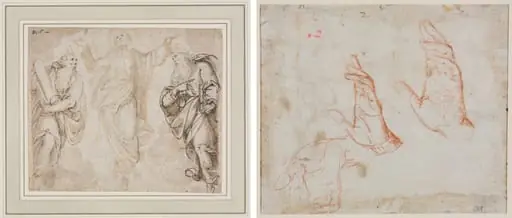 The Transfiguration (recto); Study of Hands (verso)
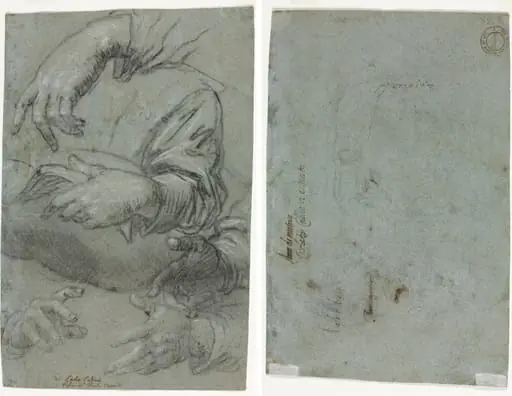 Studies of Hands (recto); Sketch of a Child's Head (verso)
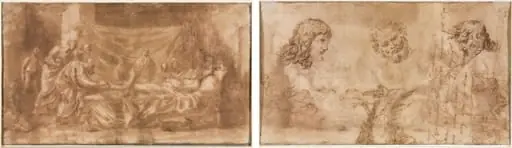 Extreme Unction (recto); Three Heads and Other Sketches (verso)
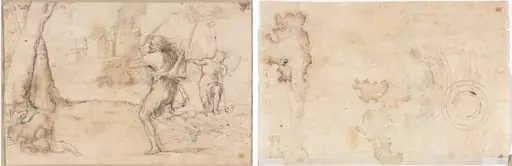 Romulus and Remus Found by Faustulus (recto) Concentric Circles (verso)
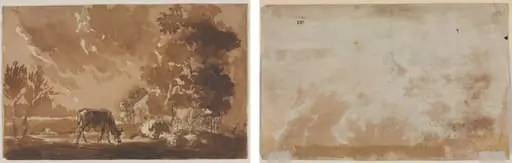 Landscape with Cattle (recto) Cattle (verso)
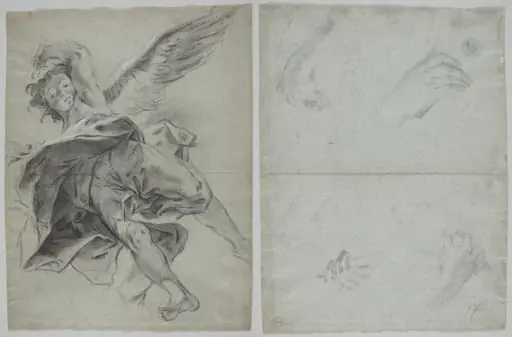 A Flying Angel (recto); Studies of Hands Playing Instruments (verso)
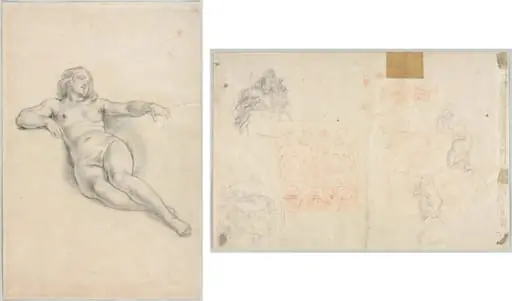 Reclining Female Nude (recto); Various Sketches of Figures and Plants (verso)
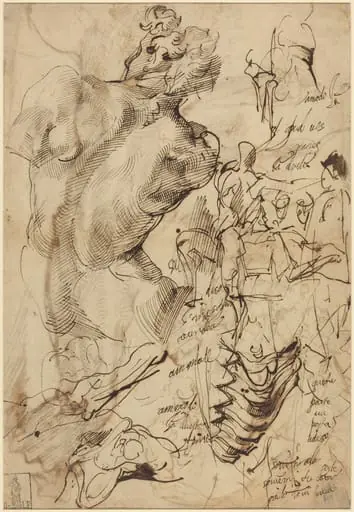 Studies of a Sculpture of a Male Nude, Vertebrae, and Gesturing Figures
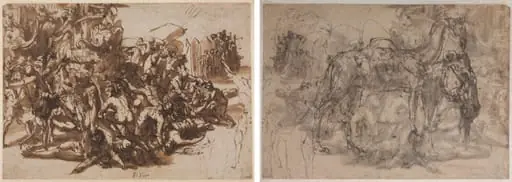 Poros Assailed by the Macedonian Army (recto); Sketches of Animals (verso)
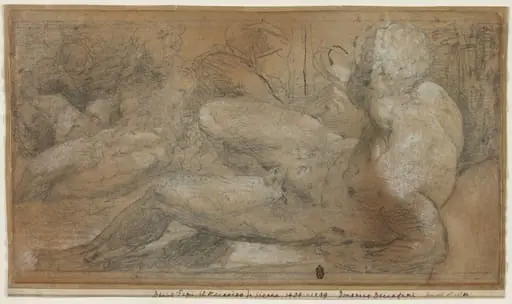 Three Male Nudes
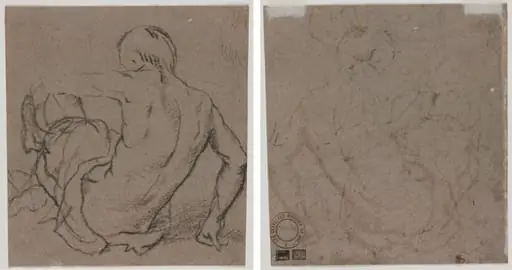 Man Seated on the Ground, Seen from Behind (recto); Sketch (verso)
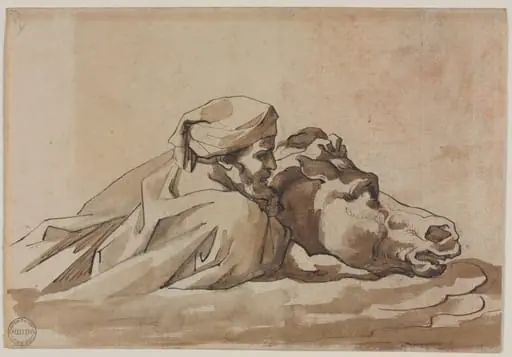 Man Clutching a Horse in Water, after Poussin's "Deluge" (recto)