Artwork
Untitled
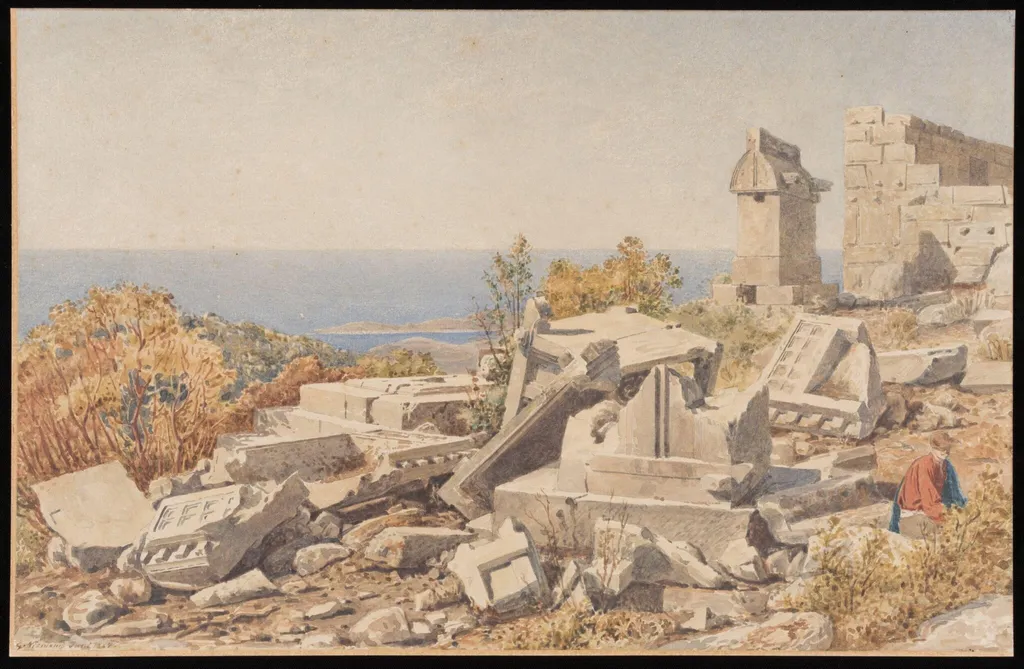
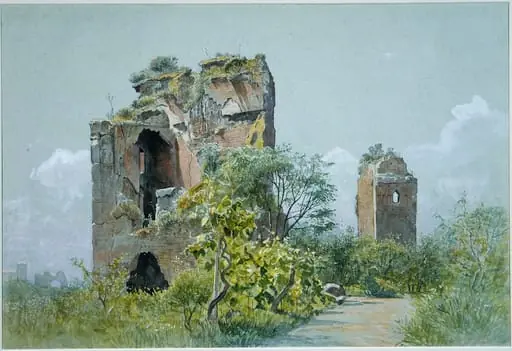
Untitled is a watercolor work on paper by the Impressionist artist Georg Niemann. It dates from 1882 and is held in the collection of the Victoria and Albert Museum. This watercolour depicts a coastal archaeological site, where weathered stone fragments lie scattered across a rocky slope.
About this work
Overview
The composition balances ruined structures in the foreground with two intact buildings in the upper right, framed by a wide, pale sea and a soft sky.
This watercolour depicts a coastal archaeological site, where weathered stone fragments lie scattered across a rocky slope. The composition balances ruined structures in the foreground with two intact buildings in the upper right, framed by a wide, pale sea and a soft sky. The scene conveys quiet abandonment, with no human activity beyond a solitary figure in red, suggesting contemplation rather than intervention.
Subject & Meaning
The artwork records the physical remnants of ancient tombs and architecture, emphasizing their gradual reclamation by the natural environment. The lone figure in red, small and still, serves as a witness rather than a participant, drawing attention to the passage of time and the impermanence of human construction against the enduring presence of land and sea.
Technique & Style
The artist employs light, dry brushwork to suggest texture and erosion, avoiding sharp definition in favor of atmospheric suggestion. Washes of muted green, brown, and pale blue create a restrained palette that mirrors the bleached tones of sun-bleached stone and sea. The sketchlike quality lends immediacy, as if the scene were observed and recorded in a single, quiet moment.
History & Provenance
The work was likely produced during a period of increased European interest in classical antiquities, possibly as part of a topographical or archaeological survey. Its intimate scale and delicate execution suggest it was made for private study or documentation rather than public display, reflecting a scholarly engagement with ruins rather than romanticized spectacle.
Context
In the early 19th century, artists and travelers frequently visited Mediterranean sites to record ancient remains before further decay or looting. This watercolour aligns with that tradition, capturing not grand monuments but their quieter, fragmented states—offering a more nuanced view of antiquity as something slowly dissolving into the landscape.
Legacy
The piece contributes to a visual record of archaeological sites during a formative period of heritage documentation. Its understated approach—favoring observation over drama—offers a counterpoint to more theatrical depictions of ruins, influencing later artists who sought to convey time’s quiet erosion rather than its dramatic collapse.
Artist & collection
Artist
Georg Niemann liked to sketch his breakfast. Every morning in his Berlin apartment he’d set a roll, a cup of tea, and whatever fruit was in season on the same wooden table and draw it again—same angle, same light—until…

 Tlos
Tlos Parthenon, Inside
 Ruins of the Old Fort, Calcutta
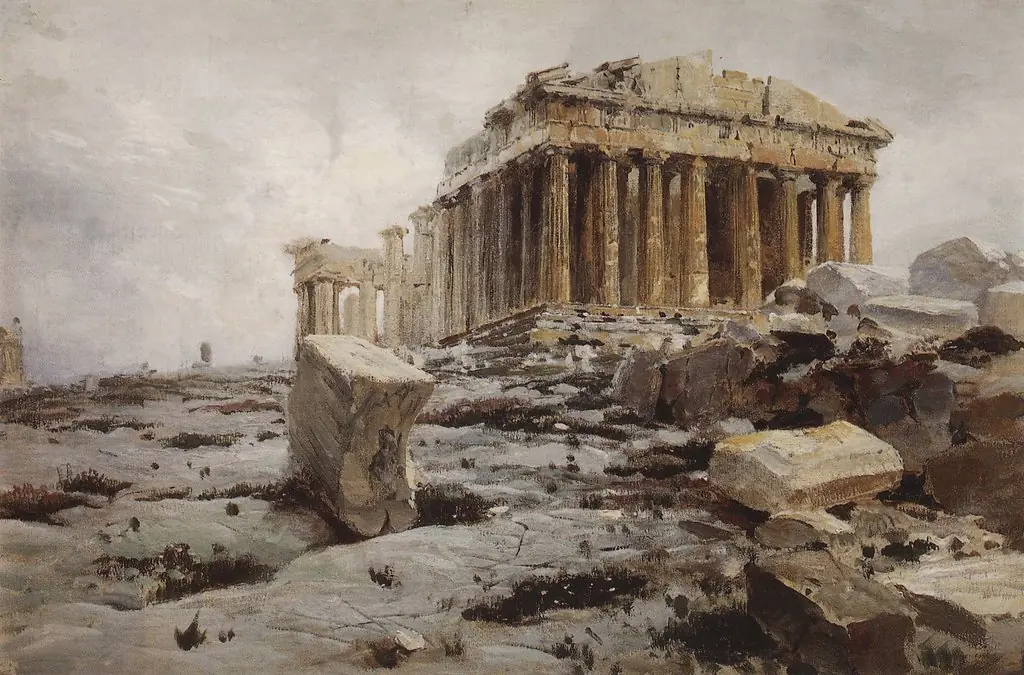 Parthenon
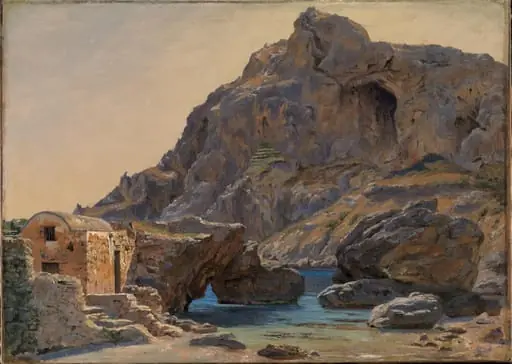 View of Marina Piccola, Capri: Afternoon Light
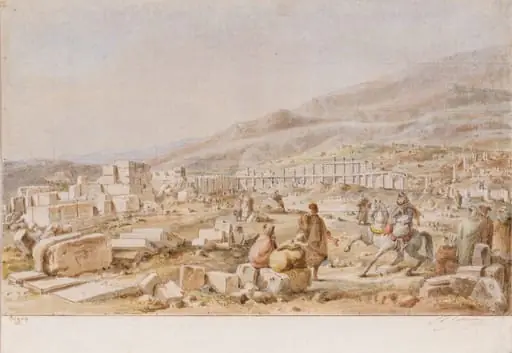 Ruine la Sigus
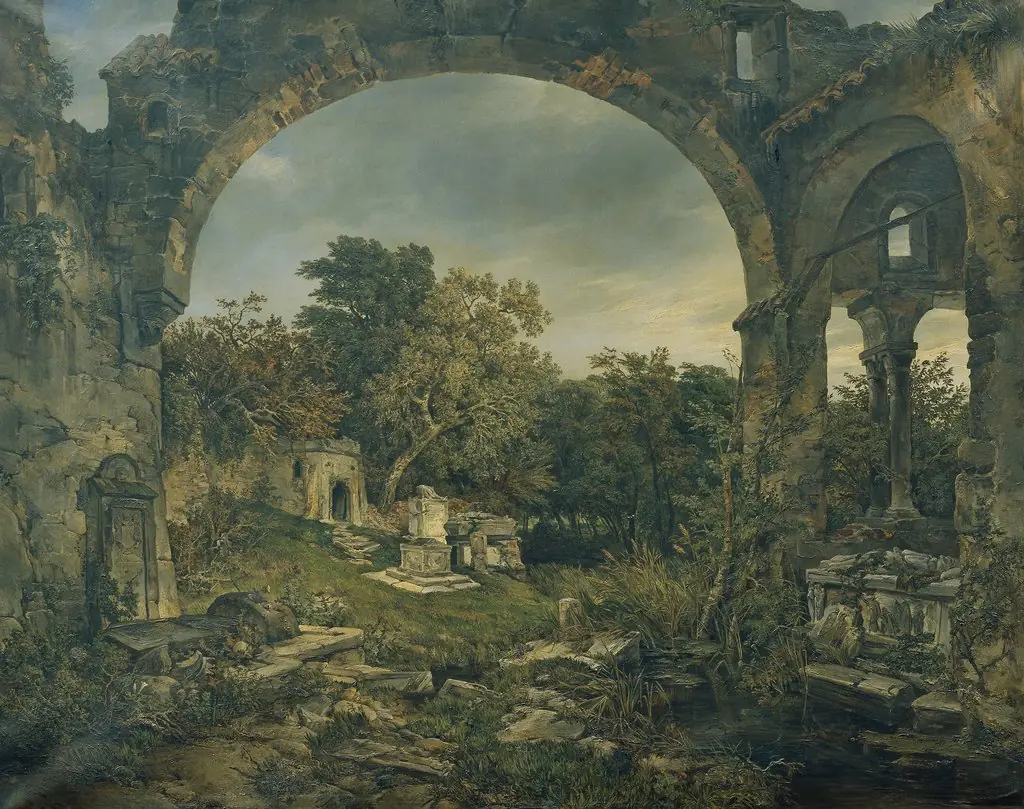 Verödeter Friedhof
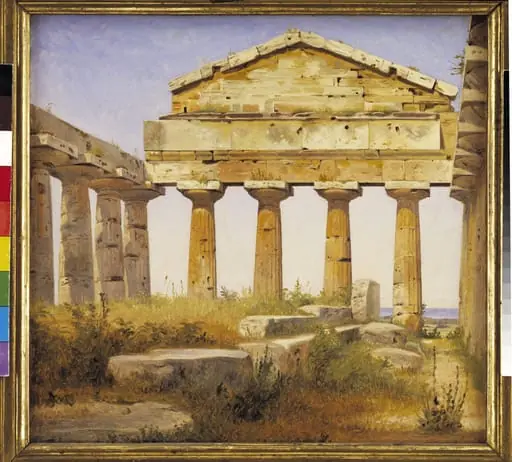 The Temple of Athena in Paestum
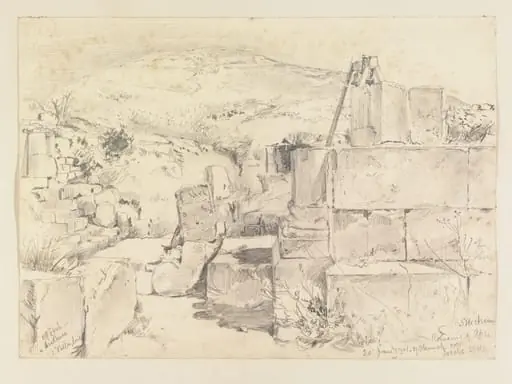 Shechem Remains of Apse of Church over Jacobs Well
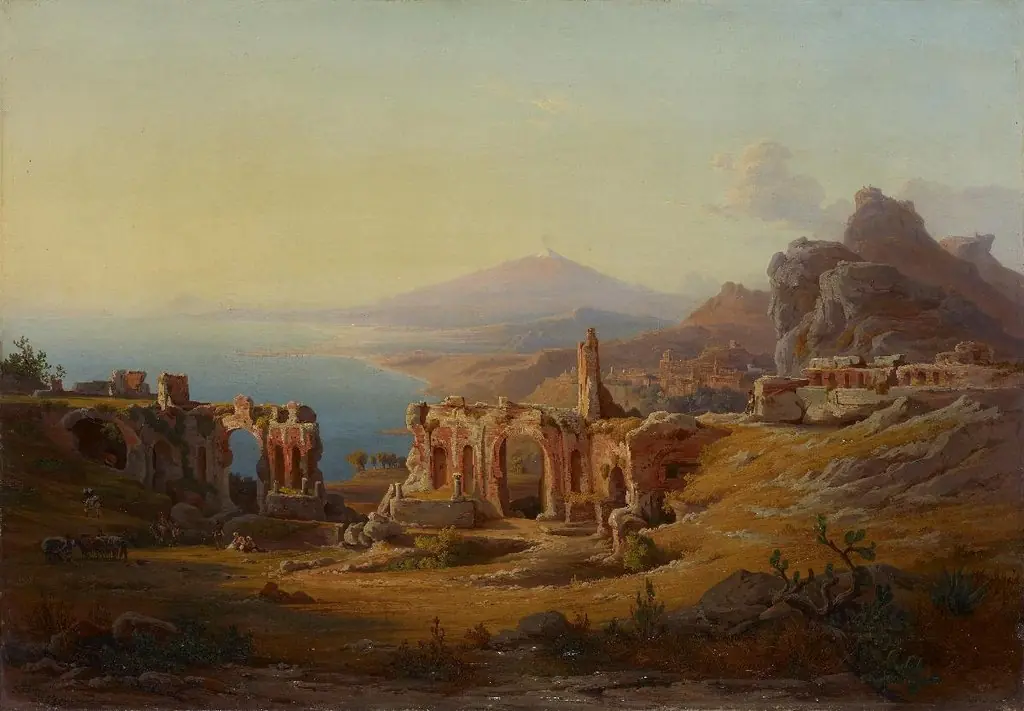 Taormina. Das Theater mit dem Aetna
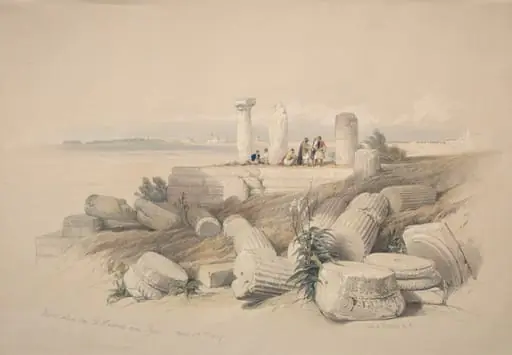 Ruins Called Om El Hamed near Tyre
 Baths of Trajan (Sette Sale, Villa Brancaccio, Rome)