Artwork
Parthenon, Inside
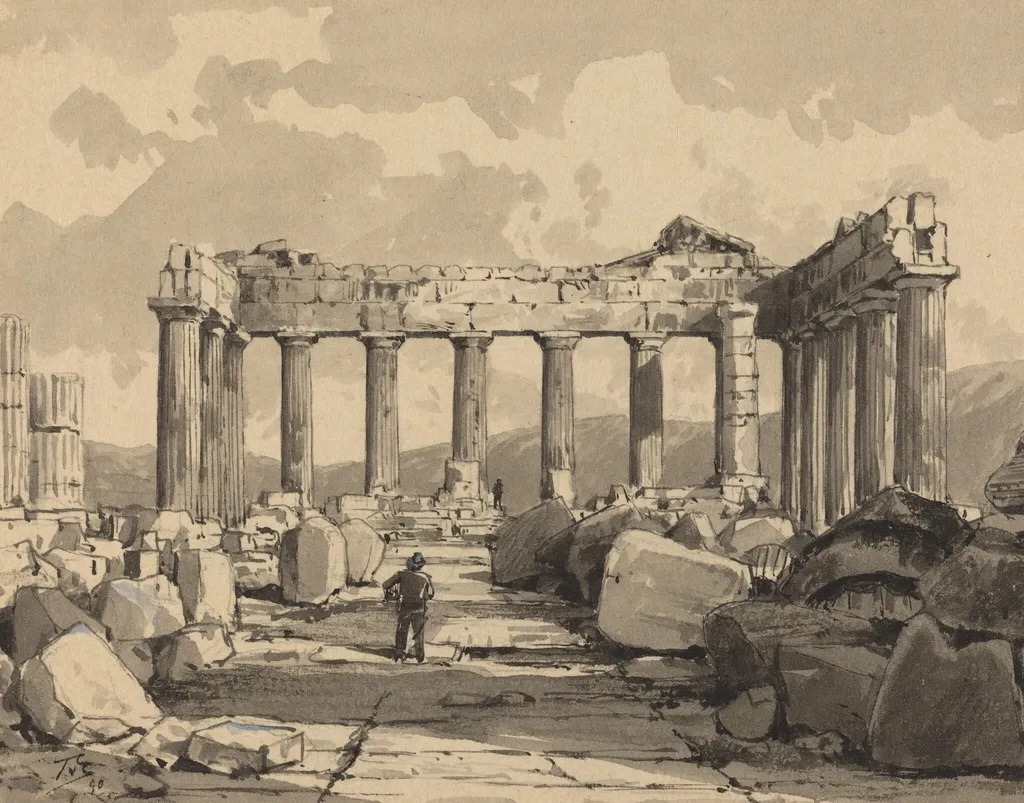
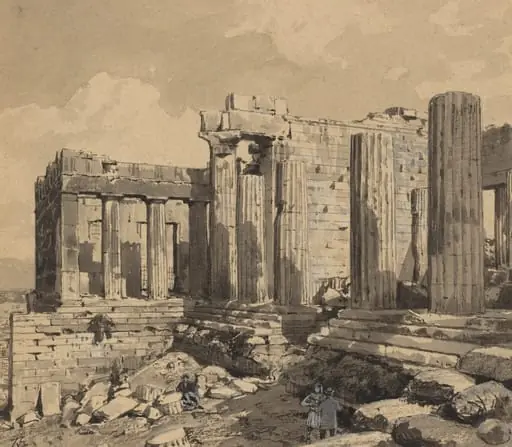
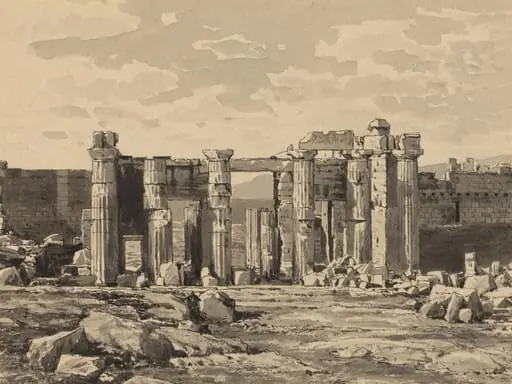
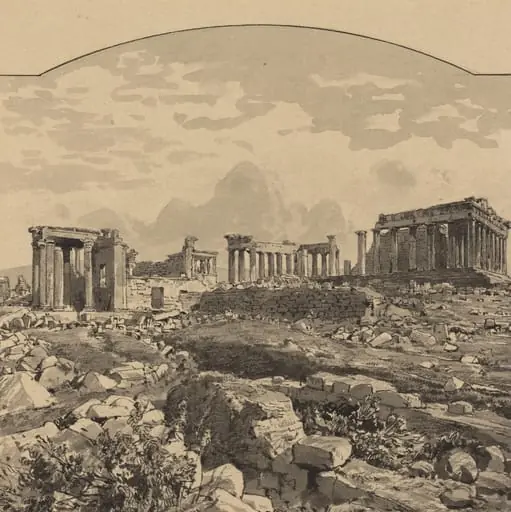
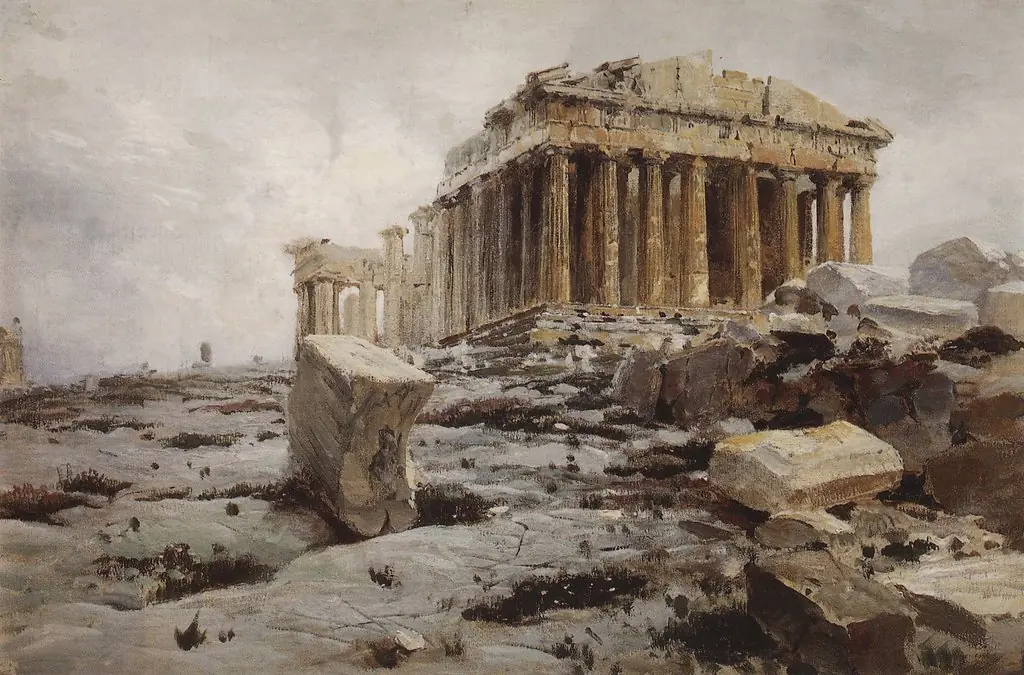
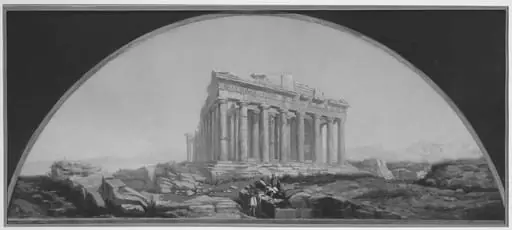
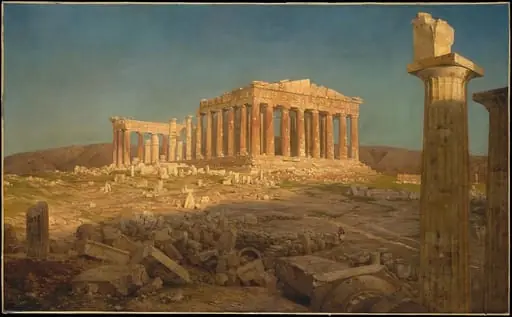
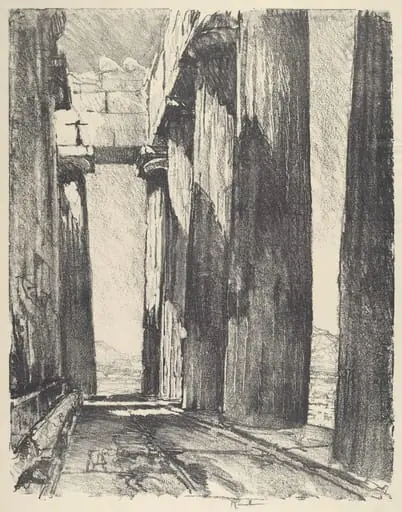
Parthenon, Inside is an ink drawing by the Impressionist artist Themistocles von Eckenbrecher. It dates from 1890 and is held in the collection of the National Gallery of Art.
About this work
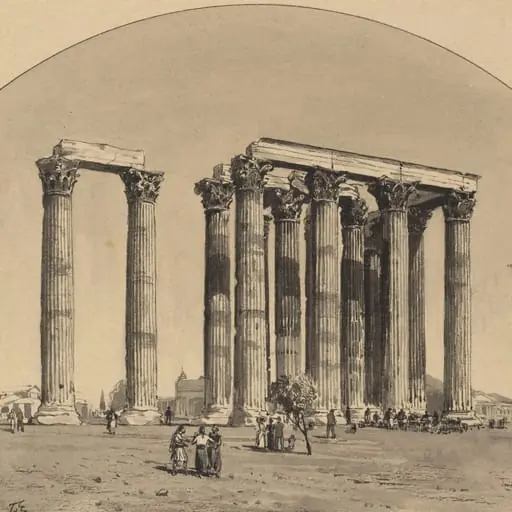
The painting shows the inside of the Parthenon with tall columns rising against a pale sky.
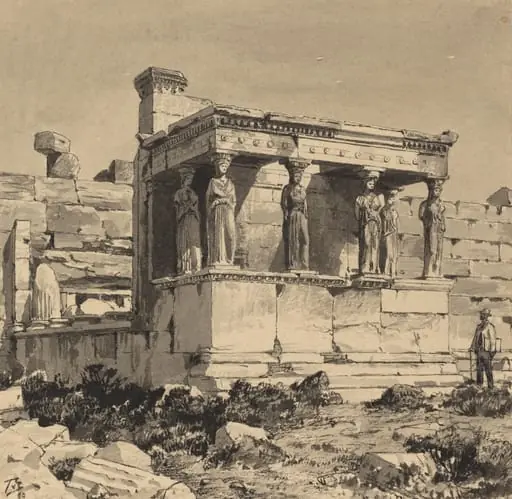
The painting shows the inside of the Parthenon with tall columns rising against a pale sky. The light picks out the fluted columns and shadows on the floor. Tiny figures walk between them, making the huge space feel almost human.
Von Eckenbrecher painted this in 1890, during a trip to Greece. He used black ink and watercolor layered like stained glass. The glazing gives a soft glow to the marble.
Find more work like this at the National Gallery of Art, Washington.
Overview
Created in 1890, *Parthenon, Inside* is a detailed drawing by German artist Themistocles von Eckenbrecher, executed in pen, black ink, watercolor, black chalk, and graphite, with subtle gray highlights. The work captures the interior of the ancient Athenian temple, reflecting the artist’s sustained interest in classical architecture. Von Eckenbrecher’s technique combines precise line work with layered washes to evoke both structure and atmosphere, characteristic of his late Romantic sensibility.
Subject & Meaning
The drawing portrays the Parthenon’s interior as a vast, quiet space defined by towering columns and soft, diffused light. Tiny human figures move through the colonnade, emphasizing the scale of the ruin and its enduring presence. Rather than celebrating antiquity as a symbol of glory, the scene conveys contemplation—time’s quiet erosion, the interplay of human presence and monumental stone, and the solemnity of a sacred space now emptied of its original function.
Technique & Style
Von Eckenbrecher employed layered watercolor washes over ink and chalk underdrawing, creating a luminous, translucent effect reminiscent of stained glass. The glazing technique softens the marble’s surface, suggesting the play of natural light filtering through the open structure. Graphite and gray highlights define shadows and texture without overpowering the delicate tonal range, reinforcing the atmospheric mood while preserving architectural clarity.
History & Provenance
The work was produced during von Eckenbrecher’s travels in Greece, a period that deeply influenced his artistic focus. He spent years in Athens, sketching and studying ancient sites, which became central to his oeuvre. While the specific provenance of this drawing is not widely documented, its style and subject align with his known body of work from the 1880s and 1890s, and it is held in the collection of the National Gallery of Art in Washington, D.C.
Context
In the late 19th century, European artists frequently turned to Mediterranean antiquities as subjects of romanticized reflection. Von Eckenbrecher’s approach diverged from archaeological precision, favoring mood and light over scholarly reconstruction. His work resonated with broader Romantic trends that saw ruins not as relics to be cataloged, but as evocative spaces where nature, time, and memory converged.
Legacy
Von Eckenbrecher’s *Parthenon, Inside* exemplifies a quiet, introspective strand of 19th-century architectural drawing—one that prioritized emotional resonance over grand narrative. Though not widely known today, his technique influenced later artists interested in atmospheric rendering of historical sites. The work remains a thoughtful record of how 19th-century viewers experienced ancient ruins not as monuments, but as spaces of quiet contemplation.
Artist & collection

Artist
Karl Paul Themistokles von Eckenbrecher (17 November 1842, Athens – 4 December 1921, Goslar) was a German landscape and marine painter, in the late Romantic style.