Artwork
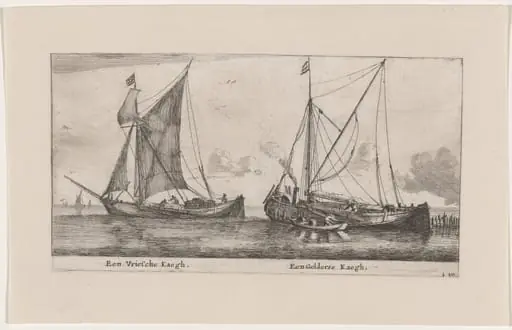
A "Friesland" Peatpot, and a "Dijnopschuit" or "Veense" Peatpot
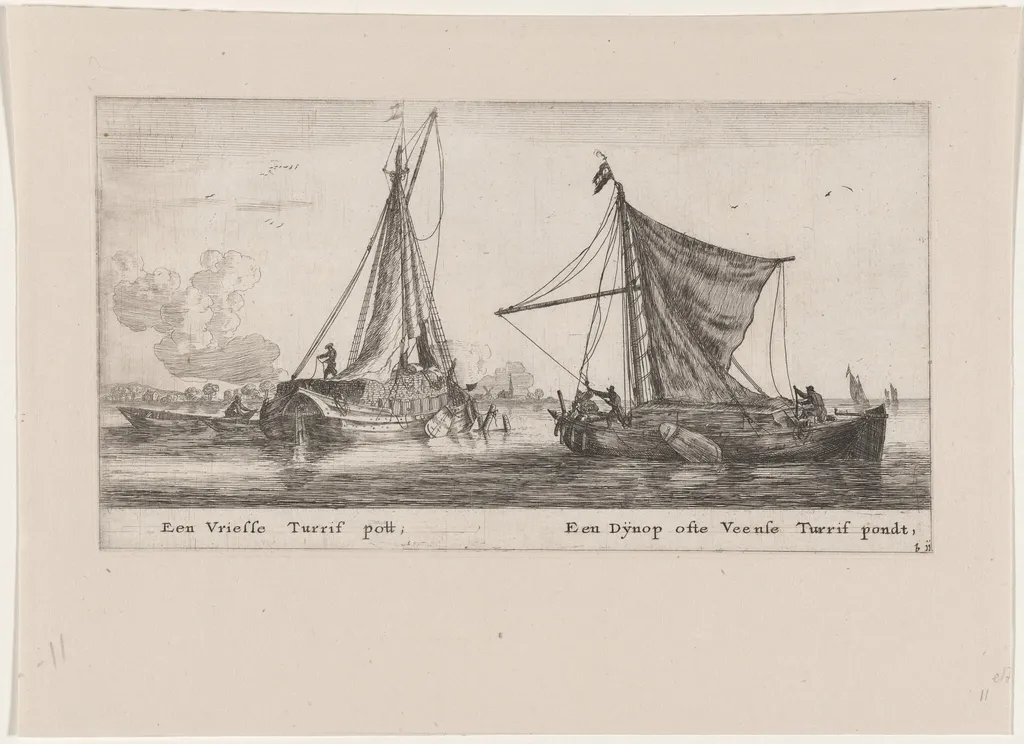
A "Friesland" Peatpot, and a "Dijnopschuit" or "Veense" Peatpot is an ink print by the Baroque artist Nooms, called Zeeman, Reinier. It dates from 1653 and is held in the collection of the National Gallery of Art.
About this work
Overview
Created around 1653 by Reinier Nooms, known as Zeeman, this print combines etching and drypoint on laid paper to depict two regional peat transport vessels.
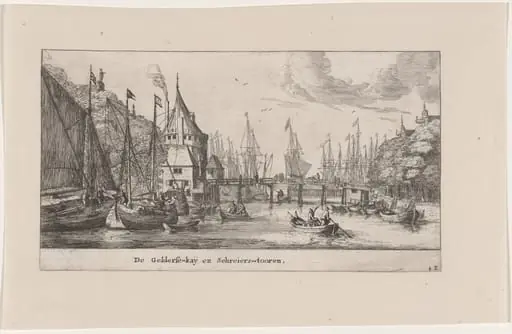
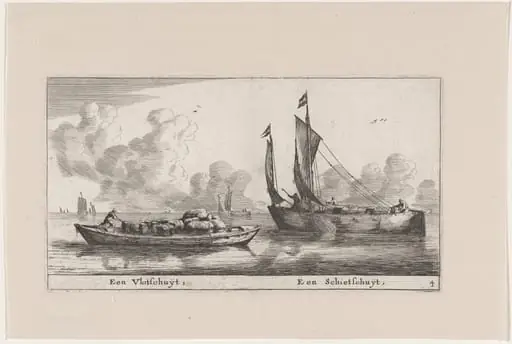
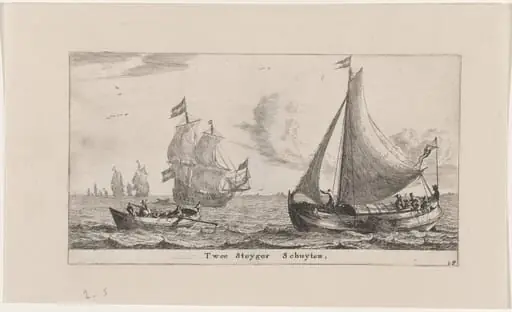
Created around 1653 by Reinier Nooms, known as Zeeman, this print combines etching and drypoint on laid paper to depict two regional peat transport vessels. Unlike his usual maritime scenes, Nooms turns his attention to the functional craft used in peat extraction, reflecting a shift toward detailed topographical studies. The work belongs to a series of precise, observational prints made during the 1650s that document Dutch watercraft with documentary intent.
Subject & Meaning
The print portrays two distinct types of peat barges: the Friesland peatpot and the Dijnopschuit or Veense variant. These vessels were essential to the regional economy, transporting peat from marshlands to urban centers. By isolating and rendering them with care, Nooms elevates utilitarian objects into subjects of quiet significance, suggesting an interest in the infrastructure of daily life rather than grand narratives.
Technique & Style
Nooms employed etching for fine linear definition and drypoint for richer, textured shadows, enhancing the tactile quality of the wooden hulls and rope details. His approach is methodical, emphasizing structural accuracy over dramatic effect. The composition is centered and uncluttered, focusing attention on form and surface, characteristic of his later work where precision supersedes narrative flourish.
History & Provenance
The print was produced during a period when Nooms was increasingly engaged in documenting Dutch watercraft for scholarly and artistic reference. Though no early ownership records are widely documented, the work entered institutional collections in the 19th century, valued for its technical fidelity. It remains part of the broader corpus of 17th-century Dutch printmaking that served as a visual archive of regional maritime culture.
Context
In mid-17th century Holland, peat was a vital fuel source, and its transport shaped regional economies and waterway networks. Nooms’s focus on these humble barges aligns with a broader trend among Dutch artists to depict everyday labor and infrastructure. His prints were used by contemporaries as reference material, contributing to a growing visual record of the nation’s commercial and environmental landscape.
Legacy
Nooms’s etchings of peat vessels influenced later topographical artists and maritime illustrators who sought accurate depictions of Dutch craft. While not widely exhibited today, these works remain important for their role in preserving the visual language of 17th-century Dutch water transport. They exemplify how printmaking served as a tool for observation, bridging art and ethnographic documentation.
Artist & collection

Artist
Reinier Nooms (c. 1623 – 1664), also known as Zeeman or Seeman (Dutch for "sailor"), was a Dutch maritime painter known for his highly detailed paintings and etchings of ships. From the 1650s, Nooms started producing…