Artwork
The "Vergulde Dolphyn," a Large Merchant Vessel, and the "Kat," a Flute
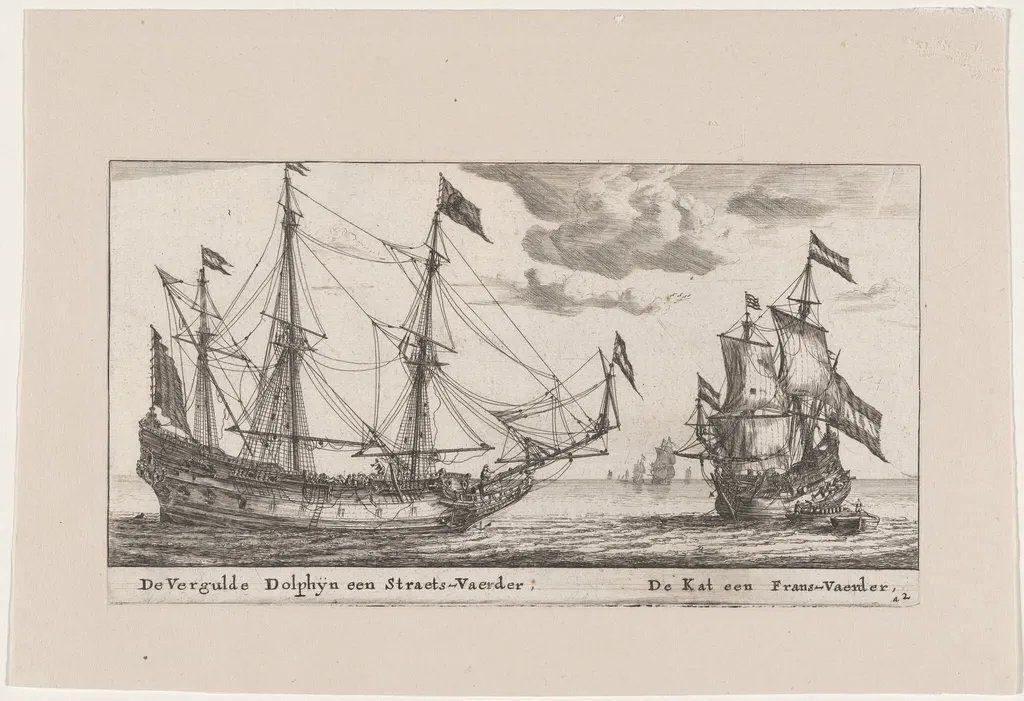
The "Vergulde Dolphyn," a Large Merchant Vessel, and the "Kat," a Flute is an ink print by the Baroque artist Nooms, called Zeeman, Reinier. It dates from 1653 and is held in the collection of the National Gallery of Art.
About this work
Overview
Reinier Nooms, known by the nickname Zeeman, created an etching titled *The "Vergulde Dolphyn," a Large Merchant Vessel, and the "Kat," a Flute* around 1653. Executed on laid paper with a combination of etching and drypoint, the print shows two ships navigating tranquil waters, each identified by name and distinct hull form.
Subject & Meaning
The left-hand vessel, the Vergulde Dolphyn, is rendered as a sizable merchant ship with a pronounced stern and multiple masts, suggesting a cargo‑laden craft. The right-hand ship, the Kat, is a smaller, more streamlined flute—a type of fast, lightly built vessel—highlighting the contrast between heavy trade ships and swift coastal craft.
Technique & Style
Nooms employed fine line work characteristic of drypoint to achieve delicate textures on the hulls, rigging, and water surface. The etching’s layered strokes convey the billowing sails and subtle cloud formations, while the interplay of light and shadow creates a sense of atmospheric depth uncommon in many contemporary prints.
History & Provenance
The print belongs to a series Nooms began publishing in the 1650s, a period when he turned his experience as a seafarer into a systematic visual record of ships and maritime topography. These works circulated among shipbuilders, artists, and collectors, serving as reference material for accurate vessel representation.
Context
Created during the Dutch Golden Age, the image reflects the era’s intense commercial activity and naval innovation. By documenting both a merchantman and a flute, Nooms captures the breadth of Dutch maritime enterprise, from long‑distance trade to coastal navigation.
Legacy
Nooms’s meticulous ship prints influenced later marine artists, who used his detailed depictions as models for accuracy. The combination of etching and drypoint in this work exemplifies a technical approach that helped standardize visual documentation of 17th‑century Dutch vessels.
Artist & collection

Artist
Reinier Nooms (c. 1623 – 1664), also known as Zeeman or Seeman (Dutch for "sailor"), was a Dutch maritime painter known for his highly detailed paintings and etchings of ships. From the 1650s, Nooms started producing…

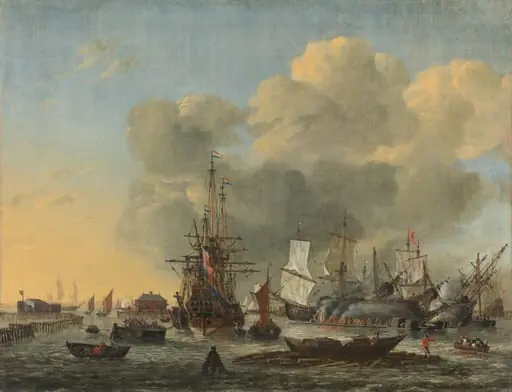
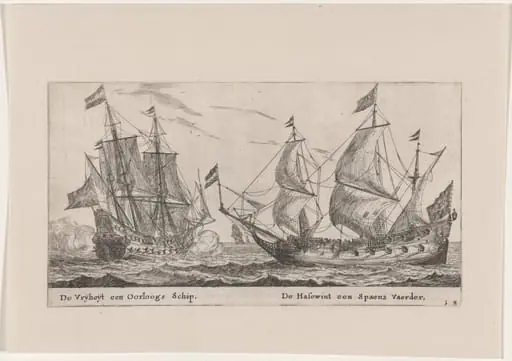 The "Vrijheijt," a Man-of-War and the "Hazewind," a Merchantman for Spain
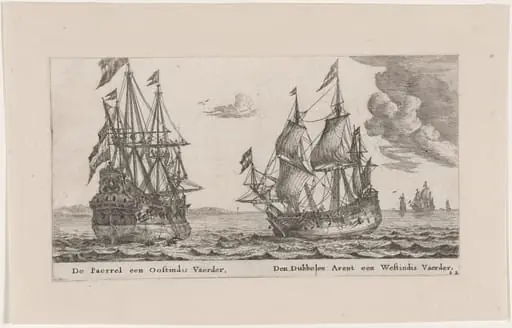 The "Parel" (Pearl), an East Indiaman and the "Dubbele Arent" (Spread Eagle), a West Indiaman
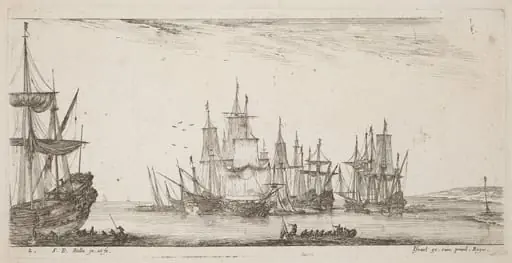 Group of Ships
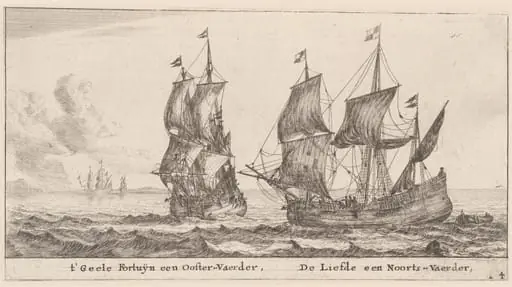 Two Merchant-Men: the "Geele Fortuÿn," Trading in the Baltic, and the "Liefde," Trading in Norway
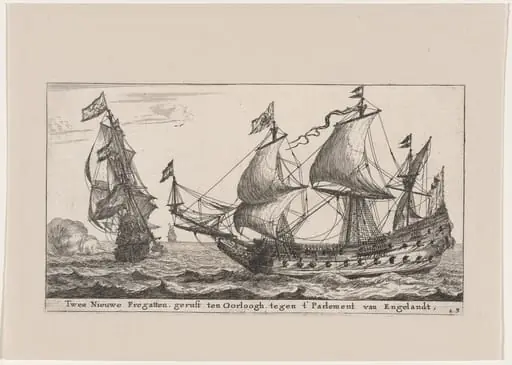 Two Dutch Frigates
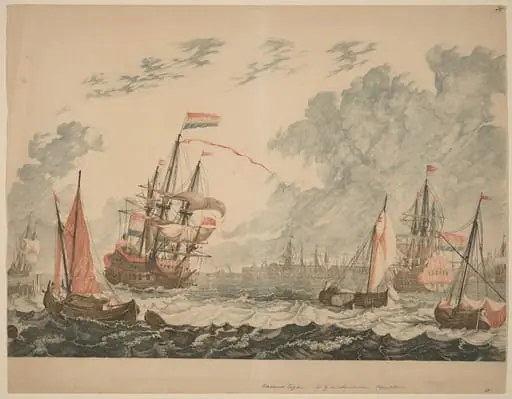 Amsterdam, Ships at the IJ on Choppy Water
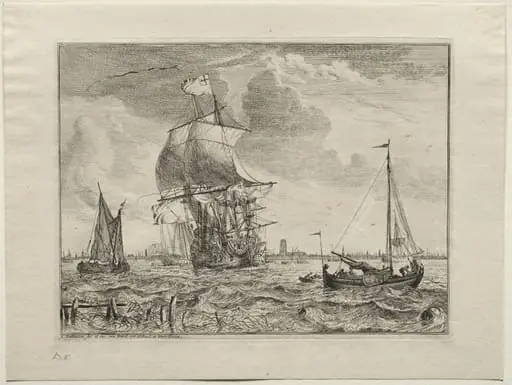 Marine Scene with Amsterdam in the Distance
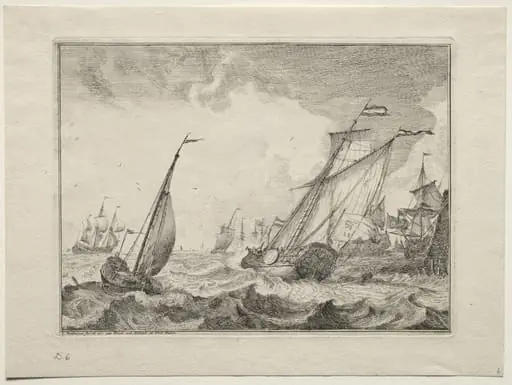 Ships in a Gale
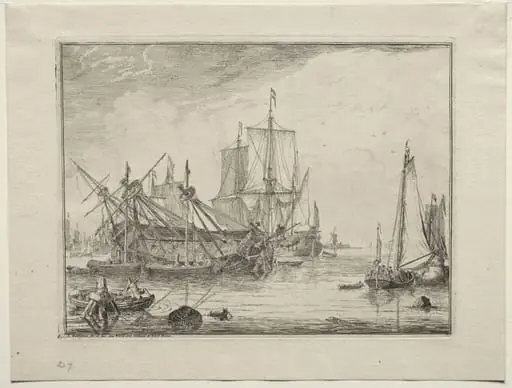 Ships Under Repair