Artwork
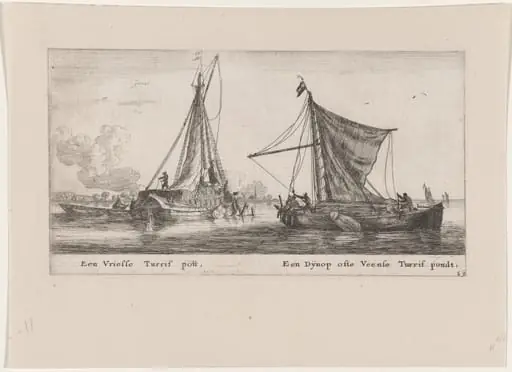
A "Watership" Carrying Water for the Salt Works and Another One Carrying Water for the Breweries
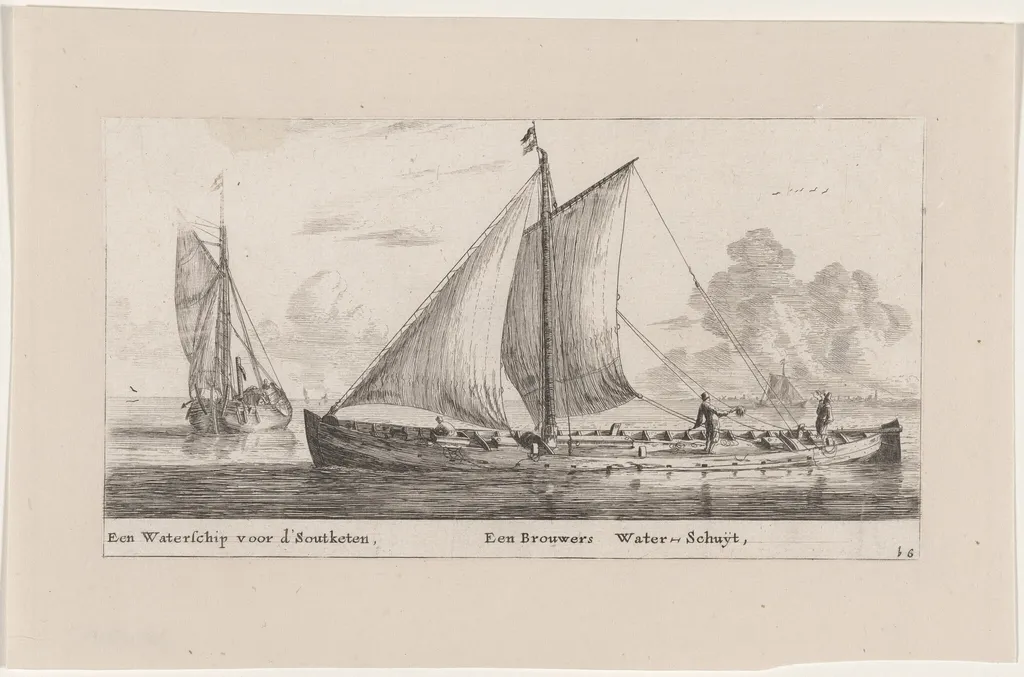
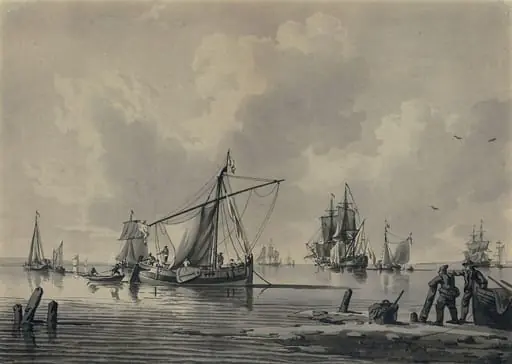
A "Watership" Carrying Water for the Salt Works and Another One Carrying Water for the Breweries is an ink print by the Baroque artist Nooms, called Zeeman, Reinier. It dates from 1653 and is held in the collection of the National Gallery of Art. Reinier Nooms, known by the nickname Zeeman, created this print in the early 1650s.
About this work
Overview
The composition balances a modest flat‑bottomed boat in the foreground with a larger, sail‑rigged ship receding into the distance, all rendered on laid paper.
Reinier Nooms, known by the nickname Zeeman, created this print in the early 1650s. The image presents two vessels on a tranquil stretch of water, each marked with a label indicating its cargo: one supplies water to the salt works, the other to the city’s breweries. The composition balances a modest flat‑bottomed boat in the foreground with a larger, sail‑rigged ship receding into the distance, all rendered on laid paper.
Subject & Meaning
The work records a routine aspect of Amsterdam’s 17th‑century economy, showing how water was ferried to essential industrial sites. By naming the destinations, the artist highlights the logistical network that supported salt production and brewing, two vital trades in the Dutch Republic. The quiet scene underscores the integration of maritime transport into everyday urban life rather than glorifying naval exploits.
Technique & Style
Executed with a combination of etching and drypoint, the print displays Nooms’s characteristic precision. Etching provides the fine, controlled lines that define the hulls, rigging, and distant horizon, while drypoint adds richer, velvety strokes that accentuate shadows and texture on the water’s surface. The use of laid paper contributes a subtle tooth, enhancing the contrast between crisp outlines and softer tonal areas.
History & Provenance
The etching dates to around 1653, a period when Nooms was establishing his reputation for detailed maritime scenes. Though the original ownership trail is not fully documented, prints of this type were commonly circulated among collectors and merchants in the Dutch Golden Age, suggesting the image may have served both decorative and informational purposes.
Context
Nooms worked at a time when Amsterdam’s ports were bustling hubs of trade and industry. His focus on ordinary vessels contrasts with the grand naval battles favored by many contemporaries, offering a more grounded view of the city’s waterborne infrastructure. This perspective aligns with a broader 17th‑century Dutch interest in topographical accuracy and the everyday workings of urban life.
Artist & collection

Artist
Reinier Nooms (c. 1623 – 1664), also known as Zeeman or Seeman (Dutch for "sailor"), was a Dutch maritime painter known for his highly detailed paintings and etchings of ships. From the 1650s, Nooms started producing…

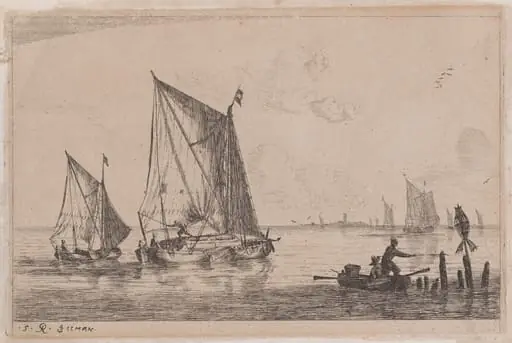 A "Duinopschuit," a Smaller Sailing Boat, and a Rowboat
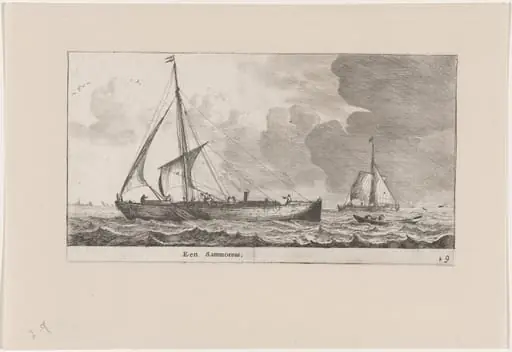 A Samoureus
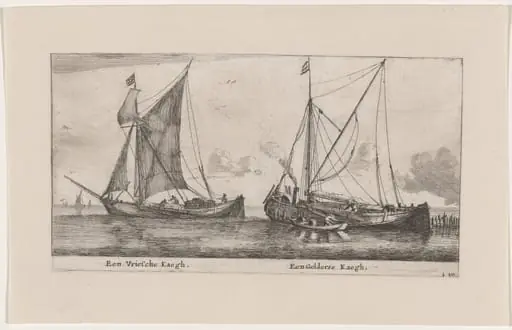 A Friesland Ketch and a Gelderse Ketch
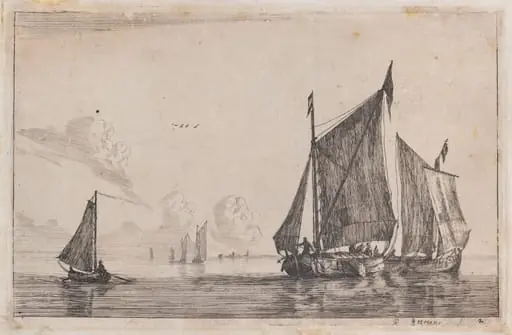 Three Sailing Vessels on Calm Waters
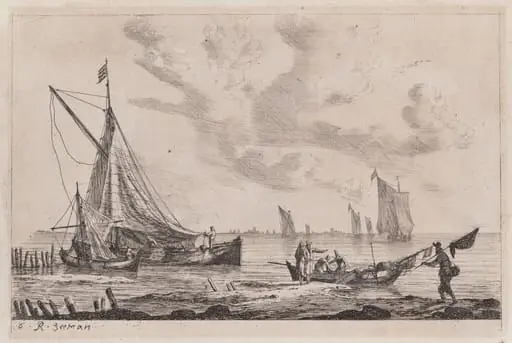 Shore of Inland Waterway with a Ketch, Two Smaller Boats, and Fisherman
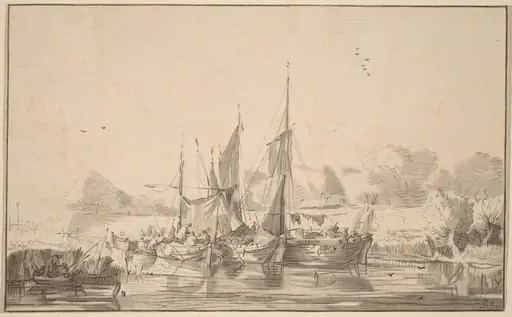 Canal at Utrecht
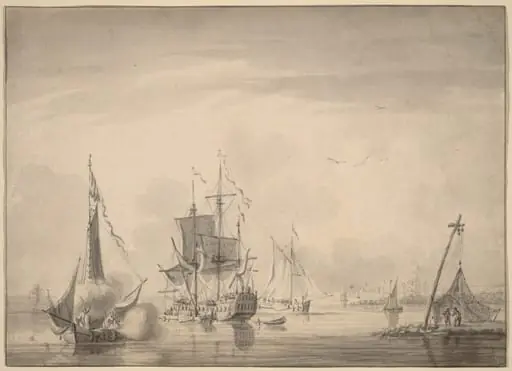 Harbor Scene
 A "Friesland" Peatpot, and a "Dijnopschuit" or "Veense" Peatpot
 Three Sailing Vessels at Choppy Sea
 Entrance of Calais Harbour
 River with Town
 River with Shipping