Artwork
Haarlem Gate (Haerlemmer Poort)
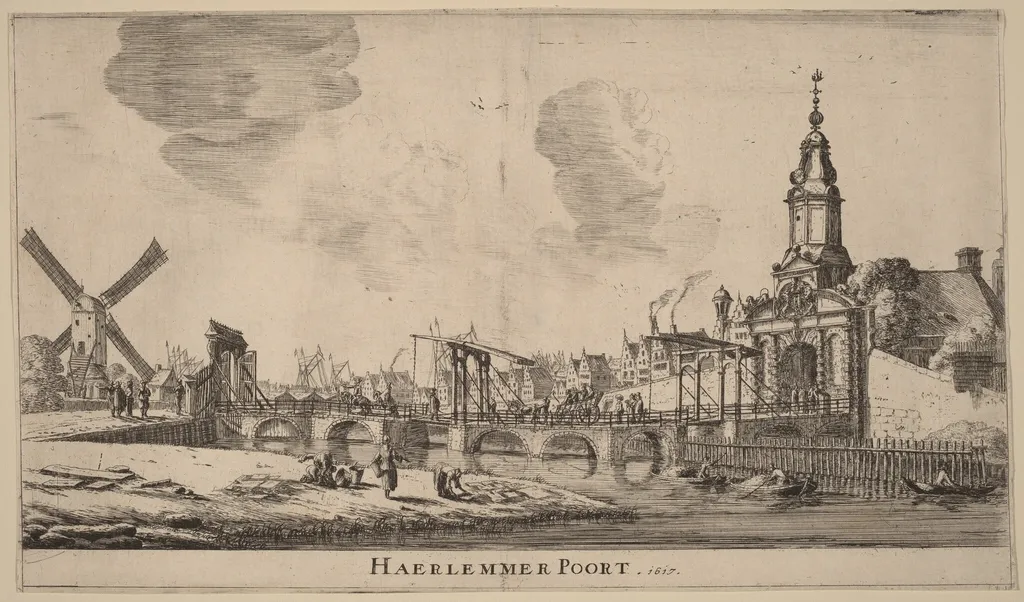
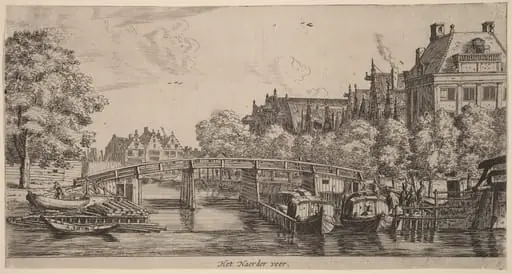
Haarlem Gate (Haerlemmer Poort) is an ink print by the Baroque artist Nooms, called Zeeman, Reinier. It dates from 1617 and is held in the collection of the National Gallery of Art. Reinier Nooms, who signed his works as Zeeman, created an etching titled *Haarlem Gate* (also known as Haerlemmer Poort) in 1617.
About this work
Overview
Reinier Nooms, who signed his works as Zeeman, created an etching titled *Haarlem Gate* (also known as Haerlemmer Poort) in 1617. The print presents a view of a Haarlem canal framed by a prominent city gate, complete with a tower and clock, while the waterway is populated by boats and figures engaged in everyday activities.
Subject & Meaning
The composition captures a bustling urban scene: a fortified gate dominates the right side, its architecture rendered with precision, while pedestrians, fishermen, and travelers animate the canal banks. The work reflects the daily rhythm of early‑17th‑century Haarlem, emphasizing the interaction between civic infrastructure and riverine commerce.
Technique & Style
Executed in etching, the image displays Nooms’s characteristic attention to line and texture. Fine hatching creates atmospheric depth, and careful modulation of light and shadow conveys a warm, lived‑in ambience. The detailed rendering of stonework, water, and human figures demonstrates the artist’s skill in translating a topographical view into a finely graded print.
History & Provenance
Nooms, primarily known for maritime subjects, began producing topographical prints in the 1620s, and *Haarlem Gate* exemplifies the refined approach he developed in that period. The etching circulated among collectors of Dutch prints and contributed to the visual documentation of Haarlem’s cityscape, influencing later artists who adopted similar detailed urban depictions.
Artist & collection

Artist
Reinier Nooms (c. 1623 – 1664), also known as Zeeman or Seeman (Dutch for "sailor"), was a Dutch maritime painter known for his highly detailed paintings and etchings of ships. From the 1650s, Nooms started producing…