Artwork
The Ferry to Leiden (Het Leytsche veer)
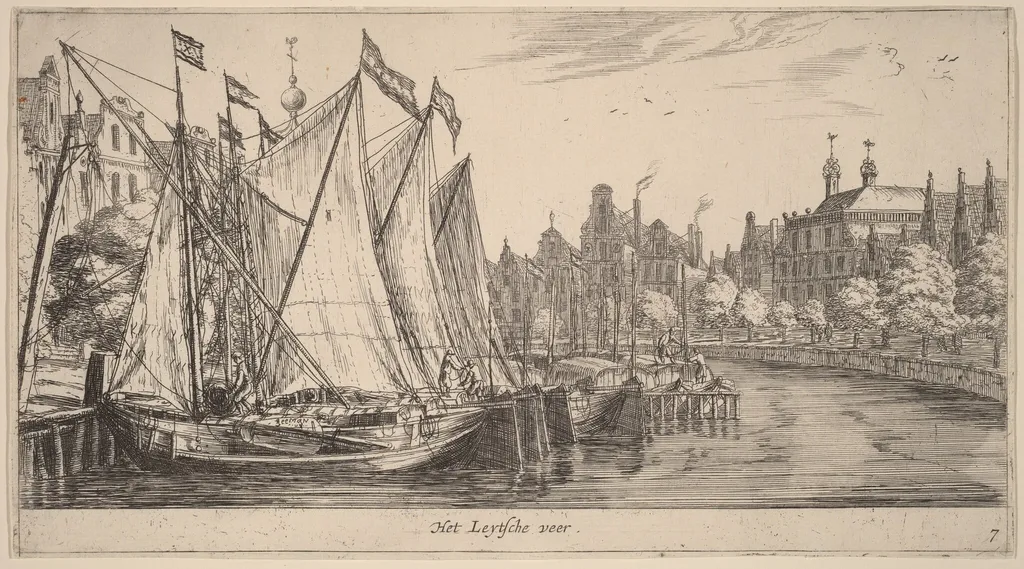
The Ferry to Leiden (Het Leytsche veer) is an ink print by the Baroque artist Nooms, called Zeeman, Reinier. It dates from 1645 and is held in the collection of the National Gallery of Art.
About this work
Overview
The Ferry to Leiden (Het Leytsche veer) is a 1645 etching by Reinier Nooms, known as Zeeman, a Dutch artist renowned for his detailed maritime paintings.
Subject & Meaning
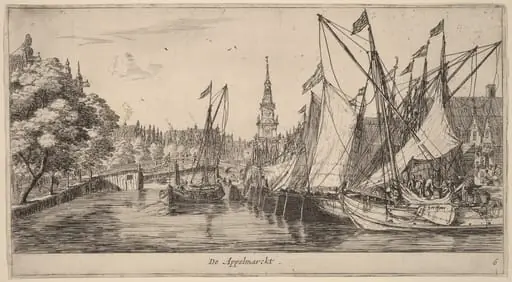
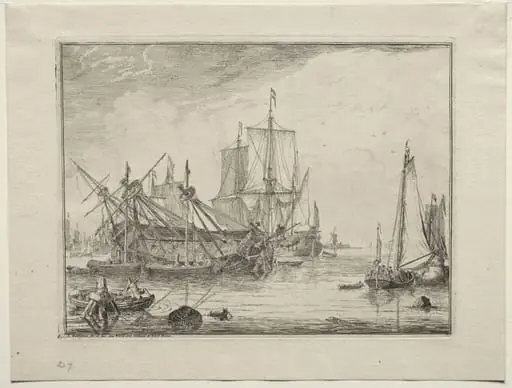
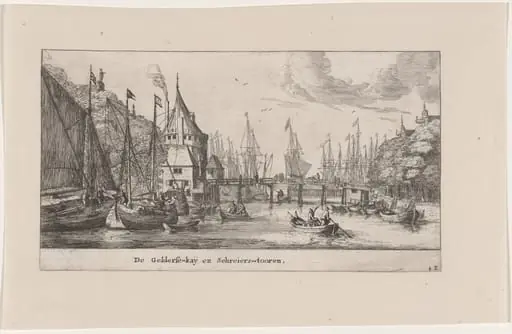
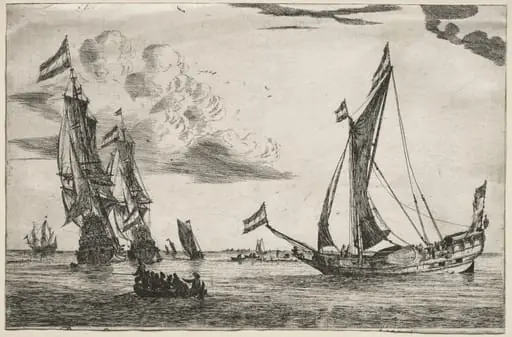
The etching depicts a bustling ferry crossing scene, showcasing Nooms' expertise in maritime subjects with a focus on three prominently docked ships amidst cargo activity and a riverside backdrop of buildings, including potential churches and warehouses.
Technique & Style
Executed in black-and-white, the etching highlights Nooms' attention to ship details (masts, flags, ropes, sails) while maintaining a simpler, less detailed background, characteristic of his refined etching technique.
History & Provenance
Created in 1645, this work predates Nooms' more prolific etching period in the 1650s, which would later influence other artists with its meticulousness.
Context
Part of a broader body of Dutch topographical and maritime art, The Ferry to Leiden reflects the era's interest in capturing everyday life and the importance of waterways in the Netherlands.
Legacy
As one of Nooms' earlier etchings, it contributes to his legacy as a model for subsequent artists, particularly in the depiction of vessels and scenes of daily maritime activity.
Artist & collection

Artist
Reinier Nooms (c. 1623 – 1664), also known as Zeeman or Seeman (Dutch for "sailor"), was a Dutch maritime painter known for his highly detailed paintings and etchings of ships. From the 1650s, Nooms started producing…