Artwork
Ludgate Hill
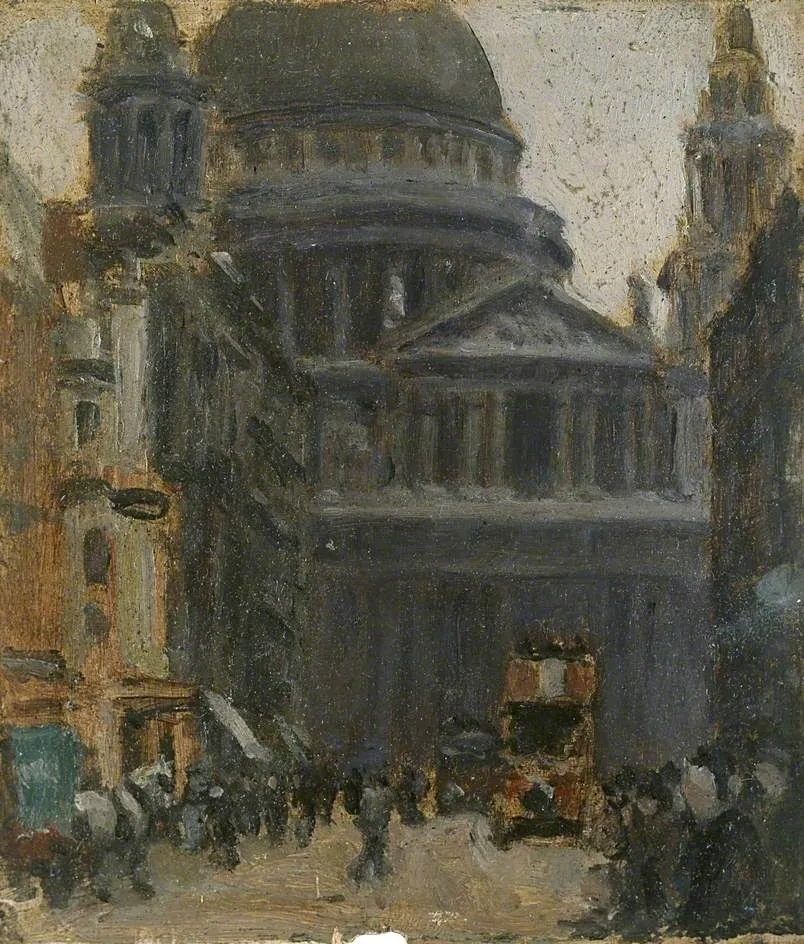
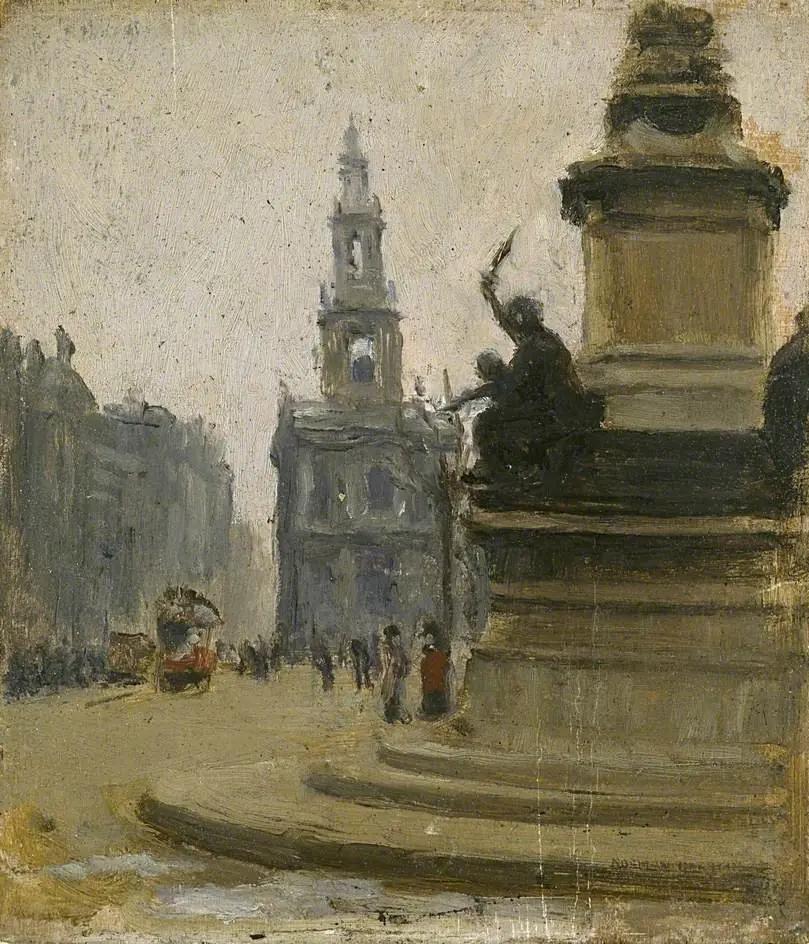
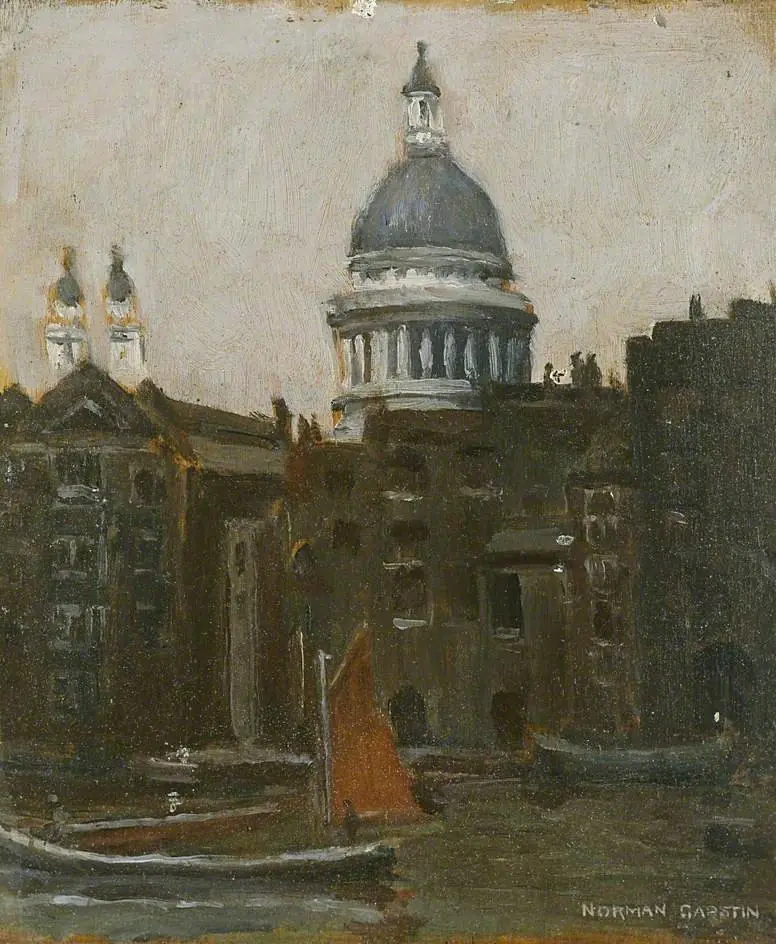
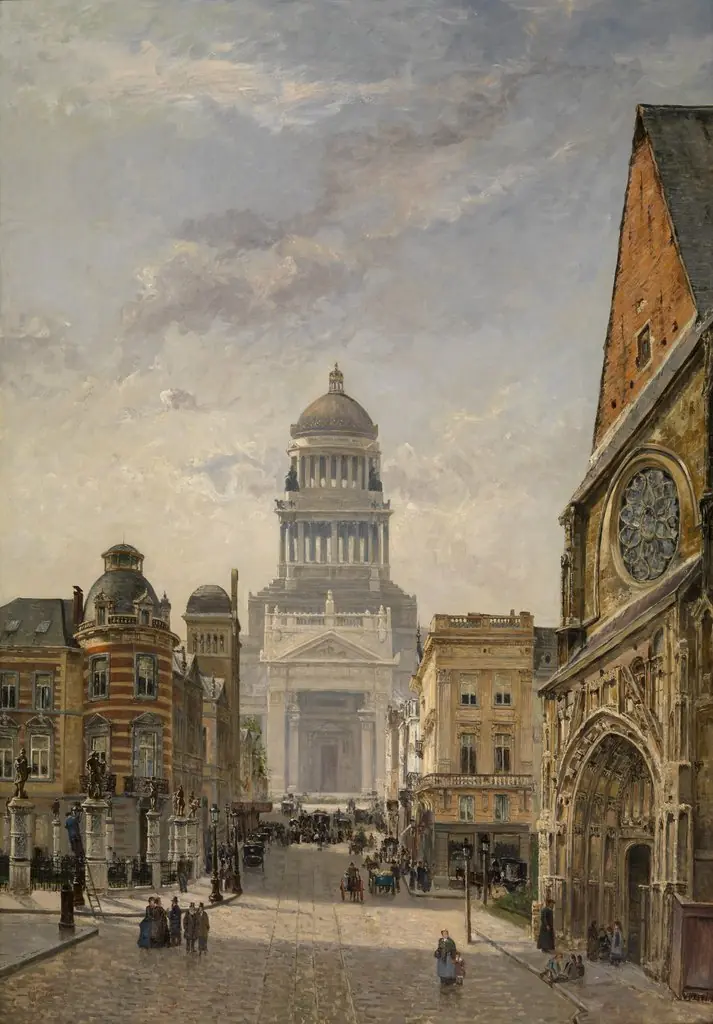
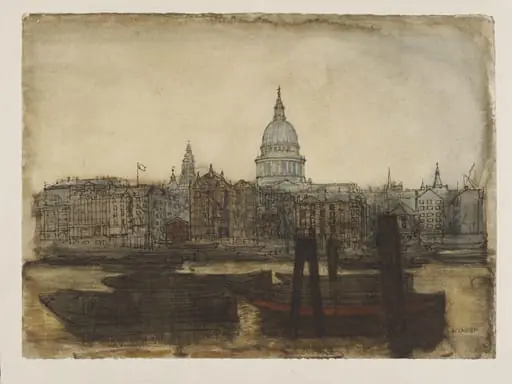
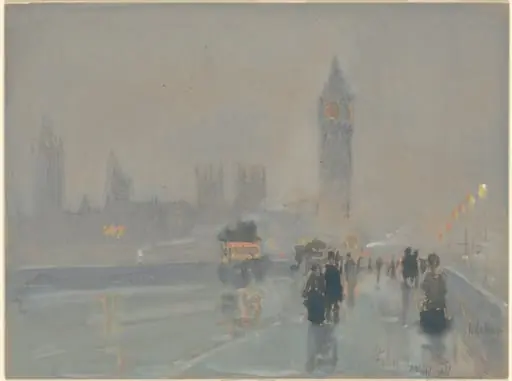
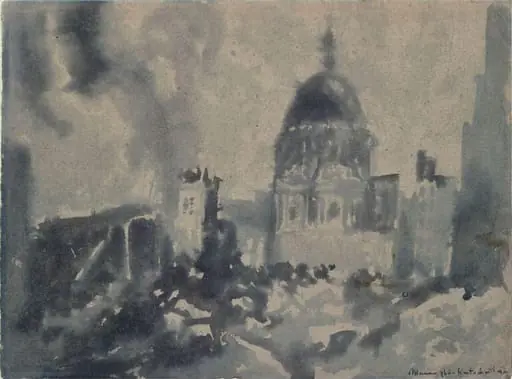
Ludgate Hill is an unspecified painting by the Post-Impressionist artist Norman Garstin. It dates from 1919 and is held in the collection of the Ashmolean Museum.
About this work
Overview
Ludgate Hill is a 1919 cityscape painting by Norman Garstin, an Irish artist linked to the Newlyn School. The work is characterized by its post-Impressionist style and is part of the Ashmolean Museum's collection.
Subject & Meaning
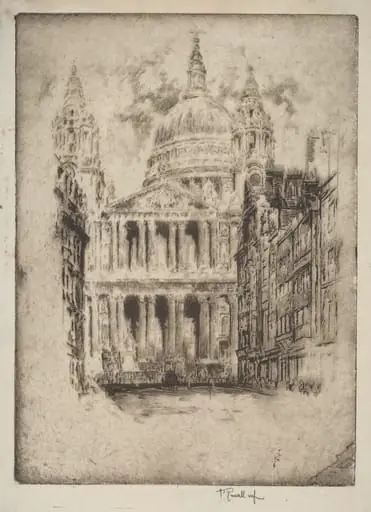
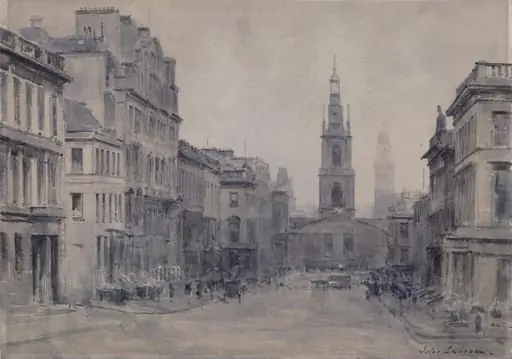
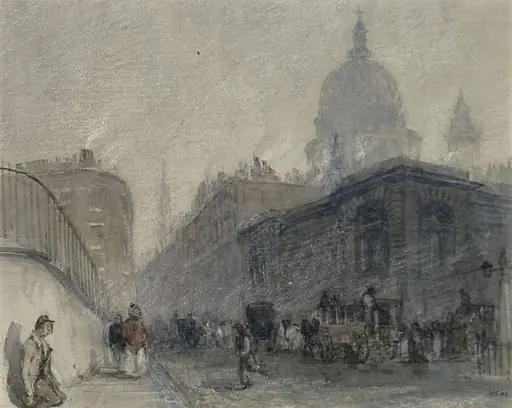
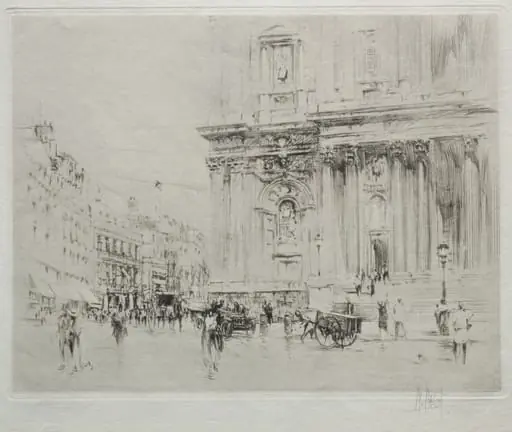
The painting focuses on a central, domed building with columns, set amidst a lively London street scene. Figures engaged in daily activities populate the foreground, conveying the dynamic energy of urban life.
Technique & Style
Garstin employed a diverse color palette to achieve depth and atmosphere. His approach reflects influences from Impressionism, Japanese art, and James McNeill Whistler, with a notable emphasis on capturing light and shadow.
History & Provenance
Created in 1919, Ludgate Hill is the product of Garstin's eclectic artistic background, which included training in Antwerp and Paris, extensive European travel, and experience teaching plein air painting.
Context
As a post-Impressionist work, Ludgate Hill situates itself within early 20th-century artistic movements that sought to push beyond traditional Impressionist techniques, often emphasizing emotional and psychological depth in representation.
Legacy
While specific legacy details of Ludgate Hill are not prominently documented, its presence in the Ashmolean Museum collection underscores its value as a representative of the Newlyn School's contribution to post-Impressionist cityscape painting.
Artist & collection
Artist
Norman Garstin (28 August 1847 – 22 June 1926) was an Irish artist, teacher, art critic and journalist associated with the Newlyn School of painters.