Artwork
St Mary-le-Strand
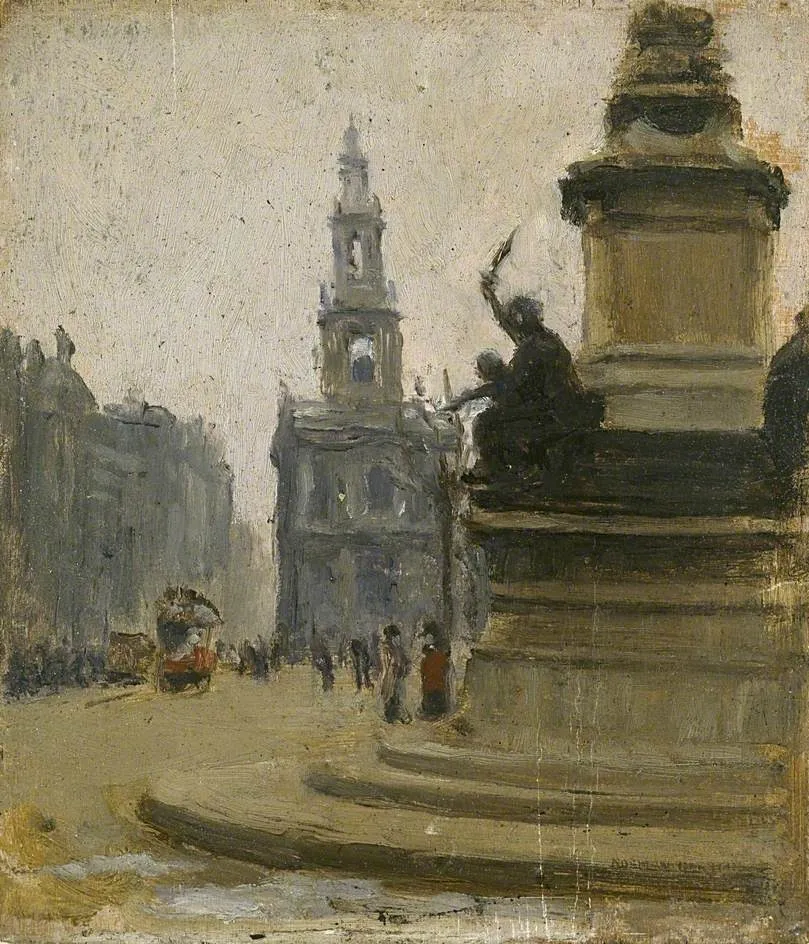
St Mary-le-Strand is an unspecified painting by the Impressionist artist Norman Garstin. It dates from 1919 and is held in the collection of the Ashmolean Museum.
About this work
Overview
Norman Garstin’s 1919 canvas captures a lively stretch of London centered on the church of St Mary‑le‑Strand. The composition places the ecclesiastical façade amid a dense row of surrounding buildings, while pedestrians animate the street below. Light falls across the façades, creating a sense of depth that draws the eye through the urban scene.
Subject & Meaning
The work portrays the everyday rhythm of a bustling metropolis, using the church as a visual anchor that contrasts with the surrounding commercial architecture. By depicting ordinary passers‑by alongside the historic structure, Garstin highlights the coexistence of tradition and modernity within the city’s public space.
Technique & Style
Garstin applied his plein‑air approach, working outdoors to record the shifting quality of light. The painting shows the influence of Impressionist brushwork and a subtle Japanese compositional balance, while the careful modulation of light and shadow reflects a chiaroscuro sensibility that enhances texture and spatial recession.
History & Provenance
Created shortly after the First World War, the piece entered the Ashmolean Museum’s collection, where it remains on display. Garstin, an Irish painter linked to the Newlyn School, produced the work during a period when he was integrating Impressionist and East‑Asian visual ideas into his practice.
Artist & collection
Artist
Norman Garstin (28 August 1847 – 22 June 1926) was an Irish artist, teacher, art critic and journalist associated with the Newlyn School of painters.

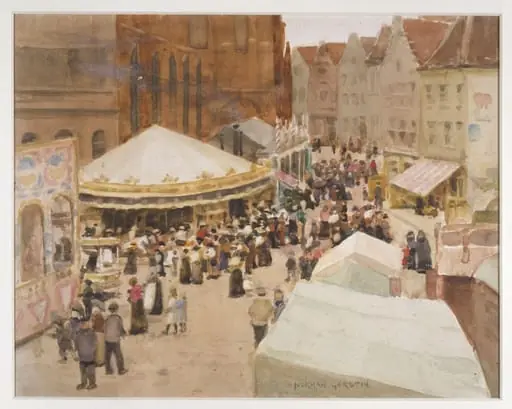
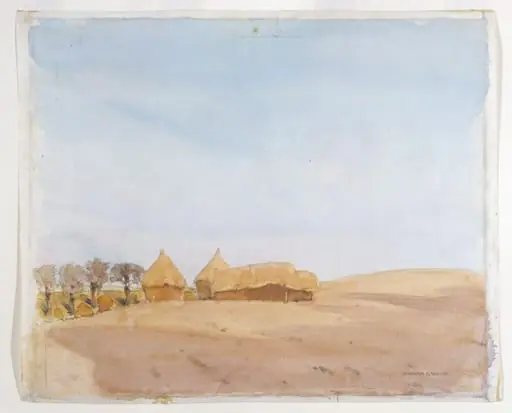
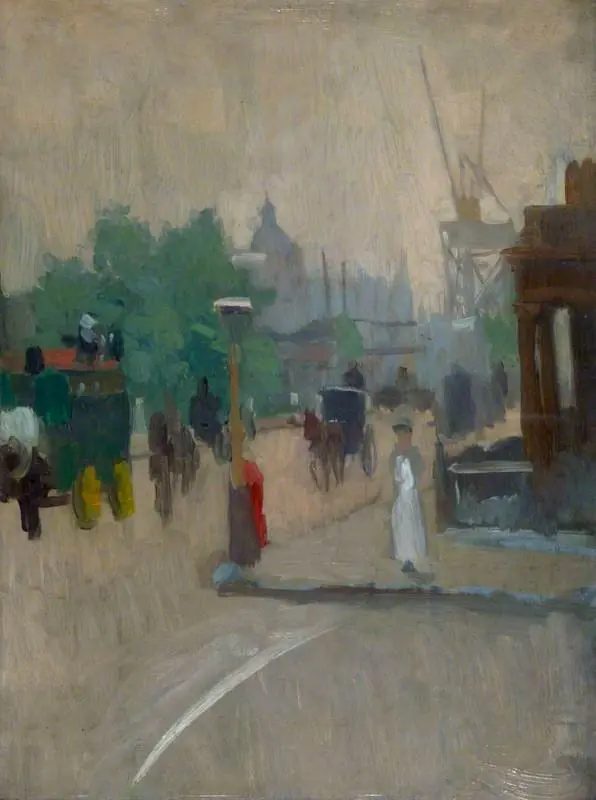 Cromwell Road: The New Building of the Victoria and Albert Museum under Construction
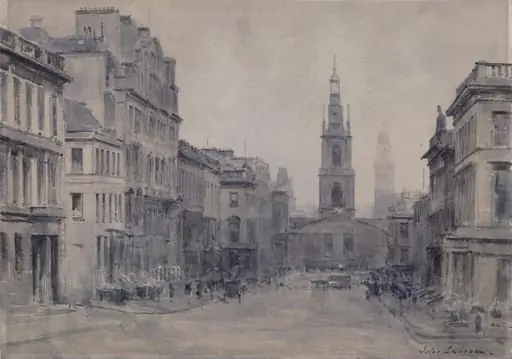 West George Street, Glasgow
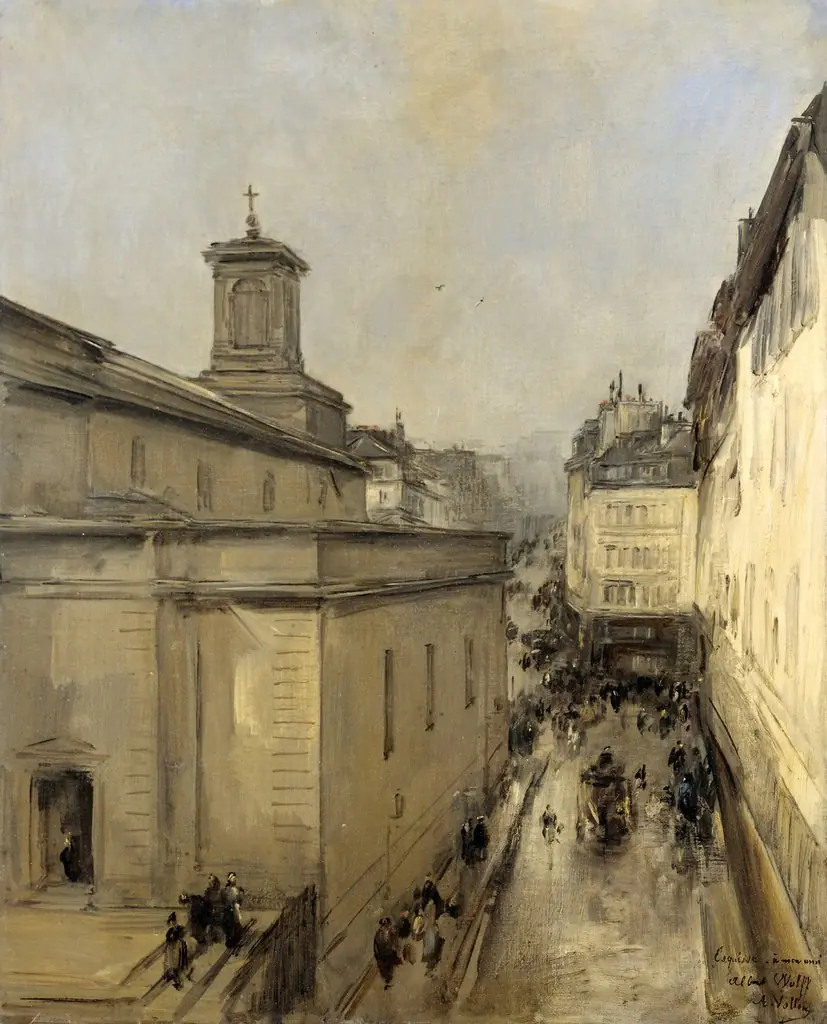 View of Paris
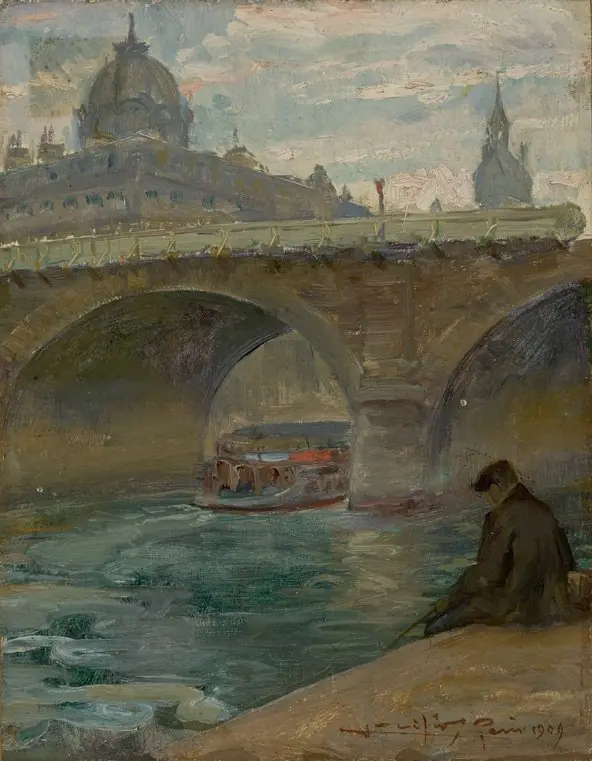 Seine River
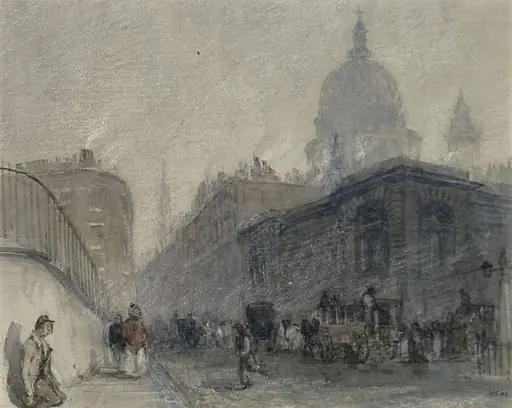 Solitude: View of Newgate Street, looking east, showing the old prison and St. Paul's
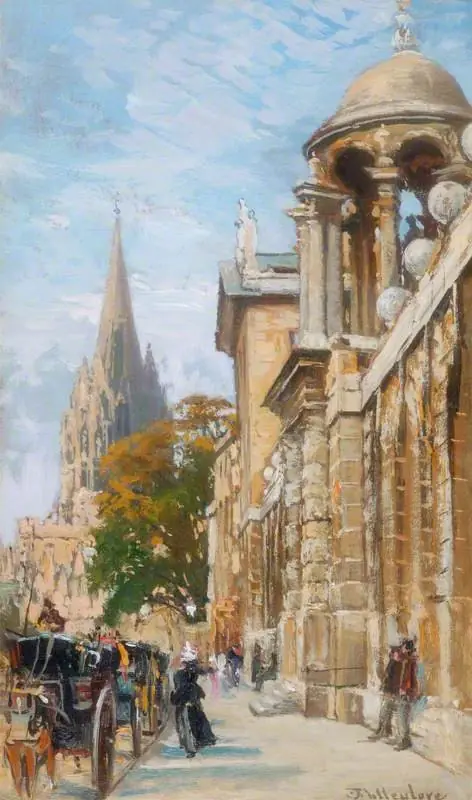 Entrance to Queen's College, Oxford
 Harbour Scene
 Cleared Site with Hoarding and a Figure
 London Set: Horseguards
 St Mary's Church in Krakow