Artwork
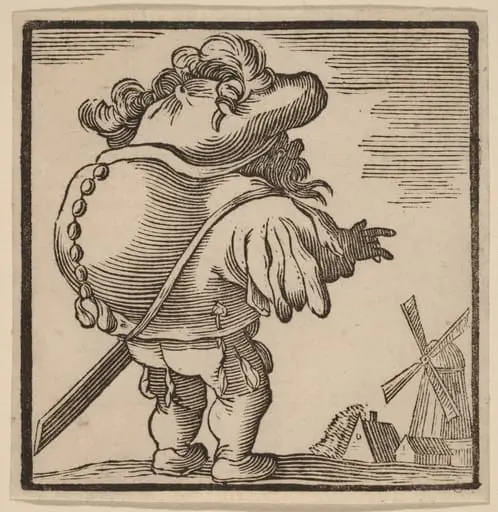
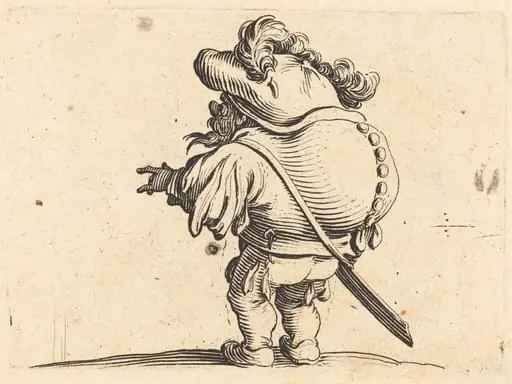
Hunchback Brandishing Two Swords
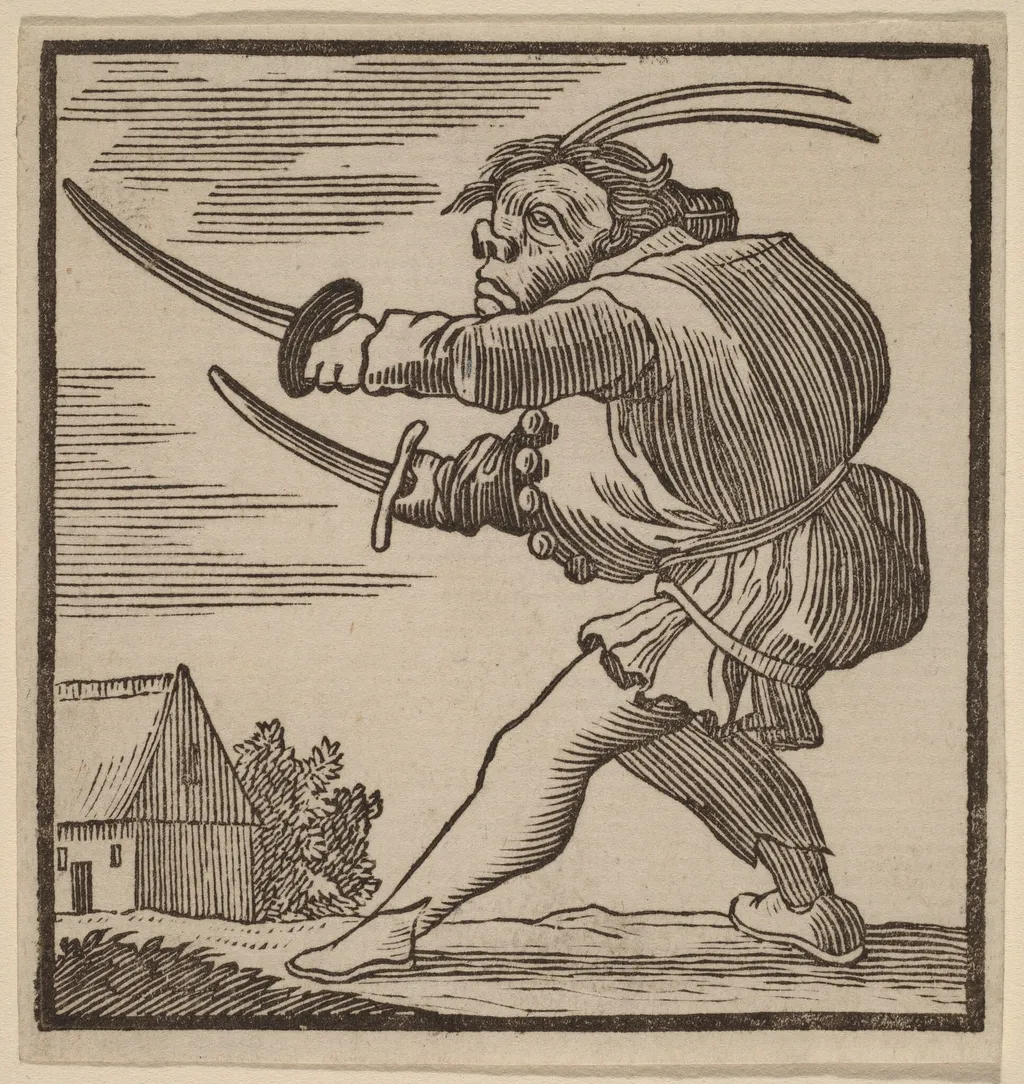
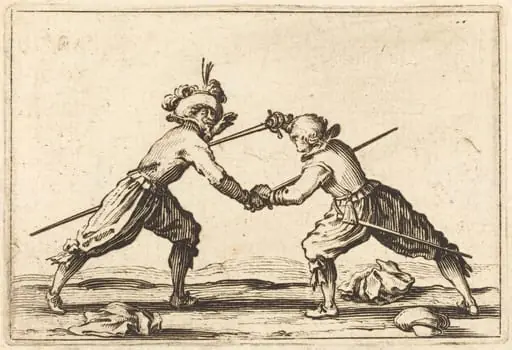
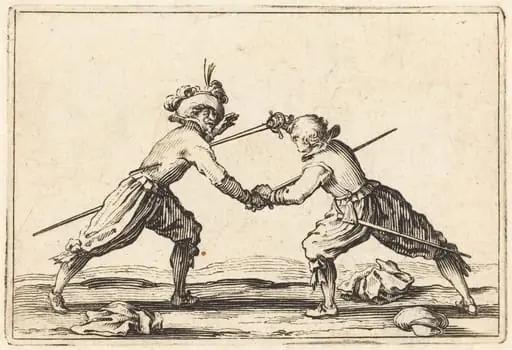
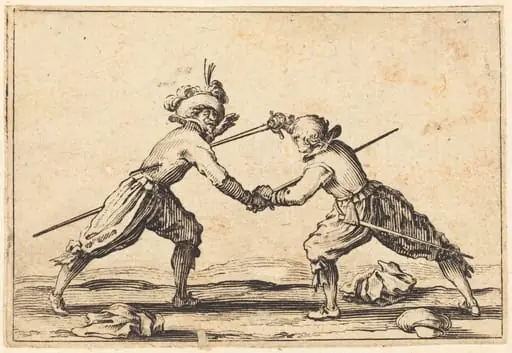
Hunchback Brandishing Two Swords is an ink print by the Romanticist artist H. Numan. It dates from 1770 and is held in the collection of the National Gallery of Art. Created in 1770 by H.
About this work
Overview
Its stark black-and-white composition relies on incised lines to convey energy and form, characteristic of the woodcut medium.
Created in 1770 by H. Numan, this woodcut depicts a contorted figure in dynamic motion, wielding two swords. Executed on laid paper, the print belongs to the broader tradition of 18th-century graphic art. Its stark black-and-white composition relies on incised lines to convey energy and form, characteristic of the woodcut medium. The image balances violent motion with stillness, suggesting a narrative tension between chaos and order.
Subject & Meaning
The central figure, hunched and mid-leap, appears as a figure of primal aggression, his limbs stretched and hair flying. Below, a tranquil village with pitched roofs and sparse trees remains untouched, its stillness amplifying the figure’s frenzy. The contrast may imply a commentary on disruption—whether social, moral, or psychological—where one isolated force disrupts communal peace, though no explicit allegory is documented.
Technique & Style
The artist employed sharp, angular lines carved into wood to render the figure’s twisted posture and swirling hair. The high contrast between inked forms and the untouched paper enhances the sense of movement. Fine, controlled strokes define the village below, creating a deliberate visual contrast. The technique highlights the woodcut’s capacity for expressive force, using minimal means to suggest dramatic action.
History & Provenance
The print is attributed to H. Numan, a lesser-known Dutch artist active in the late 18th century. No record of its original commission or exhibition exists. It survives in private and institutional collections, likely circulated as a standalone image or possibly as part of a broader series of grotesque or satirical prints common in Northern European print culture of the period.
Context
Produced during a time of growing interest in the grotesque and the sublime, the image aligns with emerging artistic explorations of human distortion and emotional intensity. While not tied to a specific political event, its timing coincides with broader European fascination with figures of marginality and disorder, reflected in literature and visual art alike.
Legacy
Though not widely reproduced or studied, the print contributes to a niche tradition of expressive woodcuts that prioritize emotional impact over narrative clarity. Its raw energy and compositional contrast influenced later artists exploring psychological states through graphic media, particularly in 19th-century German and Dutch printmaking circles.
Artist & collection