Artwork
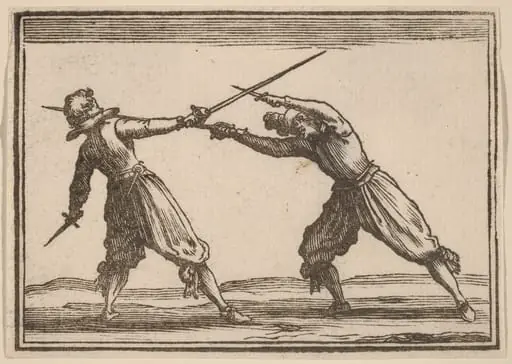
Duel with Swords
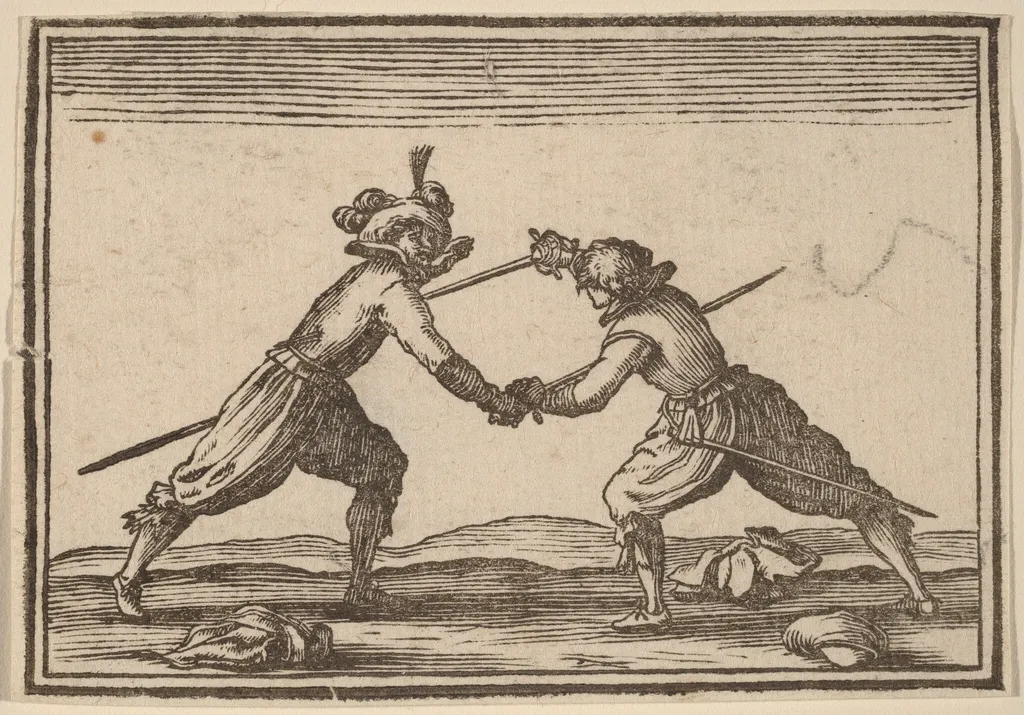
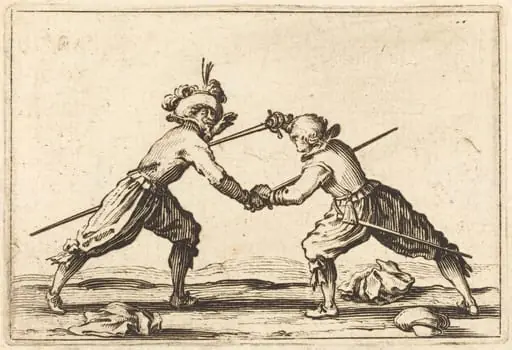
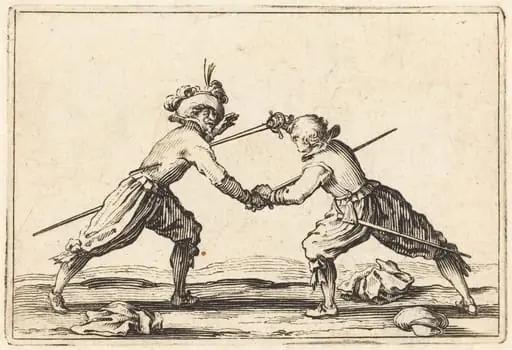
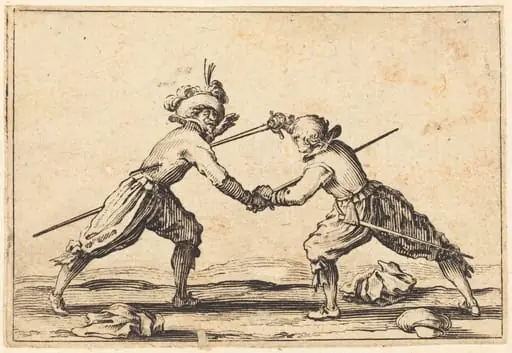
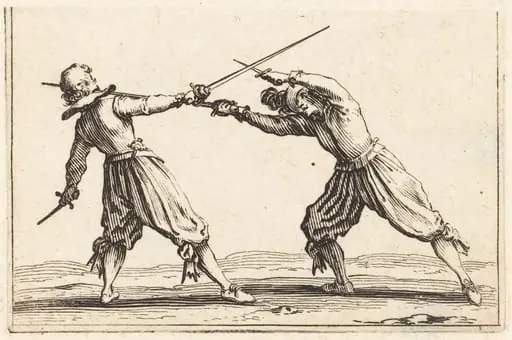
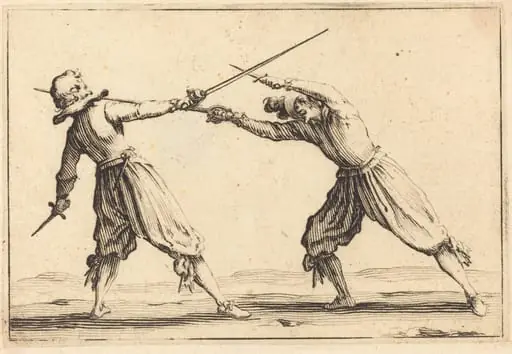
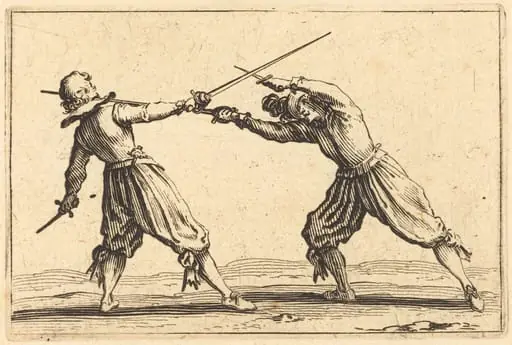
Duel with Swords is an ink print by the Baroque artist Edouard Eckman. It dates from 1621 and is held in the collection of the National Gallery of Art.
About this work
Overview
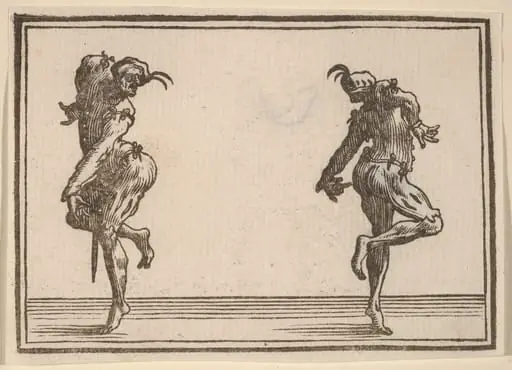
Created in 1621 by Edouard Eckman, this woodcut depicts a moment of intense combat between two figures. Rendered in black ink on laid paper, the print captures a dynamic duel on an open, minimally detailed landscape. The composition emphasizes motion and tension through stark contrasts of light and shadow, characteristic of early 17th-century printmaking techniques.
Subject & Meaning
One figure stands upright, wielding two swords, while the other kneels, gripping his weapon with both hands, suggesting vulnerability or a final effort.
The scene portrays two armored men engaged in a personal combat, likely representing a formal duel. One figure stands upright, wielding two swords, while the other kneels, gripping his weapon with both hands, suggesting vulnerability or a final effort. The focused expressions and rigid postures imply a ritualized confrontation, possibly reflecting contemporary ideals of honor and personal resolve.
Technique & Style
Eckman employed the woodcut method, carving lines into a wooden block to create a relief print. Bold, incised contours define the figures and their movements, while areas of solid black enhance dramatic contrast. The background is reduced to sparse, wavy lines and scattered rocks, directing attention to the central action. The style is linear and economical, typical of Northern European prints of the period.
History & Provenance
The print originates from the early 17th century, a time when woodcuts were widely used for illustrations and disseminated imagery. While specific ownership records are limited, its survival suggests it was circulated among collectors or used as a study piece. Eckman’s work from this era remains rare, making this piece a valuable example of Dutch printmaking outside the dominant genre of religious or allegorical subjects.
Context
In the early 1600s, dueling remained a contested social practice in Europe, often depicted in art as both a moral warning and a symbol of personal courage. Woodcuts like this one served as accessible visual narratives, reaching audiences beyond elite circles. Eckman’s focus on secular combat reflects a broader trend in Northern art toward everyday and martial themes during a period of political and religious upheaval.
Legacy
Though Eckman is not widely known today, this woodcut exemplifies the precision and narrative clarity achievable in early printmaking. It contributes to the understanding of how martial imagery was visualized for public consumption before the rise of oil painting as the dominant medium. Its survival offers insight into the visual culture of conflict in the Dutch Republic during the Thirty Years' War.
Artist & collection