Artwork
Fear
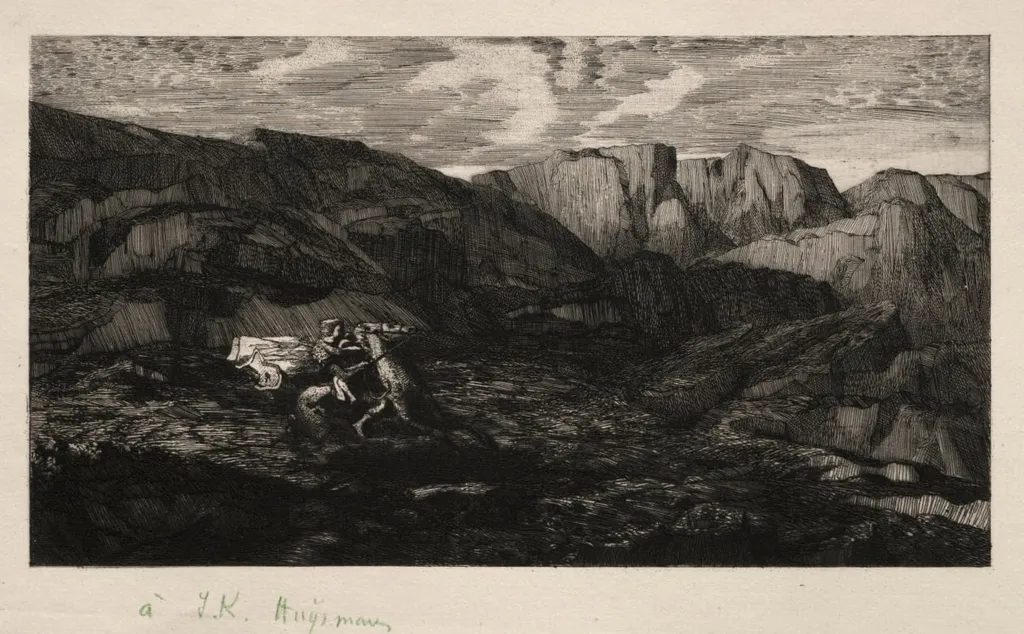
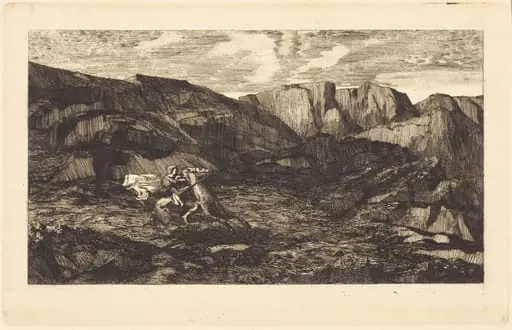
Fear is a print by the Impressionist artist Odilon Redon. It dates from 1866 and is held in the collection of the Cleveland Museum of Art.
About this work
Overview
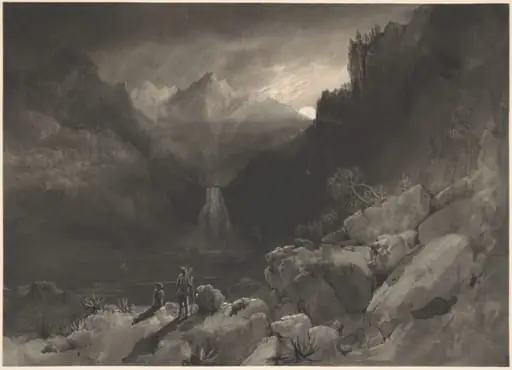
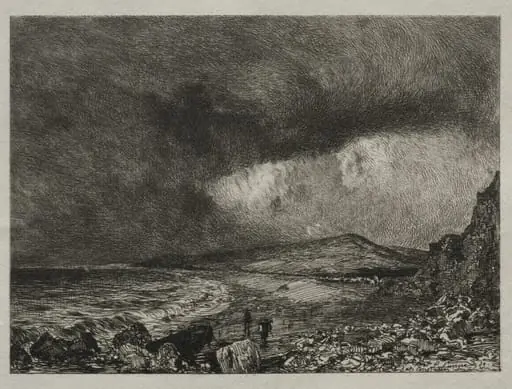
Odilon Redon created this etching as one of very few in his career, using dense, parallel scratching to build deep tonal contrasts. The work captures a moment of profound stillness: a man kneels in a windswept field, cradling a small, lifeless form. The sky, rendered in tightly packed lines, feels charged and oppressive, as if the storm itself has halted in grief.
Subject & Meaning
The image draws from Goethe’s 1782 poem about a father returning home after a harrowing night to find his child dead. Redon does not illustrate the narrative literally but evokes its emotional weight through isolation and scale. The father’s white cape, stark against the dark earth, becomes a symbol of vulnerability amid overwhelming sorrow, emphasizing the silence of loss.
Technique & Style
Redon employed etching with exceptional control, varying line density to modulate light and shadow. Areas of near-black emerge where scratches overlap densely, while the figure’s cape remains a void of untouched paper. The swirling, rhythmic lines in the sky suggest motion arrested—wind frozen in time—creating a psychological atmosphere more than a literal landscape.
History & Provenance
This print was made as a personal gift to Joris-Karl Huysmans, a French writer and close friend of Redon’s. A handwritten dedication at the bottom confirms its intimate purpose. Few etchings by Redon survive, and this one stands as a rare example of his engagement with the medium, likely intended as a quiet tribute to shared literary sensibilities.
Context
In the late 19th century, artists increasingly turned to literature for emotional and symbolic inspiration. Redon’s engagement with Goethe’s poem reflects a broader trend among Symbolists who favored inner states over external realism. The etching’s austerity aligns with contemporary interest in mood, silence, and the unseen forces shaping human experience.
Legacy
Though Redon produced few etchings, this work remains a significant example of his ability to translate literary grief into visual form. Its restrained technique and emotional gravity influenced later artists exploring psychological depth through monochrome printmaking. The piece endures not as spectacle, but as a quiet meditation on loss and the limits of representation.
Artist & collection
Artist
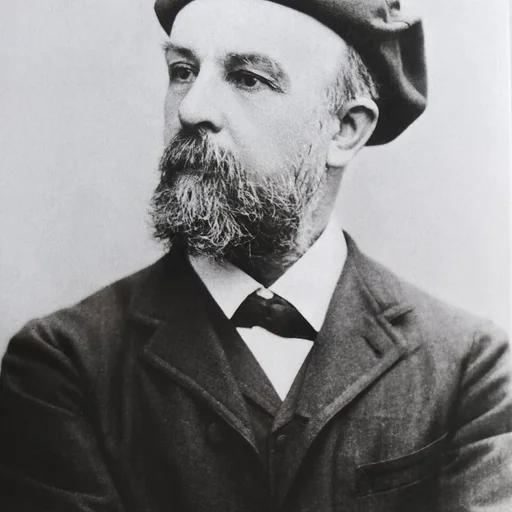
Born Bertrand-Jean Redon on 20 April 1840 in Bordeaux, the artist adopted the name Odilon from his mother, Marie-Odile.

![Landscape [Paesaggio], by Carlo Paolo Agazzi](https://artifactworldgallery.com/img/carlo-paolo-agazzi--landscape-paesaggio--e606f4ada87d2052-w320.webp)