Artwork
The Anchorite
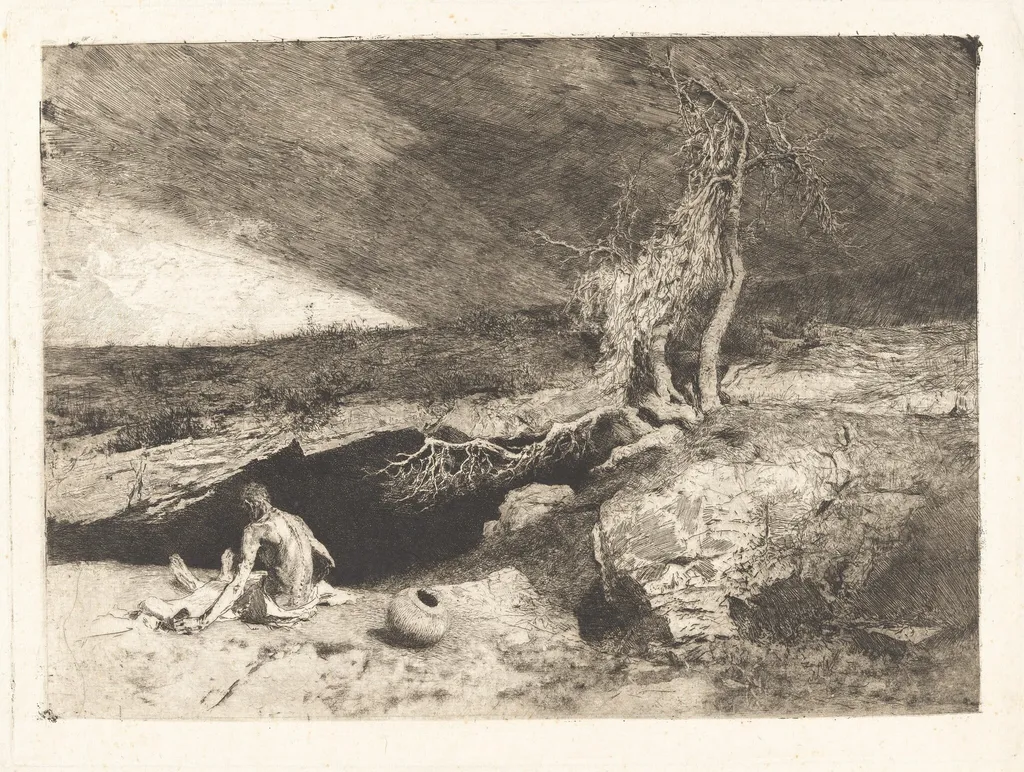
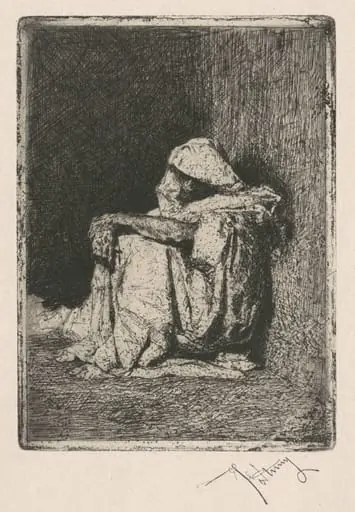
The Anchorite is an ink print by the Impressionist artist Mariano Fortuny Marsal. It dates from 1869 and is held in the collection of the National Gallery of Art.
About this work
Overview
Mariano Fortuny Marsal’s print The Anchorite, executed around 1869, is an etching and aquatint on laid paper. The work measures a modest size and resides in the collection of the National Gallery of Art in Washington, D.C. It exists as a proof predating the first edition printed in 1875, offering a glimpse of Fortuny’s early printmaking practice.
Subject & Meaning
The image depicts a solitary figure kneeling within a dimly lit, rocky cavern, head bowed in contemplation. Beyond the entrance, a twisted tree with exposed roots rises from a small patch of grass, while a dead fish lies on the ground, a tiny bird pecking at it. The stark juxtaposition of life, death, and isolation suggests a meditation on spiritual withdrawal.
Technique & Style
Fortuny combined traditional etching with aquatint, employing selective wiping to achieve nuanced tonal gradations. The deep shadows of the cave are rendered through dense line work, whereas the tree’s gnarled branches emerge with lighter, more textured strokes. This interplay of line and wash creates a tactile sense of depth uncommon in many contemporary prints.
History & Provenance
The Anchorite was produced as a proof before the first edition of 1875, indicating Fortuny’s experimental phase with the medium. It entered the National Gallery of Art’s holdings through a mid‑20th‑century acquisition, where it has been displayed as part of the museum’s European print collection.
Context
Created in the late 1860s, the print reflects the broader Romantic fascination with solitary figures and rugged landscapes. Fortuny, known primarily for his later Orientalist paintings, explored printmaking as a means to study atmospheric effects and narrative composition during this period.
Artist & collection


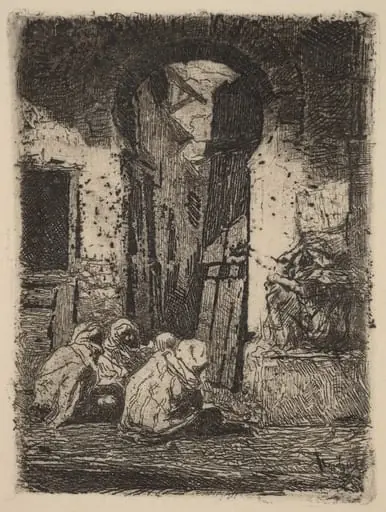
![Landscape [Paesaggio], by Carlo Paolo Agazzi](https://artifactworldgallery.com/img/carlo-paolo-agazzi--landscape-paesaggio--e606f4ada87d2052-w320.webp) Landscape [Paesaggio]
Landscape [Paesaggio]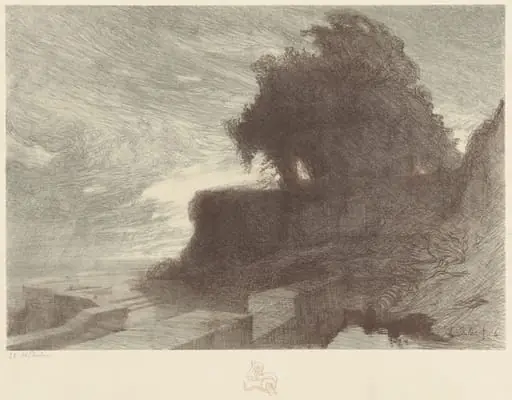 Landscape with Trees on a Bluff and a Snake Remarque
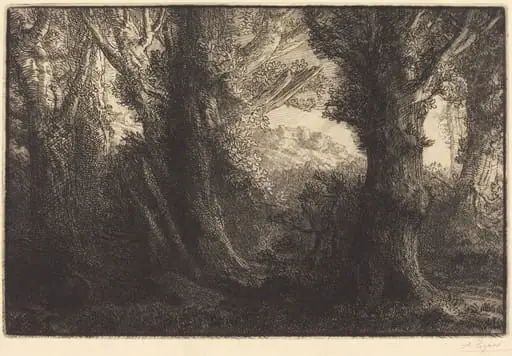 In the Forest of Conteville (Dans la foret de Conteville)
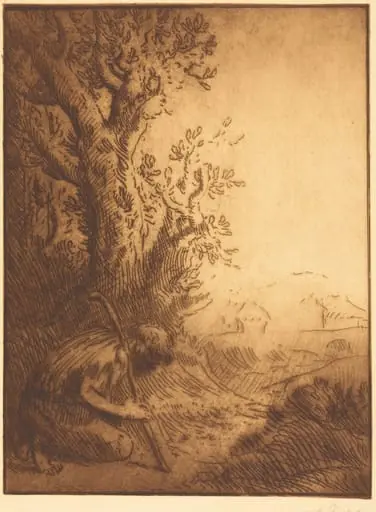 The Prodigal Son, 4th plate (L'enfant prodigue)
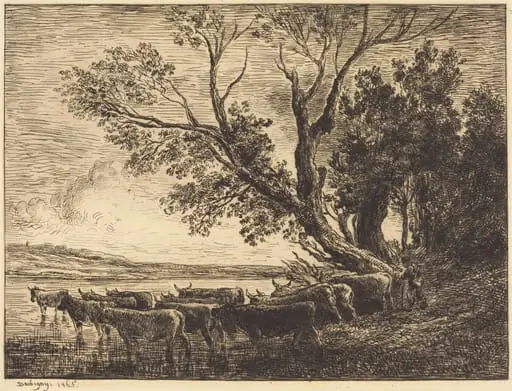 The Ford (Le Gue)
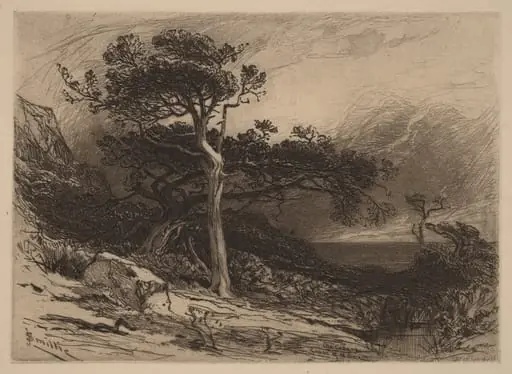 Old Cedars, Coast of Maine
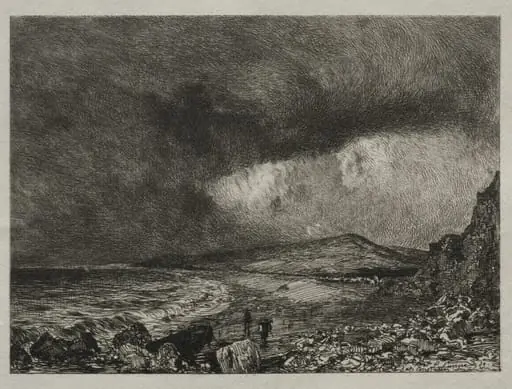 The Bay of Weymouth
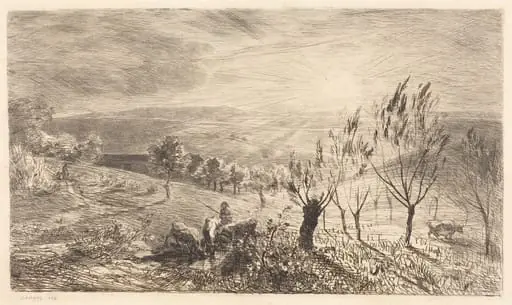 Sunrise (Le Lever du soleil)
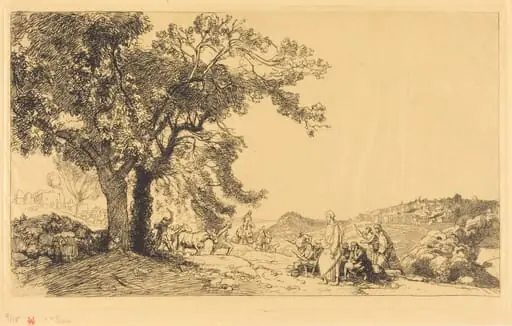 Le Christ au matin de rameaux
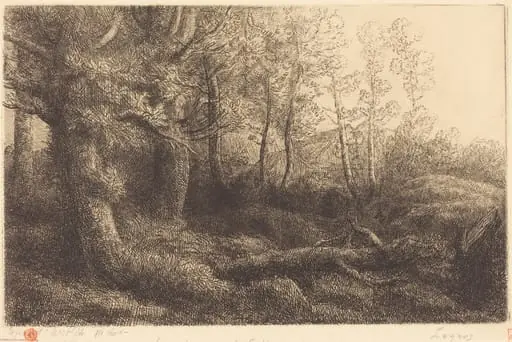 In the Forest (Lisiere de foret)
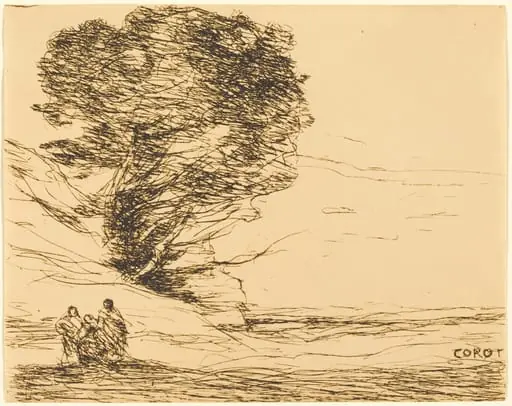 Souvenir of Antibes (Souvenir d'Antibes)
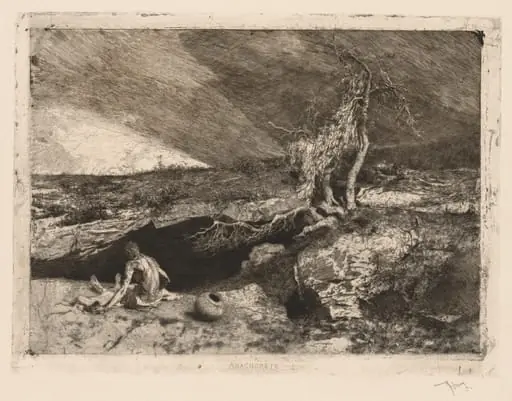 The Anchorite