Artwork
The Early Plowman
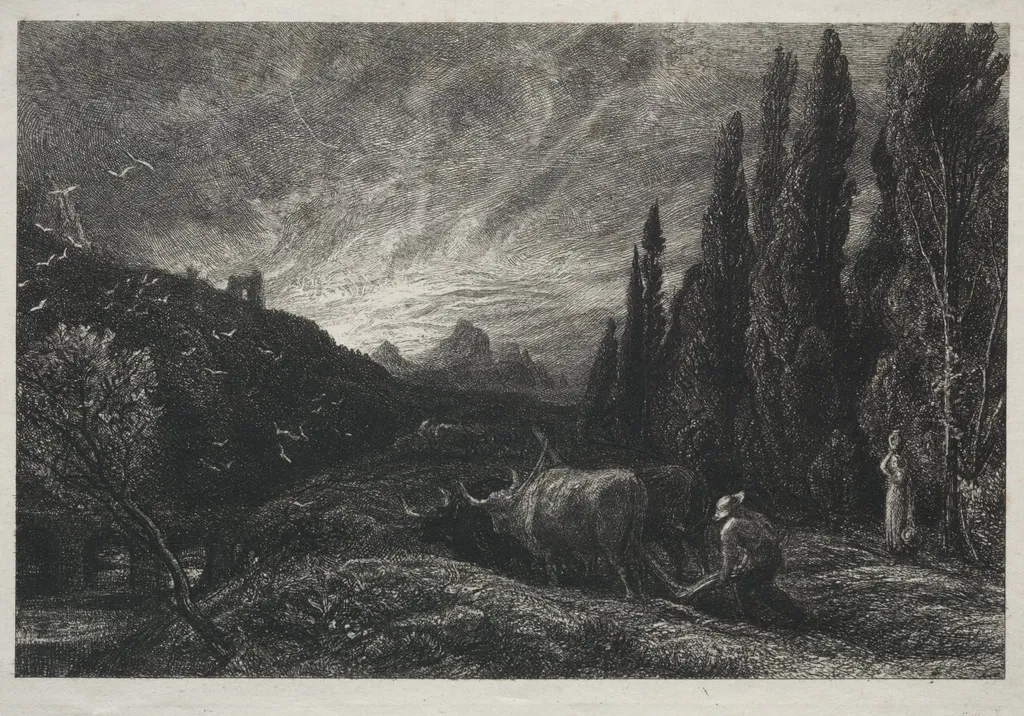
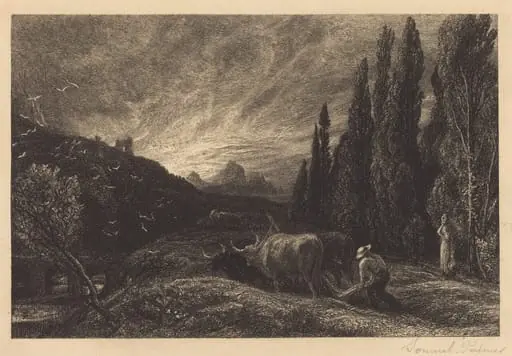
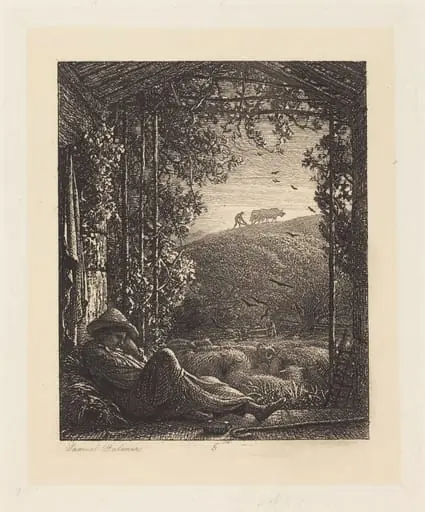
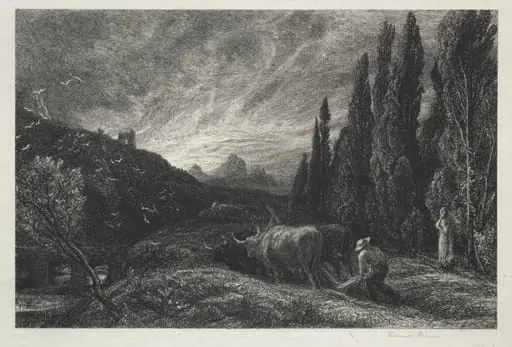
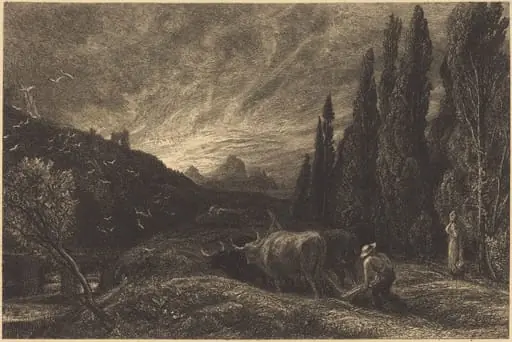
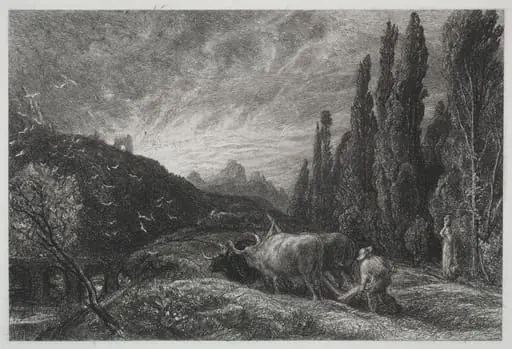
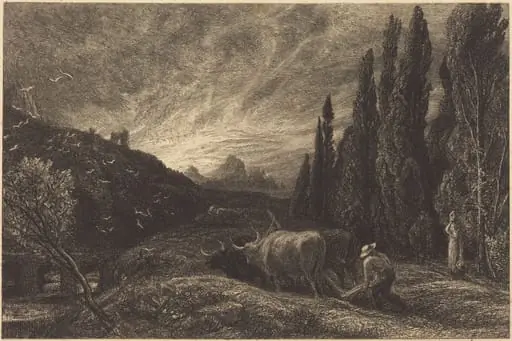
The Early Plowman is a print by the Impressionist artist Samuel Palmer. It dates from 1861 and is held in the collection of the Cleveland Museum of Art.
About this work
Overview
Created around 1861, *The Early Plowman* is a monochrome print by Samuel Palmer, reflecting his enduring interest in rural life and quiet solitude.
Created around 1861, *The Early Plowman* is a monochrome print by Samuel Palmer, reflecting his enduring interest in rural life and quiet solitude. Unlike his earlier visionary works, this piece adopts a restrained tone, capturing a moment at day’s end with minimal detail. The composition centers on labor and nature in quiet harmony, rendered through subtle tonal gradations rather than dramatic contrast.
Subject & Meaning
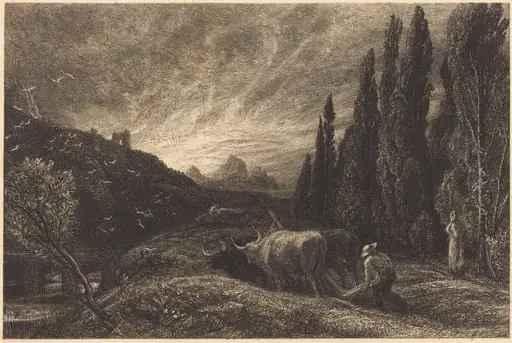
The print portrays a solitary plowman guiding two weary oxen along a forest path at twilight. A faint figure lingers in the shadows, adding ambiguity to the scene. The imagery suggests the dignity of manual labor and the passage of time, evoking themes of endurance and transience. There is no overt symbolism; meaning arises from stillness, fading light, and the weight of the moment.
Technique & Style
Palmer employed fine, soft etching lines and delicate hatching to model form and atmosphere. The trees and sky are rendered with muted gradations, creating a hazy, twilight mood. Shadows are deep but not harsh, and the oxen’s posture conveys fatigue through subtle contours. The absence of color heightens the sense of quietude, emphasizing texture and light over narrative.
History & Provenance
This print emerged late in Palmer’s career, after his most celebrated visionary period. It reflects a shift toward quieter, more observational subjects. Likely produced for private circulation rather than public sale, it was not widely exhibited during his lifetime. Its survival in limited impressions underscores its status as a personal, introspective work rather than a commercial endeavor.
Context
In the 1860s, Britain’s industrial expansion reshaped rural landscapes, prompting artists to revisit agrarian themes with nostalgia or reverence. Palmer, once associated with the Shoreham group, now worked in isolation, distilling his earlier spiritual vision into understated scenes. *The Early Plowman* aligns with broader cultural reflections on lost simplicity, though without overt political or sentimental commentary.
Legacy
Though less known than his earlier visionary prints, *The Early Plowman* illustrates Palmer’s sustained engagement with rural life and atmospheric tone. It influenced later British printmakers drawn to quiet naturalism and tonal subtlety. The work remains a quiet testament to his ability to convey emotional depth through restraint, rather than grandeur.
Artist & collection
Artist
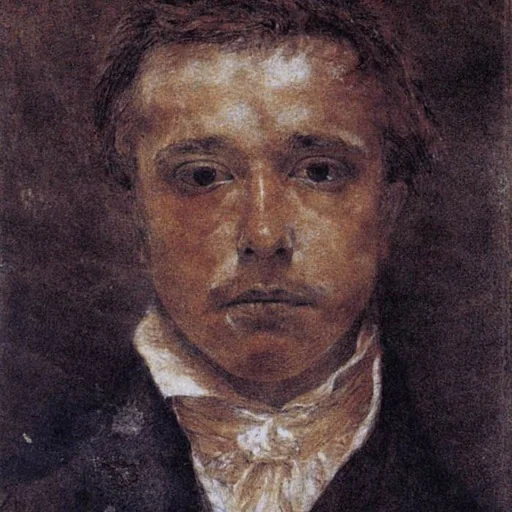
Samuel Palmer Hon.RE (Hon. Fellow of the Society of Painter-Etchers) (27 January 1805 – 24 May 1881) was a British landscape painter, etcher and printmaker. He was also a prolific writer. Palmer was a key figure in…