Artwork
Vas de formă rotundă, cu pereții evazați, smălțuit în interior, decorat pe suprafața interioară, în prim-plan apărând fațada unei biserici cu trei turle, alături de motive geometrice (pătrate, semicercuri, puncte) grupate; pe margine, succesiune de motive semicirculare și punctiforme. Pe partea exterioară apare semnătura de meșter (Stelian Ogrezeanu) și localizarea (jud. Vîlcea). Cromatică: verde, cafeniu, maro, alb.
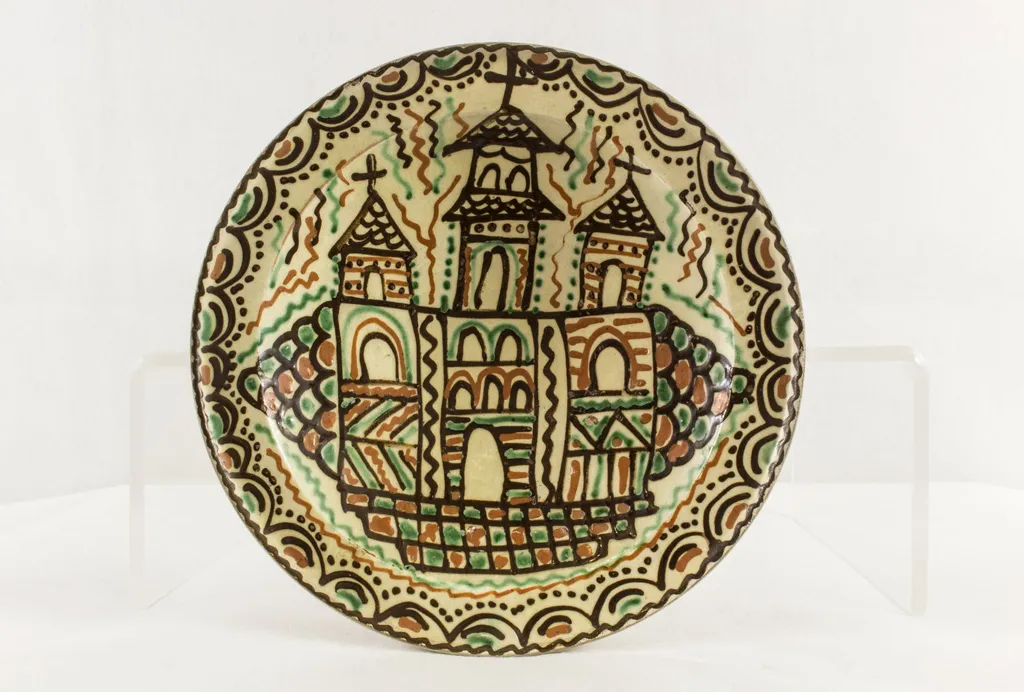
Vas de formă rotundă, cu pereții evazați, smălțuit în interior, decorat pe suprafața interioară, în prim-plan apărând fațada unei biserici cu trei turle, alături de motive geometrice (pătrate, semicercuri, puncte) grupate; pe margine, succesiune de motive semicirculare și punctiforme. Pe partea exterioară apare semnătura de meșter (Stelian Ogrezeanu) și localizarea (jud. Vîlcea). Cromatică: verde, cafeniu, maro, alb. is a print by Ogrezeanu Stelian. It is held in the collection of the Gavrila Simion Eco-Museum Research Institute Tulcea. A circular ceramic plate, glazed on the interior, features a central depiction of a three‑towered church façade.
About this work
Overview
A circular ceramic plate, glazed on the interior, features a central depiction of a three‑towered church façade. The design is surrounded by geometric motifs—squares, semicircles and dots—arranged in bands along the rim. The exterior bears the craftsman's signature, Stelian Ogrezeanu, and the designation of Vâlcea County, Romania. The palette is limited to shades of green, brown, cream and white.
Subject & Meaning
The central image presents a stylised church with three spires, each crowned by a cross, suggesting a local religious architecture. The surrounding geometric patterns—repeating squares, half‑circles and punctiform elements—create a rhythmic border that frames the sacred motif, reflecting a folk aesthetic that intertwines everyday ornamentation with spiritual symbolism.
Technique & Style
The plate is formed from rounded ceramic clay and fired with an interior glaze that accentuates the painted scene. The decorative scheme relies on hand‑applied pigments in muted earth tones, applied in a flat, graphic manner characteristic of Romanian folk pottery. The use of simple, repetitive geometric forms aligns with traditional decorative vocabularies.
History & Provenance
Crafted by the potter Stelian Ogrezeanu, the piece is identified with the Vâlcea region of Romania, a locality known for its ceramic traditions. The signature and regional inscription on the reverse side provide direct evidence of its origin and the artisan’s personal attribution.
Context
The work belongs to a broader tradition of utilitarian ceramics that double as decorative objects in Romanian folk culture. Such plates often served both functional and ceremonial purposes, integrating local architectural motifs with ornamental patterns common in rural households.
Legacy
While modest in scale, the plate exemplifies the continuity of regional ceramic practices and the transmission of visual motifs across generations. It offers insight into the everyday artistic expression of Vâlcea’s communities and contributes to the documentation of Romanian folk art.
Artist & collection
Artist
Stelian Ogrezeanu shaped clay in a tiny workshop near Horezu, where the Carpathians press close enough to smell the woodsmoke.
Museum
Gavrila Simion Eco-Museum Research Institute Tulcea
Continue through works from the same source collection.
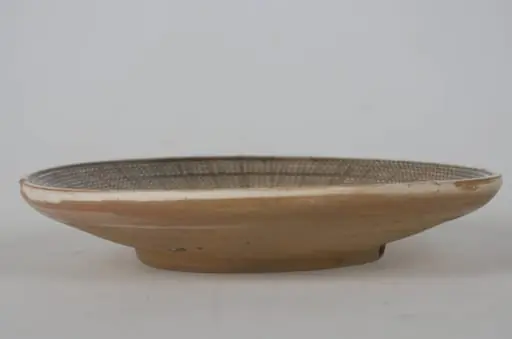 Vas ceramic smălțuit de mici dimensiuni, modelat la roata olarului, uscat, pictat, ars de două ori și smălțuit. Taierul prezintă o bază plată din care pornesc pereții foarte evazați/arcuiți cu buza ridicată. Decorul este dispus pe toată suprafața vasului, care în prealabil a fost angobat. Fundul vasului este nedecorat; în zona de demarcarea dintre fundul vasului și pereți un registru jirăvit, cuprins între două linii de culoare maro-roșcat. Un al doilea registru realizat din frunze de culoare verde, maro-roșcat și maro-închis. Marginea vasului a fost jirăvită, realizată cu „gaița”. Cromatica vasului este alb la interior și maro-deschis la exterior, iar cea a decorului pictat este maro-închis; verde; maro-roșcat; alb.
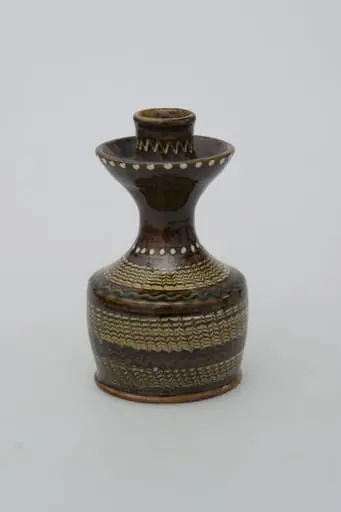 Recipient ceramic tubular, folosit ca suport de lumânare. Baza, fără fund, foarte înaltă cu pereții drepți ce se continuă printr-un gât îngust, înalt, lățindu-se în partea superioară pe marginea care se evazează la exterior. Este prevăzut un șanț pentru ținerea cerii topite. Partea superioară prevăzută cu un orificiu înalt pentru fixat lumânarea. Decorații jirăvite pe întreg corpul, linie verde ondulată pe umăr, linie punctiformă circulară la baza gâtului și pe inelul reliefat, și o linie în zig-zag în partea superioară a gâtului. Smălțuit în exterior. Cromatică: fond: maro închis; motive: alb; verde; maro; negru; bej.
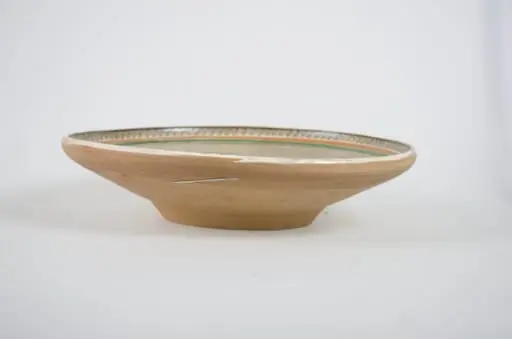 Vas ceramic de formă tronconică. Baza puțin adâncă din care pornesc pereții arcuiți spre exterior având pereții întinși și buza rotunjită. Ornament în două registre: pe fundul farfuriei o stea în opt colțuri având în fiecare vârf câte un "boboc". Delimitarea dintre bază și pereți s-a făcut printr-o porțiune jirăvită. Pereții ornamentați cu spirale și "altițe" cu linii ondulate (trei spirale și trei altițe). Marginea are o dungă jirăvită. Pe fundul vasului apare numele meșterului și localitatea "Ogrezeanu Stelian - Hurez, Valcea, Romania". Cromatică: fond: maro închis; motive: maro-roșcat, verde, alb. Smălțuit în interior.
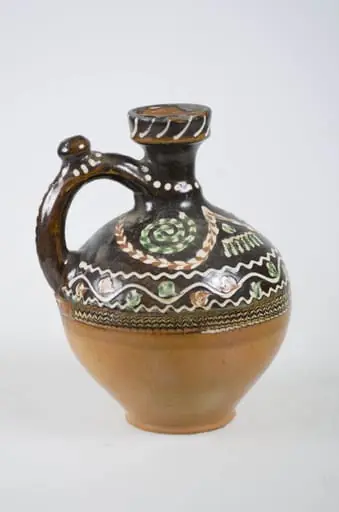 Vas ceramic sferic, ce prezintă baza plată din care pornesc pereții puternic arcuiți spre exterior, înalți, care în partea superioară se îngustează și se termină printr-un gât înalt cu marginea dreaptă ușor rotunjită. Ornamentul realizat cu cornul este dispus numai în partea superioară pe fond de angobă, realizat cu cornul. La diametrul maxim o porțiune jirăvită cu șarpe de o parte și de alta cu "altiță" și "boboci". Pe gât trei linii ondulate urmat de un șir de puncte. Pe marginea buzei linii. Mânerul prevăzut cu "țâță" are puncte. Jumătatea inferioară maro deschis. Smălțuit. Pe fundul vasului apare numele meșterului și localitatea "Ogrezeanu Stelian - Horezu". Cromatică: fond: maro închis partea superioară. Cărămiziu partea inferioară; motive: verde; alb; maro închis.
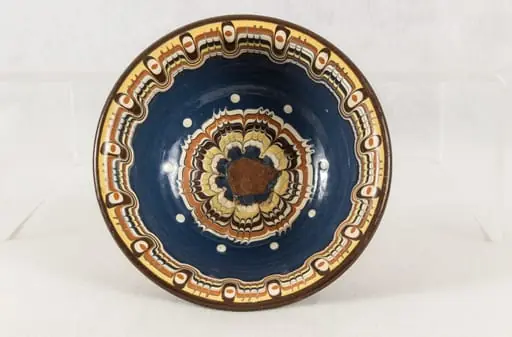 Vas de formă rotundă, adâncită, smălțuit în interior și exterior (cu excepția fundului), decorat pe suprafața interioară și exterioară astfel: în interior, un motiv floral central, realizat prin tehnica jirăvitului cu gaița, încadrat de nouă motive punctiforme, iar pe margine, un brâu maro și un registru de motive diverse (ochiul, linii curbe) realizare prin pictare și jirăvit; la exterior, un registru mai lat cu motive jirăvite și pictate cu pensula. Cromatică: albastru, alb, galben, maro, cărămiziu.
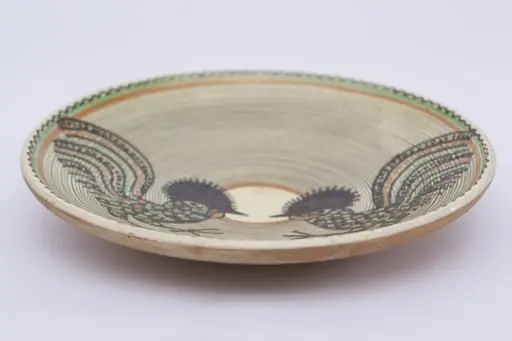 Platoul are fundul îngust, pereții puțin înalți dar puternic evazați. Pe o pânză de spirale, doi cocoși stau pregătiți de luptă. Buza vasului conturată cu o linie vălurită dispusă circular. Pe spate platoul este prevăzut cu o gaură de prindere, tot la posterior, pe fund incizată inscripția ”Stelian Ogrezeanu Hurez Vâlcea România''. Cromatică: fond: smalț alb-gălbui; motive: verde; maro; cărămiziu.
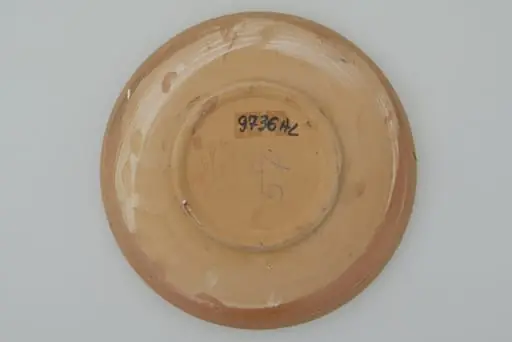 Farfurie tronconică de mici dimensiuni, cu fundul mic, pereții puțin înalți, dar puternic evazați. Centrul farfuriei prezintă o spirală, urmează un câmp jirăvit; urmează două cercuri maro și verde, din nou câmp jirăvit, urmează o ghirlandă cu trandafiri, sfârșindu-se cu un câmp jirăvit. Este prevăzută cu o gaură, pe partea posterioară, pentru prindere. Cromatică: fond: alb-gri; motive; maro; verde; cărămiziu.
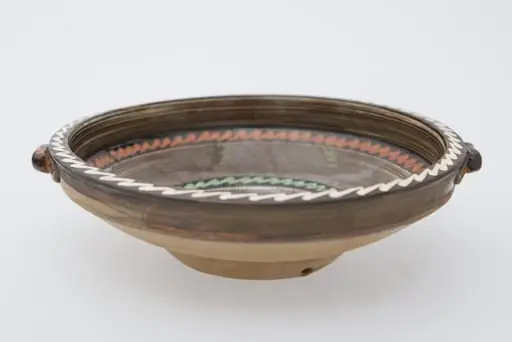 Castronul, pe bază inelară, are fundul îngust, pereții înalți și evazați, gura vasului este înaltă și dreaptă. Centrul este marcat de o spirală, înconjurată de o linie vălurită pe maron deschis, în nuanță cu câmp jirăvit. Pe pereții vasului este un brâu verde, în zig-zag, apoi un câmp jirăvit și din nou un brâu în zig-zag maro. Pe gâtul vasului o spirală, iar pe buza lui, un zig-zag pe alb. Castronul este prevăzut cu două urechi de prindere și o gaură pe partea posterioară, pentru agățare. Cromatică: fond: maron închis; motive: verde; alb; maro.
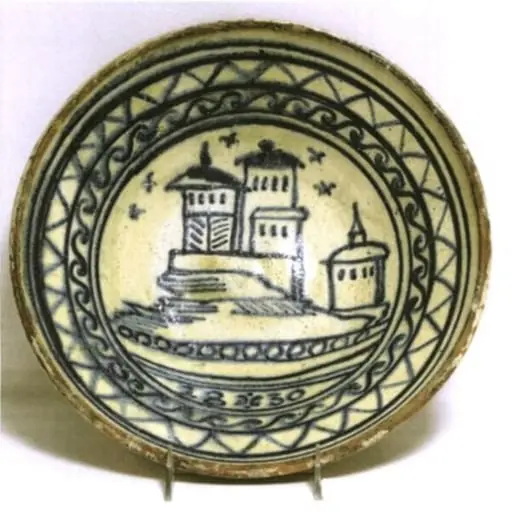 blid
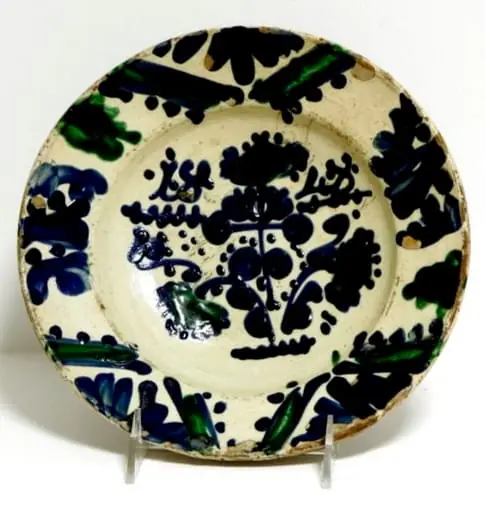
blid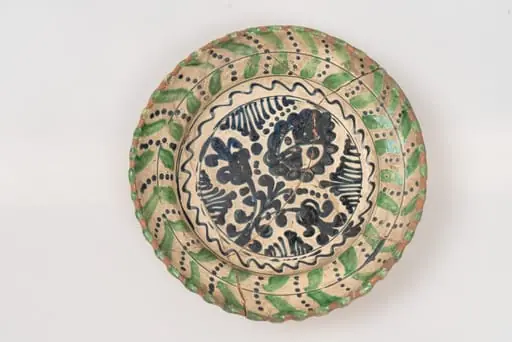 Farfurie de formă semi-adâncă, cu buză evazată și muchia buzei ondulată. Farfuria este angobată pe fața interioară cu un strat de humă albă, peste care este pictat cu cornul și cu pensula decorul format din motive florale și fitomorfe stilizate și din motive geometrice: în registrul central de pe fundul farfuriei este pictată o tulpină cu trei flori și frunze mici de culoare albastră, înscrisă într-un cerc dublu ce are la mijloc o linie ondulată circulară, de culoare albastră. Acest registru este completat cu motive formate din linii albastre crescătoare și descrescătoare dispuse în formă de triunghi. Buza farfuriei este decorată cu un șir continuu de frunze duble verzi între linii punctate de culoare albastră. Buza farfuriei este marcată cu o dungă de culoare verde. Cromatica: alb, albastru, verde. Farfuria este acoperită pe fața decorată cu un strat de smalț transparent.
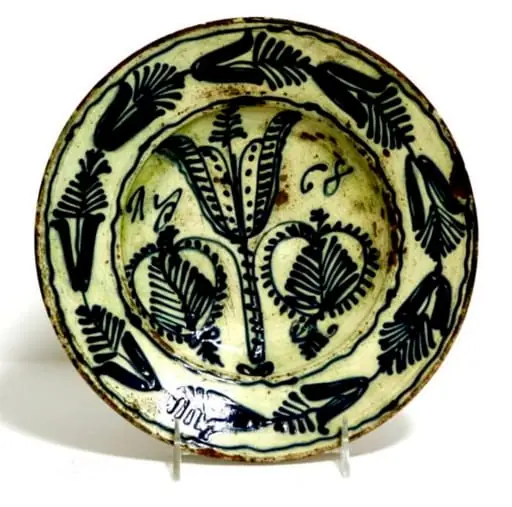
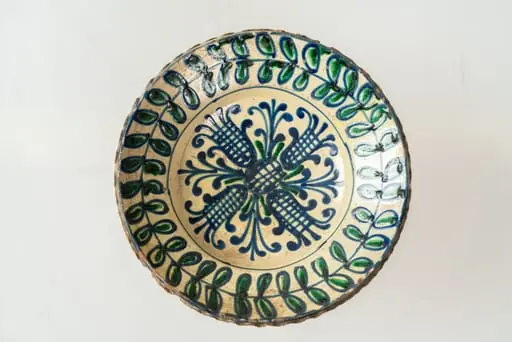 Farfurie semi-adâncă, cu buză răsfrântă și muchia buzei ondulată (mici alveole); piesa este modelată la roata olarului și angobată cu humă albă pe fața interioară. Decorul este realizat prin pictare cu cornul și cu pensula și constă în motive decorative florale și vegetale stilizate, dispuse astfel: un registru central, pe fundul farfuriei, ce conține patru flori de crin, de culoare albastră, cu frunze, iar buza farfuriei este decorată cu un șir continuu de frunze verzi cu contur albastru, înșirate pe o linie albastră sub formă de cerc. Bordura interioară a farfuriei și muchia buzei sunt marcate cu câte o linie de culoare albastră. Cromatica: alb, verde, albastru. Farfuria este acoperită pe fața decorată cu un strat de smalț transparent.
 blid
blid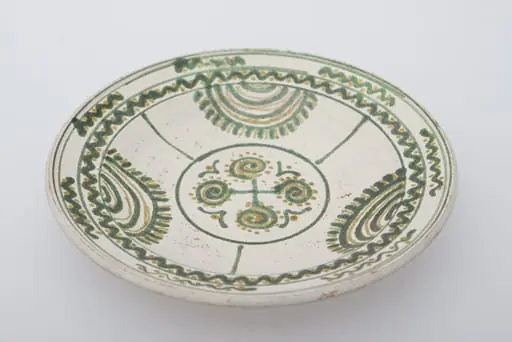 Vas ceramic de formă circulară și profil tronconic. Fața farfuriei a fost introdusă în angobă albă. Decorația a fost făcută cu pensula. Pe fundul farfuriei un cerc circumscris patru motive în spirală. Pereții farfuriei, au fost împărțiți în trei părți egale, pe circumferință, delimitate fiecare parte de o linie verticală, motivul bradului este reprezentat printr-o succesiune de semicercuri, pe ultima dintre ele pictându-se "țepii" bradului. Buza farfuriei a fost împărțită în două registre, în primul fiind pictat valul continuu, a doua cu val întrerupt. Pe fundul vasului, la spate, ștanțat ”D. Șchiopu C. Vlădești 1980'' înscris într-un cerc. Pe inelul de susținere dispuse două orifficii pentru atârnare. Cromatică: fond de angobă albă; motive: smalț verde și maro.
 farfurie
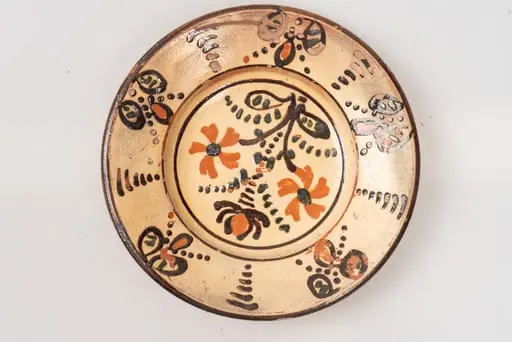 Farfurie de formă semi-adâncă, acoperită pe suprafața interioară cu un strat de angobă albă, peste care este pictat cu cornul și cu pensula decorul format din motive geometrice și florale stilizate: central pe fundul farfuriei, înscris într-un cerc maro, este pictată o tulpină de culoare maro, cu frunze și elemente vegetale de culoare verde închis și trei flori, două de culoare siena arsă, iar cea centrală cu petale maro. Buza farfuriei este decorată cu mici motive vegetale geometrizate cu contur maro, formate din câte două frunze cu două linii verzi în interior și un boboc de culoare galben ocru, completate cu linii punctate; între aceste motive se găsesc intercalate motive formate din linii mici paralele și descrescătoare ca mărime. Bordura interioară a farfuriei este marcată cu o linie circulară subțire iar muchia buzei cu o dungă de culoare maro. Suprafața ornamentată a farfuriei este acoperită cu un strat de smalț transparent. Cromatica: siena arsă, verde-închis, maro.