Artwork
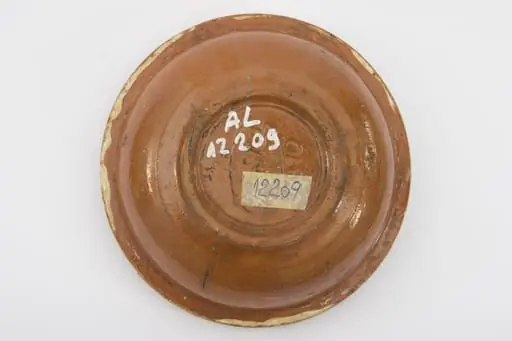
Farfurie tronconică de mici dimensiuni, cu fundul mic, pereții puțin înalți, dar puternic evazați. Centrul farfuriei prezintă o spirală, urmează un câmp jirăvit; urmează două cercuri maro și verde, din nou câmp jirăvit, urmează o ghirlandă cu trandafiri, sfârșindu-se cu un câmp jirăvit. Este prevăzută cu o gaură, pe partea posterioară, pentru prindere. Cromatică: fond: alb-gri; motive; maro; verde; cărămiziu.
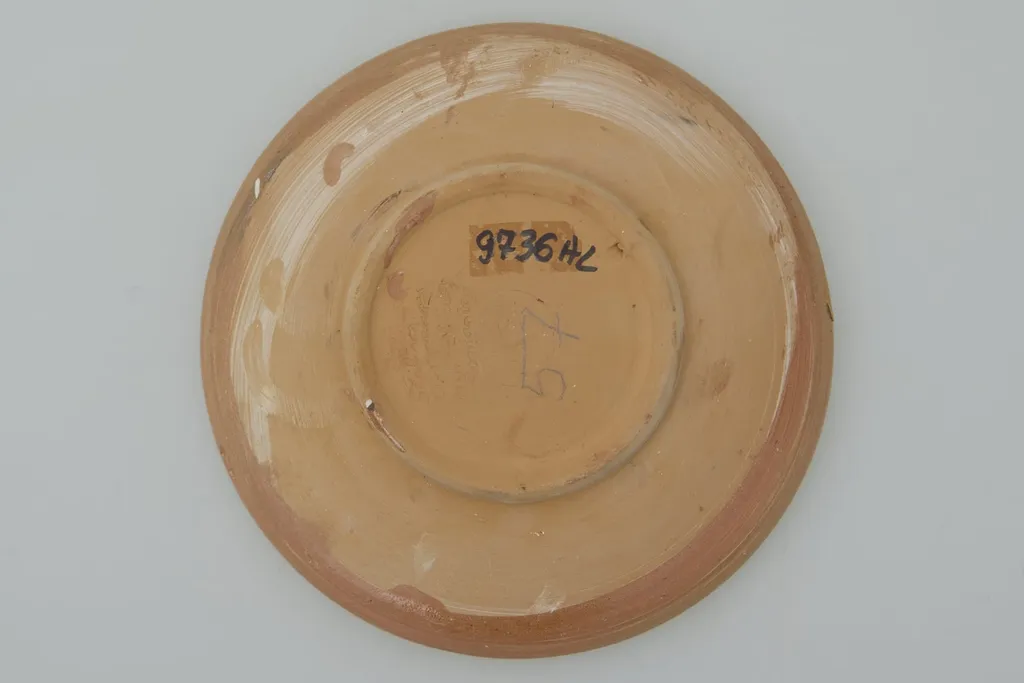
Farfurie tronconică de mici dimensiuni, cu fundul mic, pereții puțin înalți, dar puternic evazați. Centrul farfuriei prezintă o spirală, urmează un câmp jirăvit; urmează două cercuri maro și verde, din nou câmp jirăvit, urmează o ghirlandă cu trandafiri, sfârșindu-se cu un câmp jirăvit. Este prevăzută cu o gaură, pe partea posterioară, pentru prindere. Cromatică: fond: alb-gri; motive; maro; verde; cărămiziu. is a poster by Ogrezeanu Stelian. It is held in the collection of the ASTRA National Museum Complex. A small, conical ceramic plate with a narrow base and gently flared sides, this object is made of fired clay and exhibits signs of age.
About this work
Overview
The decoration is arranged in concentric bands, beginning with a central spiral and progressing outward with alternating textured fields and painted motifs.
A small, conical ceramic plate with a narrow base and gently flared sides, this object is made of fired clay and exhibits signs of age. Its surface is primarily light grayish-white, accented with brown, green, and brick-red pigments. A single hole on the reverse suggests it was designed for hanging or mounting. The decoration is arranged in concentric bands, beginning with a central spiral and progressing outward with alternating textured fields and painted motifs.
Subject & Meaning
The decorative sequence includes a spiral, repeated jirăvit patterns, two colored rings, and a floral garland of roses. These elements may reflect regional symbolic traditions, where spirals could denote continuity and roses might signify seasonal cycles or domestic life. The repetition of textured fields may serve both aesthetic and structural purposes, creating visual rhythm without overt narrative intent. The design suggests utility combined with subtle ornamentation common in vernacular pottery.
Technique & Style
Hand-formed from coarse clay, the plate shows uneven edges and a thick rim, indicating hand-building rather than wheel-throwing. Painted decoration was applied in limited pigments—brown, green, and brick-red—using simple brushwork. The jirăvit fields, characterized by stippled or dotted textures, contrast with the smoother painted bands. The floral motif is stylized, not naturalistic, suggesting adherence to local decorative conventions rather than detailed representation.
History & Provenance
This object likely originates from a rural ceramic tradition in Eastern Europe, possibly 18th to early 20th century. Its modest scale, utilitarian form, and restrained palette align with household wares produced for daily use. The presence of a mounting hole implies it may have been displayed or used in a domestic setting where wall-hung items were common. No documented provenance exists, but similar pieces are found in regional folk collections.
Context
In rural communities where mass-produced ceramics were scarce, handmade pottery served both functional and decorative roles. This plate reflects a tradition where household items were adorned with symbolic or rhythmic patterns, often passed down through generations. The use of locally sourced clay and natural pigments, along with repetitive motifs, points to a culture where craft was integrated into everyday life rather than separated as fine art.
Legacy
Though unattributed and undocumented in major collections, such objects contribute to understanding vernacular ceramic practices in Eastern Europe. They represent a quiet continuity of form and decoration, preserved through domestic use rather than institutional preservation. Today, they offer insight into how ordinary people engaged with aesthetics, embedding meaning into utilitarian objects without formal artistic training.
Artist & collection
Artist
Stelian Ogrezeanu shaped clay in a tiny workshop near Horezu, where the Carpathians press close enough to smell the woodsmoke.

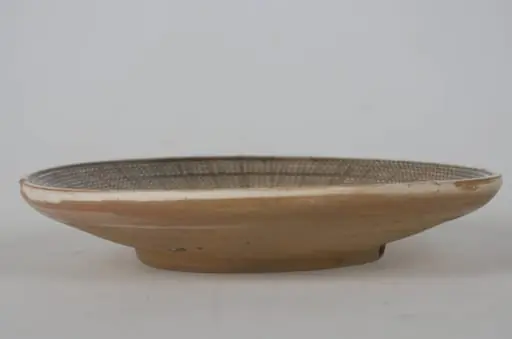 Vas ceramic smălțuit de mici dimensiuni, modelat la roata olarului, uscat, pictat, ars de două ori și smălțuit. Taierul prezintă o bază plată din care pornesc pereții foarte evazați/arcuiți cu buza ridicată. Decorul este dispus pe toată suprafața vasului, care în prealabil a fost angobat. Fundul vasului este nedecorat; în zona de demarcarea dintre fundul vasului și pereți un registru jirăvit, cuprins între două linii de culoare maro-roșcat. Un al doilea registru realizat din frunze de culoare verde, maro-roșcat și maro-închis. Marginea vasului a fost jirăvită, realizată cu „gaița”. Cromatica vasului este alb la interior și maro-deschis la exterior, iar cea a decorului pictat este maro-închis; verde; maro-roșcat; alb.
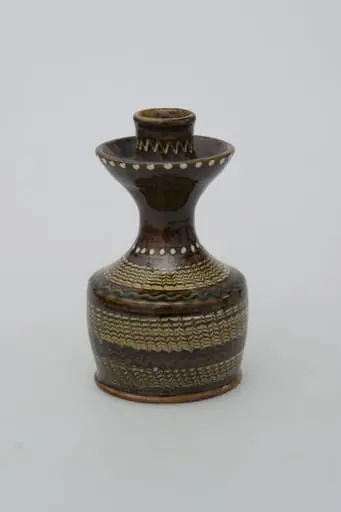 Recipient ceramic tubular, folosit ca suport de lumânare. Baza, fără fund, foarte înaltă cu pereții drepți ce se continuă printr-un gât îngust, înalt, lățindu-se în partea superioară pe marginea care se evazează la exterior. Este prevăzut un șanț pentru ținerea cerii topite. Partea superioară prevăzută cu un orificiu înalt pentru fixat lumânarea. Decorații jirăvite pe întreg corpul, linie verde ondulată pe umăr, linie punctiformă circulară la baza gâtului și pe inelul reliefat, și o linie în zig-zag în partea superioară a gâtului. Smălțuit în exterior. Cromatică: fond: maro închis; motive: alb; verde; maro; negru; bej.
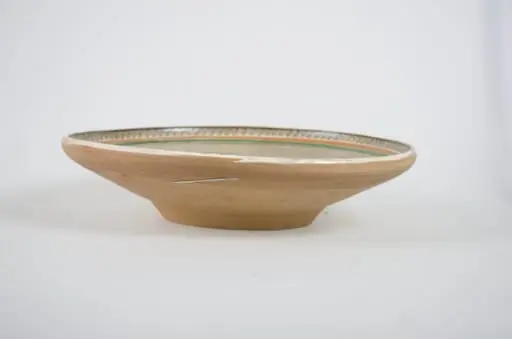 Vas ceramic de formă tronconică. Baza puțin adâncă din care pornesc pereții arcuiți spre exterior având pereții întinși și buza rotunjită. Ornament în două registre: pe fundul farfuriei o stea în opt colțuri având în fiecare vârf câte un "boboc". Delimitarea dintre bază și pereți s-a făcut printr-o porțiune jirăvită. Pereții ornamentați cu spirale și "altițe" cu linii ondulate (trei spirale și trei altițe). Marginea are o dungă jirăvită. Pe fundul vasului apare numele meșterului și localitatea "Ogrezeanu Stelian - Hurez, Valcea, Romania". Cromatică: fond: maro închis; motive: maro-roșcat, verde, alb. Smălțuit în interior.
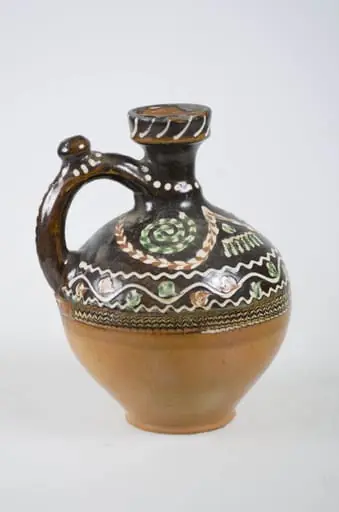 Vas ceramic sferic, ce prezintă baza plată din care pornesc pereții puternic arcuiți spre exterior, înalți, care în partea superioară se îngustează și se termină printr-un gât înalt cu marginea dreaptă ușor rotunjită. Ornamentul realizat cu cornul este dispus numai în partea superioară pe fond de angobă, realizat cu cornul. La diametrul maxim o porțiune jirăvită cu șarpe de o parte și de alta cu "altiță" și "boboci". Pe gât trei linii ondulate urmat de un șir de puncte. Pe marginea buzei linii. Mânerul prevăzut cu "țâță" are puncte. Jumătatea inferioară maro deschis. Smălțuit. Pe fundul vasului apare numele meșterului și localitatea "Ogrezeanu Stelian - Horezu". Cromatică: fond: maro închis partea superioară. Cărămiziu partea inferioară; motive: verde; alb; maro închis.
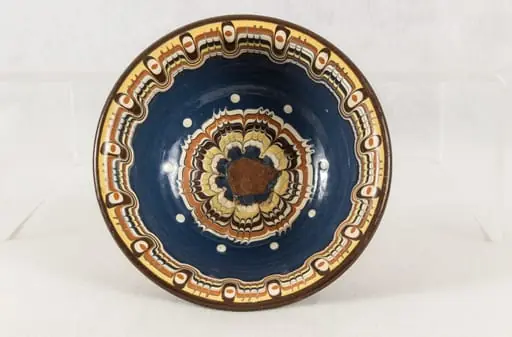 Vas de formă rotundă, adâncită, smălțuit în interior și exterior (cu excepția fundului), decorat pe suprafața interioară și exterioară astfel: în interior, un motiv floral central, realizat prin tehnica jirăvitului cu gaița, încadrat de nouă motive punctiforme, iar pe margine, un brâu maro și un registru de motive diverse (ochiul, linii curbe) realizare prin pictare și jirăvit; la exterior, un registru mai lat cu motive jirăvite și pictate cu pensula. Cromatică: albastru, alb, galben, maro, cărămiziu.
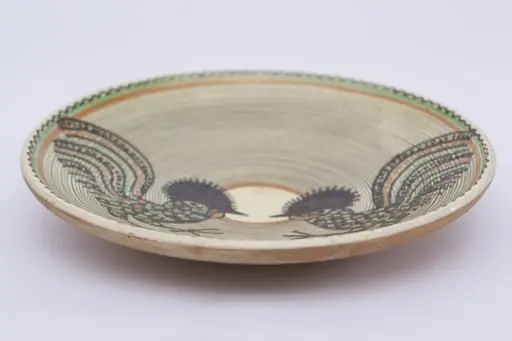 Platoul are fundul îngust, pereții puțin înalți dar puternic evazați. Pe o pânză de spirale, doi cocoși stau pregătiți de luptă. Buza vasului conturată cu o linie vălurită dispusă circular. Pe spate platoul este prevăzut cu o gaură de prindere, tot la posterior, pe fund incizată inscripția ”Stelian Ogrezeanu Hurez Vâlcea România''. Cromatică: fond: smalț alb-gălbui; motive: verde; maro; cărămiziu.
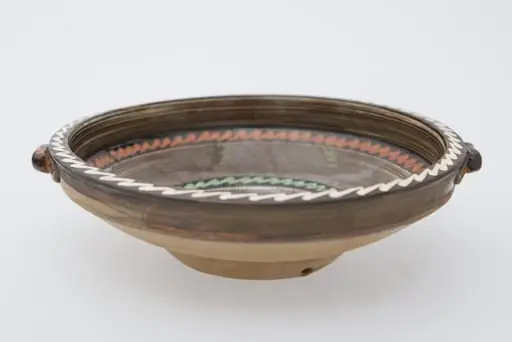 Castronul, pe bază inelară, are fundul îngust, pereții înalți și evazați, gura vasului este înaltă și dreaptă. Centrul este marcat de o spirală, înconjurată de o linie vălurită pe maron deschis, în nuanță cu câmp jirăvit. Pe pereții vasului este un brâu verde, în zig-zag, apoi un câmp jirăvit și din nou un brâu în zig-zag maro. Pe gâtul vasului o spirală, iar pe buza lui, un zig-zag pe alb. Castronul este prevăzut cu două urechi de prindere și o gaură pe partea posterioară, pentru agățare. Cromatică: fond: maron închis; motive: verde; alb; maro.
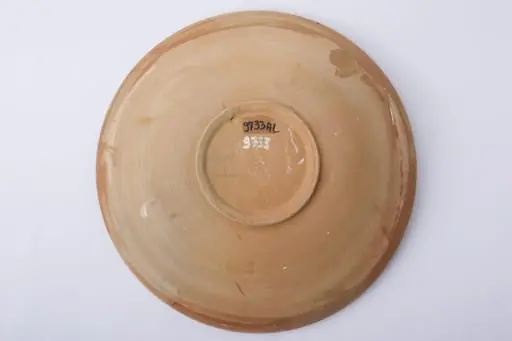 Platoul are fundul îngust, pereții puțin înalți dar puternic evazați. Central, pe fundul vasului, amplasată o spirală, în partea superioară jirăvită, încadrată de un cerc maron și ghirlande de frunze. Pe pereți o ghirlandă cu trandafiri desparte două registre cu pânze jirăvite. Câmpul jirăvit de pe marginea vasului capătă conturul unei stele cu 12 vârfuri, în spațiul dintre acestea fiind dispuse 12 ghirlande. La posterior, pe fund, semnătura ”Stelian Ogrezeanu Hurez Vîlcea România''. Pe partea posterioară, pe fundul vasului, a fost făcut o gaură pentru prindere. Cromatică: fond: alb; motive: verde; maro; cărămiziu; brun.
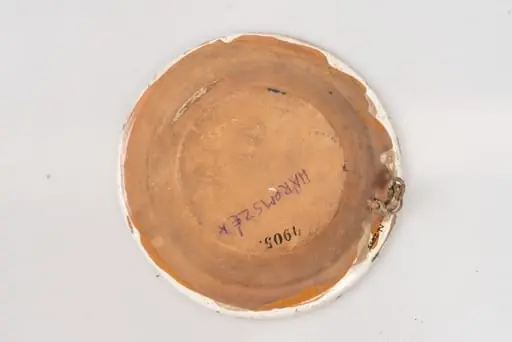 Farfurie adâncă cu buză îngustă, evazată și muchia buzei rotunjită, angobată pe suprafața interioară cu un strat de humă albă. Decorul este realizat prin pictare cu pensula și cu cornul și se compune din motive florale și geometrice, dispuse astfel: central pe fundul farfuriei, încadrat într-un cerc albastru, se găsește un buchet format din trei flori cu petale mici albastre și mijlocul din linii roșu-cărămiziu, și din doi boboci în culorile roșu-cărămiziu și albastru. Registrul marginal de pe buza farfuriei conține motive formate din câte două dungi scurte de culoare roșu-cărămiziu, între care sunt pictate grupuri de linii drepte hașurate intersectat, de culoare roșu-cărămiziu, albastru și verde. Decorul marginal este încadrat între două cercuri subțiri albastre. Suprafața ornamentată a farfuriei este acoperită cu un strat de smalț transparent. Cromatica: alb, albastru, roșu-cărămiziu, verde.
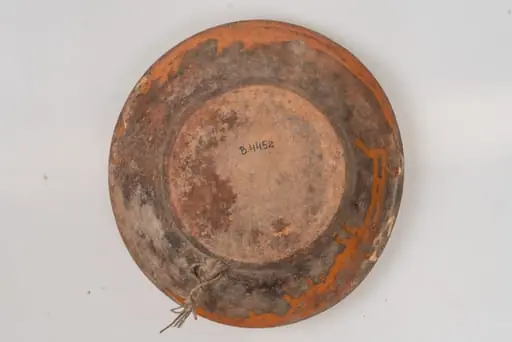 Farfurie adâncă de tip castron, cu corp tronconic și buza dreaptă, verticală. Piesa este acoperită pe suprafața interioară și pe exteriorul buzei cu un strat de angobă albă, peste care este pictat cu cornul decorul format din motive vegetale foarte stilizate: decorul de pe fundul farfuriei este păstrat doar parțial (urme de culoare maro), peretele farfuriei fiind decorat cu patru flori de culoare albastru-deschis, intercalate cu patru motive formate din linii hașurate intersectat de culoare verde, sugerând niște frunze. Două linii circulare de culoare maro, neglijent realizate, încadrează acest decor. Suprafața ornamentată a farfuriei este acoperită cu un strat de smalț transparent. Cromatica: alb, verde, maro, albastru-deschis.
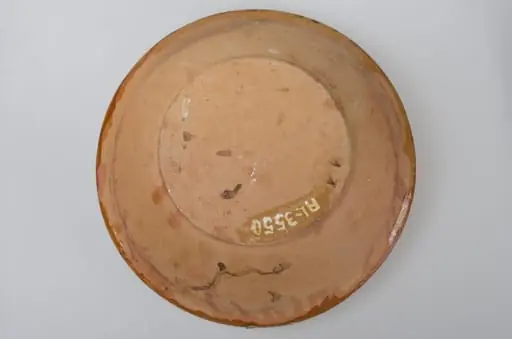 Vas de formă tronconică cu buza dreapta. Decorul este amplasat pe toată suprafața interioară și parțial în exterior, pe buză. Acesta este compus din motive geometrice (val); motive fitomorfe, plasate pe fund (frunza) și motive florale, tot pe fund (pansea). Blidul este smălțuit la interior și pe zona exterioară a buzei. Cromatică: fond: maron; motive: alb, verde.
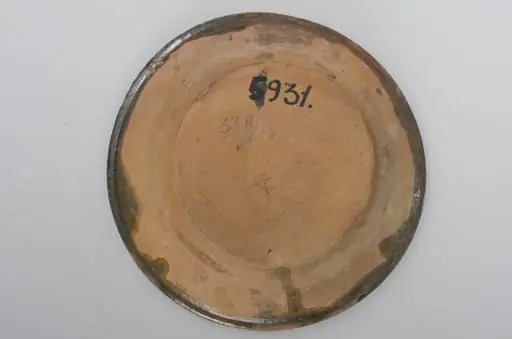 Farfurie cu fundul adânc, rotunjit în interior, iar în exterior plat. Marginea farfuriei lată și răsfrântă oblic. Pe margine sunt motive geometrice compuse din patru grupuri de câte trei linii de culoare albă ca ornament. Interiorul farfuriei este smălțuit. Cromatică: fond: maro; motive: alb.
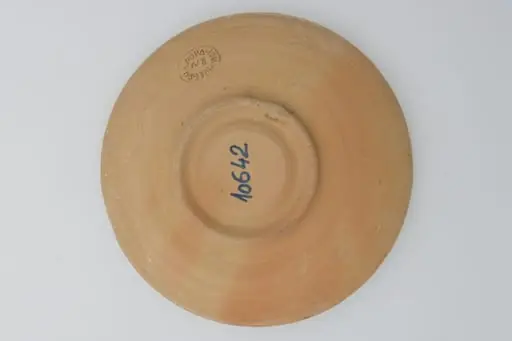 Recipient din lut de uz casnic, nesmălțuit, de formă circulară, cu profil tronconic și buza rotunjită. Acesta este decorat pe toată suprafața cu motive geometrice și florale, realizate cu gaița și cornul. În partea centrală este redată o floare cu petale multiple. Pereții se termină cu o linie ondulată. Cromatică: fond: alb; motive: gri, maro închis, maro deschis.
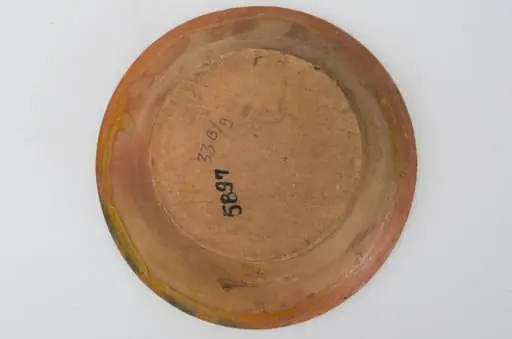 Formă tronconică, adâncită, cu buza evazată; este smălțuit în interior și exterior (buza); este decorat pe margine cu motive geometrice dispuse în 4 registre a câte 3 linii albe; cromatică: cărămiziu, verzui, alb.
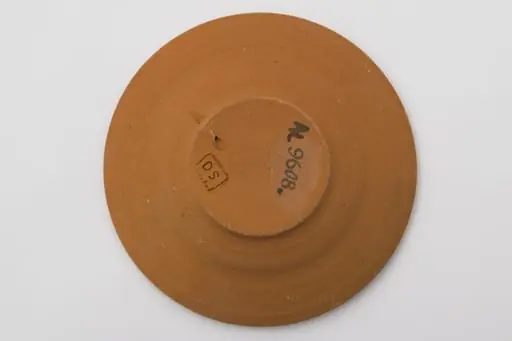 Vas ceramic cu fundul plat puțin adâncit și marginile evazate, puțin ridicate. Ornamentată cu pensula cu angoba albă. Fundul este marcat printr-o spirală din care ies alte șase spirale mici dispuse pe circumferința exterioară. Pe marginea vasului două benzi, una cu o linie întreruptă, a doua cu șase valuri întrerupte. La posterior ștanțat ”DS” încadrat într-un dreptunghi. Cromatică: fond: cărămiziu; motive: alb.
 Obiect de uz casnic de formă tronconică foarte adâncită, cu buza foarte înaltă și ușor ieșită în afară în partea exterioară; este smălțuit interior și exterior (doar buza); în centru e decorat cu motive florale, iar pe margine cu o linie; pe fund are marca Granitul No 10; are gura puțin ciobită. Ccromatica: fond interior crem, fond exterior maro; motice: verde, albastru, maro.