Artwork
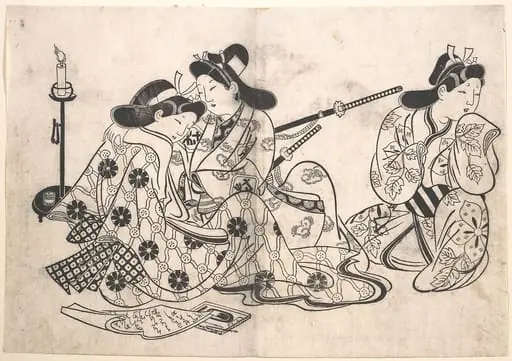
Three Courtesans with a Client
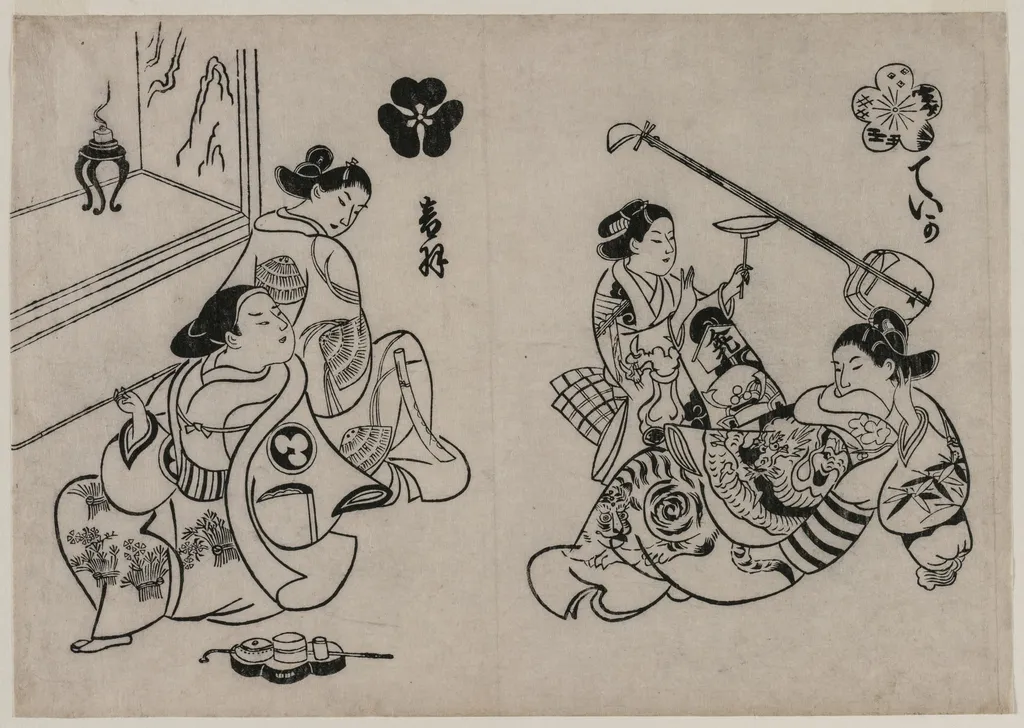
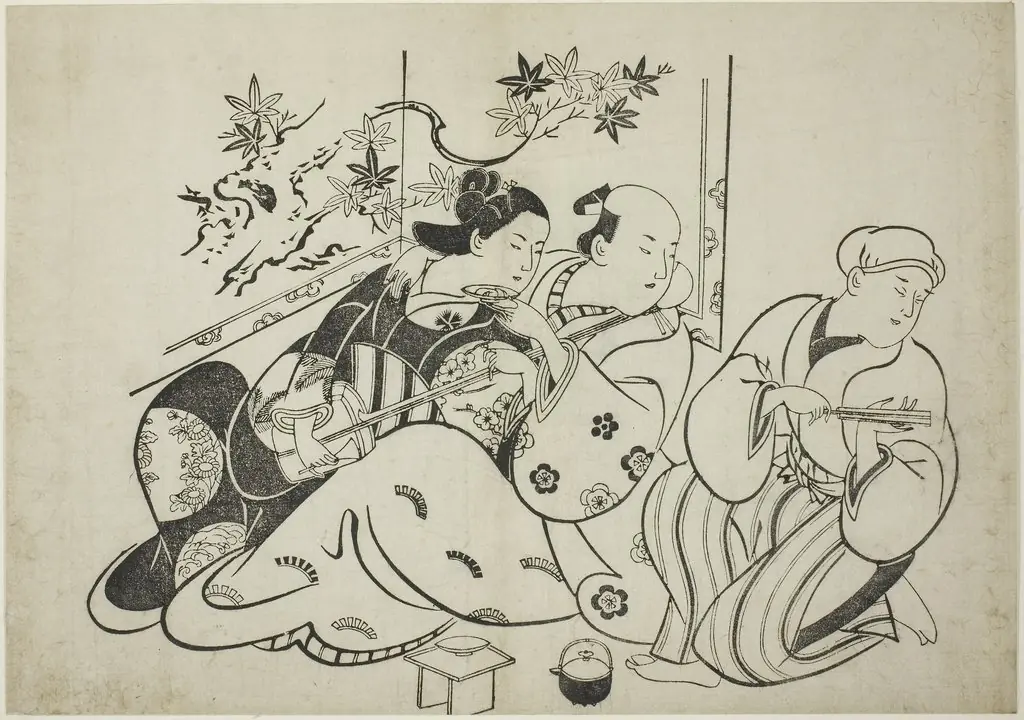
Three Courtesans with a Client is a print by the Baroque artist Okumura Masanobu. It dates from 1710 and is held in the collection of the Cleveland Museum of Art. This double-page woodblock print, executed in sumi ink on paper, belongs to the sumizuri tradition of early ukiyo-e.
About this work
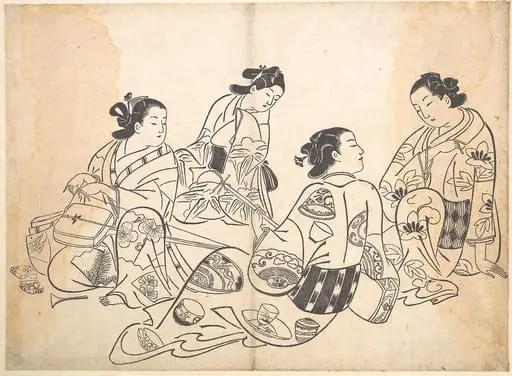
This print shows three women in fine kimonos sitting with a man who looks relaxed.
This print shows three women in fine kimonos sitting with a man who looks relaxed. Their hair is styled high. A painted screen stands behind them.
This was made with sumi ink on paper. The women wear the latest Edo styles. Their faces are calm but their eyes hint at things unsaid.
These scenes were popular in books then. See how the black ink makes shadows sharp? The artist started new ways to print pictures.
Look up Okumura Masanobu (Japanese, 1686–1764).
Overview
This double-page woodblock print, executed in sumi ink on paper, belongs to the sumizuri tradition of early ukiyo-e. It likely originated as an illustration for a published book, possibly linked to Kiyonobu I’s Keisei ehon. The composition centers on a social encounter between three courtesans and a male client, rendered with minimal color and a focus on ink tonality. The work reflects the growing demand for illustrated narratives of Edo’s pleasure quarters during the early 18th century.
Subject & Meaning
The scene depicts courtesans in elaborate Edo-period attire, seated with a composed male visitor amid a painted screen. Their elevated hairstyles and refined garments signal status within the Yoshiwara hierarchy. While their expressions remain serene, subtle shifts in gaze suggest unspoken dynamics—power, calculation, or performative intimacy. Such images were not mere decoration but visual commentaries on the complex social rituals of the pleasure districts.
Technique & Style
Executed solely in sumi ink, the print relies on gradations of black to define form, texture, and space. Sharp contrasts between inked areas and untouched paper create depth, particularly in the folds of kimonos and the screen’s architectural lines. The figures are rendered with restrained linework, avoiding overt detail in favor of suggestive economy. This monochrome approach was characteristic of early ukiyo-e before color printing became widespread.
History & Provenance
Attributed to Okumura Masanobu, a pivotal figure in early ukiyo-e, the print emerged from a publishing culture that transformed illustrated books into mass-produced visual media. Masanobu, active between 1686 and 1764, operated as publisher, designer, and painter, bridging painting traditions with printmaking. Though the exact provenance of this sheet is undocumented, its style aligns with his known output from the 1710s–1730s, a period of rapid innovation in book illustration.
Context
During the early 1700s, Edo’s urban elite consumed illustrated books depicting courtesans, actors, and urban life as both entertainment and cultural documentation. Masanobu’s work responded to this market, blending literary themes with visual novelty. The popularity of such imagery reflected broader societal fascination with the pleasure quarters, where status, aesthetics, and commerce converged in carefully staged performances.
Legacy
Masanobu’s innovations laid groundwork for later ukiyo-e developments, including perspective prints and narrative sequencing in books. His use of ink-only techniques influenced the aesthetic of early monochrome prints before the rise of full-color nishiki-e. Though overshadowed by later artists, his role in institutionalizing print illustration as a legitimate art form helped shape the trajectory of Japanese visual culture in the 18th century.
Artist & collection
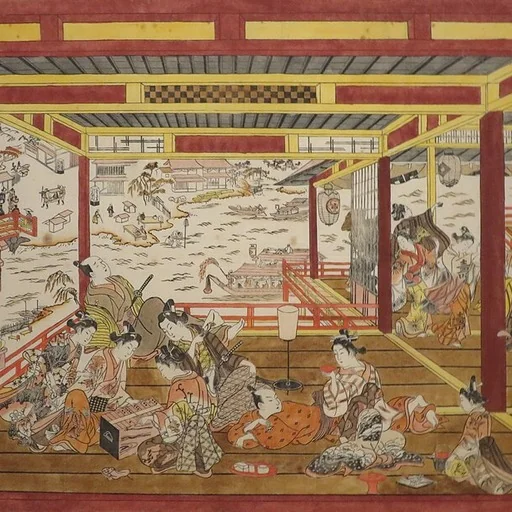
Artist
Okumura Masanobu lived in Edo (now Tokyo) when the city was a flashy, fast-growing hub of theater, gossip, and new ideas.

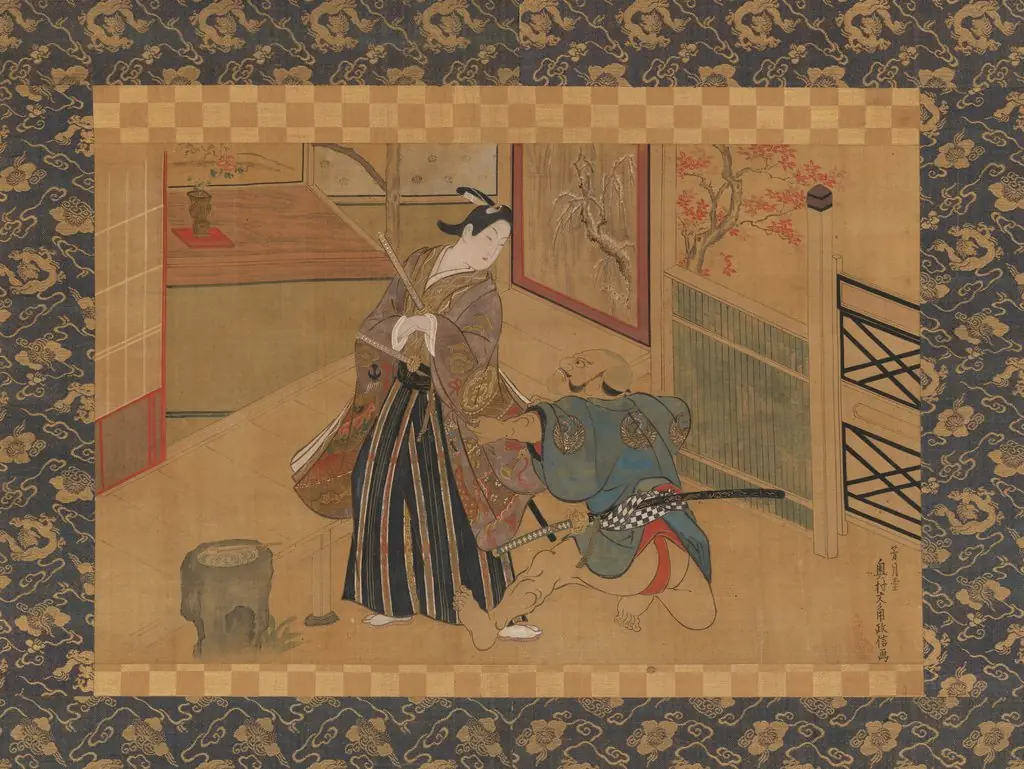 Kabuki Play Kusazuribiki from the Tales of Soga (Soga monogatari)
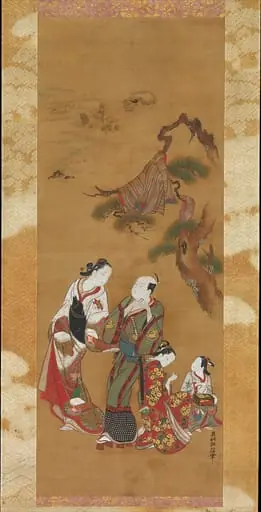 Untitled
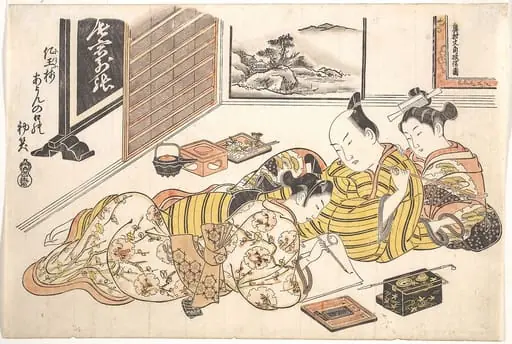 『閨の雛形』 正月|Plate from the Erotic Book Mounds of Dyed Colors: A Pattern Book for the Boudoir (Someiro no yama neya no hinagata), First Month
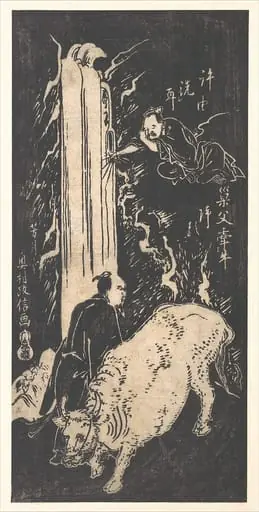 Untitled
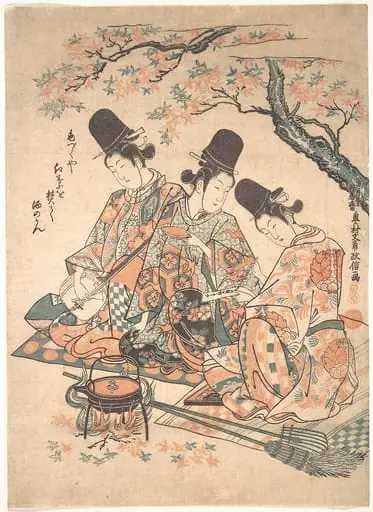 見立『平家物語』 紅葉焚図|Parody of Palace Servants Heating Sake over a Fire of Maple Leaves
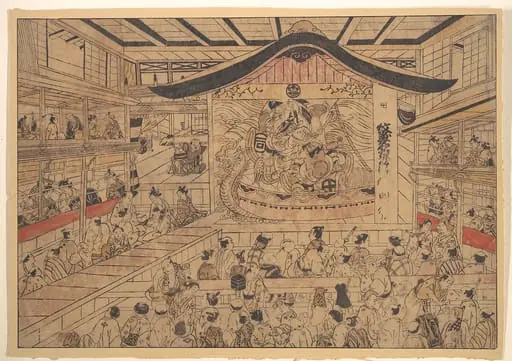 浮絵 「紋尽名古屋曽我」|Perpsective View (uki-e) of a Kabuki Theatre, with a Performance of The Crest Patterns of the Soga Brothers and Nagoya Sanza (Mon-zukushi Nagoya Soga)
 Untitled
 Untitled