Artwork
No Title
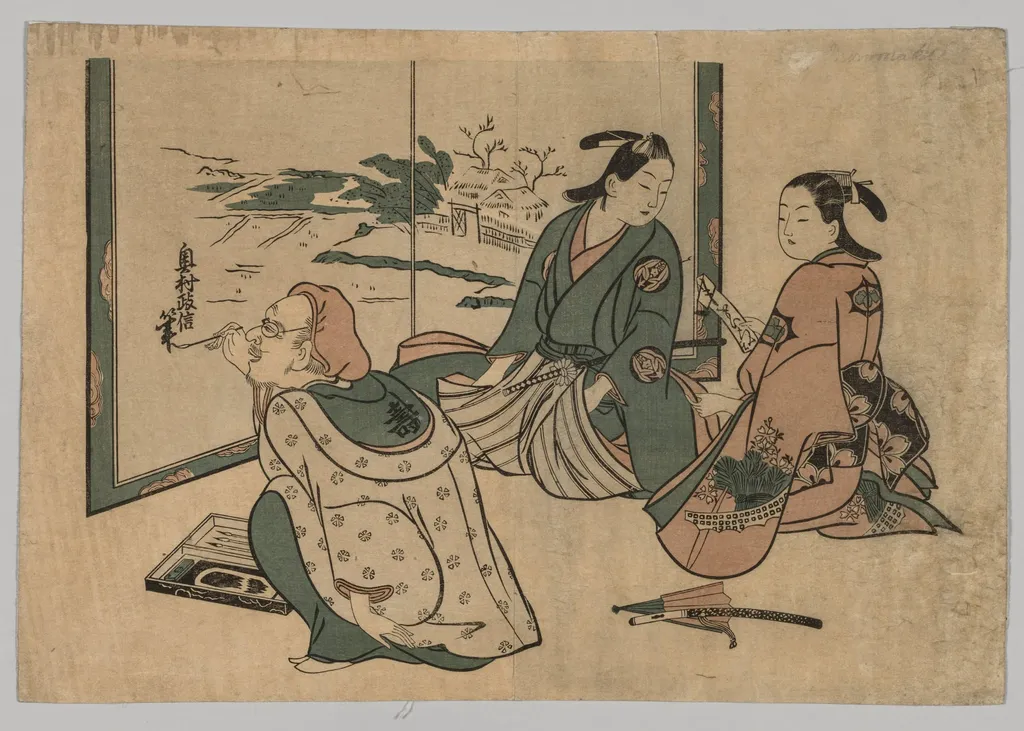
No Title is a print by the Baroque artist Okumura Masanobu. It dates from 1748 and is held in the collection of the Cleveland Museum of Art.
About this work
Overview
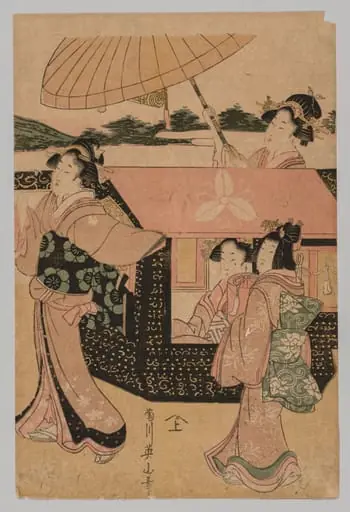
The composition is framed by sliding doors that open onto a minimal landscape, blending domestic space with the natural world beyond.
Created in 1748 by Okumura Masanobu, this woodblock print is part of the Cleveland Museum of Art’s collection. It depicts three figures in an interior setting, their postures and attire suggesting a moment of quiet exchange. The composition is framed by sliding doors that open onto a minimal landscape, blending domestic space with the natural world beyond. The print reflects the ukiyo-e tradition of capturing everyday scenes with refined simplicity.
Subject & Meaning
The figures appear engaged in a private, possibly ceremonial interaction. The kneeling figure holds a fan and small box, the standing one a scroll, and the seated figure a basket of flowers—objects that may imply ritual, gift-giving, or literary exchange. Their stylized expressions and arranged gestures suggest formality without narrative clarity, inviting interpretation rather than telling a specific story.
Technique & Style
Masanobu employs flat areas of color and strong, clean outlines typical of early ukiyo-e. Facial features are simplified, with emphasis on contour rather than realism. The robes display intricate patterns rendered in subtle tonal contrasts, while the background landscape is reduced to a few linear elements—trees and a fence—creating depth without detail. The print’s economy of line and color reflects a deliberate aesthetic restraint.
History & Provenance
The print has been held by the Cleveland Museum of Art since at least the mid-20th century, though its earlier ownership history is not publicly documented. As a work from the mid-18th century, it represents Masanobu’s output during a period when ukiyo-e was expanding beyond theatrical subjects into domestic and literary themes. Its survival in good condition suggests careful preservation over centuries.
Context
Produced during the Edo period, this print aligns with a growing interest in scenes of refined civilian life, distinct from kabuki or courtesan imagery. Masanobu, active in Osaka and Edo, was known for blending traditional painting techniques with woodblock printing. This work reflects the era’s cultural shift toward introspective, intimate moments among the educated classes.
Legacy
Though unsigned and untitled, the print exemplifies Masanobu’s contribution to the evolution of ukiyo-e’s thematic range. It influenced later artists who sought to convey quiet emotion through composition and gesture rather than dramatic action. Its preservation allows continued study of early printmaking’s capacity to capture subtlety in daily life.
Artist & collection
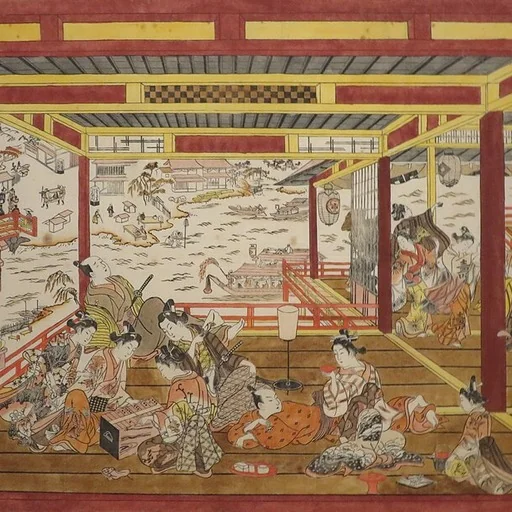
Artist
Okumura Masanobu lived in Edo (now Tokyo) when the city was a flashy, fast-growing hub of theater, gossip, and new ideas.

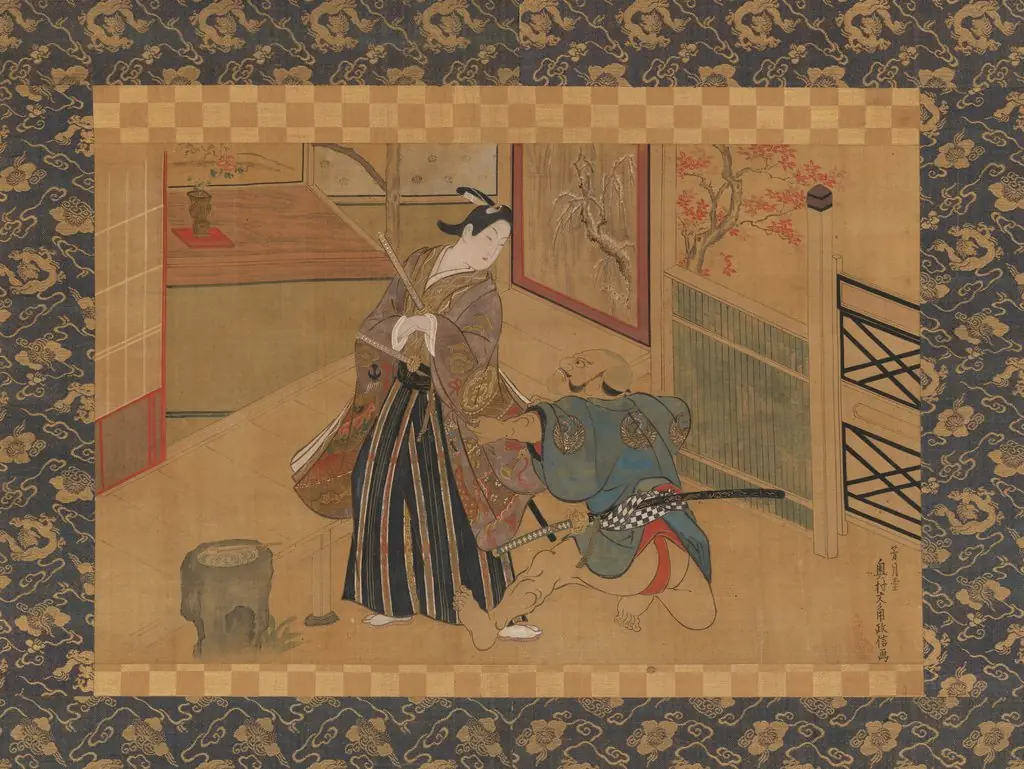 Kabuki Play Kusazuribiki from the Tales of Soga (Soga monogatari)
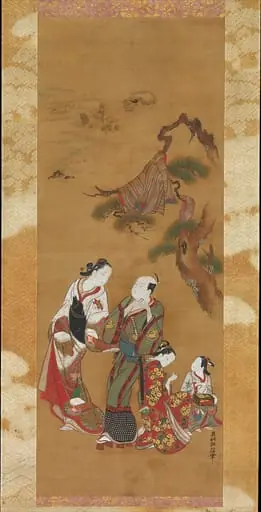 Untitled
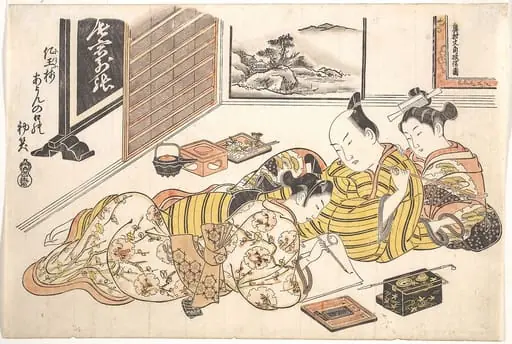 『閨の雛形』 正月|Plate from the Erotic Book Mounds of Dyed Colors: A Pattern Book for the Boudoir (Someiro no yama neya no hinagata), First Month
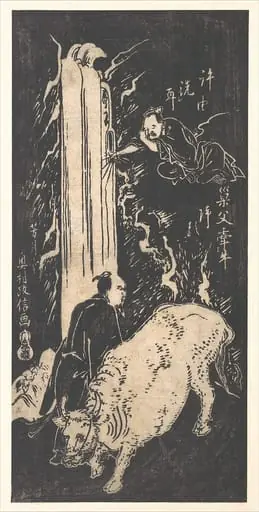 Untitled
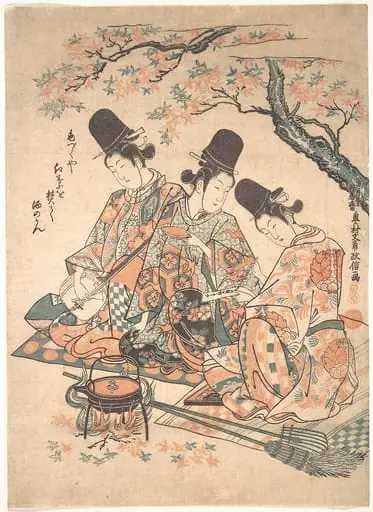 見立『平家物語』 紅葉焚図|Parody of Palace Servants Heating Sake over a Fire of Maple Leaves
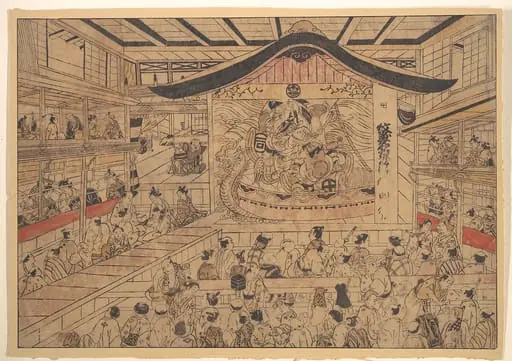 浮絵 「紋尽名古屋曽我」|Perpsective View (uki-e) of a Kabuki Theatre, with a Performance of The Crest Patterns of the Soga Brothers and Nagoya Sanza (Mon-zukushi Nagoya Soga)
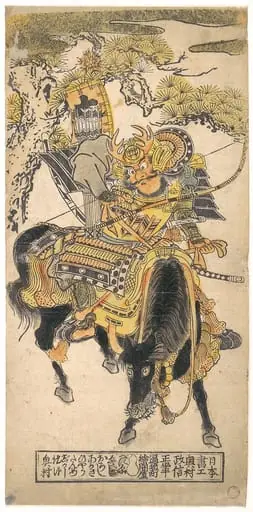 Untitled
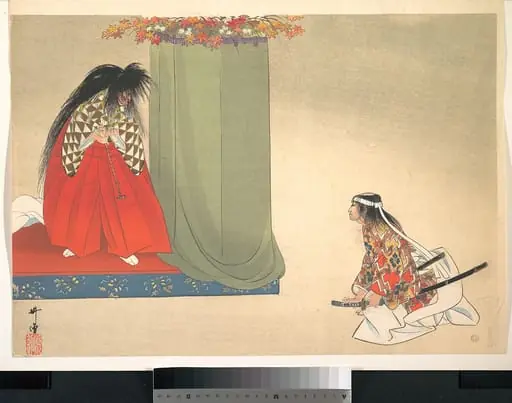 Untitled
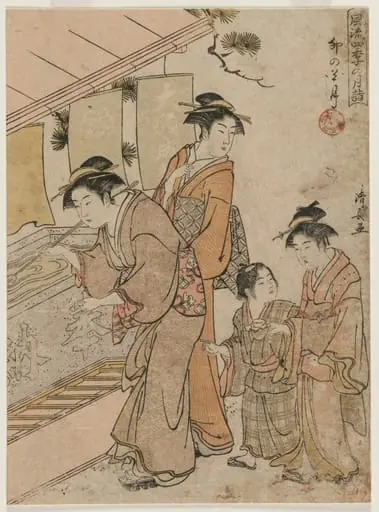 The Fourth Month (from the series Fashionable Monthly Visits to Temples in the Four Seasons)
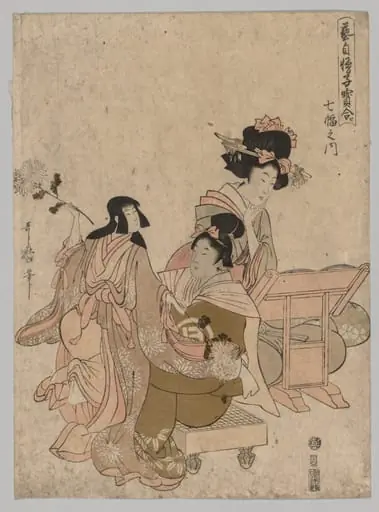 Bunraku Puppetry from the series Competition of Precious Children Proud of their Arts, Among Seven Scrolls
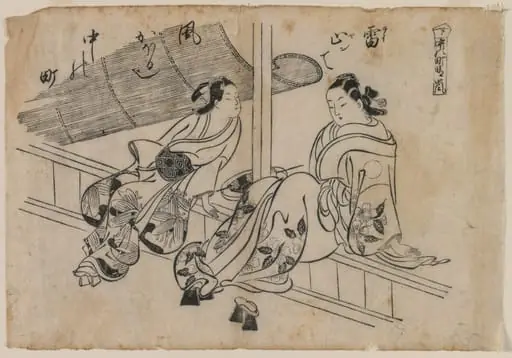 Twilight at Nakanocho
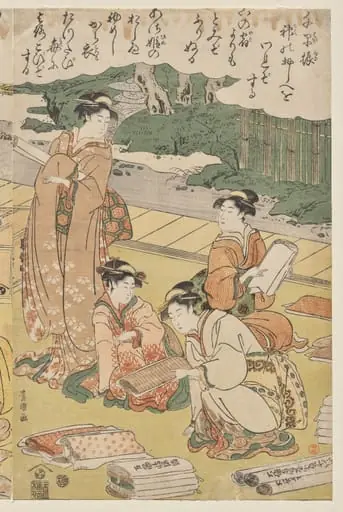 Women Making Clothing
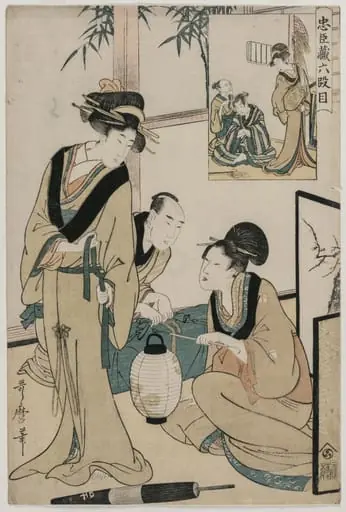 Chushingura: Act VI of The Storehouse of Loyalty
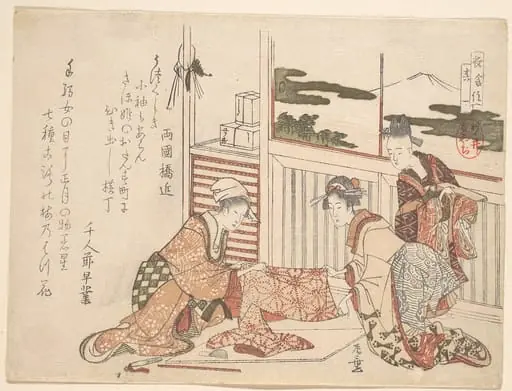 衣食住|Attire
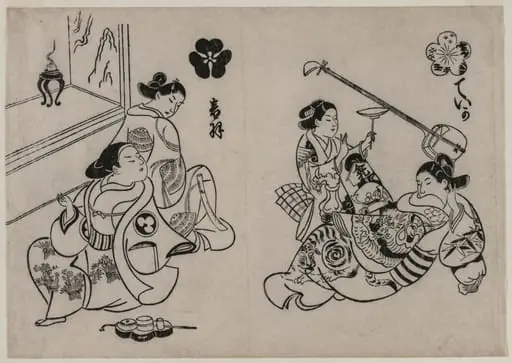 Three Courtesans with a Client
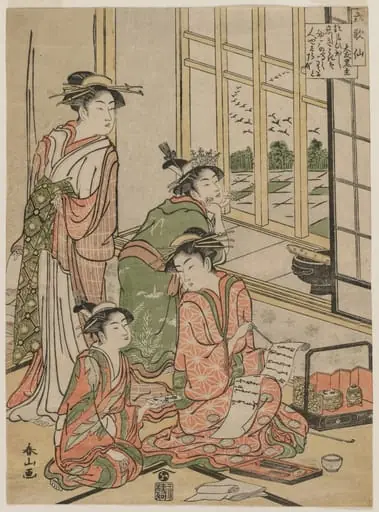 Courtesans at Leisure from the series The Six Immortal Poets
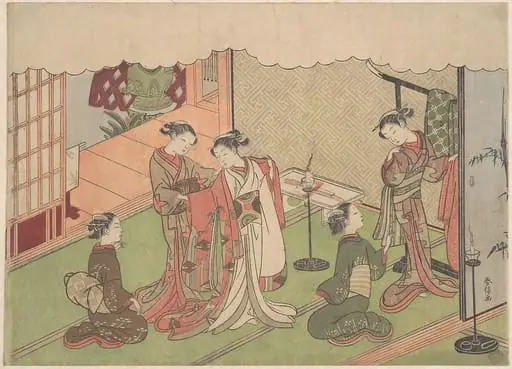 Untitled
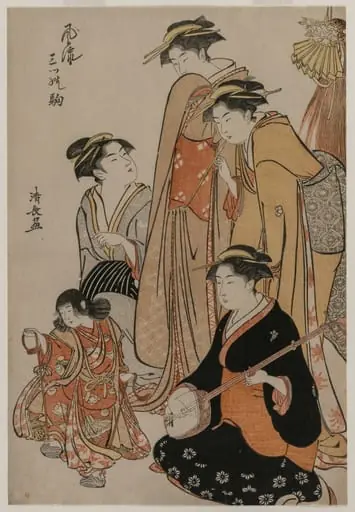 Women Watching a Girl Dance on Shells (From the series Fashionable Presentations of Three Horses)
 No Title
 Nakatsu, from the series Fifty-three Stations in the Life of a Beauty