Artwork
Balthus Turned to Stone
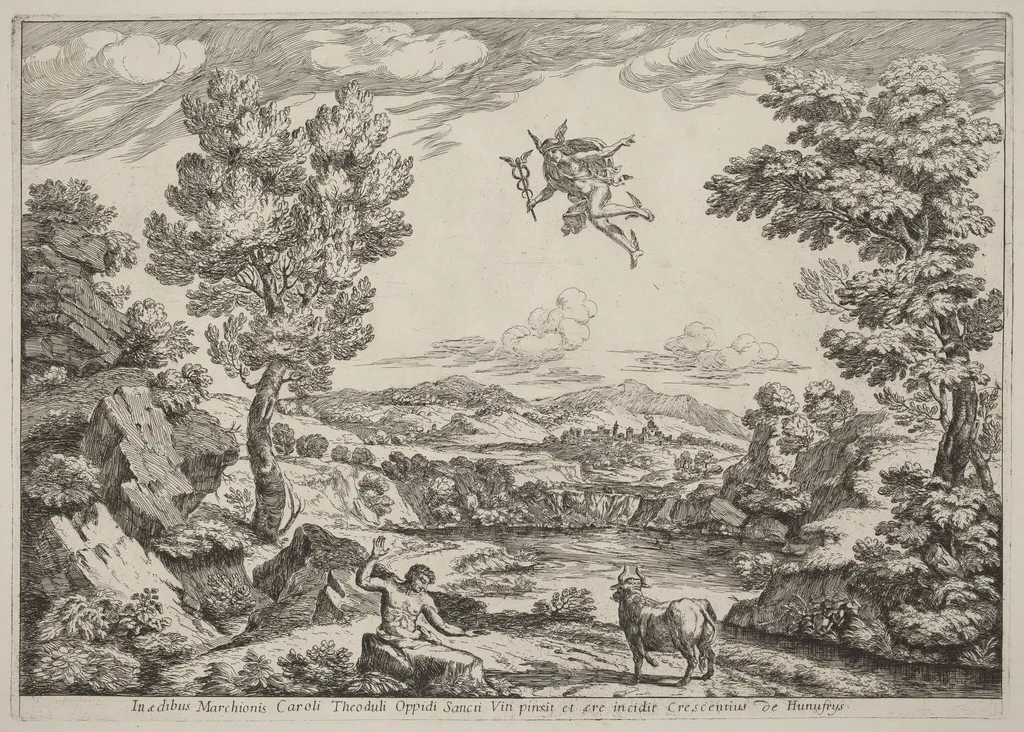
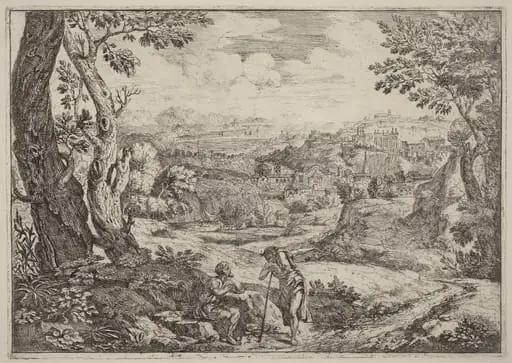
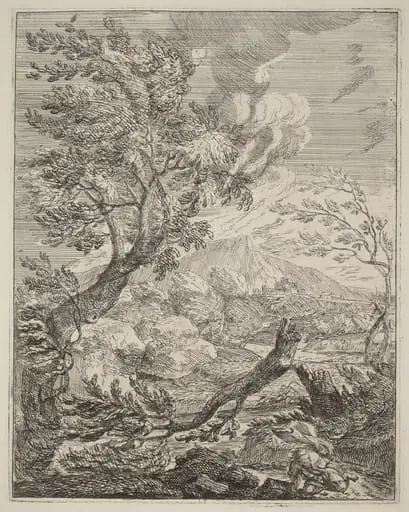
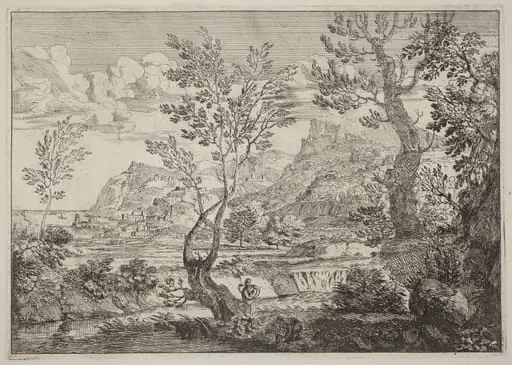
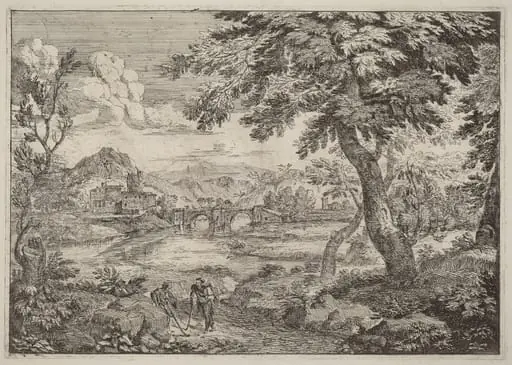
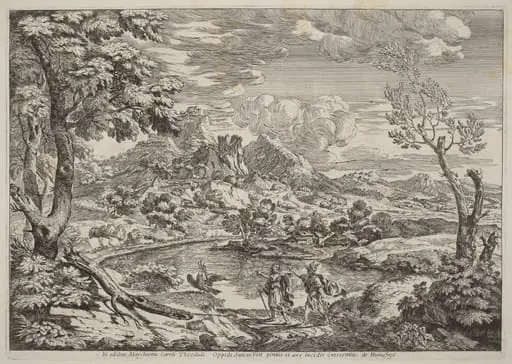
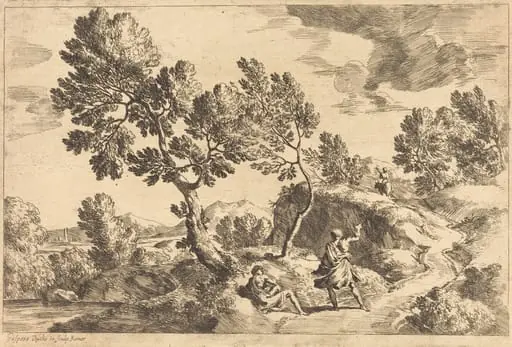
Balthus Turned to Stone is an ink print by the Baroque artist Crescenzio Onofri. It dates from 1696 and is held in the collection of the National Gallery of Art.
About this work
Overview
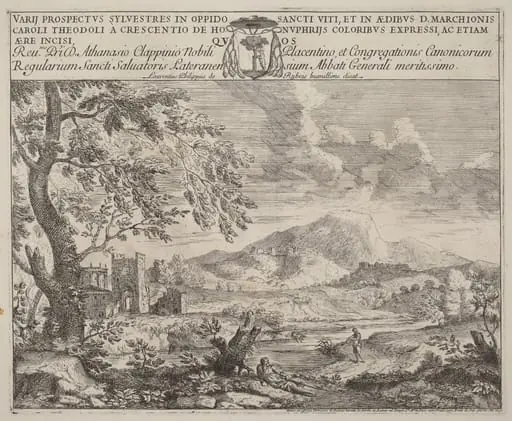
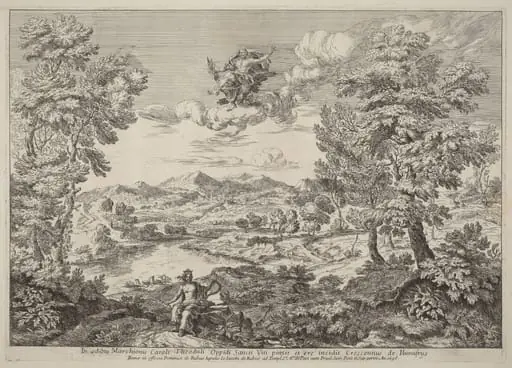
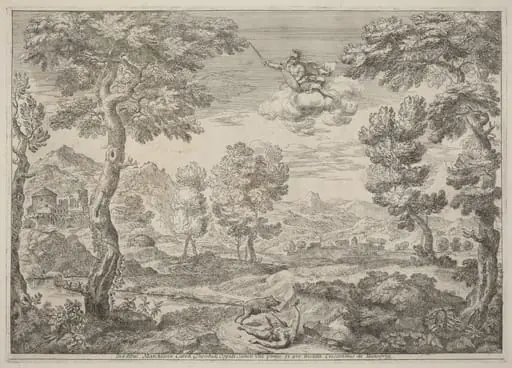
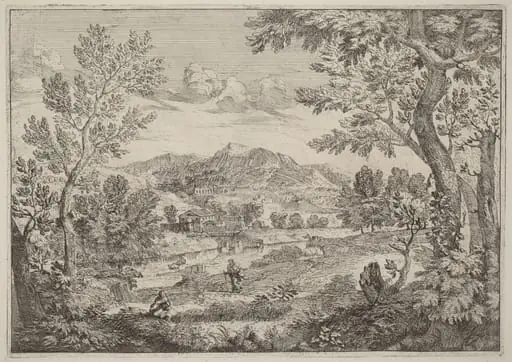
Balthus Turned to Stone is a black‑and‑white etching produced in 1696 by the Italian printmaker Crescenzio Onofri. The work presents a tranquil woodland setting, rendered in fine line work that defines trees, a riverbank and a distant sky.
Subject & Meaning
In the foreground, two figures are seated beside a river beneath a solitary tree; one gestures upward while the other gazes downward. A grazing cow stands nearby, and a winged being hovers above the treetops, suggesting a mythological or allegorical element within the otherwise natural scene.
Technique & Style
Onofri employed the traditional etching process, incising the composition into a metal plate with a needle. After immersing the plate in acid to deepen the lines, ink was applied and wiped from the surface, leaving ink only in the etched grooves. The plate was then pressed onto paper, producing the delicate tonal contrasts characteristic of early modern printmaking.
History & Provenance
Created at the close of the 17th century, the print reflects the period’s interest in combining landscape with symbolic figures. While specific ownership records are scarce, the work is catalogued among Onofri’s surviving prints and is referenced in scholarly surveys of Italian etching from the late Baroque era.
Own this work as a print
Artist & collection