Artwork
Dunnottar Castle, Kincardineshire
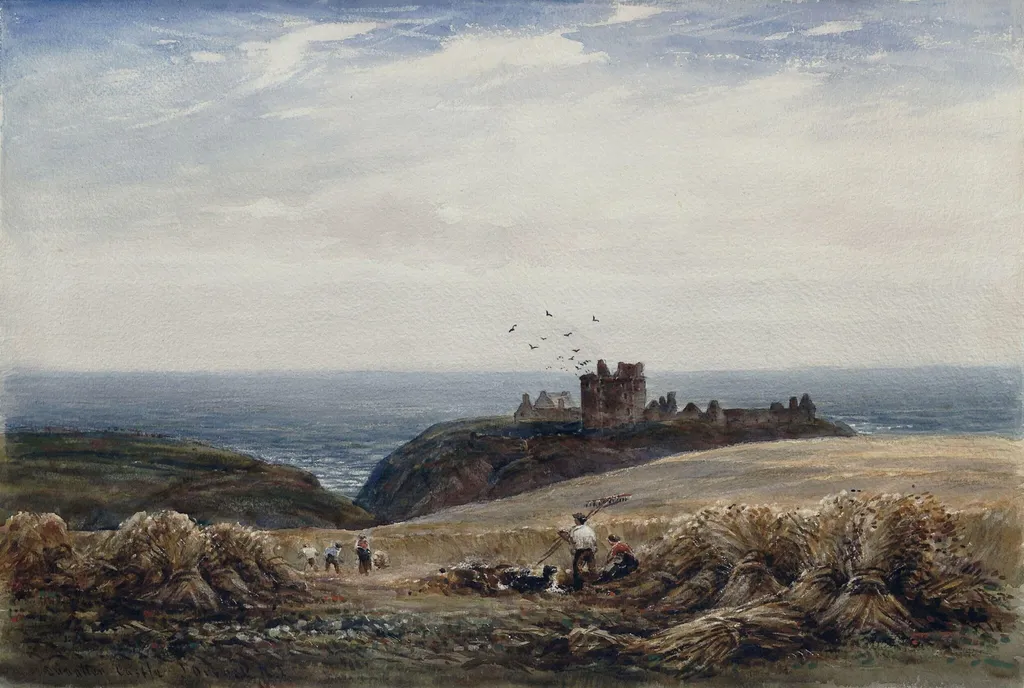
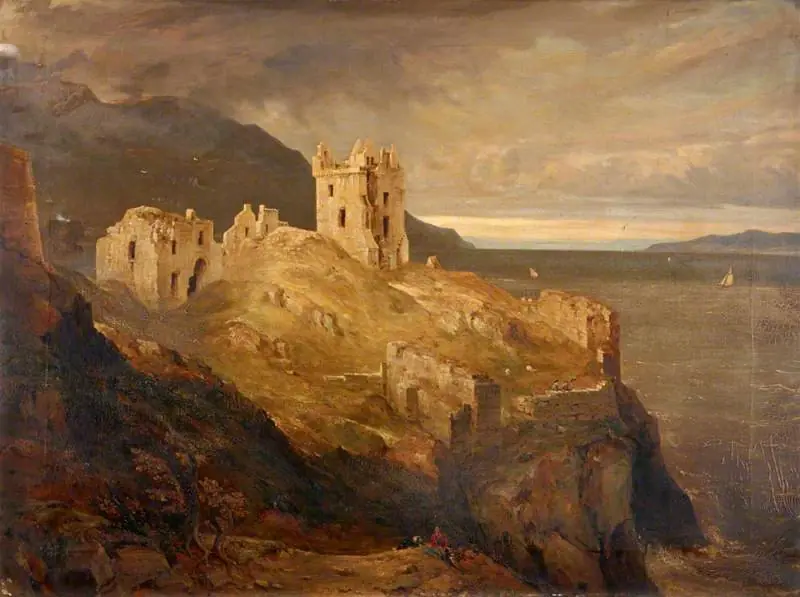
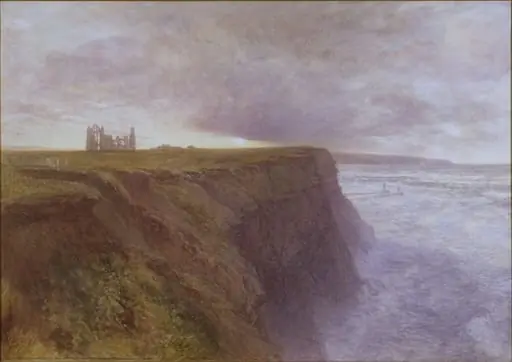
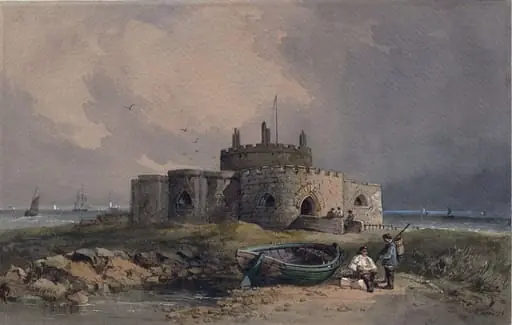
Dunnottar Castle, Kincardineshire is a watercolor work on paper by the British Romanticist artist Orrock. It dates from 1898 and is held in the collection of the Victoria and Albert Museum. A watercolour from 1898 captures Dunnottar Castle perched on a rugged coastal cliff in Kincardineshire.
About this work
Overview
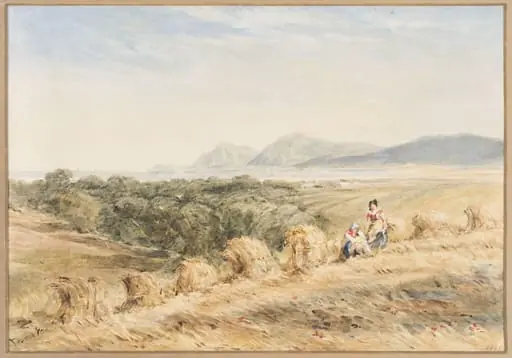
The scene presents the castle in isolation, framed by a broad sea and pale sky, with human activity in the foreground suggesting daily rural life.
A watercolour from 1898 captures Dunnottar Castle perched on a rugged coastal cliff in Kincardineshire. The work is signed and dated on the reverse, confirming its origin. The scene presents the castle in isolation, framed by a broad sea and pale sky, with human activity in the foreground suggesting daily rural life. The artist employs delicate washes to convey atmosphere rather than dramatic detail.
Subject & Meaning
The painting juxtaposes the ancient, decaying castle with humble agricultural labor in the foreground. The castle, weathered and solitary, stands as a relic of the past, while the figures harvesting hay represent enduring, quiet routines of rural existence. This contrast may reflect a contemplation of time’s passage, without overt sentimentality or narrative.
Technique & Style
The artist uses soft, muted watercolour tones to suggest subtle shifts in light and texture. The sky and sea are rendered with loose, transparent washes, while the castle’s stonework is hinted at through layered greys and ochres. Figures in the foreground are simplified, their forms defined by minimal brushwork, reinforcing the painting’s restrained realism.
History & Provenance
The work was completed in 1898 and bears the artist’s signature on the reverse, indicating intentional preservation. No documented ownership history is provided, but its focus on a specific Scottish landmark suggests local or regional interest. The watercolour format implies it was likely a personal study or small-scale commission rather than a public exhibition piece.
Context
Created during a period when British artists increasingly turned to landscape and vernacular scenes, this work aligns with Realist traditions that valued observed detail over idealization. Dunnottar Castle, though historically significant, is depicted not as a monument but as a natural feature of the coastline, integrated into the rhythms of everyday life.
Legacy
The painting contributes to a body of 19th-century Scottish watercolours that documented regional architecture and rural life with quiet precision. While not widely exhibited, its restrained aesthetic and attention to atmospheric effect place it within a broader movement that valued understated observation over grandeur.
Artist & collection
Artist
Orrock was the quiet watercolour artist who followed the light like a lighthouse keeper, chasing Scottish castles and coves whenever the weather cleared.