Artwork
Cleveland, Woodland Avenue and Eagle Street
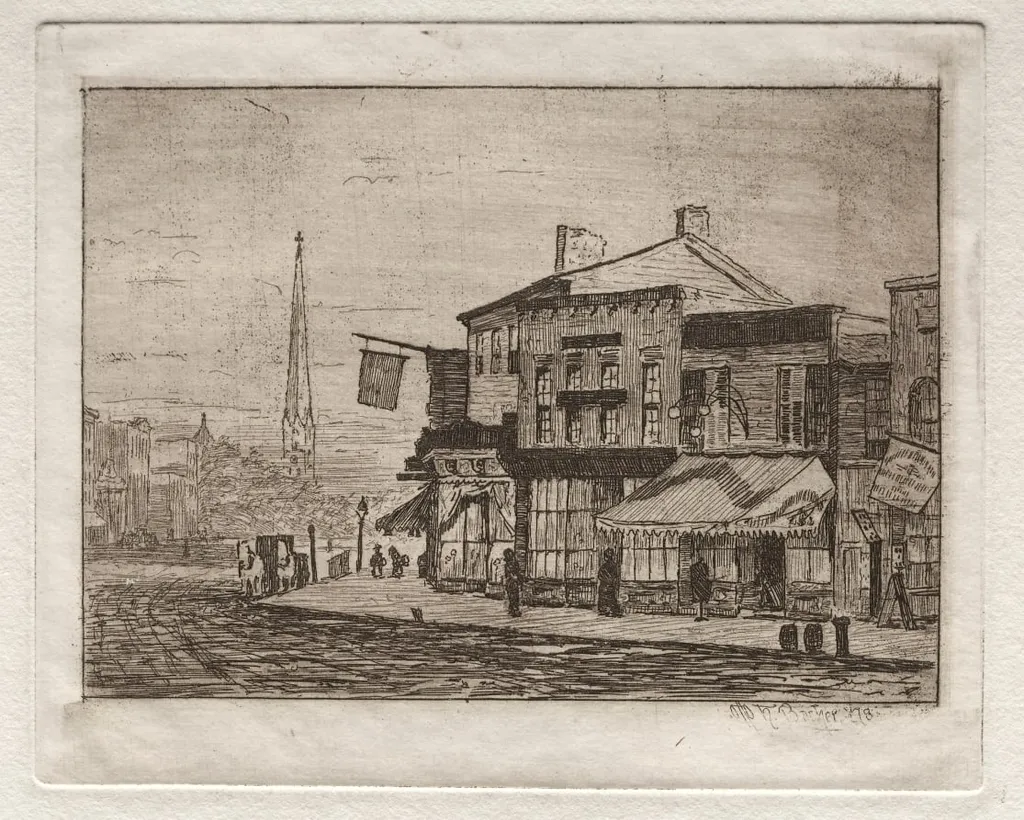
Cleveland, Woodland Avenue and Eagle Street is a print by the Impressionist artist Otto Henry Bacher. It dates from 1878 and is held in the collection of the Cleveland Museum of Art.
About this work
Overview
Cleveland, Woodland Avenue and Eagle Street is an 1878 painting by Otto H. Bacher, capturing a serene urban moment in late 19th-century Cleveland. The scene focuses on everyday life at a quiet street corner, juxtaposing two wooden buildings with a nearby waterfront.
Subject & Meaning
The painting depicts a mundane yet telling snapshot of Cleveland’s development. Simple details—awnings, signs, flags, and pedestrians—convey a sense of ordinary city life, eschewing grandeur for a realistic, unassuming portrayal of a neighborhood.
Technique & Style
While Bacher was known for both printmaking and oil painting, this work’s specific medium isn’t highlighted here. Visually, it features straightforward, detailed renderings of architectural elements (shutters, lanterns) and daily activities, aligning with Realist tendencies.
History & Provenance
Created in 1878 by Otto H. Bacher, an American artist born in Cleveland in 1856. Specific provenance details (ownership history) are not provided.
Context
The painting reflects Cleveland’s late 19th-century urban growth. The inclusion of a dock and ship’s mast in the background subtly hints at the city’s industrial and commercial activities.
Legacy
The work exemplifies Bacher’s contribution to documenting everyday American life in the late 19th century. Its style and subject matter place it within the broader Realist movement, offering a glimpse into the era’s urban realities.
Artist & collection
Artist
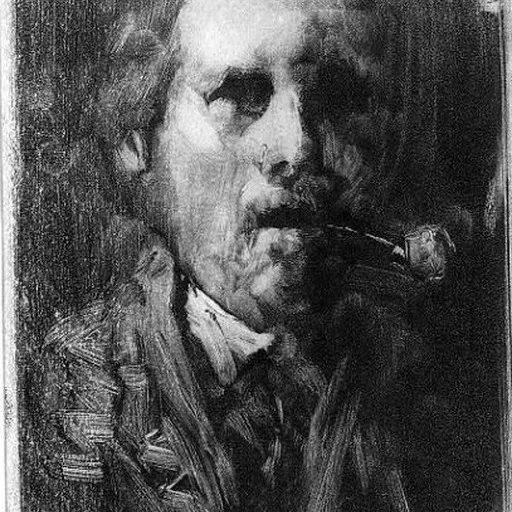
Otto Henry Bacher (May 31, 1856, Cleveland - August 16, 1909, Bronxville, New York) was an American artist; primarily known for his etchings and illustrations. He also painted oils in a variety of genres.

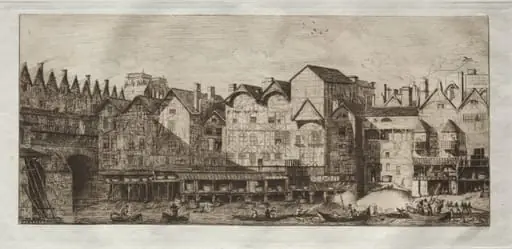 Partie de la cité vers la fin du XVIIe siècle
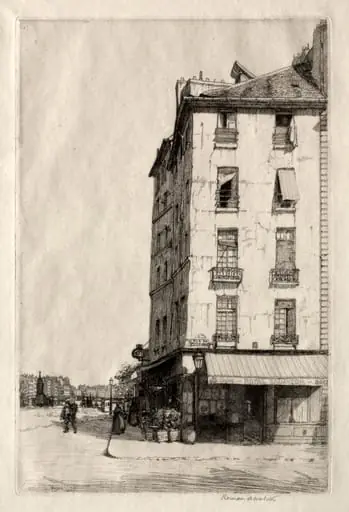 Quay Montebello
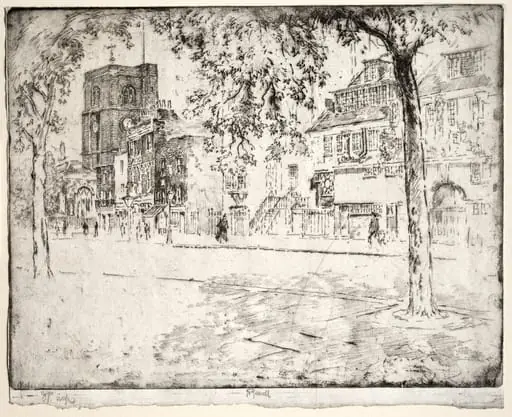 House Where Whistler Died
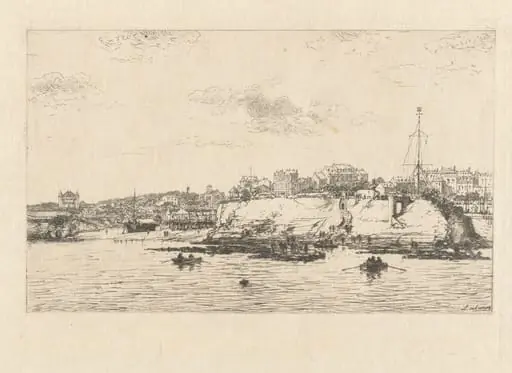 Port de la Plataine à Royan
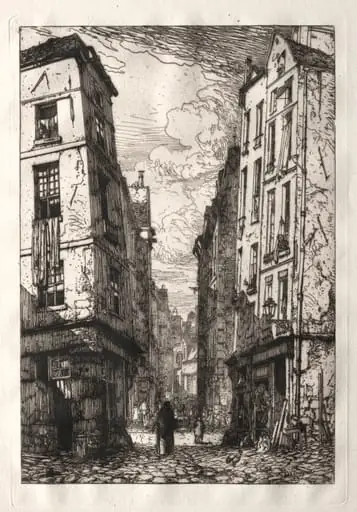 Rue des Marmousets (Old Paris)
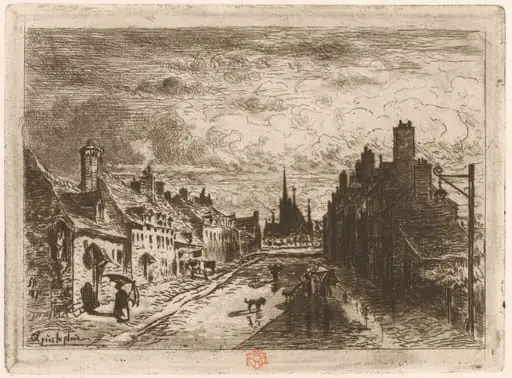 Après la pluie (After the Rain)
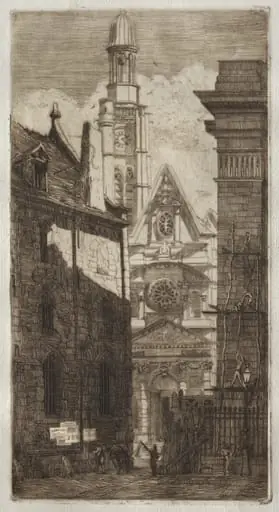 Saint-Etienne-du-Mont
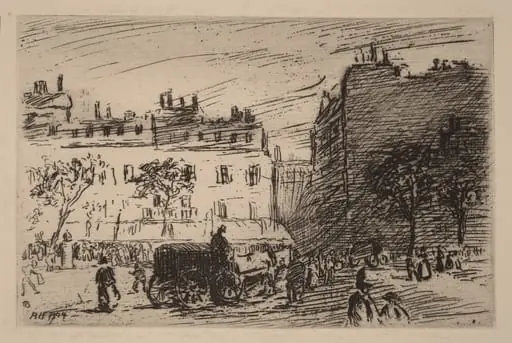 Paris Street Scene
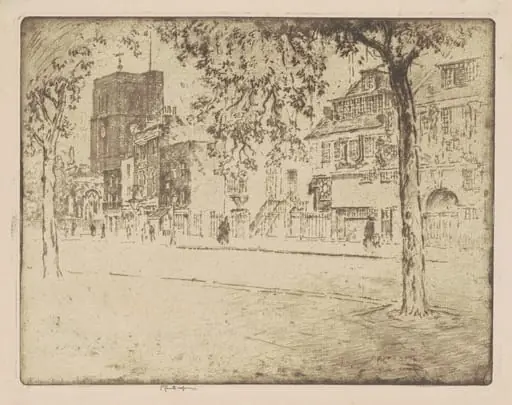 House Where Whistler Died
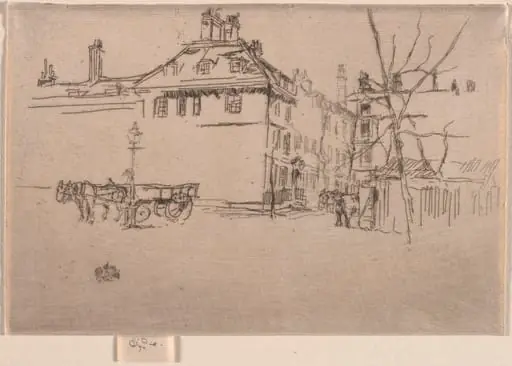 Temple
 À Concarneau (Finistère)
 Southwest Corner, Public Square, Cleveland