Artwork
The Square
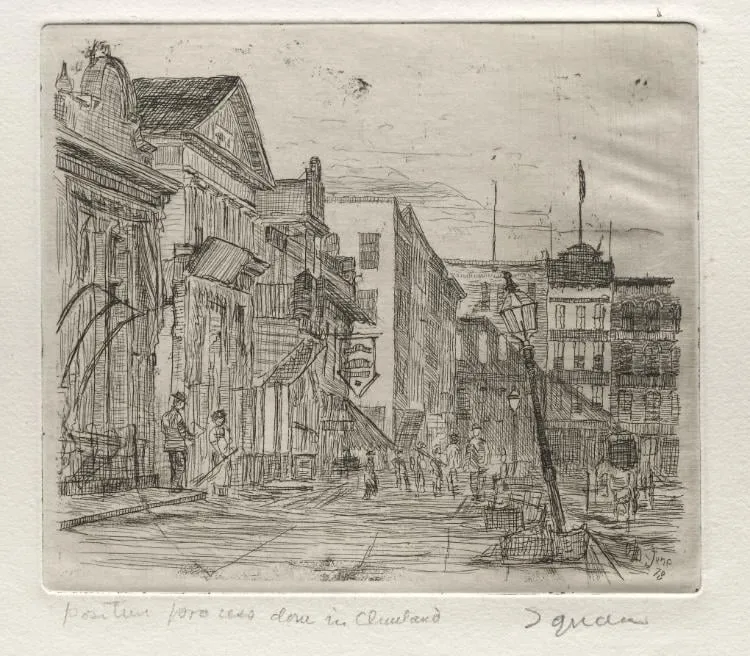
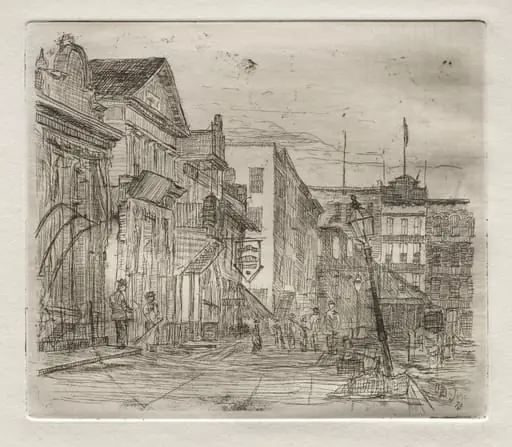
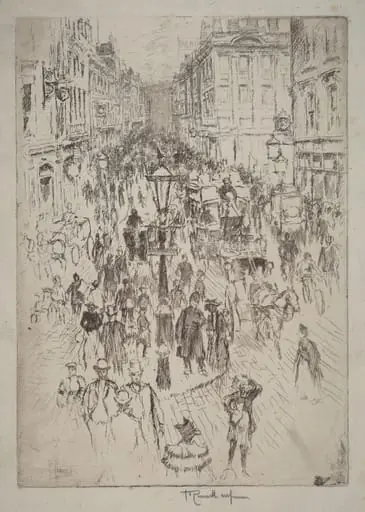
The Square is a print by the Impressionist artist Otto Henry Bacher. It dates from 1878 and is held in the collection of the Cleveland Museum of Art. Otto H.
About this work
The drawing is made of quick, sketchy lines—no smooth shading, just rough strokes to show shapes and light.
This sketch shows a busy city square with tall buildings and ships in the background. People walk along the street, some carrying bags or tools. The drawing is made of quick, sketchy lines—no smooth shading, just rough strokes to show shapes and light.
Notice how the artist didn’t focus on perfect details. Instead, they captured the messy, lively feel of the place. The title says it’s called *The Square*, and it’s from 1878.
If you like this style, look up Realism next.
Overview
Otto H. Bacher, an American artist born in Cleveland in 1856, created *The Square* in 1878 as an etching. Known for his work in both printmaking and oil painting, Bacher often focused on urban scenes with a direct, unembellished approach. This piece is part of the Cleveland Museum of Art’s collection, reflecting his regional ties and commitment to capturing everyday life through graphic media.
Subject & Meaning
The scene depicts a bustling urban square, likely in a port city, with tall buildings, distant ships, and figures moving along the street—some carrying tools or bags. The absence of idealized detail suggests an interest in ordinary activity rather than narrative drama. The title, simple and direct, reinforces the work’s focus on place over story, grounding it in the lived experience of the city.
Technique & Style
Bacher employed quick, angular etching lines to suggest form and movement without smooth shading or refined contours. The rough, energetic strokes convey texture and light through contrast rather than gradation. This method prioritizes immediacy and atmosphere over precision, aligning with a realist sensibility that values observation over polish, characteristic of late 19th-century graphic art.
History & Provenance
Created in 1878, *The Square* emerged during Bacher’s early career, a period when he was actively producing illustrations and prints for periodicals. The work remained in the artist’s circle before entering the Cleveland Museum of Art’s collection, where it has been preserved as an example of American printmaking from the Gilded Age, reflecting local artistic production.
Context
In the late 1870s, American artists increasingly turned to urban subjects as cities expanded and industrialization reshaped daily life. Bacher’s etching aligns with a broader Realist movement that favored unidealized depictions of public spaces. His choice of a working city square, rather than a grand monument or landscape, reflects a shift toward documenting the rhythms of ordinary existence.
Legacy
Though not widely known today, Bacher’s etchings like *The Square* contributed to the development of American printmaking as a serious medium. His emphasis on spontaneous line and everyday scenes influenced later artists interested in capturing urban vitality without romanticism. The work remains a quiet but significant record of late 19th-century American life in a regional collection.
Artist & collection
Artist
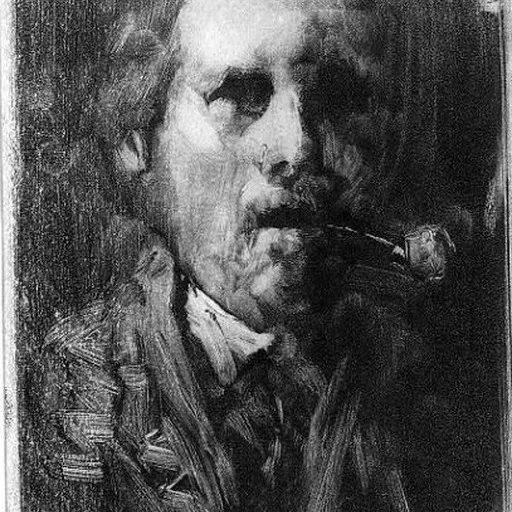
Otto Henry Bacher (May 31, 1856, Cleveland - August 16, 1909, Bronxville, New York) was an American artist; primarily known for his etchings and illustrations. He also painted oils in a variety of genres.


 Southwest Corner, Public Square, Cleveland
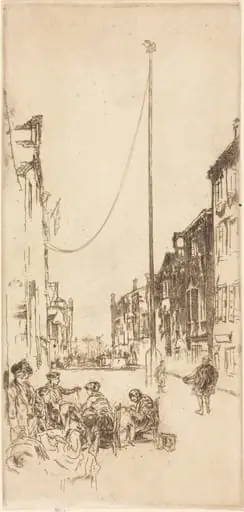 The Venetian Mast
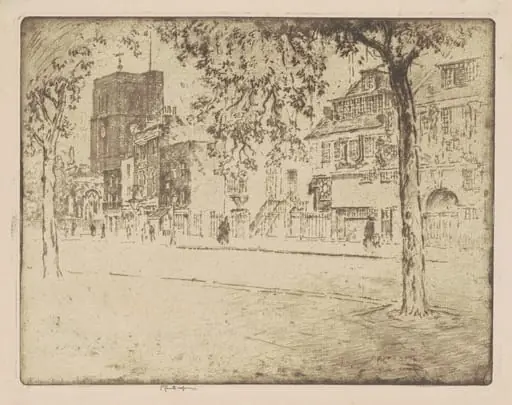 House Where Whistler Died
 The Venetian Mast
 Cleveland, Woodland Avenue and Eagle Street
 Forty-Second Street
 House Where Whistler Died
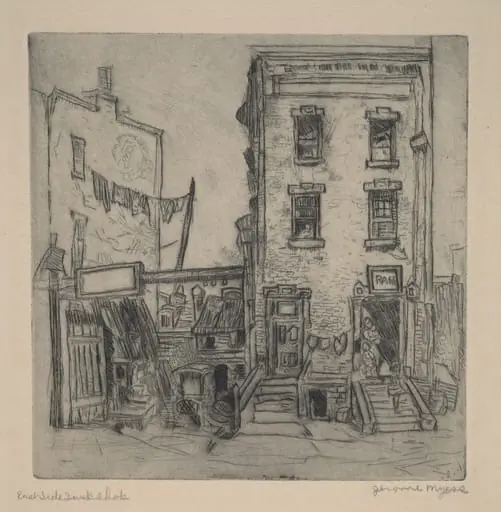 East Side Junk Shop
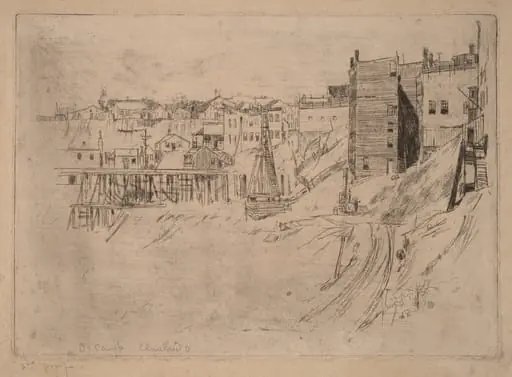 Cleveland, Ohio
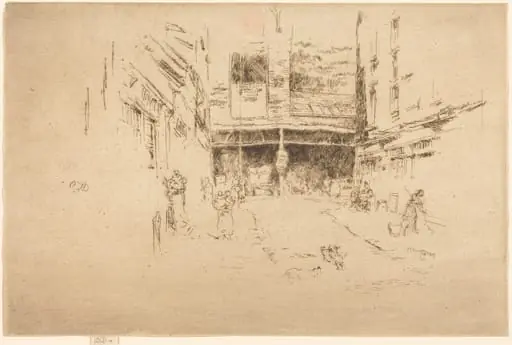 Clothes Exchange, No.I
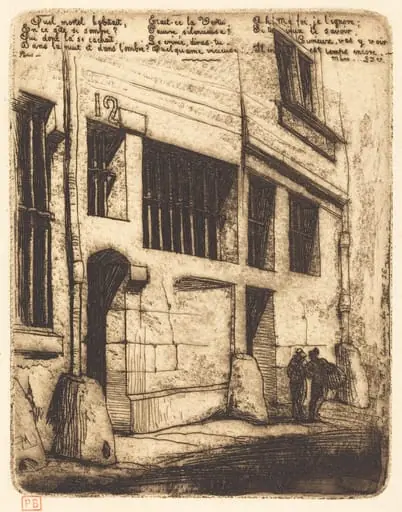 La Rue des Mauvais Garçons, Paris (The Street of the Bad Boys)
 New Oxford Street, London