Artwork
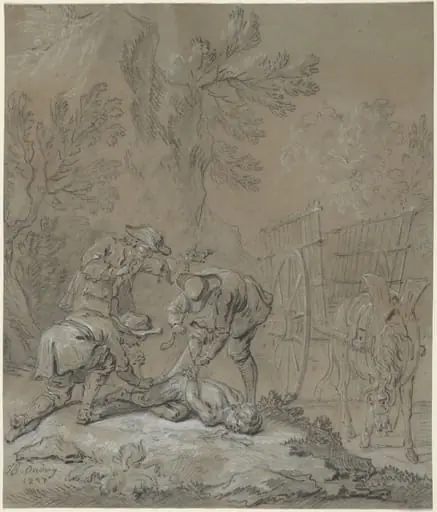
La Rancune en brancard, abattu dans le bourbier
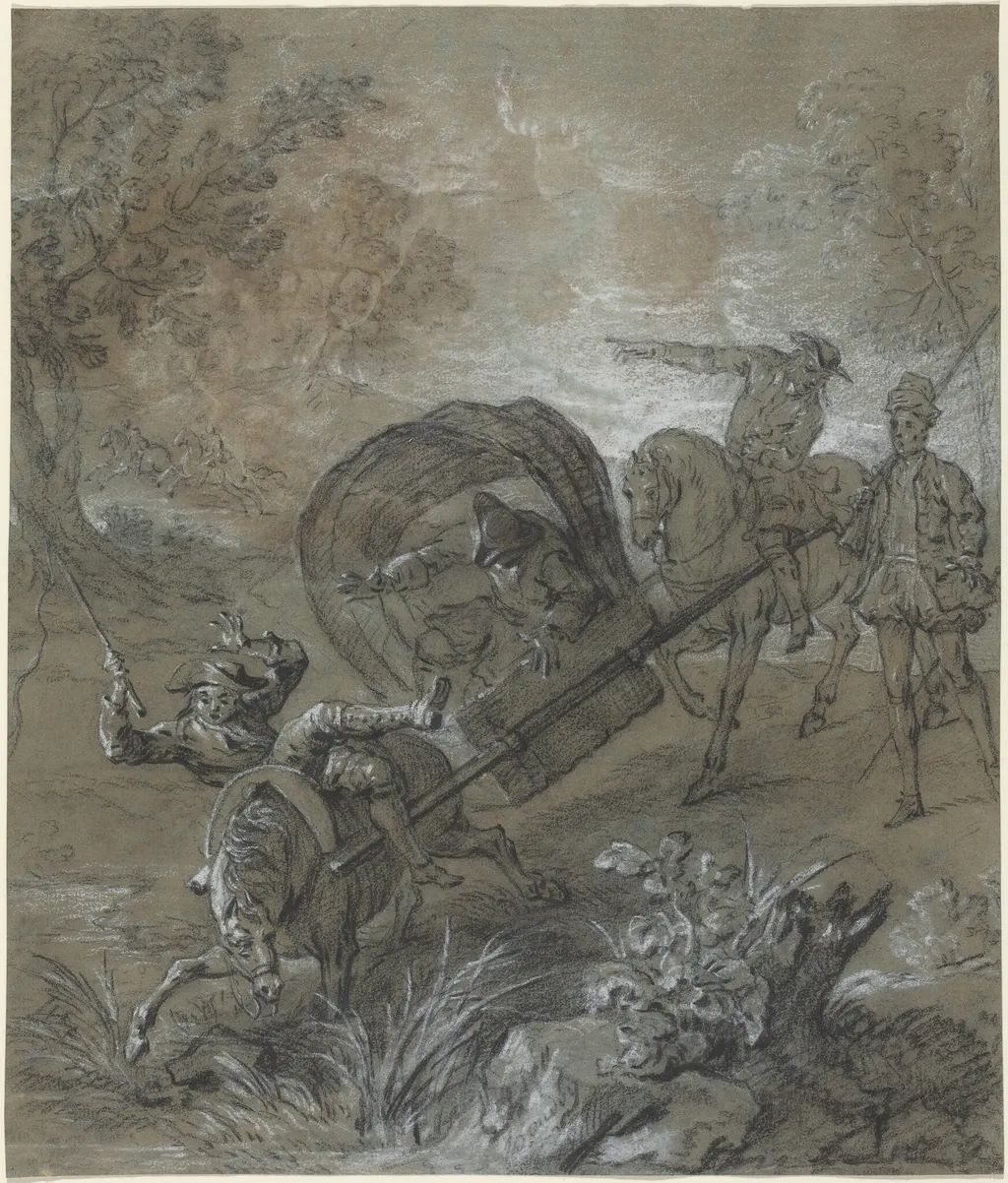
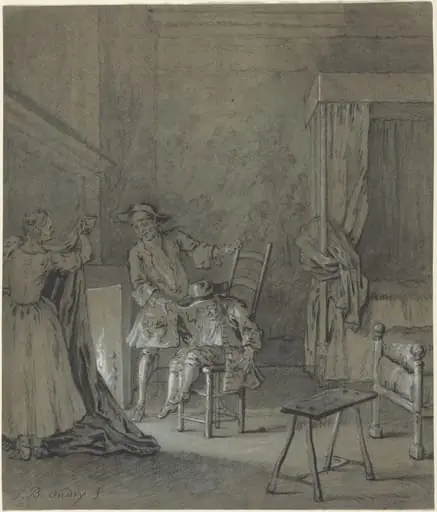
La Rancune en brancard, abattu dans le bourbier is a chalk drawing by the Baroque artist Jean-Baptiste Oudry. It dates from 1726 and is held in the collection of the National Gallery of Art.
About this work
Overview
Created in 1726, this drawing by Jean-Baptiste Oudry employs black and white chalk on blue laid paper to depict a moment of rural struggle. Unlike his more famous animal portraits, this work focuses on a human figure ensnared in mud, suggesting a narrative of exhaustion or defeat. The medium’s contrast and the paper’s tone create a muted, atmospheric effect, emphasizing texture over color.
Subject & Meaning
The figure, slumped in a muddy trench, appears to have collapsed under weight or fatigue. The title, translating to 'Malice on a Stretcher, Felled in the Mire,' implies a moral or allegorical layer—perhaps the downfall of spite or stubbornness. The scene lacks grandeur, instead grounding its meaning in physical labor and the weight of consequence.
Technique & Style
Oudry uses precise, layered strokes of black chalk to define form and shadow, with white chalk lifting highlights to suggest moisture and texture in the mud. The blue paper provides a neutral mid-tone, enhancing the tonal range. Lines are economical yet deliberate, revealing careful observation and a sensitivity to surface detail without overt dramatization.
History & Provenance
The drawing dates from early in Oudry’s career, before his rise as a royal painter. It likely served as a preparatory study or independent sketch, reflecting his interest in everyday rural life. No documented ownership history exists prior to its inclusion in modern collections, though its condition suggests it was preserved as a finished work rather than a draft.
Context
While Oudry is best known for his hunting scenes and animal studies, this drawing aligns with a broader 18th-century interest in depicting labor and rural hardship, albeit without overt political commentary. The Rococo era’s ornamental tendencies are absent here; instead, the work leans toward quiet realism, possibly influenced by Dutch genre painting.
Legacy
This drawing illustrates Oudry’s versatility beyond animal portraiture and reveals his skill in capturing human vulnerability through minimal means. Though not widely exhibited, it remains a testament to his observational rigor and the quiet, unidealized side of 18th-century French draftsmanship.
Artist & collection

Artist
Jean-Baptiste Oudry was a French Rococo painter, engraver, and tapestry designer. He is particularly well known for his naturalistic pictures of animals and his hunt pieces depicting game. His son, Jacques-Charles Oudry, was also a painter.

 Ragotin lie par les parents du fou
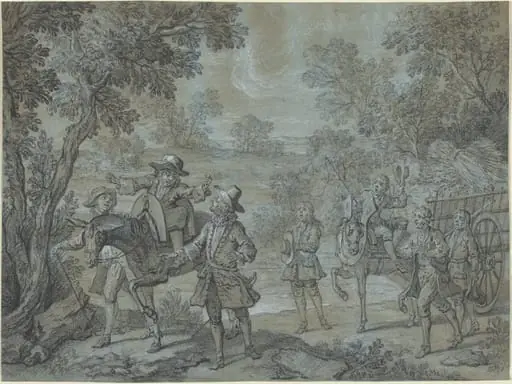 Ragotin declame des vers; des paysans croient qu'il preche
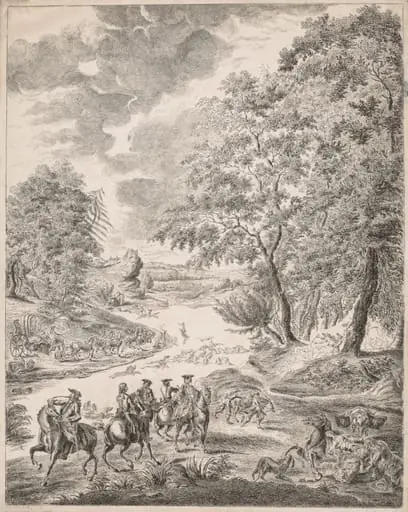 The Deer Hunt
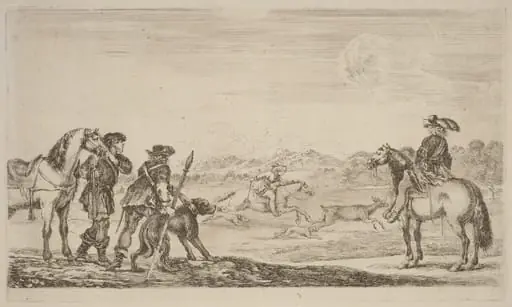 Small Deer Chased by a Cavalier
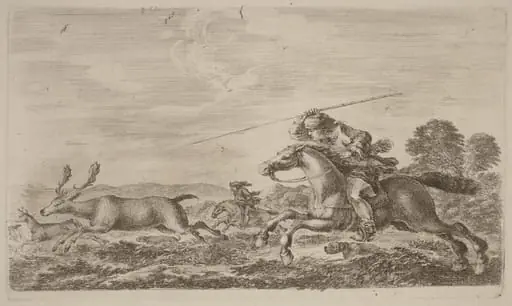 Deer Chased by Two Cavaliers
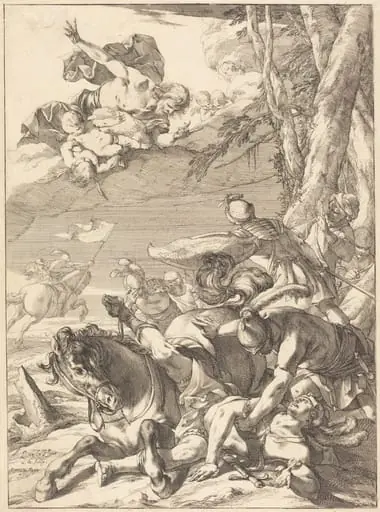 The Conversion of Saint Paul
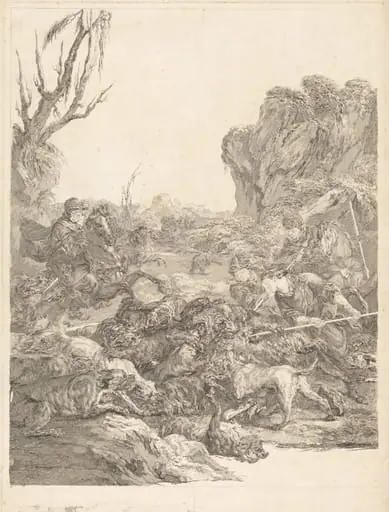 A Bear Hunt
 Peasants and Donkey
 William Tell at Küssnacht
 The Life of the Virgin: The Flight into Egypt
 Cavalry and Hay Wagon
 Ragotin enivré par La Rancune