Artwork
Ragotin enivré par La Rancune
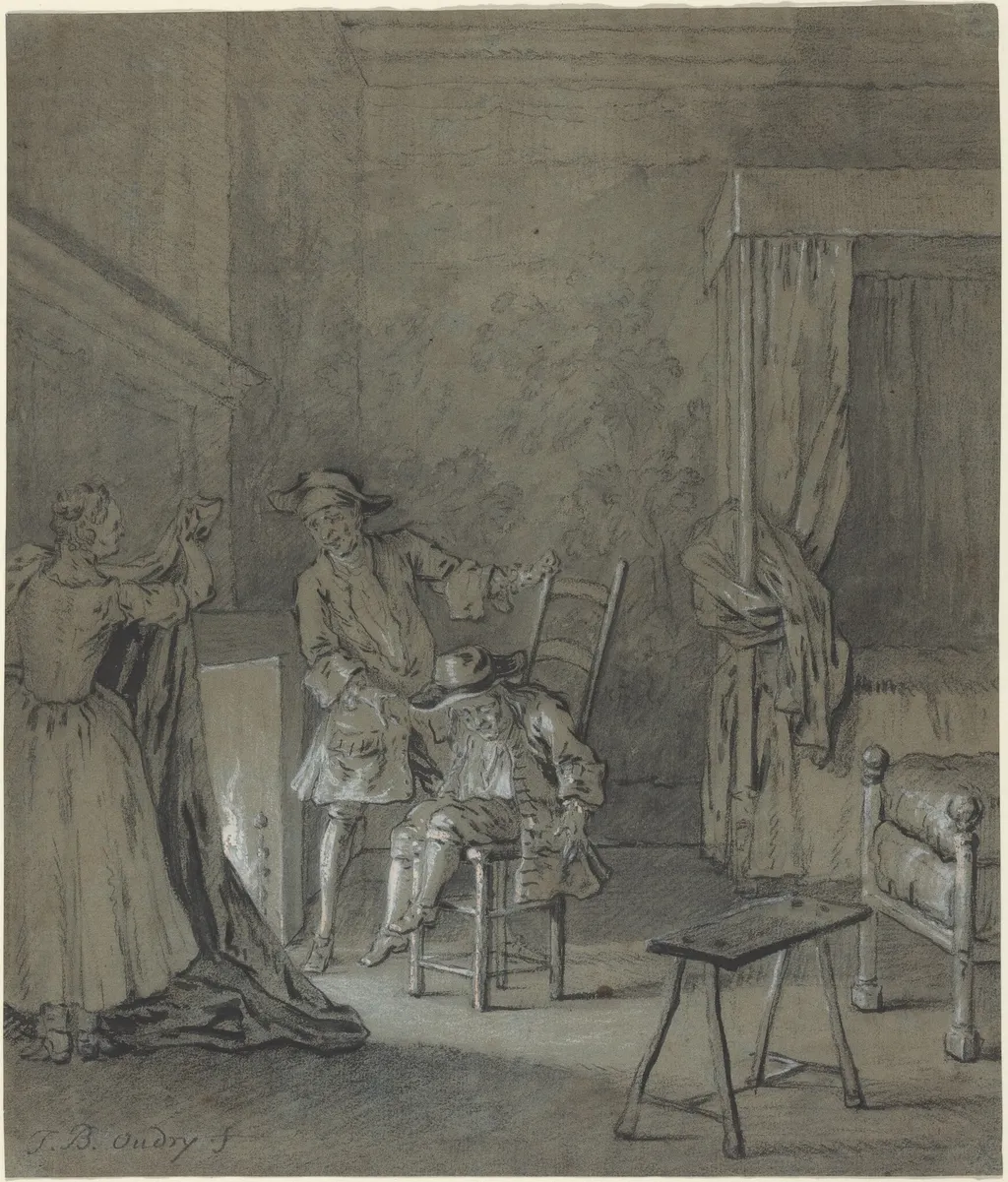
Ragotin enivré par La Rancune is a chalk drawing by the Baroque artist Jean-Baptiste Oudry. It dates from 1726 and is held in the collection of the National Gallery of Art.
About this work
Overview
Jean-Baptiste Oudry’s 1726 drawing *Ragotin enivré par La Rancune* is executed in black‑and‑white chalk, heightened with additional white, and accented with brushwork and black ink on blue laid paper. The work measures a modest size and functions as a preparatory sketch, showcasing Oudry’s facility with line and tonal modeling.
Subject & Meaning
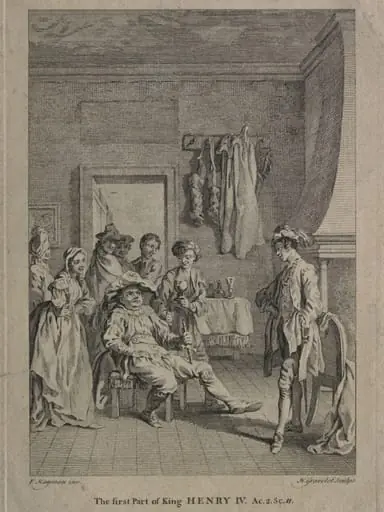
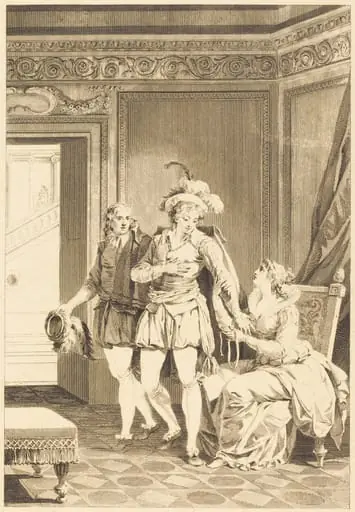
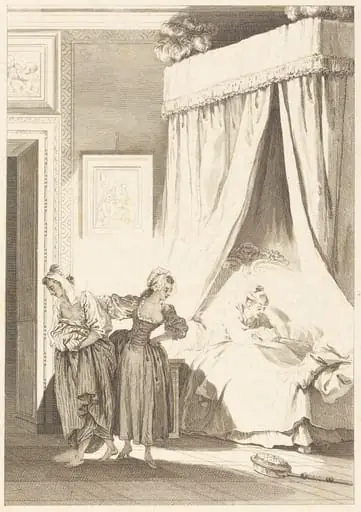
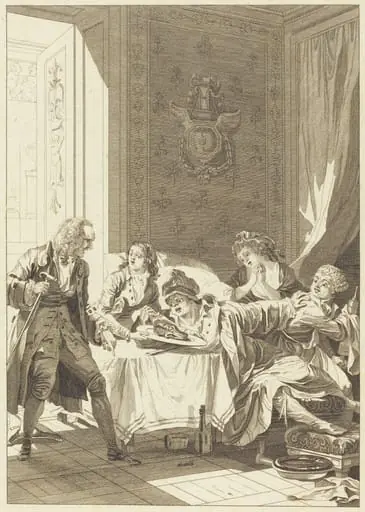
The composition depicts a cramped interior with two male figures. One figure leans on a chair, cane in hand, gazing downward, while the other sits, hat in his hand, staring vacantly. A small table bears a bottle and a glass, and a ladder rests against the wall, suggesting a scene of inebriation or a moment of idle contemplation.
Technique & Style
Oudry employs overlapping, scratchy chalk strokes to render shadows and textures, creating a sense of immediacy. Areas of dense cross‑hatching build depth, while selective white highlights lift forms from the blue ground. The combination of chalk, ink, and brush touches reflects a hybrid drawing technique typical of Rococo draftsmen.
History & Provenance
Created early in Oudry’s career, the drawing predates his most celebrated animal and hunting paintings. It remains a rare example of his figure work in a purely graphic medium, offering insight into his preparatory processes before moving to oil or tapestry commissions.
Context
Oudry, best known for naturalistic animal scenes, also produced a range of figure studies for narrative projects. This sketch aligns with the Rococo interest in intimate, genre‑type moments, contrasting with his larger, more formal compositions for royal patrons.
Legacy
Although not a finished piece, the drawing informs scholars about Oudry’s method of quickly capturing human gestures and spatial arrangements. It contributes to a broader understanding of 18th‑century French drawing practices and the artist’s versatility beyond his celebrated animal oeuvre.
Artist & collection

Artist
Jean-Baptiste Oudry was a French Rococo painter, engraver, and tapestry designer. He is particularly well known for his naturalistic pictures of animals and his hunt pieces depicting game. His son, Jacques-Charles Oudry, was also a painter.