Artwork
Femeie la oglindă
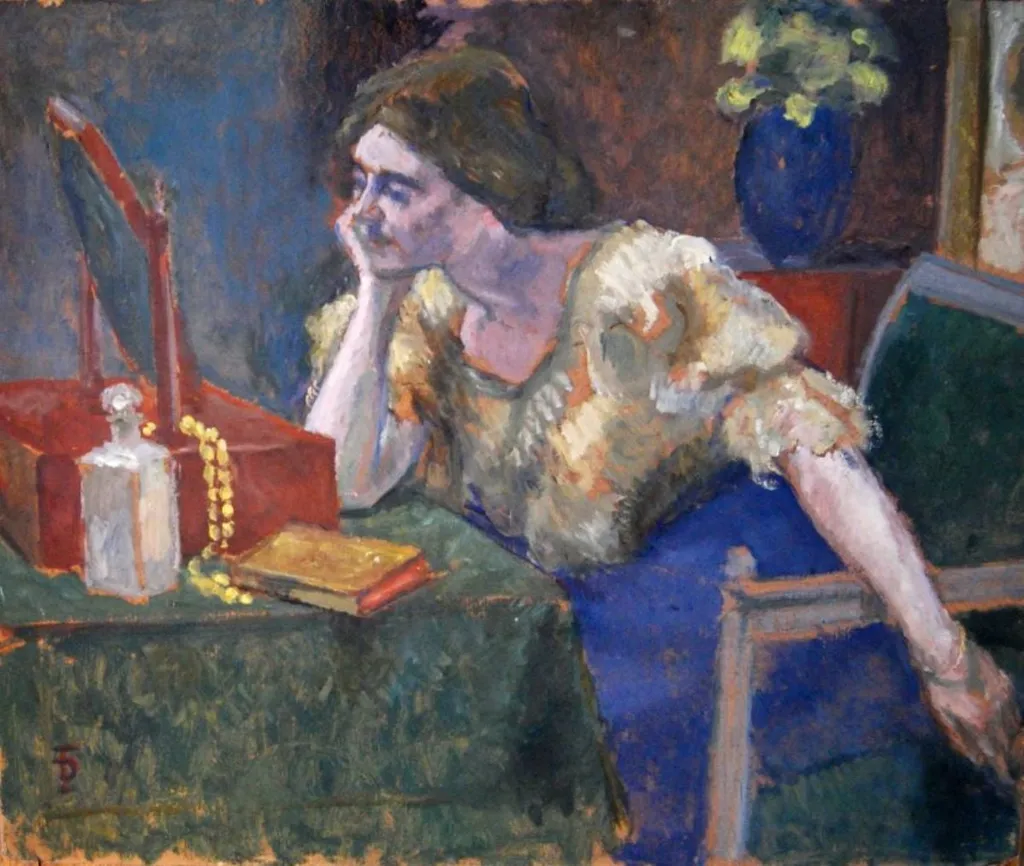
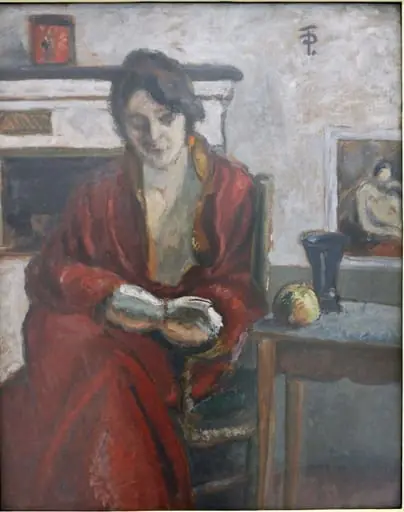
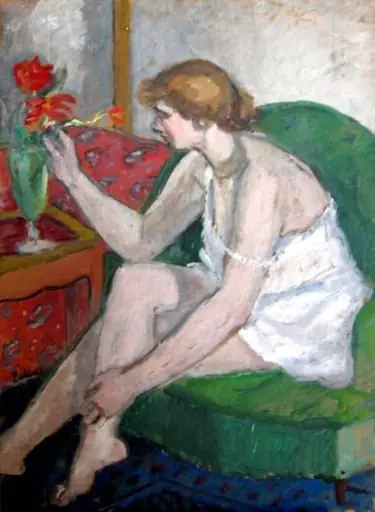
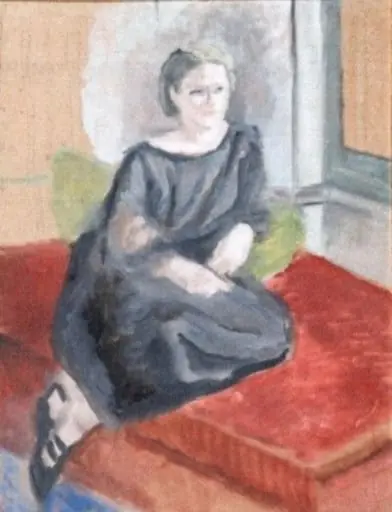
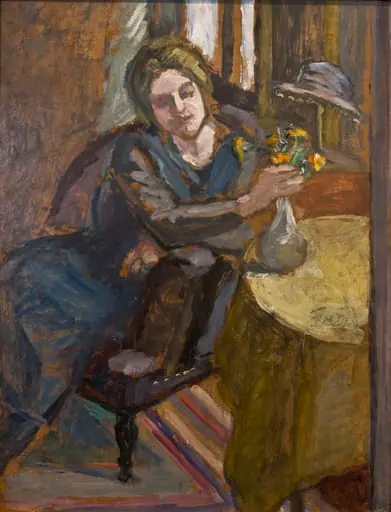
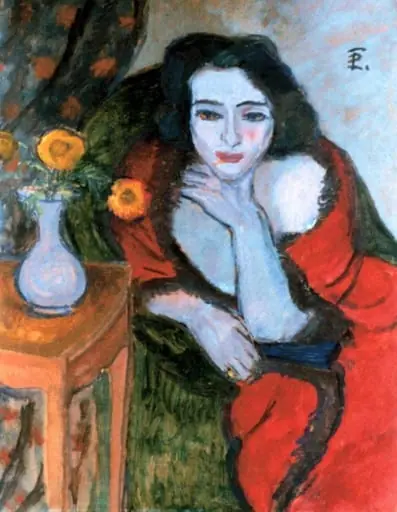
Femeie la oglindă is an unspecified painting by Theodor Pallady. It dates from 1921 and is held in the collection of the Octavian Goga Memorial Museum.
About this work
Overview
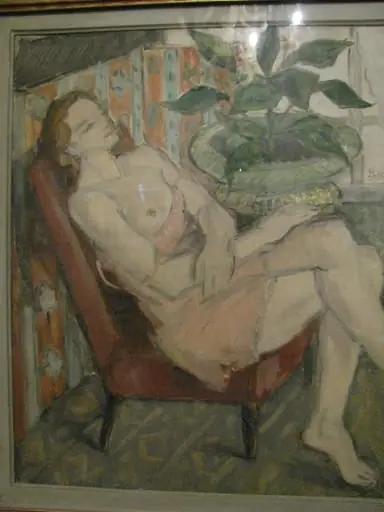
Femeie la oglindă, painted around 1921 by Theodor Pallady, captures a solitary woman engaged in a private moment before a mirror.
Femeie la oglindă, painted around 1921 by Theodor Pallady, captures a solitary woman engaged in a private moment before a mirror. The work is part of the Museum of Ethnography’s collection and exemplifies Pallady’s interest in intimate, domestic scenes. Rendered with subdued tones and careful composition, the painting conveys stillness without narrative urgency, inviting quiet observation rather than dramatic interpretation.
Subject & Meaning
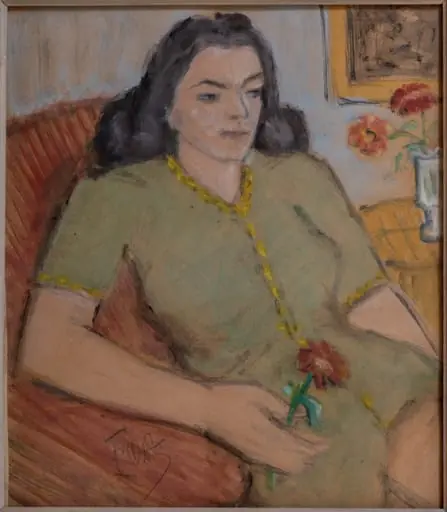
The figure, seated before a mirror, holds her cheek in a gesture that suggests inward thought rather than vanity. Her attire—a white blouse and blue skirt—hints at everyday life, while the perfume bottle and open book on the table imply personal rituals of self-care and intellectual engagement. The reflection in the mirror confirms her gaze is directed inward, framing the scene as a meditation on solitude and self-awareness.
Technique & Style
Pallady employs a restrained palette of soft whites, blues, and muted earth tones to cultivate a tranquil mood. Brushwork is delicate, with attention to the play of light on fabric and glass. The mirror’s reflection is rendered with precision, anchoring the composition. Chiaroscuro is used subtly, enhancing volume without creating stark contrasts, reinforcing the painting’s gentle, contemplative tone.
History & Provenance
The painting was completed around 1921 during Pallady’s mature period, following his studies in Paris and his engagement with French modernism. It entered the Museum of Ethnography’s holdings in the mid-20th century, likely through acquisition or donation. Its presence in an ethnographic institution reflects broader institutional interest in depicting everyday Romanian life during the interwar years.
Context
In early 20th-century Romania, artists like Pallady turned from grand historical themes to intimate portrayals of domestic life. Femeie la oglindă aligns with this shift, echoing European trends in psychological realism. The focus on a woman’s private moment resonates with broader cultural conversations about gender, interiority, and modern identity emerging in interwar Eastern Europe.
Legacy
The work remains a quiet reference point in Romanian modernist painting, noted for its emotional restraint and formal clarity. While not widely reproduced, it is frequently cited in scholarly discussions of Pallady’s contribution to Romanian art. Its enduring presence in the Museum of Ethnography underscores its value as a document of personal and cultural introspection in early modern Romania.
Artist & collection