Artwork
Femeie în negru
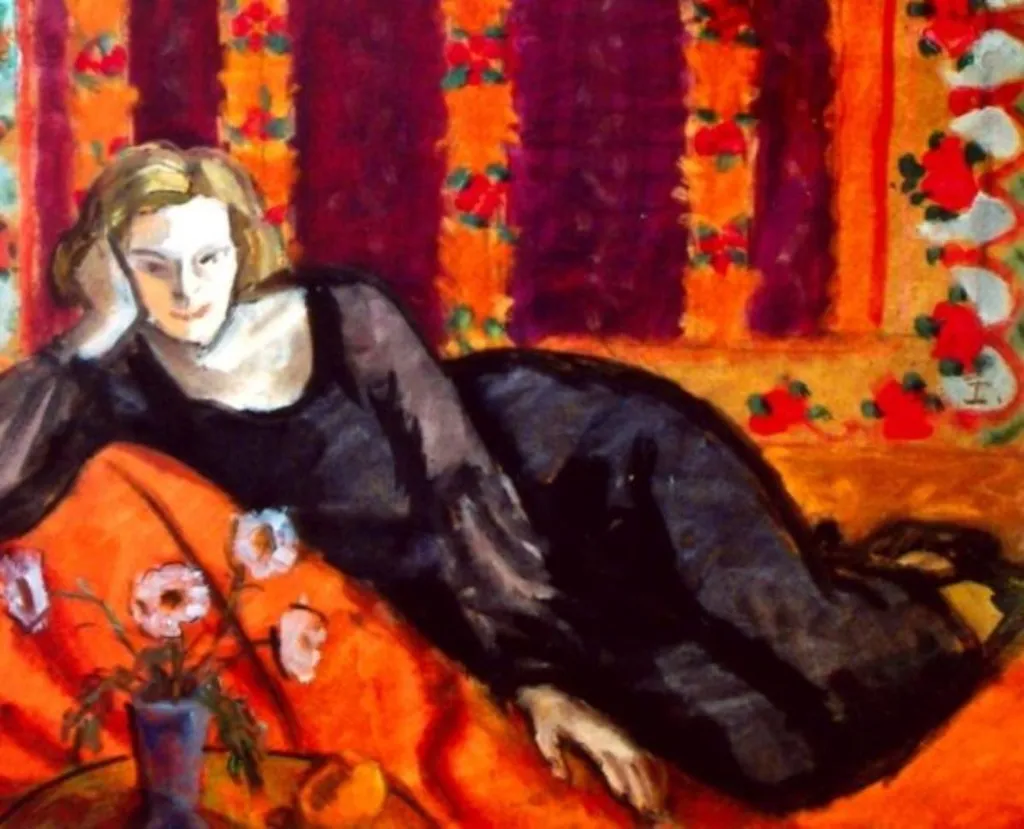
Femeie în negru is an unspecified painting by Theodor Pallady. It dates from 1921 and is held in the collection of the Argeș County Museum.
About this work
Overview
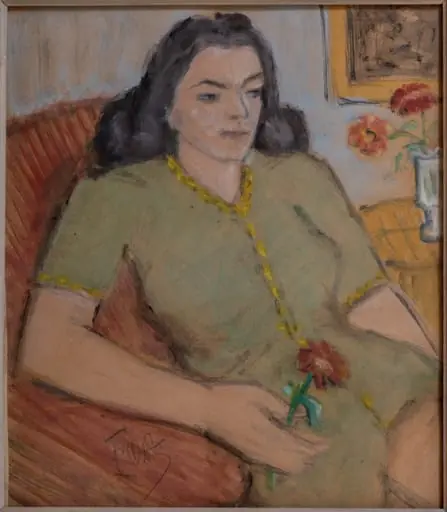
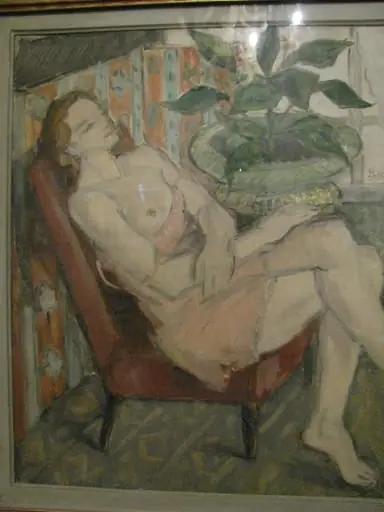
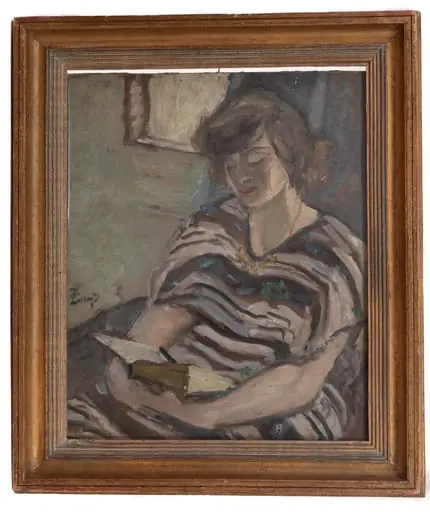
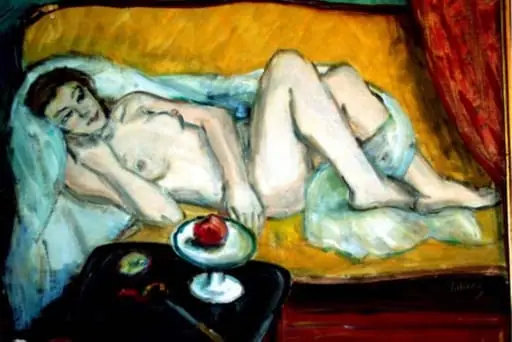
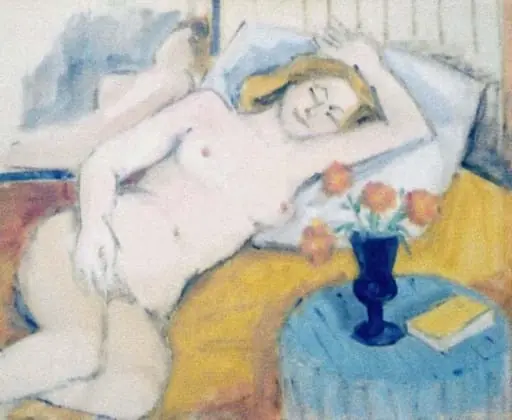
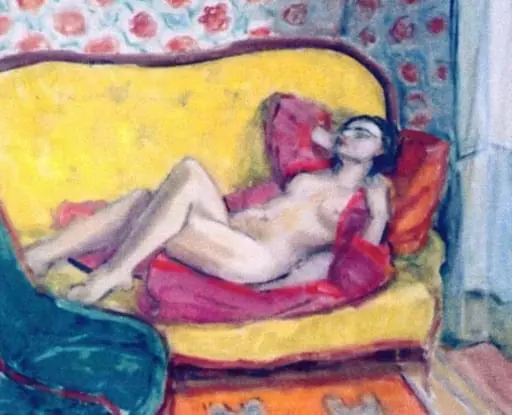
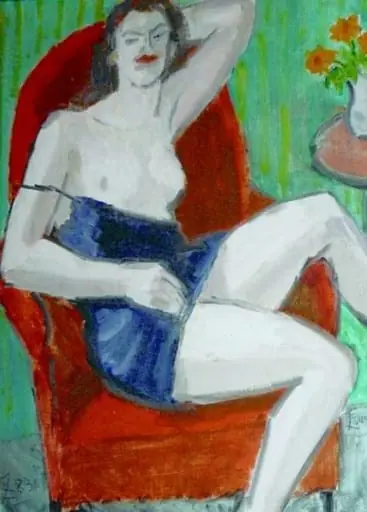
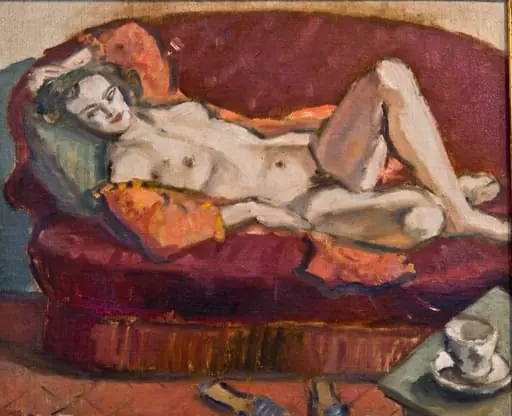
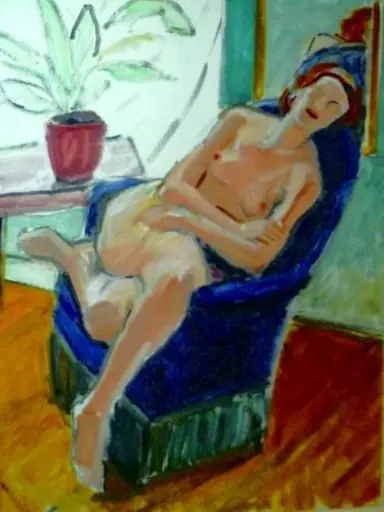
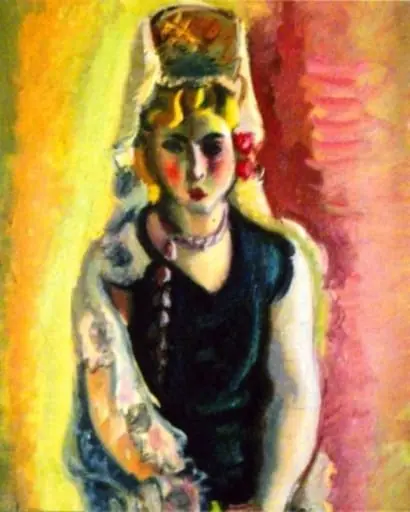
Painted around 1921 by Theodor Pallady, Femeie în negru depicts a reclining woman in a dark garment against a vividly colored interior.
Painted around 1921 by Theodor Pallady, Femeie în negru depicts a reclining woman in a dark garment against a vividly colored interior. The composition emphasizes contrast through tonal and textural means, with the figure rendered in subdued tones while the surrounding space bursts with warm, saturated hues. The work reflects Pallady’s engagement with post-impressionist approaches, particularly in its handling of surface and light.
Subject & Meaning
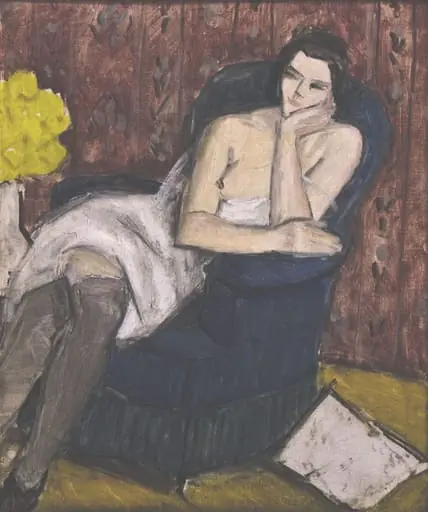
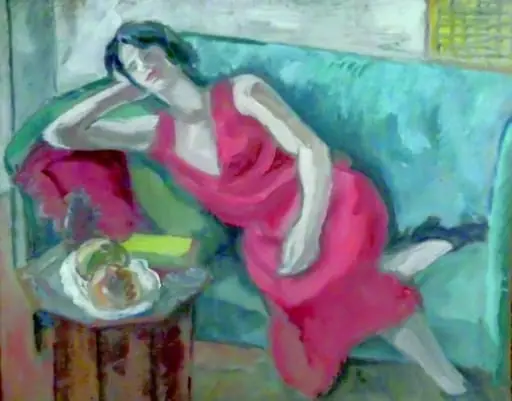
The woman, shown in a state of quiet repose, is neither idealized nor engaged in narrative action. Her relaxed posture and closed eyes suggest introspection or drowsiness, inviting contemplation rather than storytelling. The modest presence of a small vase of flowers adds a subtle note of domesticity, grounding the scene in an intimate, private moment without overt symbolism.
Technique & Style
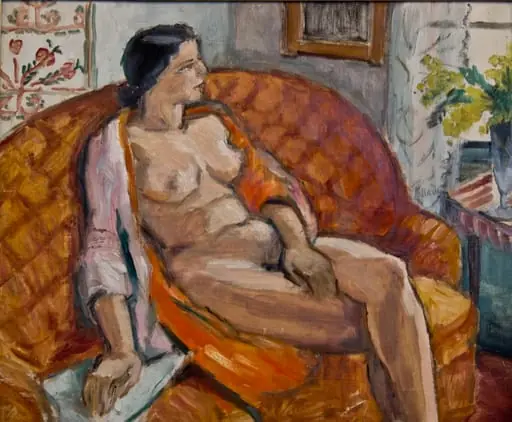
Pallady employed thick, layered brushwork—impasto—to build texture in the background and fabric. The orange couch and patterned wall are executed with energetic, tactile strokes, creating a sense of physical presence. The contrast between the dense, dark form of the figure and the luminous, textured surroundings heightens visual tension, emphasizing form through pigment rather than line.
History & Provenance
Femeie în negru was produced during Pallady’s mature period, following his years in Paris and return to Romania. It reflects his synthesis of French modernism with Romanian sensibilities. The painting remained in private collections for much of the 20th century and is now held in a public Romanian institution, where it is recognized as a key example of interwar Romanian painting.
Context
Created in the early 1920s, the work emerges from a time when Romanian artists were redefining national identity through modernist forms. Pallady, influenced by Matisse and post-impressionism, avoided overt political themes, instead focusing on domestic tranquility and chromatic harmony. This quiet interior scene aligns with broader European trends favoring personal, sensory experience over grand narrative.
Legacy
Femeie în negru is regarded as a significant study in color and mood within Romanian modernism. Its emphasis on texture and tonal contrast influenced later generations of Romanian painters seeking to move beyond academic traditions. The work endures as a quiet but resonant example of how personal observation could be elevated through formal innovation.
Artist & collection