Artwork
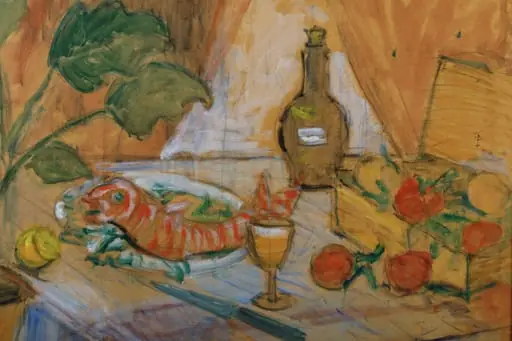
Natură moartă cu rață
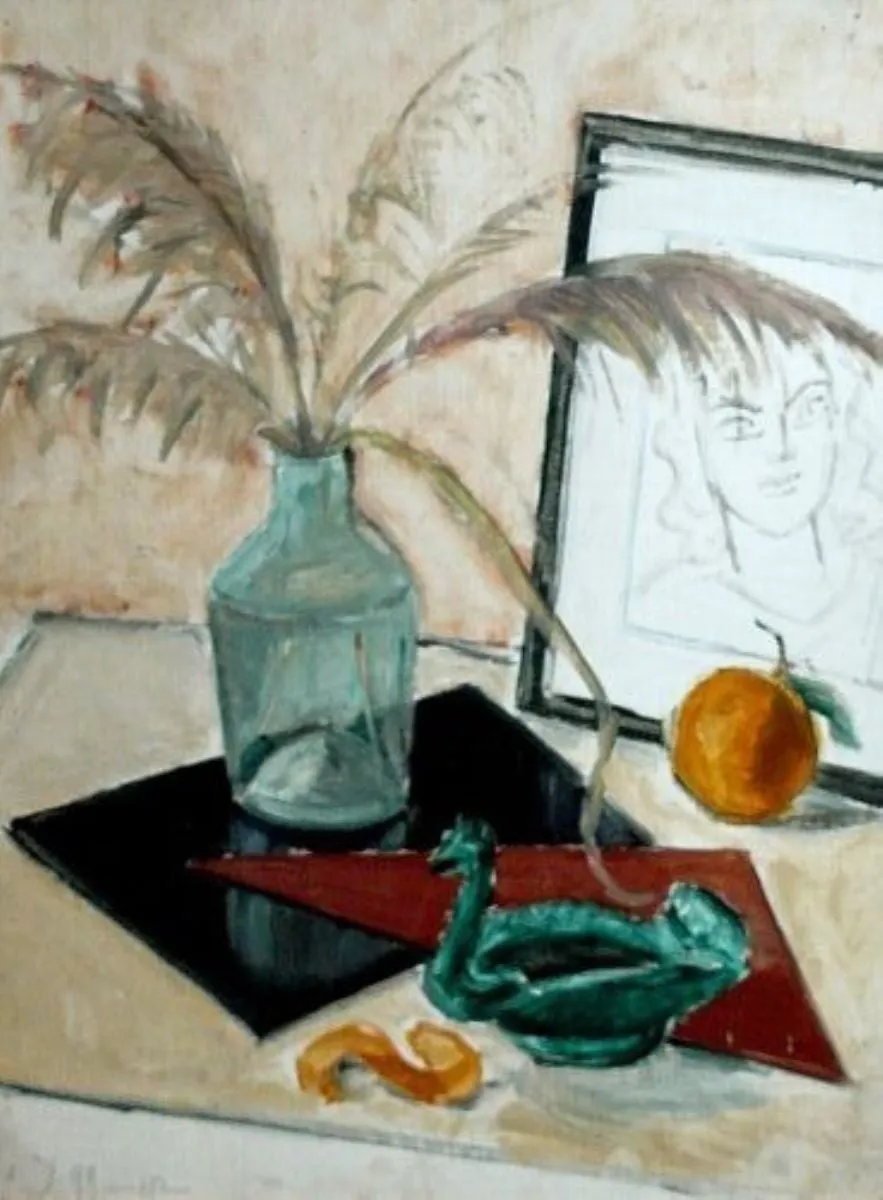
Natură moartă cu rață is an unspecified painting by Theodor Pallady. It dates from 1949 and is held in the collection of the Art museum of Craiova.
About this work
Overview
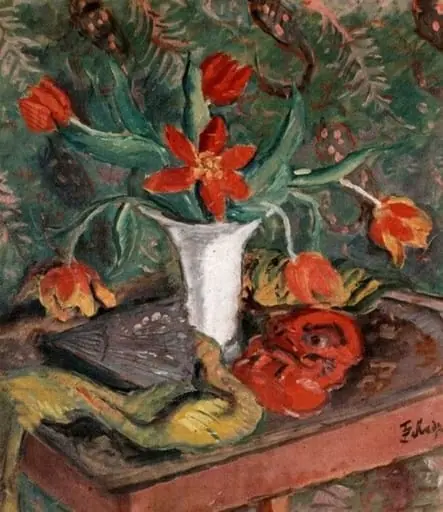
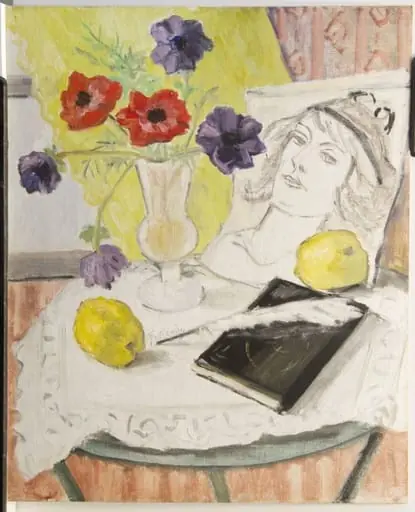
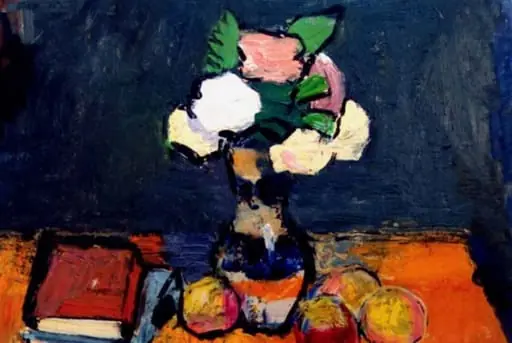
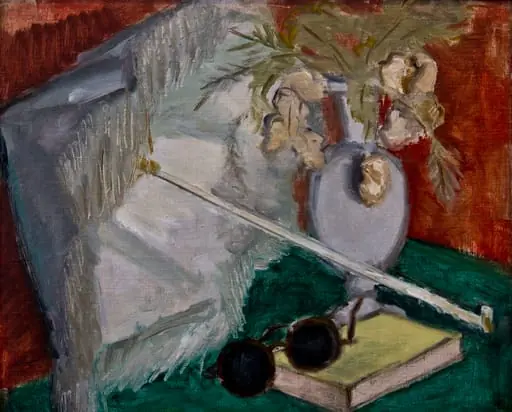
It presents a quiet arrangement of everyday objects: a glass vessel containing feathers, a green ceramic duck, an orange, and a small framed portrait sketch.
Natură moartă cu rață, dated around 1949, is a still life painting by Romanian artist Theodor Pallady. It presents a quiet arrangement of everyday objects: a glass vessel containing feathers, a green ceramic duck, an orange, and a small framed portrait sketch. The composition is restrained, set against a pale beige background, with geometric elements like a black square and red triangle anchoring the forms. The work reflects Pallady’s interest in balance and subtle tonal variation.
Subject & Meaning
The objects in the painting—feathers, a duck figurine, an orange, and a portrait sketch—suggest themes of transience and observation. The feathers, likely from the duck, imply a connection between the natural and the crafted. The framed face may hint at memory or identity, contrasting with the mute stillness of the other items. Together, they form a contemplative tableau, avoiding overt symbolism in favor of quiet resonance.
Technique & Style
Pallady employs a muted palette and delicate brushwork to render textures with precision: the smooth glaze of the ceramic duck, the fragile sheen of the orange peel, and the soft irregularity of the feathers. Shading is subtle, avoiding dramatic contrasts. The flat planes of the black square and red triangle introduce a structural rigidity that grounds the organic forms, reflecting a synthesis of modernist design and traditional still-life conventions.
History & Provenance
The painting was created in the late 1940s, during Pallady’s later period in Romania. It entered the collection of the Museum of Ethnography, an institution more commonly associated with cultural artifacts than fine art. Its presence there suggests an interest in the work’s anthropological qualities—its focus on domestic objects and craftsmanship—rather than its status as a purely aesthetic object.
Context
In postwar Romania, artistic expression was increasingly shaped by state-endorsed realism. Pallady’s still life, with its quiet abstraction and personal symbolism, stands apart from official mandates. His choice of humble, intimate subjects reflects a continuity with earlier European modernism, particularly the introspective still lifes of artists like Cézanne and Bonnard, adapted through a Romanian sensibility.
Legacy
Natură moartă cu rață exemplifies Pallady’s enduring focus on quiet observation and formal harmony. While not widely exhibited, it remains a representative work of his later years, illustrating his ability to infuse simplicity with depth. The painting’s placement in an ethnographic museum underscores its resonance beyond traditional art categories, inviting reflection on the cultural weight of ordinary things.
Artist & collection